
Switching to solar outdoor lighting is an increasingly popular choice for homeowners across the Philippines. With the country’s abundant tropical sunshine, utilizing solar energy to illuminate gardens, pathways, and perimeters offers an eco-friendly way to enhance home security and curb appeal without adding to your monthly electricity bill. Moreover, solar fixtures eliminate the need for complex, costly, and potentially hazardous trenching or outdoor wiring, making them an accessible DIY project for any household.
However, navigating the vast market of outdoor solar lamps can be challenging. The local climate presents unique challenges, from intense heat and high humidity to torrential rains and severe tropical storms. To ensure your investment survives these demanding conditions and provides reliable illumination night after night, you must understand how to evaluate key technical specifications. This guide provides a practical framework for assessing brightness, battery performance, and weather resistance, helping you build a reliable shortlist of solar lamps tailored to your home’s specific needs.
Key Evaluation Criteria for Tropical Outdoor Conditions
To select a solar lamp that will perform consistently in the Philippines, you must look beyond aesthetic appeal and examine the technical specifications listed on the product packaging or manufacturer data sheets. The first critical metric is light output, which is measured in lumens rather than watts. Lumens indicate the actual brightness of the light. For ambient garden accents or pathway markers, a modest output of 10 to 100 lumens is generally sufficient to guide your steps without creating harsh glare. For task-oriented areas, such as outdoor dining spaces, gates, or driveways, you should look for fixtures that deliver 200 to 500 lumens. High-security floodlights require even greater output, often ranging from 800 to over 2,000 lumens, to effectively illuminate large open areas.
Products mentioned in this guide
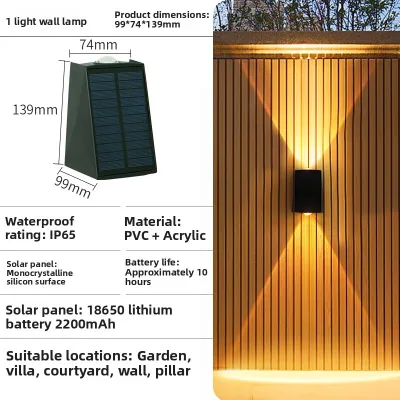
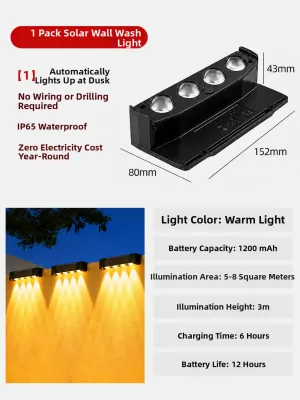
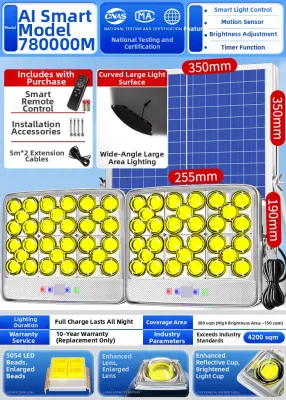
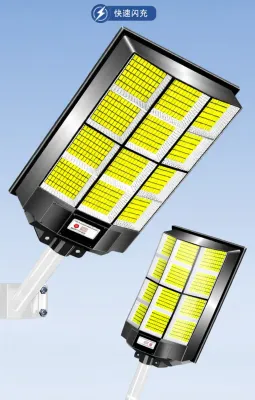
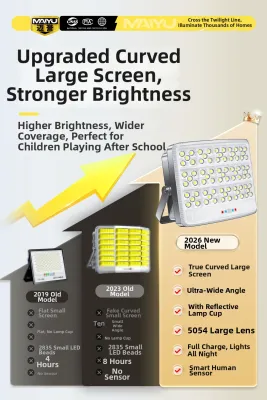
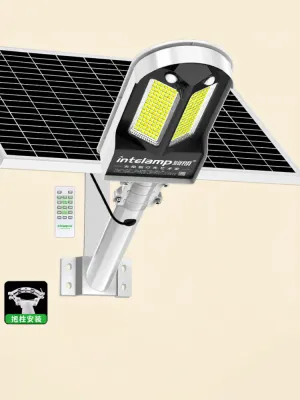
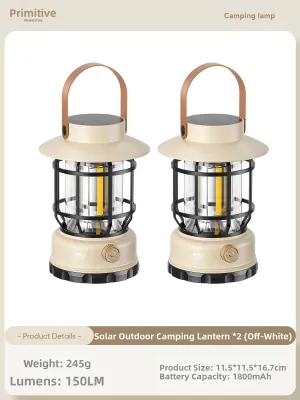
Prices are valid at publication and may change. Please refer to the product page for the latest price.
The battery is the heart of any solar lighting system, determining how long the lamp can stay illuminated after the sun goes down. Modern solar lamps typically use one of three rechargeable battery chemistries: Nickel-Metal Hydride (NiMH), Lithium-ion (Li-ion), or Lithium Iron Phosphate (LiFePO4). NiMH batteries are common in budget-friendly accent lights; they are inexpensive but have a shorter lifespan and lower energy density. Li-ion batteries offer higher capacity and better performance but can be sensitive to extreme heat. LiFePO4 batteries represent the premium standard for outdoor solar lighting. They offer exceptional thermal stability, which is crucial for hot tropical climates, and boast a significantly longer cycle life, often lasting for several years of daily charge and discharge cycles before showing signs of degradation.
Given the heavy downpours and high humidity levels experienced throughout the archipelago, weather resistance is non-negotiable. You can verify a fixture’s durability by checking its Ingress Protection (IP) rating, which consists of two digits. The first digit (0 to 6) measures protection against solid particles like dust, while the second digit (0 to 9) measures protection against liquids. For general outdoor use in a garden or patio, a minimum rating of IP44 is acceptable for partially sheltered areas. However, for fully exposed locations subject to heavy monsoon rains, you should prioritize fixtures with a rating of IP65 or IP67. An IP65 rating ensures the lamp is completely dust-tight and protected against water jets from any angle, while IP67 indicates the unit can withstand temporary submersion in water.
The efficiency of the solar panel itself determines how quickly and effectively the battery charges during the day. Most residential solar lamps utilize either polycrystalline or monocrystalline solar panels. Polycrystalline panels are recognizable by their blue, speckled appearance and are generally more affordable, though they have a lower energy conversion efficiency, typically around 15% to 17%. Monocrystalline panels, which are uniform black, are highly efficient, often converting 20% to 24% of sunlight into usable electricity. In regions with frequent afternoon cloud cover or shading from nearby foliage, investing in monocrystalline panels ensures the battery can still reach a functional charge even on overcast days.
Selecting the Right Solar Lamp by Outdoor Application
Different outdoor spaces require distinct lighting strategies, and matching the right lamp design to the specific application is key to achieving both functionality and visual harmony. For pathways, walkways, and driveways, the primary goal is safe navigation and boundary marking. Stake lights and low-profile bollards are ideal for these areas. These fixtures are designed to cast a downward, localized pool of light that illuminates the ground without shining directly into your eyes. When planning pathway lighting, space the fixtures evenly along the borders, ensuring the light pools slightly overlap to prevent dark patches that could present tripping hazards.

Security and wall lighting demand a more robust approach, focusing on deterrence and clear visibility around entry points, gates, and perimeter walls. Motion-sensor floodlights are highly effective for these zones. These fixtures remain in a low-power dim mode or completely off until their passive infrared (PIR) sensors detect movement, at which point they burst into full brightness. This sudden change in illumination is an excellent deterrent for intruders and conserves battery power, allowing the fixture to deliver high-intensity light only when needed. For front doors, balconies, and patios, decorative wall sconces with integrated solar panels offer a softer, welcoming glow while still providing sufficient illumination for keyholes and steps.
Garden and decorative lighting allows you to express your personal style and highlight the natural beauty of your landscaping. Solar lanterns, string lights, and adjustable spotlights are excellent tools for creating outdoor ambiance. String lights draped across a pergola or patio ceiling can transform a simple backyard into an inviting space for evening gatherings. If you want to showcase specific landscape features, such as a mature tree, a water feature, or architectural details, adjustable solar spotlights can be positioned at the base of the object and angled upward. Because decorative lights are often placed in shaded garden beds, look for models with detachable solar panels connected by a wire, allowing you to position the light fixture in the shade while placing the panel in direct sunlight.
Installation and Maintenance for Maximum Lifespan
Proper installation and regular maintenance are essential to maximize the lifespan and daily performance of your outdoor solar lamps. The most critical factor during installation is panel placement. To achieve a full charge, the solar panel must receive direct, unobstructed sunlight for at least six to eight hours daily. Avoid placing fixtures directly under the eaves of roofs, beneath dense tree canopies, or in the shadow of walls and fences. In the Philippines, which is located close to the equator, angling solar panels slightly toward the south can help optimize year-round solar energy capture, though a flat or slightly tilted orientation is generally highly effective.
Over time, outdoor elements will inevitably take a toll on the efficiency of your solar panels. Dust, pollen, bird droppings, and salt residue—especially in coastal areas—can form a thin film over the glass surface of the panel. This debris blocks sunlight, significantly reducing the panel’s ability to charge the internal battery. To prevent this, establish a routine cleaning schedule. Wiping the panels with a soft, damp microfiber cloth and a mild, non-abrasive soap every few weeks is usually sufficient to restore maximum charging efficiency. Avoid using harsh chemical cleaners or abrasive scrubbing pads, as these can scratch the protective coating on the panel and permanently reduce its light transmission.
Even with meticulous care, the rechargeable batteries inside your solar lamps will eventually reach the end of their natural lifespan. If you notice that a lamp’s illumination time has decreased significantly, or if it fails to turn on at all despite a full day of clear sunlight, the battery likely needs replacement. Before purchasing replacement batteries, consult the manufacturer’s guidelines to verify the exact voltage, capacity (measured in milliampere-hours or mAh), and physical dimensions required. Many high-quality solar lamps feature easily accessible battery compartments, allowing you to swap out the old cell for a new one, thereby extending the life of the fixture and reducing electronic waste.
Pre-Purchase Checklist and Safety Boundaries
Before finalizing your purchase, it is wise to run through a checklist to ensure you are investing in safe, reliable, and cost-effective products. First, verify the manufacturer’s warranty and the availability of local after-sales support. While cheap, unbranded solar lights are widely available on online marketplaces, they often lack warranties or replacement parts, meaning a single component failure could force you to discard the entire unit. Choosing brands that offer clear warranty terms and sell replacement batteries or panels separately provides much better long-term value.
If you are considering hybrid solar lamps—which feature a plug-in backup cord or connect to your home’s electrical grid for use during extended rainy periods—you must exercise extra caution. Ensure these units carry recognized electrical safety certifications, such as the Philippine Standard (PS) mark or the Import Commodity Clearance (ICC) sticker. Any fixture that connects to fixed household wiring must be installed in accordance with local electrical codes. For complex installations, damp environments, or work at heights, always isolate the power supply and consult a qualified professional to prevent electrical shocks or fire hazards.
It is also important to manage expectations regarding the physical limitations of solar lighting. While solar technology has advanced significantly, standalone solar fixtures generally cannot match the continuous, high-intensity output of hardwired electrical systems. For critical high-security areas where constant, uninterrupted illumination is mandatory regardless of weather conditions, a hardwired system remains the most reliable choice.
Finally, establish a realistic budget in ₱ that reflects your long-term goals. While a basic plastic stake light may cost under ₱200, a durable, high-output security light with a LiFePO4 battery and a monocrystalline panel can range from ₱1,500 to over ₱5,000. Investing in higher-quality fixtures with robust weatherproofing and replaceable batteries typically results in a lower total cost of ownership over time, as you will not need to constantly replace failed units after every rainy season.
Frequently Asked Questions (FAQ)
Do solar lamps work effectively during the rainy season?
Yes, solar lamps can still function during the rainy season, but their performance will be reduced. Solar panels do not require direct sunlight to charge; they can utilize ambient daylight on overcast or cloudy days. However, because the intensity of light is much lower, the battery will not reach a full charge, resulting in shorter illumination times at night. To maintain baseline performance during the monsoon months, look for solar lamps with high-efficiency monocrystalline panels and energy-saving modes, such as motion-activated settings, which conserve battery power by only illuminating when someone is nearby.
How long do outdoor solar lamp batteries typically last?
The lifespan of an outdoor solar lamp battery depends heavily on its chemistry and usage patterns. Standard NiMH batteries typically last between 1 to 2 years (about 300 to 500 charge cycles) before their capacity degrades significantly. Lithium-ion (Li-ion) batteries generally last 2 to 3 years. Premium Lithium Iron Phosphate (LiFePO4) batteries offer the longest lifespan, often lasting 5 to 7 years (up to 2,000 or more charge cycles) under optimal conditions. To maximize battery life, ensure the solar panel receives adequate daily sunlight to prevent the battery from remaining in a deeply discharged state for extended periods.
Can I leave solar lamps outside during severe typhoons?
While high-quality solar lamps with IP65 or IP67 ratings are designed to withstand heavy rain and wind, it is highly recommended to temporarily take down and store portable or loosely mounted fixtures during severe typhoons. Strong winds can easily dislodge stake lights, hangings, or poorly secured wall mounts, turning them into flying debris that can damage your property or destroy the fixtures themselves. Heavy-duty, permanently bolted security floodlights can usually remain in place, provided their mounts are securely anchored to solid concrete or wooden structures. After the storm passes, inspect the fixtures for physical damage and wipe the panels clean before turning them back on.
Community discussion
Share your experience or ask a question. Comments are reviewed before publication.