
Outdoor spaces in the Philippines, from cozy backyard patios in Quezon City to breezy garden verandas in Tagaytay, come alive at night with the right decorative lighting. Fireworks-style string lights—with their unique starburst shapes and radiating micro-LED branches—offer a festive, dynamic alternative to traditional linear fairy lights. These eye-catching displays mimic the look of exploding pyrotechnics, making them popular for holiday celebrations, outdoor parties, or everyday garden ambiance.
Adding smart functionality to these lights allows you to customize colors, set schedules, and sync visual effects directly from your smartphone. Whether you are specifically searching for options like “uzboo smart fireworks” or exploring other brands on an online marketplace, buying outdoor electronics requires careful evaluation. To avoid wasting money on lights that fail after the first heavy rain, you must look beyond the beautiful product photos and inspect the technical specifications to ensure they can survive the elements while delivering the exact visual effects you want.
Assessing Your Outdoor Space and Layout Needs
Before purchasing any smart fireworks string lights, you must map out your physical space to determine the required light coverage and dimensions. Unlike standard linear string lights, fireworks-style lights feature multiple dangling “bursts” or “pompoms” spaced along a main transmission cable. This unique physical footprint requires a different approach to measuring and planning your layout.
Products mentioned in this guide
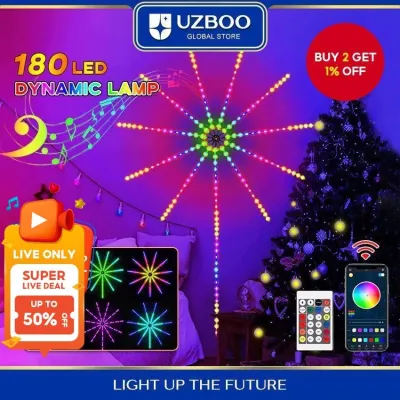
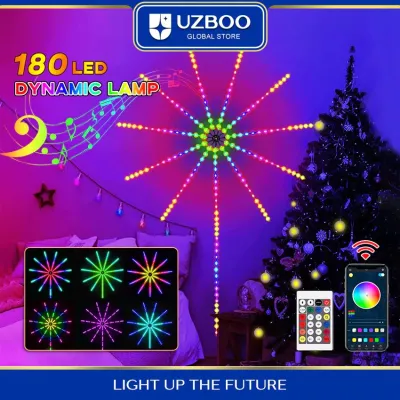
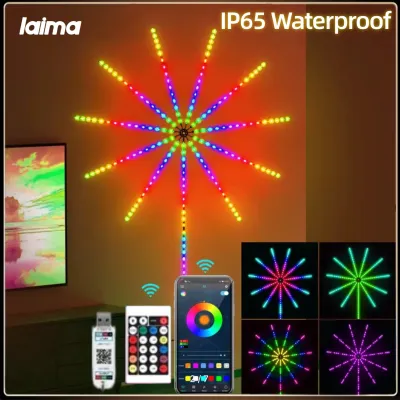
Prices are valid at publication and may change. Please refer to the product page for the latest price.
Start by identifying your mounting points, such as fence posts, pergola beams, gutters, or tree branches. Use a physical measuring tape to determine the total distance between these points, and always account for the natural sag or drape of the main cable. Pulling the cable too tight puts unnecessary tension on the internal copper wires and connectors, which can lead to premature electrical failure.
Next, consider the visual spread and physical footprint of the individual firework bursts. Each burst consists of flexible copper branches that you must manually fan out into a sphere or starburst shape. Check the manufacturer’s specifications for the diameter of these bursts and the spacing between them along the main cable. If the bursts are spaced too closely, they may tangle in windy conditions; if they are too far apart, the display might look sparse and lose its cohesive visual impact.
Finally, locate your nearest outdoor-rated electrical outlet to plan the routing of the main cable. Note the distance from this outlet to where you want the first firework burst to begin. This distance determines the required length of the lead wire, which is the unlit portion of the cable. If the lead wire is too short, you will need to use an outdoor-rated extension cord, which introduces an additional connection point that must be carefully protected from moisture.
Core Durability Specs for Outdoor Environments
Outdoor lighting in a tropical climate faces severe environmental stressors, including intense solar heat, high humidity, and torrential downpours. To prevent short circuits, electrical hazards, or total product failure, you must evaluate the build quality of every component. This includes not just the individual LED bulbs and their flexible copper branches, but also the main transmission cable, the inline control box, the connectors, and the power adapter.

Understanding IP Ratings for Weather Resistance
The Ingress Protection (IP) rating is the standard metric for determining how well an electronic device resists dust and water. It consists of two digits: the first represents solid particle protection, and the second represents liquid protection. When shopping for outdoor fireworks string lights, checking the product label or manual for these specific IP codes is essential.
For general outdoor use under a covered patio or veranda, look for an IP rating of at least IP44. However, if the lights will be fully exposed to heavy rain, wind, and dust, prioritize a rating of IP65 or higher. An IP65 rating indicates that the product is dust-tight and protected against water jets from any angle, which is crucial for surviving the monsoon season.
Be aware that manufacturers often apply different IP ratings to different parts of the product. For example, the light strands themselves might be rated IP65, but the inline controller or the wall plug might only carry an IP44 or IP20 rating. Always verify that the connectors, control boxes, and power adapters carry appropriate outdoor seals. If the plug is only rated for indoor use, you must plug it into a covered, weatherproof outlet box or keep it indoors and run the low-voltage wire outside.
Power Source and Cable Length Limitations
Choosing the right power source affects both the brightness of your lights and the convenience of your installation. The three primary options are solar, battery, and plug-in (mains power), each with distinct trade-offs for continuous outdoor use.
Solar-powered options are highly convenient because they do not require proximity to an electrical outlet, but their performance depends entirely on daily sunlight exposure. In areas with frequent afternoon cloud cover or shading from trees, solar panels may not fully charge, leading to dim lights or short runtimes. Battery-powered units offer excellent placement flexibility but require frequent battery replacements or recharging, making them less practical for permanent outdoor setups.
Plug-in models provide consistent, bright illumination and are the standard for high-density smart fireworks lights. When choosing a plug-in model, verify the input voltage compatibility. In the Philippines, the standard utility voltage is 220V. Ensure the power adapter is rated for this input and steps the voltage down to a safe low-voltage level (typically 5V, 12V, or 24V DC) before sending power down the line.
Additionally, check the maximum connectable strand limits if you plan to expand your display. Some smart systems allow you to daisy-chain multiple sets together using end-to-end connectors. However, exceeding the manufacturer’s specified limit can overload the power adapter, cause a significant voltage drop that results in dimmer lights at the end of the chain, or damage the controller. Always check the total wattage limit of your controller and power supply before adding extension strands.
Evaluating Smart Controls and Connectivity
The “smart” aspect of these lights is what sets them apart, allowing you to customize colors, set schedules, and sync the visual effects to music. However, the reliability of these features depends on the connectivity protocol used and how well it integrates with your existing home setup.
Compare the control interfaces available on the models you are considering. Most smart fireworks lights offer a combination of a physical button on the controller, an infrared (IR) or radio frequency (RF) remote control, and a dedicated smartphone app. Physical buttons are useful for quick on/off toggles, while remotes offer basic color and mode changes without needing your phone.
For full customization, you will rely on wireless connectivity, which typically uses Wi-Fi, Bluetooth, or a combination of both. Bluetooth-enabled lights are easy to set up directly with your phone and do not require an active internet connection, but their range is limited to about 10 meters. If you step inside your house, you may lose connection. Wi-Fi-enabled lights connect to your home router, allowing you to control them from anywhere with an internet connection. However, they require a strong, stable 2.4 GHz Wi-Fi signal reaching your outdoor space. If your router is deep inside the house, thick concrete walls can block the signal, requiring a Wi-Fi range extender or a mesh node closer to the yard.
If you use voice assistants or smart home ecosystems, verify that the lights’ companion app is compatible with your preferred platform. This allows you to integrate the fireworks lights into your existing automation routines. Finally, ensure the app or controller offers an offline fallback option, such as local Bluetooth control or physical button overrides, so you can still operate the lights if your home internet goes down.
Comparing Light Modes and Visual Effects
The visual appeal of fireworks string lights lies in their ability to mimic exploding pyrotechnics. The quality of this effect depends on the density of the LEDs, the color capabilities, and the control chip technology.
Check the number of LEDs per firework burst. A higher count, such as 30 to 60 micro-LEDs per burst, creates a denser, more vibrant starburst effect. Look for addressable RGB (often labeled as RGBIC or Dreamcolor) rather than standard RGB. Standard RGB lights change the color of the entire strand simultaneously. Addressable RGB lights contain individual control chips inside each LED, allowing different colors to chase, cascade, and flow along the copper branches, creating a realistic “explosion” and “fade” effect.
Evaluate the color temperature and color rendering capabilities. If you want a warm, cozy ambiance for daily use, ensure the lights can produce a true warm white (around 2700K to 3000K) rather than a harsh, bluish-white. For festive occasions, a full spectrum of millions of colors is ideal. These decorative styles and perceived color temperatures are highly subjective, so choose a model that offers adjustable settings to match your personal preferences.
Review the available dynamic modes in the companion app. Look for adjustable speed and brightness sliders so you can tone down the flashing effects for a relaxed dinner or speed them up for a party. Music synchronization is another popular feature; it uses either a built-in microphone on the physical controller or your smartphone’s microphone to pulse the lights in time with the beat. Ensure the app allows you to save custom color combinations and DIY scenes so you do not have to reconfigure your favorite settings every time you turn the lights on.
Safe Installation and Maintenance Guidelines
Proper installation is critical to protecting your investment and ensuring electrical safety. Because fireworks lights feature delicate copper wires, they require gentle handling during setup and routine maintenance.
When hanging the lights, never use metal nails, staples, or tacks to secure the cables. These can easily pierce the protective plastic insulation, causing short circuits, water ingress, or electrical shocks. Instead, use outdoor-rated plastic cable clips, adhesive hooks designed for exterior surfaces, or UV-resistant nylon zip ties. Ensure the zip ties are snug but not overtightened to avoid pinching the internal copper conductors.
If your installation requires working at heights—such as mounting lights along rooflines, high gutters, or tall trees—always prioritize safety. Use a stable, slip-resistant ladder, have a spotter assist you, and ensure the power is completely isolated (unplugged) during the entire installation process. For complex, high-voltage, or permanent outdoor wiring integrations, consult a qualified professional electrician to ensure compliance with local electrical codes.
Keep all electrical connections, inline controllers, and power adapters elevated off the ground. Never allow them to rest in areas where water can pool, such as lawns, garden beds, or low spots on a patio. Use weatherproof connection boxes or wrap outdoor plugs in specialized silicone safety covers to prevent moisture ingress.
Perform routine inspections at least once every few months, especially after heavy storms or high winds. Check the cables for signs of wear, such as fraying insulation, cracked plastic seals, or rust on the connectors. Inspect the individual firework bursts for dead LEDs or broken copper branches. If you live in an area with extreme seasonal weather, such as the typhoon season in the Philippines, follow the manufacturer’s instructions for temporarily taking down and storing the lights indoors to prolong their lifespan. Clean the solar panels (if applicable) with a soft, damp cloth to remove dust and debris that can block sunlight.
Verifying Product Claims Before You Buy
The online marketplace is filled with generic listings that make exaggerated claims about waterproof ratings, brightness, and smart features. To avoid purchasing substandard or unsafe electronics, you must verify these claims before buying.
Cross-reference the seller’s product description with the manufacturer’s official specifications. If a listing claims a product is “100% waterproof” but does not list an official IP rating, or if the price seems too low for genuine addressable RGBIC technology, proceed with caution.
Look for recognized electrical safety certifications on the product packaging, manual, or seller’s documentation. In the Philippines, look for the Import Commodity Clearance (ICC) sticker or the Philippine Standard (PS) quality mark for locally distributed electronics. For imported goods, look for international certifications such as CE, FCC, RoHS, or UL listing, which indicate the product has undergone safety testing for electrical and fire hazards.
Read user reviews carefully, filtering for those that mention long-term outdoor exposure. Look for feedback regarding how the lights perform after a heavy rainstorm, whether the smart app frequently disconnects, and how easy it is to pair the device with Wi-Fi. Be skeptical of reviews that only praise the initial unboxing and focus instead on those written after several weeks or months of use.
Finally, confirm the warranty terms and the seller’s return policy. Reliable brands, including established names like uzboo or other reputable lighting manufacturers, typically offer a clear warranty period and a straightforward return process for defective outdoor electronics. Avoid sellers who do not offer a clear return window or who shift the responsibility of return shipping fees entirely onto the buyer.
Frequently Asked Questions (FAQ)
Can I leave smart fireworks string lights outside all year round?
While high-quality smart fireworks lights with an IP65 rating are designed to withstand rain and dust, leaving them exposed to harsh tropical sun and heavy monsoon seasons year-round can accelerate the degradation of the plastic insulation and copper wires. For maximum longevity, it is best to take them down during periods of prolonged extreme weather, such as active typhoon warnings, and store them in a cool, dry place. If you choose to leave them installed permanently, ensure all connection points are sealed with weatherproof electrical tape or housed in protective junction boxes, and inspect them regularly for signs of wear.
Do smart string lights work if my Wi-Fi goes down?
Yes, most smart fireworks string lights will continue to function even if your home Wi-Fi network goes offline. While you may temporarily lose the ability to control them via voice assistants or remote app commands over the internet, you can still operate them using the physical button on the inline controller or the included infrared/radio-frequency remote control. Additionally, many smart lights feature dual-connectivity (Wi-Fi and Bluetooth), allowing your smartphone to connect directly to the lights via Bluetooth when the local Wi-Fi network is unavailable, ensuring you can still adjust colors and modes locally.
Community discussion
Share your experience or ask a question. Comments are reviewed before publication.