
Solar vine lights offer a captivating way to transform dark garden walls, bare fences, and patio pergolas into glowing, organic features. By blending the natural look of climbing foliage with the soft radiance of tiny LED bulbs, these decorative fixtures bring an enchanting, whimsical atmosphere to outdoor living spaces. Because they rely entirely on solar energy, they eliminate the need for outdoor electrical outlets or complex wiring projects, making them an accessible DIY upgrade.
However, choosing the right set requires more than simply picking an appealing design from an online marketplace. To ensure your investment survives the elements and provides consistent illumination night after night, you must know how to evaluate product specifications. Outdoor environments present unique challenges, particularly in tropical climates where intense sunlight, high humidity, and heavy seasonal downpours can quickly degrade poorly constructed electronics. This guide will walk you through how to read product labels, compare essential technical specifications, and plan your installation so you can build a reliable shortlist tailored to your specific outdoor needs.
Evaluating Wire Materials and Aesthetic Designs
The physical construction of solar vine lights determines both how easily you can install them and how they will look during the day. The core of any vine light is its wiring, which typically comes in two primary formats: bare copper wire and PVC-coated cable. Copper wire is highly flexible and lightweight, allowing you to wrap it tightly around tree branches, weave it through metal trellises, or shape it into custom patterns. However, bare copper can be delicate and may snap if subjected to repeated bending or high tension.
Products mentioned in this guide
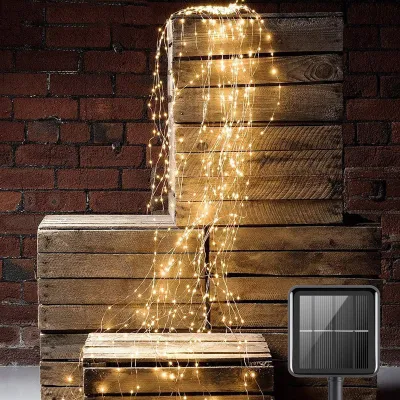
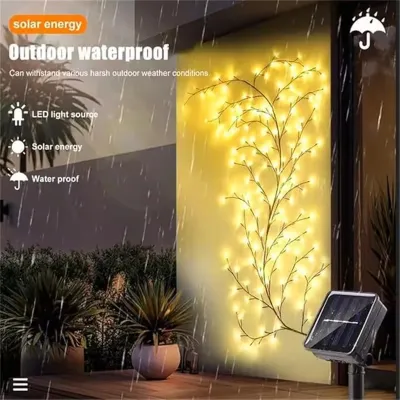
![[TOP SALES]96LED/72LED Tree Branch Lamp 8 Modes USB/Solar Powered DIY Bendable Branch Lights Willow Vine Branch Light For Home Lighting](https://img.lazcdn.com/g/ff/kf/Se0ca47501f2c4a478c80c16435696b96D.jpg_400x400q80.jpg_.webp)
Prices are valid at publication and may change. Please refer to the product page for the latest price.
In contrast, PVC-coated cables offer superior structural rigidity and tensile strength, making them ideal for hanging in straight lines across open patios or draping over heavy wooden pergolas. The thick coating also provides an extra layer of physical protection against friction and minor impacts. Choosing between these two wire types depends entirely on whether your installation requires organic shaping or structural suspension.
Beyond the wire itself, the aesthetic design of the vine plays a major role in your garden’s daytime appearance. Many solar vine lights feature integrated artificial foliage, such as faux ivy, maple, or eucalyptus leaves, which hide the copper wires and LEDs during the day. When evaluating these designs, inspect the quality of the leaf attachments; cheaply glued leaves can easily detach during strong winds or heavy rain.
Furthermore, consider how the artificial foliage affects light dispersion. Dense, opaque leaves can block or shadow the LEDs, resulting in a softer, more diffused glow, whereas bare-wire designs with exposed micro-LEDs deliver a sharper, more brilliant point of light. These visual differences are conditional preferences rather than performance flaws, so choose the style that matches your desired spatial effect.
To avoid disappointing gaps in your lighting display, you must carefully calculate the required length and LED spacing before purchasing. Manufacturers list both the total length of the string and the lighted length, which excludes the lead wire running from the solar panel to the first bulb. Ensure the lighted length matches the dimensions of the structure you plan to decorate.
LED spacing—the distance between each individual bulb—directly impacts the visual density of the light. Closely spaced LEDs (around 5 to 10 centimeters apart) create a rich, continuous ribbon of light, which is perfect for dense focal points. Wider spacing (15 centimeters or more) is better suited for subtle background ambiance over large areas, helping you cover more ground without overwhelming the space.
Essential Power and Lighting Specifications
The performance of solar vine lights depends heavily on the components housed within the solar panel assembly. The solar panel itself is responsible for converting sunlight into electrical energy, and its efficiency is determined by its material composition. Monocrystalline solar panels are highly efficient and perform better in low-light or partially shaded conditions, making them excellent for areas with frequent cloud cover. Polycrystalline panels are more common and cost-effective but require direct, unobstructed sunlight to charge effectively.

Additionally, look for solar panel housings that feature adjustable mounting brackets. An adjustable bracket allows you to tilt the panel toward the sun’s path, maximizing energy absorption throughout the day, whereas fixed panels limit your placement options. This adjustability is crucial for maintaining a consistent charge across different seasons.
Inside the solar panel housing lies the rechargeable battery, which stores the collected energy for nighttime use. When reviewing product labels, pay close attention to the battery capacity, measured in milliampere-hours (mAh), and the battery chemistry. Common options include Nickel-Metal Hydride (NiMH) and Lithium-ion (Li-ion) batteries. NiMH batteries are reliable and widely available, but they generally have a lower energy density and shorter overall lifespan than Li-ion alternatives.
A higher mAh rating indicates a larger energy storage capacity, which translates to longer runtimes. For a vine light to stay illuminated for eight to ten hours after a full day of charging, look for a battery capacity of at least 600mAh to 1200mAh, depending on the number of LEDs on the string. Always verify the battery specifications on the product label rather than relying on estimated runtime claims.
The quality of the light output is defined by lumens, color temperature, and available lighting modes. Lumens measure the brightness of the LEDs; decorative vine lights typically range from 2 to 10 lumens per bulb, prioritizing a soft accent glow over functional task lighting. Color temperature, measured in Kelvin (K), determines the warmth of the light.
Warm white lights (2700K to 3000K) create a cozy, inviting atmosphere reminiscent of traditional incandescent bulbs, while cool white lights (5000K to 6500K) offer a modern, crisp look. Many models also feature built-in controllers that allow you to switch between different lighting modes, such as steady-on, slow fade, twinkling, or flashing, giving you the flexibility to match the lighting behavior to different occasions.
While solar vine lights operate on safe, low-voltage DC power (typically 1.2V to 3.7V), it is still important to verify that the product carries recognized electrical safety certifications on its label. This ensures the internal charging circuitry and battery protection systems have been tested to prevent overheating. Never exceed the manufacturer’s stated limits if the system allows you to connect multiple strings together.
Verifying Weather Resistance and Durability Labels
Because solar vine lights are permanently installed outdoors, they must be built to withstand constant exposure to the elements. Rather than relying on vague marketing terms like “waterproof” or “weather-resistant,” you should look for standardized Ingress Protection (IP) ratings on the product packaging. An IP rating consists of two digits: the first digit (ranging from 0 to 6) indicates protection against solid objects and dust, while the second digit (ranging from 0 to 9) indicates protection against liquids.
For reliable outdoor use, a minimum rating of IP44 is required, which protects against splashing water from any direction. However, for areas exposed to heavy tropical downpours, monsoon seasons, or active garden sprinklers, look for IP65 or IP67 ratings, which ensure the housing is completely dust-tight and can withstand low-pressure water jets or temporary immersion. Verifying this rating is the most reliable way to ensure long-term outdoor safety.
In addition to water resistance, the materials used in the construction of the lights must resist degradation from sunlight and humidity. Constant exposure to ultraviolet (UV) radiation from the sun can cause cheap plastics to become brittle, crack, and discolor over time. Check the product specifications for explicit mentions of UV-resistant plastics or treated PVC coatings.
Similarly, the metal components, including the copper wiring and the screws on the solar panel housing, are highly susceptible to rust and corrosion when exposed to humid air and rain. Look for tin-coated copper wires, stainless steel hardware, and sealed silicone gaskets around the battery compartment to prevent moisture from penetrating the internal electronics.
Operating temperature limits are another critical specification to verify, especially in regions that experience extreme heat or seasonal temperature shifts. High ambient temperatures can cause solar batteries to degrade prematurely or lose charging efficiency. Review the manufacturer’s stated operating temperature range to ensure the unit can safely function during the hottest months of the year. If the product label does not specify an operating temperature range or an IP rating, it is best to treat the lights as temporary decorations rather than permanent outdoor installations.
Installation Constraints and Placement Planning
Successful installation of solar vine lights requires careful planning of both the light display and the solar panel placement. The most common point of failure for solar lights is inadequate sunlight exposure. The solar panel must be positioned in an area that receives direct, unshaded sunlight for at least six to eight hours a day.
When planning the placement, consider seasonal shadow shifts; a spot that is fully sunny in the dry season may be shaded by growing tree canopies or neighboring structures during other times of the year. If your desired display area is heavily shaded—such as under a thick garden arbor or a covered patio—choose a vine light model that features a long lead cable. This allows you to mount the solar panel in a sunny, open area while running the decorative vine into the shaded zone.
When mounting the vine lights, select securing methods that protect both the lights and your garden structures. Avoid using metal staples or nails directly over the wires, as these can easily pinch or cut through the protective insulation, causing short circuits or exposing the copper to moisture. Instead, use UV-stabilized plastic zip ties, insulated cable clips, or removable outdoor adhesive hooks.
If you are wrapping the lights around living tree branches or woody vines, leave a small amount of slack in the wiring. Wrapping the lights too tightly can restrict the plant’s natural growth or cause the wire to snap as the branches expand over time. If your installation requires working at heights—such as draping lights over a high pergola or roofline—always prioritize safety by using a stable ladder and having a second person assist you. Before handling any components, ensure the solar controller is switched to the “off” position to isolate the power.
Cable management is essential for maintaining safety and protecting your investment. Plan your wire routes so that the lead cable running from the solar panel to the vine is kept flat against walls, posts, or ground borders. Loose, dangling wires present a significant tripping hazard for family members and guests, and they are easily damaged by lawnmowers, weed eaters, or curious pets.
Additionally, ensure that any electrical connections or joiner plugs are positioned off the ground and away from low-lying areas where rainwater is likely to pool. Elevating these connections and wrapping them in outdoor electrical tape provides an extra layer of defense against water ingress. If you must run cables across pathways, use heavy-duty rubber cable ramps to protect the wires from foot traffic.
Building Your Shortlist: A Pre-Purchase Evaluation Checklist
To make an informed buying decision, you should systematically compare your top candidates against your specific installation requirements. Start by defining the primary use case for your solar vine lights. For example, wrapping a large garden tree requires a highly flexible copper wire with a long lighted length and high battery capacity to sustain a large number of LEDs. Conversely, decorating a small patio railing may only require a shorter, PVC-coated cable with a moderate battery capacity.
By matching the physical and electrical specifications of the lights to the physical demands of your space, you can avoid purchasing underpowered or fragile models. Creating a simple comparison matrix is an effective way to evaluate different products side-by-side. Use the template below to organize the specifications of the models you are considering:
| Feature / Specification | Candidate A | Candidate B | Candidate C |
|---|---|---|---|
| Lighted Length | e.g., 10 meters | e.g., 5 meters | e.g., 15 meters |
| IP Rating | e.g., IP65 | e.g., IP44 | e.g., IP65 |
| Battery Capacity | e.g., 800mAh | e.g., 600mAh | e.g., 1200mAh |
| Lighting Modes | e.g., 8 modes | e.g., 2 modes | e.g., 8 modes |
| Price Range | ₱400 – ₱600 | ₱250 – ₱350 | ₱800 – ₱1,200 |
Before finalizing your purchase, take the time to verify the manufacturer’s warranty terms and return policies. A reputable manufacturer should offer at least a six-month to one-year warranty on outdoor solar products, which provides peace of mind against early component failures.
Finally, cross-reference user reviews on your chosen ecommerce platform, paying close attention to feedback regarding real-world battery degradation and weather resistance. Look for reviews from buyers who have used the lights for several months, as these provide the most accurate indication of how well the materials and batteries hold up against continuous outdoor exposure.
Frequently Asked Questions (FAQ)
How do I maintain the solar panel to ensure maximum charging efficiency?
To keep your solar vine lights operating at peak efficiency, you must regularly clean the solar panel’s protective cover. Over time, dust, pollen, bird droppings, and airborne grime can accumulate on the surface, blocking sunlight and significantly reducing the panel’s charging capacity. Clean the panel using a soft, damp microfiber cloth and plain water; avoid using abrasive scrubbers, harsh chemical cleaners, or dry cloths, as these can scratch the plastic or glass surface and permanently scatter incoming light. While cleaning, inspect the surrounding area for overgrown foliage or new branches that may have grown over the panel, and trim them back to ensure the panel receives unobstructed sunlight throughout the day.
Can I replace the batteries in solar vine lights when they stop holding a charge?
Whether you can replace the batteries depends entirely on the design of the solar panel housing. Inspect the back of the housing to see if it features a screw-secured battery compartment or if the unit is completely sealed and glued shut. If the compartment is secured with screws, you can easily open it to replace the old battery once it stops holding a charge, which typically occurs after one to two years of daily use. When purchasing a replacement battery, you must match the original battery’s specifications exactly. Check the label for the correct voltage (usually 1.2V for NiMH or 3.7V for Li-ion), chemistry type, physical size (such as AA or AAA), and ensure the capacity (mAh) is equal to or slightly higher than the original for optimal performance.
Community discussion
Share your experience or ask a question. Comments are reviewed before publication.