
Creating a dedicated reading corner in a Filipino home is an excellent way to carve out a personal sanctuary. Whether your reading nook is tucked into a cozy corner of a bustling condominium or situated next to a window in a suburban house, proper lighting is the most critical element for comfort. While general ceiling fixtures or natural daylight can illuminate a room, they are rarely sufficient for focused reading. Standard ambient lighting often casts distracting shadows or fails to provide the concentrated brightness needed to read small text clearly without straining your eyes.
A dedicated floor lamp serves as the ideal solution, offering targeted task lighting that can be positioned exactly where you need it. However, finding the right floor lamp involves more than simply matching your living room decor. You must consider how the light interacts with your eyes, how the lamp’s physical design fits your furniture layout, and how its materials and electrical components perform under local environmental conditions. High humidity, typical tropical temperatures, and specific household layouts all play a role in determining which lamp will provide the most comfortable and durable reading experience.
Key Lighting Requirements for a Reading Corner
To understand what makes a floor lamp suitable for reading, it is essential to distinguish between ambient lighting and task lighting. Ambient lighting is designed to illuminate an entire room evenly, usually by bouncing light off walls and ceilings. While this creates a pleasant overall atmosphere, the light disperses over distance, losing the intensity required for close-up visual tasks. Task lighting, on the other hand, directs a concentrated beam of light onto a specific area, such as the pages of a book or the screen of an e-reader. This focused illumination increases contrast, making text stand out sharply against the page and significantly reducing the effort your eyes must make to decode letters.
Products mentioned in this guide
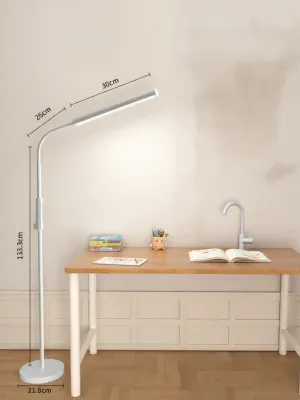

![[Free Bulb] Floor Lamp Living Room Bedroom Bedside Lamp Modern Creative Fabric Decorati Study Floor Light](https://img.lazcdn.com/g/p/578da9679681a8de06d88bb423e4a152.jpg_400x400q80.jpg_.webp)
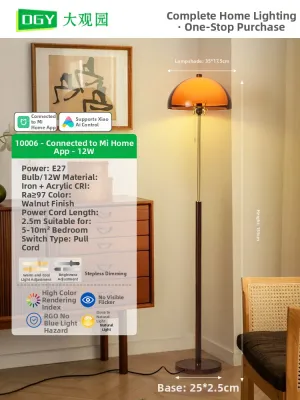
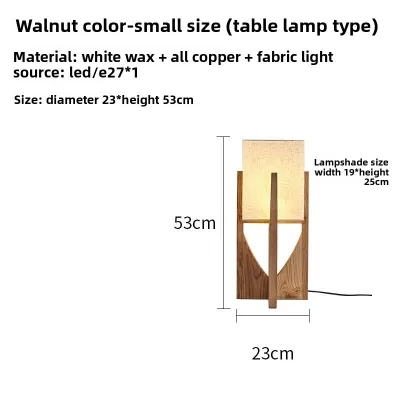
Prices are valid at publication and may change. Please refer to the product page for the latest price.
When evaluating light quality, the relationship between lumens and wattage is a crucial starting point. Wattage measures the amount of electrical power a bulb consumes, whereas lumens measure the actual amount of visible light emitted. In the past, when incandescent bulbs were the standard, a higher wattage automatically meant a brighter light. With modern energy-efficient LED technology, a bulb can produce high lumen output while consuming very little wattage. For a comfortable reading environment, you should focus entirely on the lumen rating. A bulb that is too dim forces your eye muscles to contract continuously to focus, leading to headaches and fatigue. Conversely, an excessively bright bulb can cause harsh glare, especially when reflecting off high-gloss paper or digital screens.
Color temperature, measured in Kelvin (K), is another vital factor that influences both eye comfort and your body’s natural circadian rhythm. Light sources generally fall into three categories: warm white (2700K to 3000K), cool white (3500K to 4100K), and daylight (5000K to 6500K). Warm white light emits a soft, yellow hue that mimics the glow of a sunset, creating a cozy and relaxing environment. This temperature is highly recommended for evening reading because it does not interfere with the production of melatonin, the hormone that helps you fall asleep. Cool white and daylight temperatures emit a crisp, blue-toned light that stimulates alertness and enhances focus, making them excellent for daytime study or reading highly detailed technical documents.
Finally, the Color Rendering Index (CRI) of your light source determines how accurately colors are revealed compared to natural sunlight. CRI is measured on a scale from 0 to 100, with higher numbers indicating more accurate color reproduction. For reading, a high CRI (ideally 90 or above) is highly beneficial. When light has a low CRI, the contrast between black text and white or cream-colored paper can appear muddy or faded. A high-CRI light source ensures that text remains crisp and sharp, which minimizes visual fatigue during long reading sessions and allows you to enjoy the vibrant illustrations in art books or magazines exactly as the creators intended.
Essential Features to Look for in Reading Floor Lamps
Physical adjustability is one of the most important features to look for when selecting a reading floor lamp. Because everyone has a unique reading posture—whether sitting upright in an armchair, reclining on a sofa, or lying down—a fixed-position lamp can limit your comfort. Look for lamps that offer flexible goosenecks, multi-jointed swing-arms, or telescopic poles. A gooseneck allows you to bend and twist the lamp head in any direction, while a swing-arm lets you pull the light closer to your book and push it away when you are done. Telescopic poles allow you to adjust the overall height of the lamp, ensuring that the light source remains below your eye level to prevent direct glare while still illuminating your reading material.

The stability and build quality of the lamp’s base are equally critical, particularly in active households. A floor lamp with a lightweight or poorly balanced base can easily tip over if bumped by children, pets, or even a strong breeze from an open window or an oscillating stand fan. When browsing options, check the weight and dimensions of the base. Heavy materials like solid steel, cast iron, or marble provide a low center of gravity, ensuring the lamp remains upright even when the adjustable arm is fully extended. Additionally, consider the footprint of the base; it should be compact enough to slide under or behind your furniture if you have limited floor space, without compromising the lamp’s overall stability.
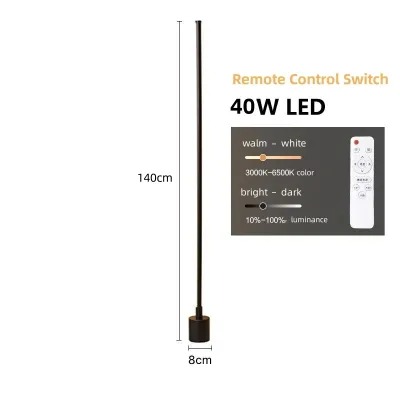
To make your reading corner truly versatile, look for floor lamps equipped with dimming capabilities. Natural light levels change constantly throughout the day, meaning a brightness level that feels comfortable at noon may feel blindingly bright at midnight. Step-less dimming or multi-level dimmer switches allow you to adjust the light output to match the ambient conditions of the room. This feature is particularly useful if your reading corner is located in a shared living space, as it allows you to dim the light to a soft glow that won’t disturb others who might be watching television or resting nearby.
Matching Lamp Styles to Your Reading Setup
The layout of your furniture and your preferred reading position should guide your choice of lamp style. Arc floor lamps, characterized by a long, sweeping neck that curves upward and outward from a heavy base, are excellent for deep seating arrangements. If your reading spot is a deep sectional sofa, a large recliner, or a bed where a traditional lamp base cannot sit close enough, an arc lamp can bridge the gap. The curved neck allows the light source to hang directly overhead, delivering focused task lighting without requiring a side table or taking up valuable floor space right next to your seat.
For those who prefer a classic, dedicated reading chair paired with a small side table, swing-arm and pharmacy-style lamps are highly effective choices. Pharmacy lamps feature a low-profile metal shade that acts as a physical barrier, directing all light downward onto your page while shielding your eyes from direct glare. When combined with a swing-arm mechanism, these lamps offer exceptional control. You can easily adjust the horizontal and vertical position of the light to match your posture, making them a favorite for readers who spend hours immersed in novels or study materials.
If you are working with a compact reading corner or a small studio apartment, space-saving designs are essential. Torchiere lamps with integrated reading attachments offer an excellent dual-purpose solution. The main light source of a torchiere points upward, bouncing light off the ceiling to provide soft, indirect ambient illumination for the entire room. Extending from the middle of the pole is a secondary, highly adjustable reading arm that provides focused task lighting exactly where you sit. This combination allows you to save floor space by using a single fixture to meet both your general room lighting and dedicated reading needs.
How to Evaluate Product Specifications and Labels
When shopping for a floor lamp, either at local lighting stores or through online marketplaces, it is important to look beyond aesthetic appeal and carefully evaluate the technical specifications. One useful framework is to compare the lamp’s lumen output against the physical distance between the light source and your reading material. Because light intensity decreases rapidly as the distance increases, a lamp that sits further away from your chair will require a higher lumen output to provide the same level of readability on your page. If you choose a lamp that positions the bulb close to your shoulder, a lower-lumen bulb will be more than sufficient and will help prevent over-illumination.
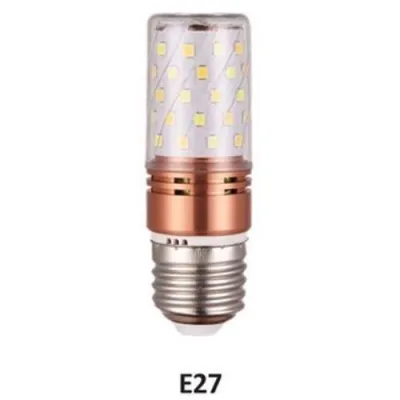
Always verify bulb compatibility and maximum wattage limits before making a purchase. In the Philippines, standard screw bases, such as E27, are the most common and widely available, making it easy to find replacement bulbs. Every lamp fixture has a maximum wattage rating printed on the socket or detailed in the user manual. It is critical never to install a bulb that exceeds this limit, especially if you are using older incandescent or halogen bulbs, as the excess heat can melt the socket, damage the internal wiring, and create a serious fire hazard. Even when using low-wattage LED bulbs, staying within the manufacturer’s specified limits ensures the longevity of the fixture.
Another key decision is choosing between built-in LED lamps and fixtures with replaceable bulbs. Integrated LED floor lamps often feature incredibly sleek, minimalist designs because they do not require a bulky traditional socket. These lamps are highly energy-efficient and boast long operational lifespans, but once the integrated LED eventually fails, the entire fixture must usually be replaced. On the other hand, lamps with replaceable bulb sockets offer greater long-term flexibility. They allow you to easily swap out bulbs if you want to change the color temperature, upgrade to a smart bulb, or replace a burned-out light. In tropical climates where ambient heat and humidity can accelerate wear on electronic components, a replaceable bulb design often provides better long-term cost efficiency and easier maintenance.
Safety and Placement Checks for Your Space
Integrating a floor lamp into your reading corner requires careful attention to safety and placement to prevent physical and electrical hazards. Cord management is a primary concern, especially in compact spaces or high-traffic areas. Loose, trailing cords can easily become tripping hazards for family members. To keep your space safe, route the power cord along the baseboards of your walls, secure them with adhesive cable clips, or tuck them neatly behind heavy furniture. Avoid running cords under rugs or carpets; continuous foot traffic can wear down the protective insulation over time, exposing live wires and creating a hidden fire hazard.
Electrical compatibility is another critical factor to verify, particularly when purchasing imported lamps online. The standard electrical supply in the Philippines is 220V at 60Hz. Always check the product label or specifications to ensure the lamp is rated for 220V. Plugging a lamp designed solely for 110V environments into a local outlet without a proper transformer can cause immediate electrical failure, ruin the lamp, or trigger a short circuit. Additionally, look for recognized safety certifications, such as the Import Commodity Clearance (ICC) sticker or the Philippine Standard (PS) mark, which verify that the product has undergone rigorous safety testing and complies with local electrical standards.
Finally, consider the heat emitted by your chosen light source and its proximity to surrounding objects. Traditional incandescent and halogen bulbs generate substantial heat during operation. If you use these types of bulbs, ensure the lamp head is positioned far away from flammable materials such as curtains, throw blankets, cushions, or wooden furniture. If your reading corner is located near an air conditioning vent or an electric fan, make sure the lamp is stable enough to withstand the constant airflow. Continuous vibration or swaying can loosen electrical connections inside the lamp over time, potentially leading to flickering lights or short circuits.
Frequently Asked Questions (FAQ)
How many lumens do I need for reading?
For comfortable reading, a light source that delivers between 450 and 800 lumens to your page is generally recommended. However, the ideal brightness depends on your age and the existing ambient light in the room. As we age, the lenses of our eyes naturally yellow and admit less light, meaning older readers often require higher contrast and brighter light—closer to 800 lumens or more—to read comfortably without strain. If your reading corner already has moderate ambient light, a lower-lumen task lamp is sufficient. If the corner is completely dark, you will need a brighter, adjustable lamp to compensate for the lack of background illumination.
Is warm or cool light better for reading at night?
Warm white light (2700K to 3000K) is much better for reading at night. Cool, blue-toned light (5000K to 6500K) stimulates the brain and suppresses the production of melatonin, which can disrupt your natural sleep cycle and make it difficult to fall asleep after reading. Warm light minimizes eye strain in low-light environments and helps your body transition into a state of relaxation. If you use your reading corner during both the day and the night, consider choosing a floor lamp with adjustable color temperature. This allows you to select a cool, energizing light for daytime focus and switch to a soft, warm light for evening relaxation.
Community discussion
Share your experience or ask a question. Comments are reviewed before publication.