
Selecting the best tabletop fountain for an indoor space in the Philippines requires balancing visual appeal, soothing acoustics, and practical maintenance. Because indoor environments vary from breezy, open-air living rooms to tightly sealed, air-conditioned offices, there is no single option that suits every setting. The ideal water feature is one that fits securely on your chosen surface, operates at a comfortable sound level, and matches your willingness to perform routine upkeep. By evaluating the physical dimensions, material properties, and electrical requirements of different designs, you can select a fountain that brings a sense of natural tranquility to your home or workspace without introducing unwanted moisture or noise.
Key Factors to Consider When Choosing an Indoor Tabletop Fountain
Before purchasing a tabletop fountain, you must carefully evaluate its physical specifications to ensure it integrates seamlessly into your indoor environment. The first consideration is the physical footprint and total weight of the unit. A fountain that appears compact online may become surprisingly heavy once filled with water. You must verify the load capacity of the table, shelf, or desk where you plan to place it. Lightweight materials like resin are highly portable and suitable for delicate glass desks, whereas solid stone or thick ceramic models require sturdy wooden or metal support structures to prevent bowing or structural failure over time.
Pump noise and water flow adjustability are equally critical, especially if you intend to place the fountain in a quiet area such as a bedroom, study, or executive office. A high-quality fountain should feature a submersible pump with adjustable flow control. This allows you to fine-tune the water speed, balancing the soothing sound of trickling water against the mechanical hum of the motor. In smaller, quieter rooms, a loud pump motor can easily overpower the gentle sound of water, turning a relaxing feature into a source of distraction. Look for pumps that specify quiet operation and allow you to submerge them fully to muffle mechanical vibrations.
Products mentioned in this guide
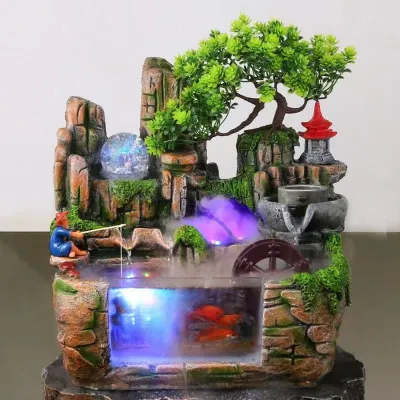
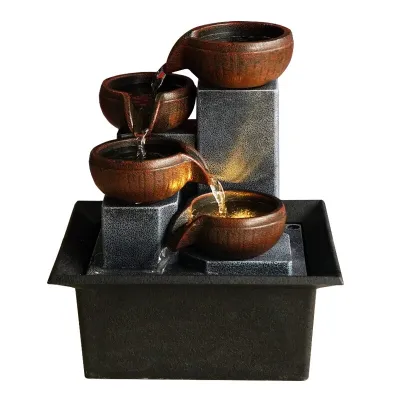
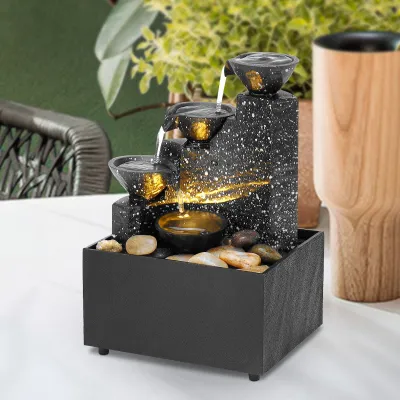
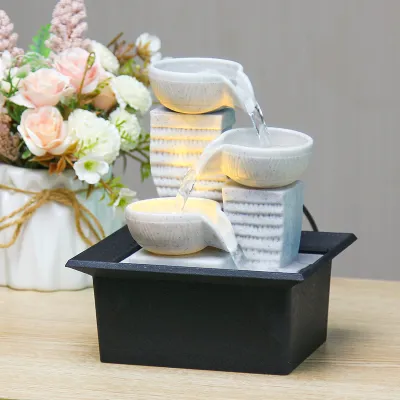
Prices are valid at publication and may change. Please refer to the product page for the latest price.
Material durability determines how well the fountain resists wear, water damage, and mineral buildup over years of use. Synthetic resin is a popular choice because it can be molded into intricate shapes, mimics natural stone or wood, and resists cracking. However, high-quality glazed ceramics and natural stone offer superior weight, stability, and resistance to fading. When selecting a material, consider how easy it will be to scrub clean. Intricate, highly textured surfaces may trap dust and algae more easily than smooth, glazed ceramic or polished metal, requiring more frequent and meticulous maintenance.
Finally, power source requirements and cord management demand careful planning. Most indoor tabletop fountains rely on corded electricity to keep the pump running continuously. You must ensure that the power cord is long enough to reach your nearest wall outlet without stretching across walkways, which creates a tripping hazard. If you prefer a clean look without visible wires, you might consider battery-operated models, though these typically require frequent battery replacements or recharging and may not support continuous, long-term operation. For corded models, planning how to conceal the wire behind furniture or along baseboards is essential for maintaining a clean, uncluttered aesthetic.
Popular Tabletop Fountain Styles for Different Indoor Settings
Tabletop fountains come in a diverse array of designs, each offering a distinct visual presence and acoustic profile. Matching the style of your fountain to the existing decor of your room ensures a cohesive look while providing the specific sensory experience you desire.

Zen and Minimalist Designs
Zen and minimalist tabletop fountains focus on clean lines, organic materials, and understated elegance. These designs frequently incorporate natural elements such as bamboo, smooth river stones, and matte-finished ceramics. The water flow in Zen fountains is typically gentle and quiet, designed to create a subtle, rhythmic trickling sound rather than a loud splash. This makes them exceptionally well-suited for meditation corners, yoga spaces, bedrooms, or quiet reading nooks where deep relaxation and focus are the primary goals.
When placing a Zen fountain, particularly those made of natural bamboo or unglazed clay, you must take precautions to protect nearby surfaces. While these designs are generally low-splash, minor splattering can still occur over time due to air currents or slight shifts in water alignment. Placing these fountains on sensitive wooden furniture or near paper books is not recommended unless you use a protective barrier. A simple stone tray or a waterproof mat underneath the fountain can safeguard your belongings while preserving the organic, minimalist aesthetic of the setup.
Modern and Contemporary Features
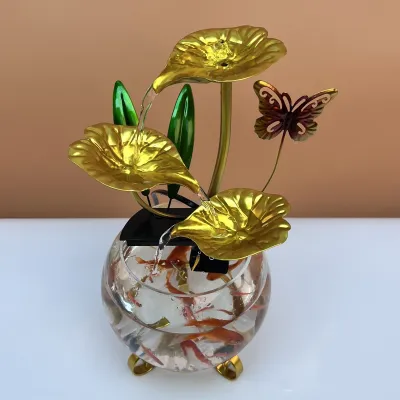
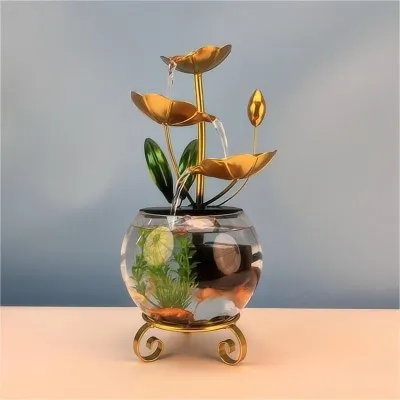
Modern and contemporary tabletop fountains utilize sleek, industrial materials such as stainless steel, tempered glass, and polished dark resins. These models often feature geometric shapes, abstract sculptures, and integrated LED lighting that illuminates the moving water from below. The visual contrast of water flowing over metallic or glass surfaces creates a striking focal point that complements contemporary living rooms, corporate reception areas, or modern home offices.
While integrated LED lights add a dramatic flair, you should carefully consider their placement and brightness. In dimly lit rooms or spaces where you frequently look at computer screens, bright or cycling LED lights can cause distracting glare and light pollution. If you plan to use the fountain in a bedroom or a media room, look for models with independent light switches or warm, dimmable LEDs. This ensures that the visual enhancements of the fountain do not interfere with your sleep quality or screen visibility during evening hours.
Classic and Nature-Inspired Tiers
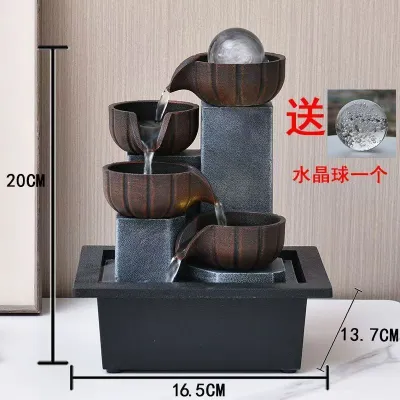
Classic and nature-inspired fountains often feature multi-tiered cascades, faux-stone rock formations, or miniature woodland scenes. These designs are engineered to create a more pronounced, cascading water sound as the liquid drops from one level to the next. The larger visual footprint and richer acoustic output of tiered fountains make them excellent centerpieces for spacious entryways, dining room buffets, or sunrooms filled with indoor plants.
Because tiered fountains hold a larger volume of water and feature multiple falling streams, they are significantly heavier and more prone to splashing than minimalist designs. It is absolutely vital to place these fountains on sturdy, perfectly level surfaces. An uneven surface can cause the water to flow disproportionately to one side, leading to uneven wear on the pump, dry spots on the cascading tiers, and excessive splashing onto surrounding floors or walls. Regularly checking the level of the fountain during installation and after cleaning will keep the water flowing smoothly and safely.
Essential Maintenance and Safety for Indoor Water Features
Proper maintenance is the key to ensuring your indoor tabletop fountain remains a beautiful and hygienic addition to your home. Over time, standing water can attract dust, promote algae growth, and lead to mineral deposits that clog the pump. To prevent these issues, establish a routine cleaning schedule. Every two to four weeks, turn off the fountain, empty the water completely, and wipe down all surfaces with a soft cloth and a mild, non-toxic cleaning solution, such as a mixture of white vinegar and warm water. Avoid harsh chemical cleaners, as they can damage the fountain’s finish and leave behind residues that may harm the pump or release unpleasant odors into your indoor air.
Managing water levels is equally important for protecting the fountain’s mechanical components. Submersible pumps rely on the surrounding water to cool their motors during operation. If the water level drops too low, the pump will draw in air, causing it to run hot and eventually burn out. In air-conditioned rooms, where the air is dry and circulation is high, water evaporates much faster than in naturally ventilated spaces. You should check the water level daily and top it off as needed to ensure the pump remains fully submerged. Never allow the pump to run dry, as even a few hours of dry operation can permanently damage the motor.
Electrical safety must always be a primary concern when dealing with water features. Because tabletop fountains combine water and electricity in a compact space, you must take specific precautions to prevent electrical hazards. Always inspect the power cord for signs of wear, fraying, or damage before plugging it in. When routing the cord to the wall outlet, ensure it hangs in a “drip loop”—a low curve in the cord below the level of the outlet. This prevents any stray water droplets that might run down the cord from reaching the electrical socket. If you need to perform any maintenance, clean the fountain, or adjust the pump, always isolate the power by unplugging the unit from the wall first.
Finally, protecting the underlying furniture from moisture damage is a crucial step that many owners overlook. Even the most well-designed, splash-free fountains can experience minor condensation, slow leaks, or accidental spills during refilling. To safeguard your wooden desks, veneered shelves, or painted tables, always place a waterproof barrier beneath the fountain base. A decorative ceramic tray, a silicone mat, or a sealed stone platter can catch any stray moisture before it seeps into the wood grain, preventing unsightly water rings, warping, or mold growth on your valuable furniture.
Pre-Purchase Checklist for Homes and Offices in the Philippines
Before finalizing your purchase from an online marketplace or a local home decor store, review this practical checklist to ensure the fountain is fully compatible with your space and local utility standards.
- Voltage and Plug Compatibility: Verify that the fountain's pump is rated for the standard Philippine electrical system of 220V to 230V at 60Hz. Importing a fountain designed for 110V systems without using a step-down transformer will quickly destroy the pump motor and pose a serious fire hazard. Additionally, check the plug type (typically Type A or Type B) to ensure it fits your wall outlets without requiring unstable adapters.
- Surface Load and Footprint: Measure the exact dimensions of the shelf, desk, or side table where the fountain will sit. Calculate the total weight of the fountain when fully filled with water. Ensure the furniture can support this weight continuously without sagging or wobbling.
- Warranty and Replacement Parts: Check the retailer's return policy and the manufacturer's warranty, particularly concerning the electric pump. Submersible pumps are mechanical devices that may eventually wear out; choosing a brand that offers easily sourceable replacement pumps or standard-sized fittings will save you from having to discard the entire fountain if the original pump fails.
- Budgeting and Shipping: Set a realistic budget in ₱ that accounts for both the purchase price and potential shipping fees. Because high-quality fountains made of ceramic, stone, or heavy resin are fragile and heavy, shipping costs from online sellers can be substantial. Ensure the seller uses adequate protective packaging to prevent cracking or breakage during transit.
Frequently Asked Questions (FAQ)
Do indoor tabletop fountains increase room humidity significantly?
Indoor tabletop fountains have a very minimal impact on overall room humidity because of their small surface area and low water volume. In naturally ventilated, humid tropical environments, the change in humidity is virtually undetectable. However, in closed, heavily air-conditioned offices or bedrooms where the air conditioning constantly strips moisture from the air, a tabletop fountain can provide a very localized, mild humidifying effect. This minor increase in moisture can help soothe dry nasal passages or skin in your immediate seating area, but it is not substantial enough to cause mold growth or damage to your walls.
Can I use distilled water to prevent hard water stains?
Yes, using distilled or demineralized water is highly recommended by manufacturers to extend the lifespan of your tabletop fountain. Tap water often contains dissolved minerals like calcium and magnesium. As water evaporates from the fountain, these minerals are left behind, creating unsightly white crusts on the fountain surfaces and clogging the internal components of the pump. While filtered water is better than tap water, distilled water completely eliminates mineral buildup, reduces the frequency of deep cleanings, and prevents the pump motor from seizing due to scale accumulation.
Community discussion
Share your experience or ask a question. Comments are reviewed before publication.