
To make a small room feel significantly more spacious without overwhelming the layout, a full body mirror should ideally cover at least half the height of the tallest user and occupy approximately 30% to 50% of the active wall width. For most spaces, this translates to a mirror that is at least 120 to 150 centimeters tall and 60 to 90 centimeters wide. Selecting these proportions creates a convincing “false window” effect, bouncing natural light deep into the room while preserving enough bare wall space to prevent a cramped, cluttered appearance.
Achieving the perfect balance requires looking beyond simple aesthetics. In compact living spaces, such as urban apartments and condominiums in Metro Manila, every square centimeter of floor and wall space must be carefully managed. By understanding how a mirror’s physical dimensions interact with light, furniture, and room architecture, you can easily transform a tight room into an airy, inviting sanctuary.
Understanding Mirror Proportions and Room Scale
Every object in a small room carries visual weight, which refers to how much attention it demands from the eye. A full body mirror has a unique form of visual weight because it does not just occupy physical space; it also duplicates the space in its reflection. If a mirror is too large for the wall it occupies, it can create a disorienting double-image effect that makes the room feel chaotic rather than expansive.
Products mentioned in this guide
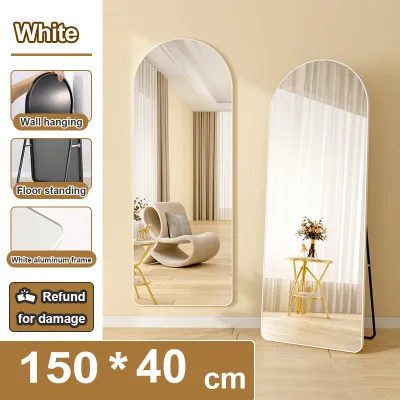
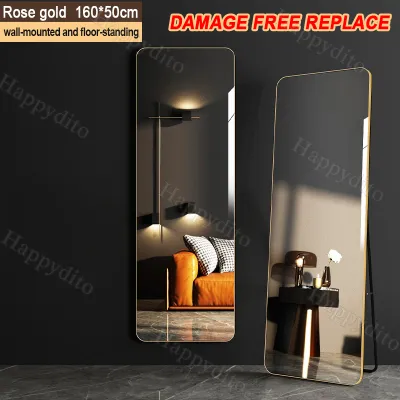
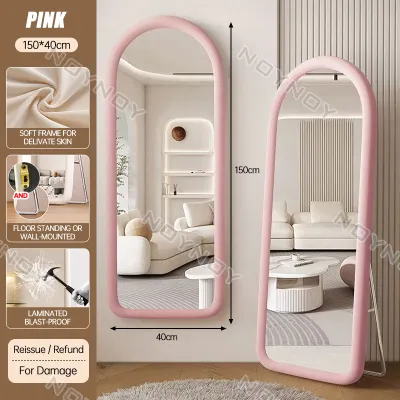
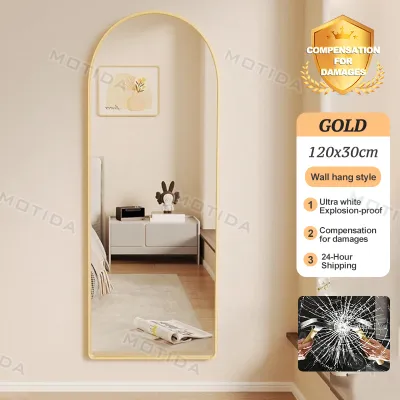
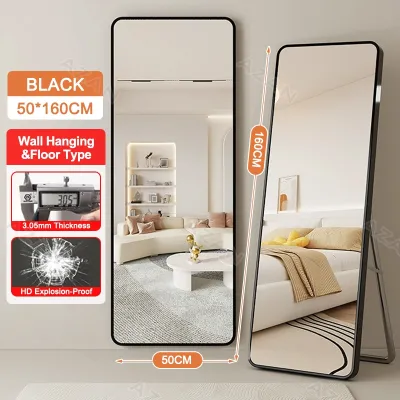
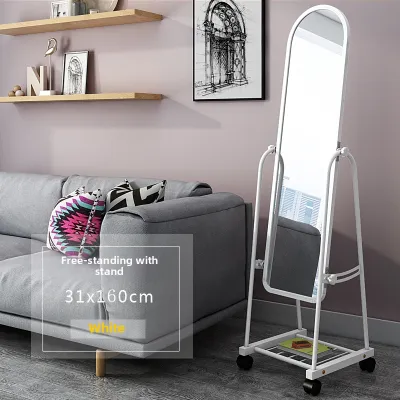

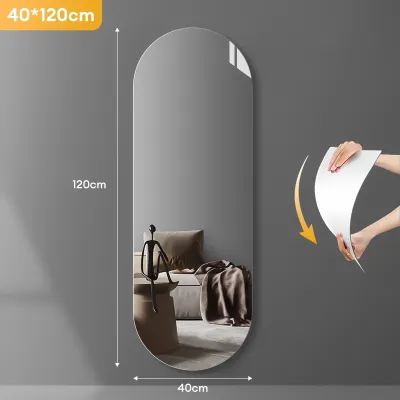
Prices are valid at publication and may change. Please refer to the product page for the latest price.
To maintain a balanced scale, you must preserve adequate negative space around the mirror. Negative space refers to the empty wall area surrounding the frame. Leaving at least 15 to 30 centimeters of bare wall on the sides of a wall-mounted mirror provides a visual border. This border anchors the mirror to the wall, signaling to the brain that the reflection is a deliberate design feature rather than an accidental architectural error.
Furthermore, the mirror must harmonize with existing furniture and walkways. Placing a massive, wide mirror directly adjacent to a bulky wardrobe or a low-profile sofa can make the room feel lopsided. The mirror should align with the clean lines of your furniture, acting as a complementary vertical element that draws the eye upward rather than competing with nearby storage units or seating.
There is a distinct threshold where a mirror ceases to expand a room and begins to clutter it. If a mirror is too small, it chops up the reflection, forcing the eye to focus on the frame rather than the depth of the room. Conversely, if a mirror is oversized and positioned to reflect a busy clothing rack, an open pantry, or a cluttered desk, it simply doubles the visual noise, making the room feel twice as crowded.
Calculating the Ideal Dimensions for Your Space
Determining the right dimensions for your full body mirror involves a straightforward calculation based on the height of the people using it and the physical limits of the room. To see a true, head-to-toe reflection, the reflective glass must be at least half the height of the tallest person in the household. For an individual who stands 180 centimeters tall, the mirror glass itself must be at least 90 centimeters tall, provided the top of the mirror is hung slightly above their eye level.

If you plan to use a floor-leaning mirror, you must adjust your height calculations. Because a leaning mirror sits at a slight backward angle, the perspective compresses the vertical reflection. To compensate for this tilt and ensure you do not cut off your head or feet when standing close, look for a taller frame, typically between 150 and 180 centimeters in height.
Width is equally important when creating the illusion of an open room. A width of 60 to 90 centimeters is generally the most effective range for small spaces. This width is substantial enough to capture a wide angle of the room, mimicking the appearance of a doorway or a window leading into another area. Anything narrower than 50 centimeters can feel like a restrictive vertical strip, which fails to create a convincing sense of depth.
Before purchasing, always measure the physical constraints of your specific wall. Take note of baseboards, skirting boards, light switches, electrical outlets, and door swings. In many modern condominiums, electrical conduits or structural columns can limit where a mirror can sit flush against the wall. Ensure your target dimensions allow the mirror to be centered or positioned safely away from high-traffic doorways where it could be easily bumped.
Placement and Installation Strategies for Maximum Illusion
How you install your mirror directly affects both its safety and its ability to make a room feel larger. Leaning floor mirrors offer a relaxed, contemporary look and can be moved easily, but they do require a small amount of floor space. The base of a leaning mirror must sit approximately 15 to 30 centimeters away from the wall to maintain a safe angle, which can restrict movement in narrow hallways or tight bedroom walkways.
Wall-mounted mirrors, on the other hand, keep the floor completely clear, which is highly beneficial for maximizing usable square footage. To get the most out of this setup, mount the mirror on a wall that is directly opposite or adjacent to a window. This placement allows the mirror to capture incoming natural light and reflect the outdoor view, instantly brightening dark corners and making the room feel twice as bright.
Because large full body mirrors are heavy, safety must be your primary concern during installation. In the Philippines, residential walls are commonly constructed from solid concrete, hollow concrete blocks, or lightweight drywall partitions. Mounting a heavy mirror on concrete requires a masonry drill bit, plastic wall plugs (commonly known as tox plugs), and heavy-duty screws that can support the weight.
If you are mounting onto drywall, you must locate the wooden or metal studs behind the board using a stud finder; do not rely on standard plastic drywall anchors for heavy glass. If your mirror features integrated LED backlighting, always verify the electrical certification, ensure the voltage matches the standard 220V local grid, and isolate the power source before connecting any wiring. For any high-altitude mounting, heavy suspended loads, or complex electrical connections, always consult a qualified professional to ensure a secure installation.
Frame Styles and Visual Weight in Small Spaces
The frame of a mirror acts as its boundary, and the style you choose can either enhance or disrupt the illusion of space. Frameless mirrors or those with ultra-thin metal frames (such as slim aluminum or matte black steel) are highly effective for small rooms. Because there is no thick border to stop the eye, the reflection blends seamlessly with the surrounding wall, maximizing the perceived depth.
Thick, dark, or highly ornate wooden frames carry immense visual weight. While they can serve as beautiful statement pieces, they also draw attention to the physical limits of the mirror, reminding the viewer that they are looking at a wall ornament rather than an extension of the room. If you prefer a framed aesthetic, opt for light wood tones, white finishes, or thin metallic borders that reflect light rather than absorbing it.
Additionally, consider the environmental conditions of your room when selecting frame materials. High humidity levels, which are common in tropical climates, can cause untreated wood frames to warp, split, or develop mold over time. Cheap metal frames may also rust if exposed to moisture near bathrooms or open windows. Look for moisture-resistant backings, treated timbers, or anodized aluminum frames to ensure your mirror remains beautiful and structurally sound for years to come.
Frequently Asked Questions (FAQ)
Can a mirror be too big for a small room?
Yes, a mirror can overwhelm a small room if it lacks sufficient negative space around its edges or if it directly reflects areas of high clutter. When a mirror covers an entire wall without any breathing room, it can cause visual confusion and make the space feel chaotic rather than open. Always aim to balance the mirror’s dimensions so it complements the scale of your existing furniture and wall space.
Does the shape of the mirror affect how spacious the room feels?
Yes, the shape of a mirror influences how the eye moves across a room. Tall, rectangular, or arched mirrors draw the eye upward, emphasizing vertical space and making low ceilings feel higher. Round or oval mirrors are excellent for softening the sharp angles of a compact room and work beautifully over low furniture, though they generally offer slightly less reflective surface area for a full-body view compared to rectangular designs.
Community discussion
Share your experience or ask a question. Comments are reviewed before publication.