
Choosing the right Halloween projector light requires balancing your aesthetic goals with the physical realities of your space. The ideal fixture depends on whether you are decorating a spacious outdoor garden, a compact concrete driveway, or a cozy indoor living room. For sharp, long-distance starry effects that cover wide areas, a laser projector is highly effective. If you prefer detailed, colorful spooky scenes like dancing skeletons or floating pumpkins at closer range, an LED slide projector is the better choice. Evaluating your environment and understanding these core technologies will help you select a safe, durable, and visually striking display.
Evaluate Your Space and Lighting Conditions
Before purchasing any holiday lighting, you must diagnose the physical characteristics of your target projection surface. Measure the distance from where you plan to mount the projector to the wall or garage door. A flat, light-colored concrete wall or a light-colored garage door provides an ideal canvas, reflecting images clearly with minimal distortion. If you plan to project onto uneven foliage, such as garden hedges or large tropical trees, keep in mind that detailed images will lose their shape. For these textured surfaces, simple light patterns or starry laser points work much better than complex character slides.
Ambient light pollution is another critical factor that dictates the required brightness of your projector. Streetlights, municipal lampposts, or bright security lights from neighboring houses can easily wash out projected images. If your front yard is exposed to high ambient light, you will need a projector with a higher light output, or you must position the device closer to the target wall to concentrate the beam. Conversely, a pitch-dark suburban yard or a shaded indoor room allows lower-wattage projectors to shine brightly without losing detail.
Products mentioned in this guide
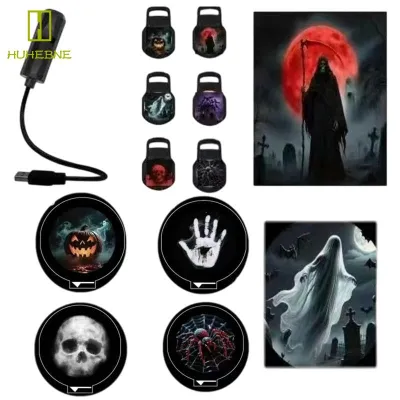
![[pantorastar] Halloween Projector With Stand Adjustable Curtain Pattern Window Projection Lamp For Halloween Christmas Outdoor Home Decor Us Plug 100‑240v](https://img.lazcdn.com/g/p/9d79ee941e30e4612277846d62a630ae.jpg_400x400q80.jpg_.webp)
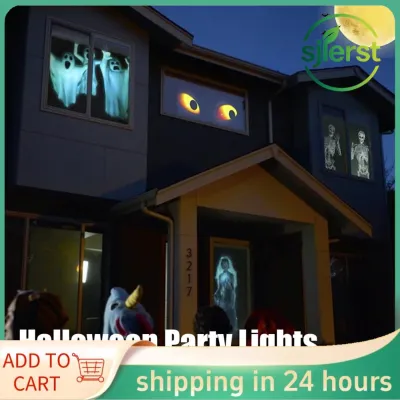
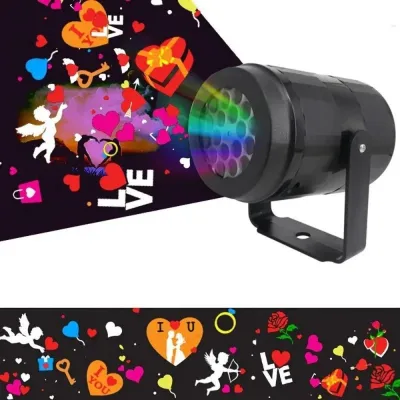
![KOQZM💖[HOT SALE]🎈🎈 USB Projector Light Wide Coverage Halloween Lamp with Christmas Patterns for Events](https://img.lazcdn.com/g/p/52471ad7dc60c0e4e134d9ccd00756c5.jpg_400x400q80.jpg_.webp)
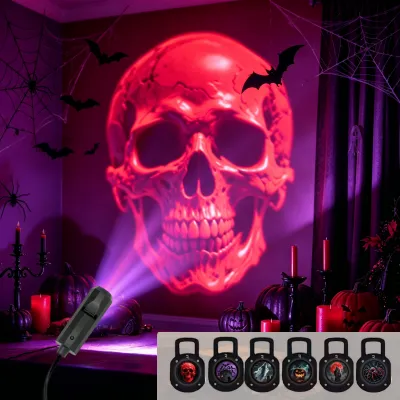
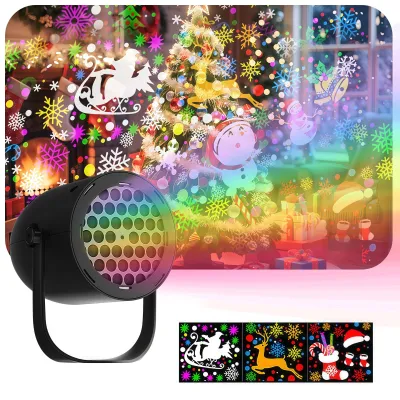
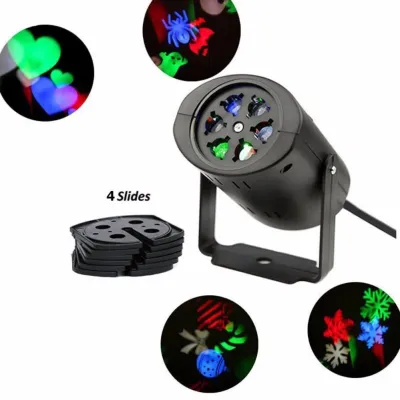
Prices are valid at publication and may change. Please refer to the product page for the latest price.
Finally, consider the environmental exposure of your chosen location. Setting up a display in an open yard means the equipment must withstand local weather conditions, including high humidity, heat, and sudden tropical rain showers. Indoor setups are shielded from the elements but require careful placement to ensure the power cables do not cross high-traffic walkways and the light beam does not shine directly into the eyes of family members or guests.
Match Projector Types to Your Decor Goals
Selecting the right projector requires matching the light source and animation style to your specific decorating theme. Different technologies produce vastly different visual atmospheres, ranging from subtle, eerie glows to high-energy, playful displays. Use the following comparisons to determine which technology aligns with your creative vision.

Laser vs. LED Projectors
Laser projectors utilize highly concentrated, coherent beams of light to cast sharp, distinct points over long distances. Because the light does not scatter easily, lasers maintain their clarity and brightness even when positioned far from the target surface. This makes them exceptionally well-suited for casting thousands of green, red, or orange “firefly” dots across a large house facade or up into a dense tree canopy. They are highly energy-efficient and offer excellent coverage for expansive outdoor landscapes.
LED projectors, on the other hand, use incoherent light focused through a lens system to project detailed, multi-colored images or slides. These fixtures are ideal for displaying recognizable Halloween icons, such as swirling ghosts, grinning jack-o’-lanterns, or flying witches. While LED light scatters more than laser light—meaning the image will naturally soften and dim as you move the projector further away—it provides much richer color saturation and broader, softer coverage at close-to-medium ranges.
Safety is a paramount consideration when choosing between these two technologies. Laser products are categorized into safety classes based on their potential to cause eye damage. When buying a laser projector, always check the manufacturer’s label to ensure it is rated as a Class 1 or Class 2 laser product, which are generally safe for consumer use under normal operating conditions. Never point a laser projector directly into anyone’s eyes, toward oncoming street traffic, or up into the open sky where it could interfere with aircraft pilots.
Static Patterns vs. Moving Animations
Static projectors display fixed images or stationary patterns that do not move. These fixtures are excellent for creating a classic, eerie, and atmospheric backdrop, such as a single, large silhouette of a haunted house or a stationary shadow of a witch on a chimney. Because they lack internal motors, static projectors generally consume less power, operate silently, and have fewer moving parts that could wear out over time. They provide a subtle, sophisticated decorative element that does not distract drivers or neighbors.
Moving animation projectors use internal motors to rotate slides, ripple light waves, or cycle through different spooky scenes. These dynamic displays are highly engaging and excellent for attracting trick-or-treaters or entertaining guests at a holiday gathering. However, constant, rapid movement can sometimes cause visual fatigue if viewed for long periods. If you choose a moving projector, look for models that allow you to adjust the speed of the animation or pause the movement entirely, giving you greater control over the mood of your display.
Check Essential Specs and Safety Features
When shopping for a Halloween projector light, verifying the technical specifications on the product packaging or manufacturer website is crucial for safety and performance. Never rely solely on product titles or marketing images; instead, look for concrete specifications that match your installation environment.
First, verify the Ingress Protection (IP) rating to ensure the projector can handle outdoor moisture. For outdoor installations, especially in humid or rain-prone tropical climates, look for a minimum rating of IP44, which protects against splashing water from any direction. If the projector will be completely exposed to heavy downpours without any overhead shelter, an IP65 or higher rating is strongly recommended to prevent water from penetrating the housing and causing a short circuit.
Next, examine the power cord specifications. Many consumer-grade projectors come with relatively short power cords, often measuring less than three meters. Measure the distance to your nearest power source and plan to use an outdoor-rated extension cord if necessary. Ensure that any extension cords and connection points used outdoors are kept dry, elevated off the ground, and protected by watertight electrical connection boxes to prevent water ingress during sudden rains.
Additionally, look for convenience features that simplify daily operation. Built-in timer functions are highly valuable, allowing you to program the projector to run for four, six, or eight hours before automatically shutting off to save electricity. A remote control with a clear operating range allows you to adjust settings, colors, and speeds from inside your home. Finally, check for an adjustable focus ring on the lens, which is essential for keeping projected images sharp and clear at various distances.
Electrical safety certifications must never be overlooked. Look for recognized certification marks on the product label, such as the Philippine Standard (PS) mark, the Import Commodity Clearance (ICC) sticker, or international safety marks like UL, ETL, or CE. These certifications indicate that the device has undergone rigorous testing for electrical safety, insulation, and fire resistance. Avoid unbranded, unverified alternatives that lack these safety markings, as they present a significantly higher risk of overheating or electrical failure.
Plan Your Installation and Power Setup
Proper installation ensures your projector remains stable, functions correctly, and does not pose a hazard to your household or property. Begin by selecting a secure mounting method. Most outdoor projectors include both a ground stake for lawns and gardens and a flat mounting base for hard surfaces like concrete patios, balconies, or wooden decks. If you are mounting the projector on an elevated surface like an eave or gutter, use secure brackets or clamps, and ensure the fixture is tightly fastened to withstand wind gusts without damaging your home’s structure.
Route all power cables carefully to eliminate safety hazards. Lay cables flat along the edges of pathways, garden beds, or walls where they are unlikely to be stepped on or tripped over. Avoid running power cords across active driveways or high-traffic walkways. To protect your electrical system from water pooling during heavy rains, always elevate the connection point between the projector plug and the extension cord using a specialized outdoor safety cover or a heavy-duty plastic enclosure.
Finally, respect the boundaries of safe electrical installation. If your outdoor area lacks a dedicated, weather-resistant outlet with Ground Fault Circuit Interrupter (GFCI) protection, do not attempt to run temporary cords through open windows or doors for extended periods. For permanent outdoor power solutions or complex wiring setups, always consult a qualified electrician to install a dedicated, outdoor-rated outlet that complies with local electrical codes.
Frequently Asked Questions (FAQ)
Can I use a regular indoor projector light outside for Halloween?
No, you should not use a regular indoor projector light outdoors. Indoor models lack the necessary weatherproofing, seals, and gaskets required to protect their internal electrical components from moisture, dew, dust, and temperature fluctuations. Exposing an indoor projector to outdoor conditions can lead to immediate electrical short circuits, permanent damage to the device, and serious shock or fire hazards. Always verify that a projector is explicitly rated for outdoor use before installing it outside.
How far should I place the projector from the wall?
The ideal distance between your projector and the target wall depends entirely on the specific model’s lens design, light source, and focal length. As a general guideline, most consumer holiday projectors perform best when placed between 10 and 20 feet (approximately 3 to 6 meters) from the projection surface. Placing the projector too close will result in a very small image, while placing it too far will cause the image to expand, lose brightness, and become blurry. Consult your product’s instruction manual for the manufacturer’s recommended distance range, and use the manual focus ring to sharpen the image once the projector is in place.
Community discussion
Share your experience or ask a question. Comments are reviewed before publication.