
Selecting the perfect LED Christmas light tree for your home involves balancing physical space, personal design preferences, and critical electrical safety standards. In the Philippines, where the holiday season kicks off early and brings warm, humid tropical weather, choosing a durable and energy-efficient decorative setup is key to a hassle-free celebration. By evaluating the dimensions of your room, verifying the electrical specifications on the product label, and selecting a style that complements your existing decor, you can secure a festive centerpiece that remains safe and vibrant throughout the long holiday months.
Determine the Right Size and Placement for Your Space
Before purchasing an LED Christmas light tree, you must measure both the floor area and the vertical clearance of your intended setup location. A tree that is too tall can crowd your ceiling, while an overly wide base can obstruct high-traffic walkways in living rooms or hallways. Use a tape measure to determine the maximum height and width your space can comfortably accommodate, leaving at least 30 centimeters of clearance between the top of the tree and your ceiling or any hanging fixtures.
For compact spaces, such as condominiums, apartments, or side tables, tabletop models offer a space-saving solution that adds festive warmth without occupying valuable floor space. These smaller units are lightweight and easy to move, making them ideal for entryways, desks, or dining room sideboards. Conversely, floor-standing models ranging from five to eight feet serve as dramatic focal points in spacious living areas, but they require a sturdy, level surface and sufficient clearance from surrounding furniture to prevent accidental bumps.
Products mentioned in this guide
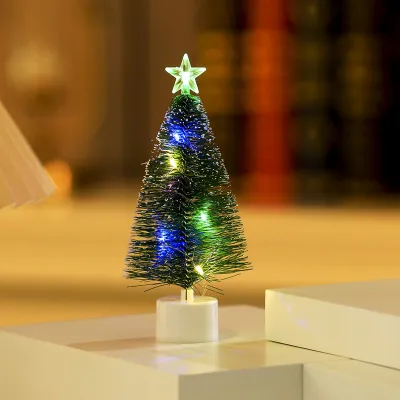
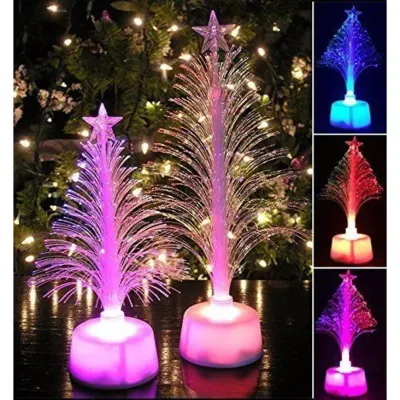
Prices are valid at publication and may change. Please refer to the product page for the latest price.
You must also verify the installation environment by checking the manufacturer’s specified Ingress Protection (IP) rating on the product packaging. If you plan to place the light tree on an open porch, balcony, or garden, it must carry an outdoor-ready rating (typically IP44 or higher) to withstand moisture, sudden tropical downpours, and high humidity. Indoor-rated models lack these protective seals and should never be exposed to outdoor elements, as moisture penetration can damage the internal circuitry and create electrical hazards.
Match the Light Tree to Your Preferred Decoration Style
The visual impact of your LED Christmas light tree depends heavily on its color temperature and light configuration. Warm white LEDs emit a soft, golden glow that mimics traditional incandescent bulbs, creating a cozy, classic, and inviting atmosphere. If you prefer a more vibrant, energetic, and playful holiday theme, multicolor or RGB color-changing options allow you to cycle through different hues and dynamic patterns to suit various gatherings.

The structural design of the tree also dictates its overall aesthetic. Classic conical shapes offer a dense, traditional silhouette that closely resembles a natural pine tree adorned with lights. For a modern, minimalist, or industrial look, spiral wireframe designs or bare branch outlines with micro-LEDs provide a sleek, contemporary alternative that highlights clean lines and artistic negative space.
Additionally, consider whether a pre-decorated model or a bare light tree fits your lifestyle. Pre-decorated trees come with built-in ornaments, faux snow, or fiber-optic tips, offering a convenient, ready-to-display setup straight out of the box. If you enjoy personalizing your holiday decor, a bare light tree serves as a blank canvas, allowing you to drape your own lightweight ornaments, ribbons, or garlands to match your changing style year after year.
Check Essential Electrical and Safety Specifications
Electrical compatibility is paramount when integrating any new lighting fixture into your home. In the Philippines, the standard household voltage is 220V at 60Hz, so you must verify that the light tree’s transformer or plug matches these specifications. Using a device designed solely for 110V without a proper step-down transformer can permanently damage the LEDs and pose a severe fire hazard. Always inspect the plug type to ensure it fits securely into your wall outlets without requiring loose, unstable adapters.
The length of the power cord is another practical factor that affects safety. Measure the distance from your desired placement spot to the nearest wall outlet to ensure the cord can reach comfortably without being stretched taut. Avoid daisy-chaining multiple extension cords or running wires under rugs and carpets, as stepped-on cords can degrade over time, overheat, and create hidden fire risks. If an extension cord is necessary, use a single, heavy-duty, grounded cord rated for the appropriate wattage.
Modern LED light trees often feature built-in convenience controls that help manage energy consumption and customize the ambiance. Look for models equipped with integrated timers that automatically turn the lights off after a set number of hours, preventing unnecessary power draw when you are asleep or away from home. Dimmers and multi-mode controllers also allow you to adjust the brightness levels and transition between steady-on, fading, or twinkling effects.
To guarantee peace of mind, always inspect the product packaging, label, or manual for recognized electrical safety certification marks. In the local market, look for the Philippine Standard (PS) mark or the Import Commodity Clearance (ICC) sticker, which indicate that the product has undergone safety testing. For imported goods, check for reputable international certifications such as UL, CE, or RoHS, which verify that the electrical components meet strict safety and environmental standards.
Evaluate Durability and Storage for Seasonal Reuse
Investing in a high-quality LED Christmas light tree ensures you can enjoy its festive glow for many seasons to come. Examine the frame material, opting for sturdy metals or high-grade, impact-resistant plastics that do not bend or crack easily under their own weight. Pay close attention to how the LED strings are secured to the branches; tightly wrapped, integrated wiring is less likely to snag, tangle, or break during assembly and disassembly compared to loosely draped wires.
Before purchasing, review the manufacturer’s assembly and disassembly instructions. High-quality models often feature modular, interlocking sections or hinged branches that fold down smoothly for quick setup. Avoid designs with fragile plastic joints or non-removable, bulky bases that make packing the tree back into its box difficult, as forcing these parts can pinch the internal wiring and cause individual light sections to fail.
Proper post-holiday storage is critical to preserving the lifespan of your light tree, especially in tropical climates. Store the disassembled tree in a sturdy, airtight plastic container rather than its original cardboard box, which can degrade and attract moisture or pests over time. Keep the storage container in a cool, dry, and elevated area away from direct sunlight to prevent the wire insulation from becoming brittle and to protect the delicate LED components from humidity-induced corrosion.
Frequently Asked Questions (FAQ)
Can I use an indoor LED Christmas light tree outside?
No, you should never use an indoor-rated LED Christmas light tree in an outdoor environment. Indoor models lack the specialized weatherproofing, sealed connections, and moisture-resistant materials required to withstand rain, dew, and high humidity. Exposing an indoor tree to outdoor elements can cause water to penetrate the electrical housing, leading to short circuits, blown fuses, or dangerous electrical shocks. Always check the product label for an outdoor-ready IP rating before placing any light tree outside.
How do I prevent a tall light tree from tipping over?
To prevent a tall floor-standing light tree from tipping, always place it on a flat, level surface away from high-traffic areas, active children, or pets. Verify that the tree includes a wide, heavy base that provides adequate low-center-of-gravity support. For added stability, you can place decorative weights or sandbags over the base stand, or secure the trunk to a nearby wall or heavy piece of furniture using clear, high-strength monofilament line.
Are LED light trees safe to leave on overnight?
While LED lights generate significantly less heat than traditional incandescent bulbs, it is still not recommended to leave them running continuously overnight. Continuous operation can accelerate wear on the internal transformer and driver components. To ensure safety and conserve energy, utilize the light tree’s built-in timer function, or connect the tree to a smart plug programmed to shut off automatically when you go to bed.
Community discussion
Share your experience or ask a question. Comments are reviewed before publication.