
Selecting the ideal LED firework tree for your garden requires balancing striking visual appeal with structural and electrical resilience. These decorative fixtures, designed to mimic the vibrant burst of pyrotechnics using radiating metallic or plastic branches tipped with light-emitting diodes, can instantly transform a dark lawn into an inviting, illuminated landscape. However, because they are permanently or semi-permanently installed outdoors, they must withstand continuous exposure to the elements—including intense sunlight, heavy seasonal rains, and strong winds—while operating safely on your home’s electrical infrastructure.
To make an informed purchase, you must evaluate several technical specifications beyond simple aesthetics. Key factors include the Ingress Protection (IP) rating for water and dust resistance, the UV and corrosion resistance of the structural materials, the reliability and capacity of the power source, and the structural stability of the mounting system. By analyzing these specifications against your garden’s specific microclimate and layout, you can select a fixture that remains safe, bright, and durable for years to come.
Quick Guide: Core Specifications to Check Before Buying
An LED firework tree serves as a dramatic focal point in landscape lighting, utilizing a central trunk and dozens of radiating, flexible branches to create a three-dimensional sphere or burst of light. Unlike standard string lights that drape over existing structures, these freestanding fixtures define their own space and draw the eye upward, making them highly effective for adding vertical interest to flat garden beds, patios, or lawns.
Products mentioned in this guide
![[warranty]Solar Firework Light Outdoor Waterproof LED Firework Lamps 90/120/150LED For Fowerbed Garden Home Tree Flower Xmas Festive Lighting Atmosphere Decoration In Babalux](https://img.lazcdn.com/g/p/c11415af6358624b45fc65f5bd337bb5.jpg_400x400q80.jpg_.webp)
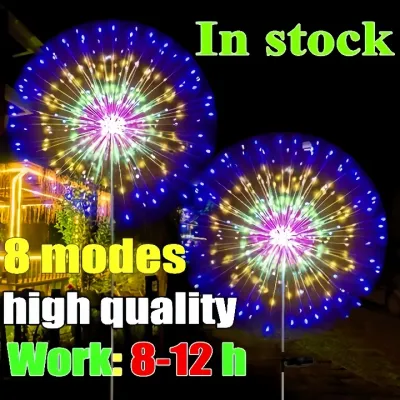
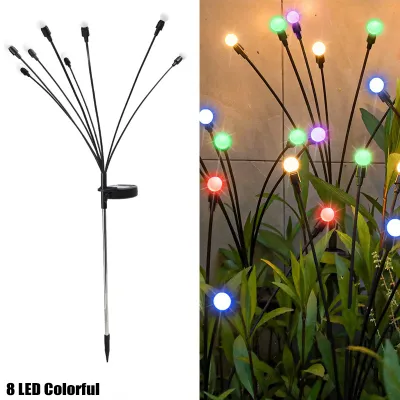
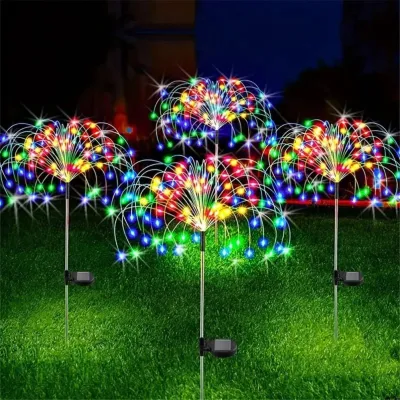
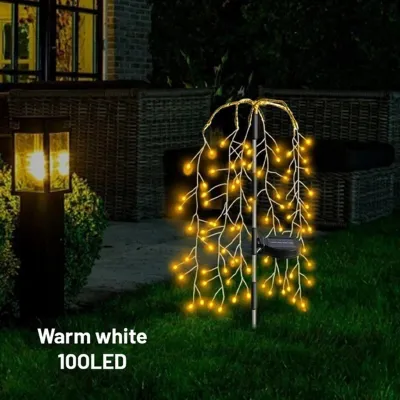
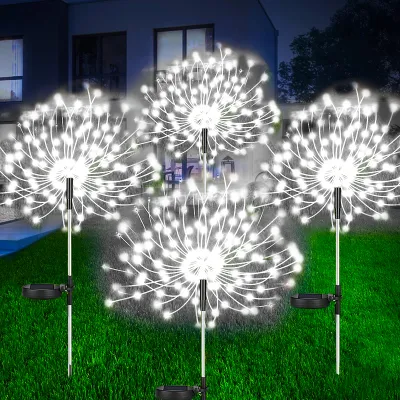
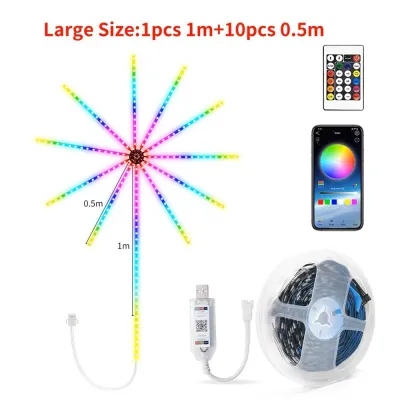
Prices are valid at publication and may change. Please refer to the product page for the latest price.
When evaluating different models, prioritize the following four non-negotiable pillars of outdoor lighting quality:
- Weatherproofing: Verify the exact IP rating of the entire unit, ensuring both the light strings and the central control box are rated for continuous outdoor exposure.
- Material Durability: Look for UV-stabilized plastics and powder-coated or rust-treated metals to prevent premature degradation under intense sun and humidity.
- Power Reliability: Choose between the convenience of solar-powered units and the consistent, high-output performance of low-voltage plug-in systems.
- Base Stability: Ensure the mounting system—whether ground spikes, weighted bases, or anchor bolts—is robust enough to keep the top-heavy structure upright during windy conditions.
Ultimately, the right choice depends on your property’s specific environmental conditions and electrical layout. A sheltered patio corner might accommodate a lighter, plug-in decorative model, whereas an open lawn exposed to heavy monsoons demands a heavy-duty, highly weather-resistant fixture with deep ground anchoring.
Weather Resistance and Material Durability for Tropical Gardens
Outdoor lighting in tropical climates faces a grueling combination of high humidity, intense ultraviolet radiation, and torrential rainfall. Understanding how a manufacturer builds and seals an LED firework tree is critical to ensuring it does not short-circuit during the first heavy downpour or turn brittle and snap after a few months in the sun.

Decoding Ingress Protection (IP) Ratings
Every outdoor electrical fixture should carry an IP rating, which consists of two digits indicating its resistance to solid objects and liquids. The first digit (ranging from 0 to 6) measures protection against dust and solids, while the second digit (ranging from 0 to 9) measures protection against water penetration.
For general garden placement exposed to rain, a minimum rating of IP44 is required, which protects against splashing water from any direction. However, for completely unsheltered areas subject to heavy tropical storms and monsoons, look for fixtures rated IP65 or higher. An IP65 rating signifies that the unit is completely dust-tight and can withstand low-pressure water jets from any angle, preventing water from seeping into the branch joints, wire connections, or control housing. Always check the manufacturer’s documentation for specific limitations, as standard decorative garden trees are not designed for submersion (which requires IP67 or IP68) and should never be placed in low-lying garden spots prone to standing water.
Combatting Material Degradation from Sun and Moisture
The structural integrity of an LED firework tree relies heavily on the quality of its outer sheathings and frame. The radiating branches are typically constructed from flexible wire coated in plastic or silicone to allow for custom shaping. In tropical environments with high year-round UV exposure, standard plastics degrade rapidly, losing their flexibility, fading in color, and eventually cracking, which exposes the copper wiring inside to moisture.
To prevent this, verify that the product specifications explicitly state the use of UV-stabilized or UV-resistant polymers. Similarly, any metal components—such as the central trunk, base plate, or internal wire cores—must be treated to prevent rust. Untreated steel or iron will corrode quickly when exposed to high humidity and rain, leading to structural failure. Look for trunks made of anodized aluminum, stainless steel, or heavy-duty iron coated with a rust-resistant powder finish. These materials form a barrier against moisture and oxygen, extending the lifespan of the tree’s support structure.
Preparing for Extreme Weather and Typhoons
Because of their shape, LED firework trees are inherently vulnerable to high winds. The dense network of radiating branches acts like a sail, catching gusts of wind and transferring significant kinetic force down to the trunk and base. During severe weather events, such as tropical storms or typhoons, even the most robustly anchored tree can suffer damage if left fully assembled.
Read the manufacturer’s guidelines regarding wind tolerances and extreme weather protocols. High-quality models often feature flexible, bendable branches that can be temporarily folded inward toward the trunk to reduce wind resistance, or they are designed for quick disassembly so the entire upper branch structure can be stored indoors. If you live in an area prone to cyclical high winds, choose a model that is easy to dismantle and store, rather than a permanently sealed, rigid structure that cannot be modified.
Sizing, Placement, and Visual Proportions in Your Landscape
Achieving the desired visual impact with an LED firework tree requires careful consideration of scale, branch density, and physical placement within your garden layout. A tree that is too small will look lost in a wide lawn, while an oversized, overly bright tree can overwhelm a compact patio or courtyard.
Selecting the Right Height and Scale
LED firework trees are available in a wide range of sizes to suit different landscape applications. Understanding where each size category excels will help you plan your garden’s visual hierarchy:
- Compact/Patio Models (1.2 to 1.5 meters): These shorter fixtures are ideal for framing entryways, placing along patio borders, or positioning within raised garden beds. Their lower height keeps the light source close to eye level when seated, creating a cozy, intimate ambiance.
- Standard Garden Models (1.8 to 2.1 meters): Matching the height of typical ornamental garden trees, these models work exceptionally well as standalone features in medium-sized lawns or integrated into mixed shrub borders. They are tall enough to be seen clearly from inside the house or from across the yard.
- Estate/Lawn Centerpieces (2.4 meters and taller): These large, imposing fixtures are designed for expansive open spaces, long driveways, or large commercial landscapes. They demand attention and serve as major architectural focal points, requiring substantial ground space and robust anchoring.
Before purchasing, measure the height of nearby plants, fences, and structures to ensure the tree fits proportionally. It is often helpful to mark the proposed height and width of the tree in your garden using a temporary stake to visualize how it will affect sightlines from key viewing angles, such as your living room window or outdoor seating area.
Evaluating Branch Spread and LED Density
The magic of a firework tree lies in its ability to create a convincing “burst” pattern. This visual effect is determined by two key specifications: the branch spread (the diameter of the fully expanded branch canopy) and the total LED count. A tree with a wide spread but a low LED count will look sparse, resembling a collection of individual string lights rather than a cohesive firework explosion.
For a lush, high-impact display, look for models that offer a high ratio of LEDs to branch tips. For example, a standard 1.8-meter tree should ideally feature at least 150 to 300 individual LED diodes distributed across 30 or more branch tips. High-quality manufacturers design their branches with multiple micro-LEDs clustered closely together along the outer ends of the wire, which maximizes the brightness at the perimeter of the sphere and enhances the bursting illusion.
Strategic Placement and Foliage Integration
When planning where to install your LED firework tree, consider both the physical environment and the visual composition of your landscape. Placing a tree near a calm water feature, such as a garden pond or swimming pool, creates beautiful reflections that double the visual impact of the lights. Alternatively, lining a driveway or pathway with multiple smaller firework trees can establish a grand, welcoming entrance.
Keep a safe distance between the tree’s flexible branches and any surrounding living foliage. Wind can cause nearby tree limbs or heavy shrubs to brush against the LED branches, which can scrape off protective coatings, tangle the wires, or pull the fixture out of alignment. Ensure there is at least 30 to 50 centimeters of clear space around the entire canopy of the firework tree to prevent friction damage and maintain a clean, defined silhouette against the night sky.
Power Options and Lighting Control Features
How your LED firework tree is powered affects not only its installation flexibility but also its long-term operational costs, daily maintenance requirements, and overall light output. You must choose a power delivery system that matches the physical layout of your garden and your willingness to manage cables.
Solar-Powered vs. Low-Voltage Plug-In Systems
Deciding between solar and plug-in power involves a clear trade-off between installation convenience and lighting consistency:
Solar-Powered Systems require no trenching or running of outdoor extension cords, making them highly convenient for remote garden beds, far corners of the lawn, or rental properties where permanent electrical installations are not permitted. To ensure reliable performance, check the specifications of the solar panel and battery system. Look for monocrystalline solar panels, which offer higher energy conversion efficiency under partial shade or cloudy skies compared to cheaper polycrystalline panels. The internal rechargeable battery should have a capacity of at least 1200mAh to 2400mAh (typically lithium-ion) to provide 6 to 8 hours of illumination on a full charge. Keep in mind that solar performance is highly dependent on weather; during prolonged rainy seasons or heavily overcast days, the tree may shine dimly or turn off early.
Low-Voltage Plug-In Systems (typically operating on 12V or 24V step-down transformers) provide consistent, maximum brightness regardless of the weather. They are ideal for primary landscape lighting schemes where reliability is paramount. When using a plug-in system, you must connect the tree to an outdoor-rated GFCI (Ground Fault Circuit Interrupter) outlet. If you plan to chain multiple plug-in trees together, calculate the total wattage of all fixtures combined and ensure it does not exceed 80% of your transformer’s rated capacity. For example, if you have three trees that consume 15 watts each, your total load is 45 watts; you will need a transformer rated for at least 60 watts to operate the system safely and prevent overheating. Always use heavy-duty, outdoor-rated extension cables designed to resist moisture and UV exposure.
Lighting Modes, Color Temperatures, and Dimming
The color and behavior of the LEDs dictate the mood of your outdoor space. Decorative firework trees are available in several lighting configurations:
- Warm White (2700K to 3000K): Emits a soft, golden glow that mimics traditional incandescent bulbs. This color temperature is ideal for creating a cozy, elegant, and sophisticated garden atmosphere that complements natural wood, stone, and warm foliage.
- Cool White (5000K to 6500K): Produces a bright, crisp, ice-blue light. It offers a modern, high-contrast look that stands out sharply against the dark, making it popular for festive displays or contemporary architectural backdrops.
- Multicolor and RGB: Features red, green, blue, and other vibrant hues. These models are excellent for festive celebrations, parties, and holidays, allowing you to change the color scheme to match specific themes.
Many high-quality LED firework trees come equipped with multi-function controllers that allow you to select different lighting modes, such as steady-on, slow fade, sequential flash, or gentle twinkle. If you prefer adjustable brightness, verify whether the system supports dimming. Some models include a dedicated remote control or a button on the transformer plug to cycle through pre-set brightness levels (e.g., 25%, 50%, 100%), which is highly useful for adjusting the light output based on whether you are hosting a lively gathering or enjoying a quiet evening.
Automation with Timers and Smart Controls
To minimize manual effort and conserve energy, look for fixtures that incorporate automated control features. Many solar-powered models feature integrated photocells (dusk-to-dawn sensors) that automatically switch the lights on when the sun sets and turn them off at sunrise. For plug-in systems, look for transformers with built-in timers that can be programmed to run for a set number of hours (such as 4, 6, or 8 hours) after activation. Smart-enabled models can even connect to your home Wi-Fi network, allowing you to schedule operation times, adjust colors, and integrate the tree with other smart home outdoor devices via a mobile app.
Base Stability, Installation, and Electrical Safety
An outdoor light fixture is only as good as its installation. Because LED firework trees are top-heavy by design, securing them properly is essential to prevent them from tipping over, which can damage the delicate branch connections or create safety hazards in your yard.
Evaluating Base Designs and Anchoring Methods
When purchasing, pay close attention to the base configuration provided by the manufacturer. The three most common mounting styles serve different ground conditions:
- Ground Spikes: These long, pointed metal or heavy plastic stakes slide into the bottom of the trunk and push directly into lawn soil or garden beds. For top-heavy firework trees, ensure the spike is at least 20 to 30 centimeters long to provide sufficient leverage against lateral wind forces. In loose or sandy soil, standard spikes may wobble; you may need to reinforce the base by driving longer, U-shaped garden stakes over the base plate.
- Weighted Bases and Cross-Frames: Designed for hard surfaces like concrete patios, wooden decks, or paved walkways, these flat metal stands require additional weight to remain stable. If your chosen model uses a cross-frame base, plan to secure it using heavy decorative planters, sandbags, or concrete pavers placed directly over the metal legs to prevent tipping.
- Bolt-Down Mounting Plates: For permanent, high-end installations, some commercial-grade trees feature a flat metal flange at the base of the trunk with pre-drilled holes. This allows you to bolt the tree directly into a concrete pad or wooden deck using masonry anchors or lag screws, providing the highest level of stability against strong winds.
Electrical Safety Checks for Outdoor Wiring
Operating electrical equipment outdoors requires strict adherence to safety protocols to prevent shocks, short circuits, or fire hazards. If you choose a plug-in system, inspect the power cord before installation. The cable should have a thick, rubberized, outdoor-rated jacket (such as SJTW or H05RN-F cabling) that remains flexible in cold temperatures and resists cracking under hot sun. All connections between the light strings, control box, and power supply must use waterproof screw-lock connectors fitted with rubber O-rings to keep moisture out.
Always position the step-down transformer in an elevated, well-ventilated location that is protected from direct rainfall and standing water—such as mounted on a wall under an eave or inside an outdoor-rated, weatherproof electrical box. Never lay a non-submersible transformer directly on the ground where pooling rainwater can reach it.
Installation Boundaries and Professional Help
While setting up a low-voltage (12V/24V) plug-in kit or a solar-powered tree is a safe, straightforward task that most homeowners can complete independently, certain scenarios require professional assistance. If your installation plan involves any of the following, you must isolate the power source and consult a qualified, licensed electrician:
- Fixed Wiring: Connecting the fixture directly to a 220V mains electrical circuit rather than using a standard plug.
- Underground Cabling: Burying power lines across your lawn, which requires specific depth clearances and protective conduit (such as PVC or metal conduit) to prevent accidental damage from garden tools.
- Wet Environments: Installing the light fixture within 3 meters of a swimming pool, decorative pond, or water fountain, where strict local electrical codes govern grounding and proximity limits.
- Working at Height: Mounting large, heavy commercial-scale trees that require scaffolding, ladders, or specialized rigging to secure safely.
By recognizing these boundaries and prioritizing safety, you can enjoy the stunning, festive ambiance of an LED firework tree while ensuring your garden remains a safe environment for your family and guests.
Frequently Asked Questions (FAQ)
Can I leave my LED firework tree outside during heavy rain or storms?
Whether you can leave your LED firework tree outside depends entirely on its IP rating and the severity of the weather. If the product label explicitly states a rating of IP65 or higher, the tree is engineered to withstand regular, heavy rainfall and wet conditions without taking damage. However, during severe weather events such as typhoons, tropical storms, or periods of extreme high winds, you should proactively unplug the tree and fold down or dismantle the branches to store them indoors. This prevents structural damage from flying debris or strong wind gusts, and protects the electrical components from potential power surges or localized flooding.
How do I maintain the brightness of solar-powered firework trees over time?
To keep a solar-powered LED firework tree operating at peak brightness, you must perform regular, simple maintenance on the solar charging system. Dust, pollen, dirt, and bird droppings accumulate on the surface of the solar panel over time, blocking sunlight and significantly reducing its charging efficiency. Gently wipe the panel clean every few weeks using a soft, damp microfiber cloth without harsh chemical cleaners. Additionally, trim back any growing garden foliage, tree branches, or tall grass that might cast shadows over the solar panel during peak daylight hours. Finally, keep in mind that rechargeable batteries degrade over time; if you notice the lights shining for only a short period at night despite a full day of sun, consult the manufacturer’s manual to locate and replace the internal rechargeable battery with a fresh cell of equivalent voltage and capacity.
Community discussion
Share your experience or ask a question. Comments are reviewed before publication.