
When arranging a compact sleeping space, finding a full size mirror with stand that fits comfortably without cluttering the room is a common design challenge. In a small bedroom—such as those found in modern urban condominiums or townhouses—every square meter of floor space must be carefully allocated. The ideal freestanding mirror must provide a complete, head-to-toe view of your outfit while maintaining a minimal physical footprint. To achieve this balance, look for a mirror with a glass height of at least 120 centimeters (48 inches) and an overall frame height of 150 to 165 centimeters (59 to 65 inches). The stand should have a shallow base depth of 30 to 40 centimeters (12 to 16 inches) to ensure it does not obstruct doorways, wardrobe access, or walking paths.
Selecting the right dimensions involves coordinating your personal height, the physical limitations of your room, and the specific design of the mirror’s support structure. While a larger mirror can make a room feel more open by reflecting light, an oversized frame can quickly overwhelm a small space. By understanding how to calculate dimensions, evaluate stand footprints, and position the mirror strategically, you can maximize both the utility and the visual appeal of your bedroom.
How to Calculate the Right Height for a Full Size Mirror with Stand
To determine the perfect height for your mirror, it helps to understand the basic optical rules of reflection. In physics, a flat vertical mirror only needs to be half the height of the viewer to show a complete, head-to-toe reflection. This is because the angle of incidence equals the angle of reflection, allowing your eyes to see down to your feet and up to the top of your head using only half your physical height. However, a freestanding full size mirror with stand is rarely mounted perfectly flat and flush against a wall. Because these mirrors typically sit on a frame and tilt slightly backward, the physical glass height must be taller than the theoretical minimum to provide a comfortable, undistorted view.
Products mentioned in this guide
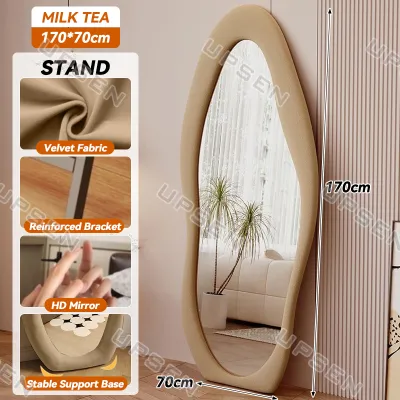
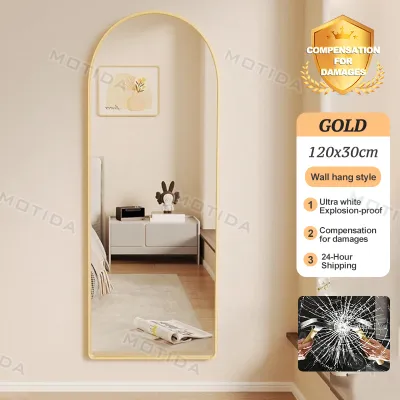
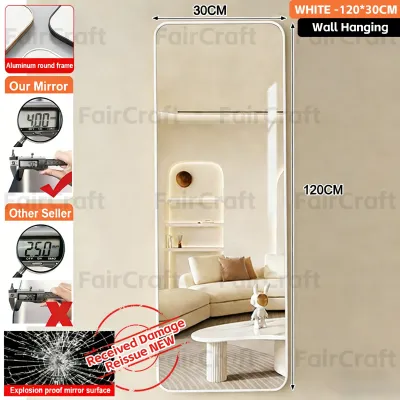
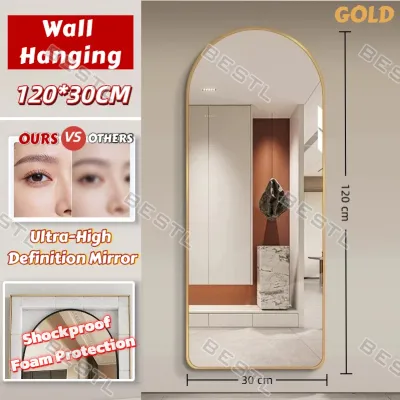
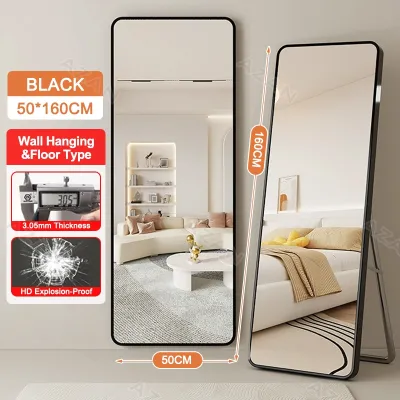
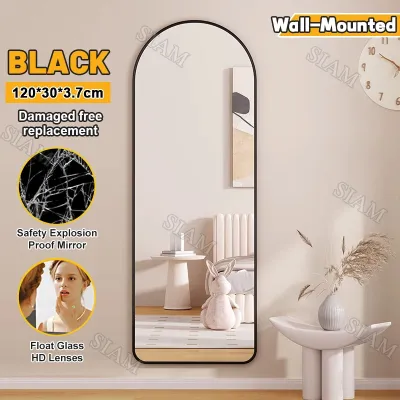
Prices are valid at publication and may change. Please refer to the product page for the latest price.
When calculating your required mirror height, start with your own physical height and add a practical margin. If you are 165 centimeters tall, a mirror with a glass height of at least 120 centimeters is highly practical. If you frequently wear high-heeled shoes, platform sandals, or traditional formal wear with headpieces, add an extra 10 to 15 centimeters to your calculations to avoid cutting off your feet or head in the reflection. If multiple family members of varying heights share the mirror, size the glass to accommodate the tallest user while ensuring the tilt angle can be adjusted to suit shorter users.
Ceiling height is another critical constraint in compact bedrooms. Standard residential ceilings in modern Philippine high-rise developments typically range from 2.4 to 2.7 meters. A mirror that is too tall—such as an oversized 180-centimeter unit—can visually crowd the room, making the ceiling feel lower and more oppressive. For balanced visual proportions, maintain at least 60 centimeters of clearance between the top of the mirror frame and the ceiling. This gap prevents the mirror from clashing with wall-mounted air conditioning units, low-hanging pendant lights, or ceiling fans.
Finally, consider the frame’s width and overall visual weight. While thick, ornate wooden frames made of heavy timber can look beautiful in large showrooms, they add unnecessary bulk and reduce the actual reflective glass area in a small room. Choosing a slim metal or minimalist wooden frame that is less than 3 centimeters wide maximizes the reflective surface while keeping the overall width of the unit between 40 and 50 centimeters. This ensures the mirror remains highly functional without dominating the limited wall space.
If you are considering an illuminated full size mirror with stand, which features integrated LED strip lights, pay close attention to the electrical specifications. Ensure the unit’s voltage matches the standard Philippine domestic supply of 220V. Verify the wattage limit, the plug type, and whether the power cord is long enough to reach your outlet without stretching across walkways. For safety, look for models with proper electrical certifications (such as the PS mark or ICC clearance) and ensure the power supply is isolated from any potential dampness if your bedroom is adjacent to an en-suite bathroom.
Managing the Stand Footprint and Floor Clearance
The design of the mirror’s stand directly dictates how much floor space it will consume. Because floor space is at a premium in a small bedroom, understanding the physical footprints of different stand types is essential for maintaining a safe and functional layout.

- A-Frame (Easel) Stands: These are the most common freestanding designs, featuring a hinged back leg that extends outward to support the mirror. While highly stable, they require a deep floor footprint—often between 40 and 50 centimeters. In a narrow room, this deep base can easily encroach on walkways or prevent you from opening wardrobe doors fully.
- U-Shaped or H-Shaped Bases: These stands feature a flat metal or wooden frame that sits flat on the floor, with two upright posts holding the mirror. Because the support structure does not need to extend far backward, these bases typically have a shallower depth of 30 to 35 centimeters. This design allows the mirror to sit more upright, saving valuable floor space.
- Single Pedestal Stands: Supported by a heavy, round, or square weighted base, pedestal stands offer excellent stability with a very compact footprint, often measuring around 30 centimeters in diameter. Some pedestal models also allow the mirror to rotate 360 degrees, making them highly versatile for tight corners where you may need to adjust the viewing angle frequently.
- Flat Back-Leaning Stands: Many modern freestanding mirrors feature a fold-away stand. This design allows you to fold the rear support completely flat, allowing the mirror to lean directly against the wall. This reduces the floor footprint to a mere 10 to 15 centimeters of depth, making it the most space-efficient option for tight walkways.
Before finalizing your purchase, map out the intended floor area using painter’s tape to visualize the mirror’s footprint. Ensure there is at least 60 to 75 centimeters of clear walkway space in front of and around the mirror. You must be able to walk past, open wardrobe doors, slide out under-bed storage drawers, and access the main entryway without bumping into the stand.
Safety and stability are paramount, especially in a tropical climate where high humidity can cause minor warping in low-quality wooden frames over time. Ensure the stand’s feet are equipped with non-slip rubber or silicone pads to prevent sliding on polished concrete, ceramic tiles, or hardwood floors. If you share your home with pets or young children, a freestanding mirror poses a tipping hazard. Always secure a leaning or freestanding mirror with anti-tip safety straps anchored directly into the wall. For the concrete or masonry walls common in Philippine construction, use a hammer drill to insert high-quality wall plugs and heavy-duty screws, ensuring the anchor can support the weight of the mirror.
If you decide to convert your freestanding mirror into a wall-mounted fixture to save floor space, always prioritize safety. For concrete or masonry walls typical in Philippine homes, use a hammer drill, high-quality wall plugs, and heavy-duty screws capable of supporting suspended loads. If the mirror features integrated electrical wiring or requires fixed connection to a wall switch, isolate the main power breaker before installation. When working at heights or handling heavy glass panels, always follow the manufacturer’s installation instructions, and do not hesitate to hire a qualified professional to ensure the mirror is securely anchored.
Placement Strategies to Make a Small Room Feel Larger
While a mirror cannot physically expand the square footage of a room, strategic placement can create a pleasant spatial effect by reflecting light and altering your perception of depth. This visual expansion is a subjective preference, but when executed correctly, it can make a compact bedroom feel significantly brighter and more open.
One of the most effective placement strategies is to position your mirror adjacent to a window. In the Philippines, natural sunlight can be incredibly bright. Placing the mirror at a 45-degree angle to a window allows it to capture and bounce soft, ambient light deep into the room. This distribution of natural light eliminates dark corners and makes the entire space feel more inviting. Avoid placing the mirror directly opposite the window, as this can reflect harsh midday glare directly into your eyes or onto your bed, causing discomfort.
Corners are often underutilized in small bedrooms, making them excellent locations for a freestanding mirror. Tucking an A-frame or pedestal mirror into an empty corner utilizes dead space while angling the glass diagonally across the room. This diagonal reflection captures a wider view of the bedroom, tricking the brain into perceiving more depth and open space than actually exists.
Always pay close attention to what the mirror will reflect from different angles. If the mirror is positioned to reflect a cluttered work desk, an open wardrobe, or an en-suite bathroom door, it will visually double the clutter, making the room feel chaotic and cramped. Instead, aim the reflection toward a clean, minimalist wall, a piece of simple art, or a light-colored curtain. Additionally, consider how the mirror affects your sleep quality; many people find it distracting to see their own reflection directly from the bed, so angling the mirror away from your sleeping area can promote a more restful environment.
Common Sizing and Layout Mistakes to Avoid
When shopping for a freestanding mirror, it is easy to make mistakes that can lead to a cramped layout or safety hazards. Being aware of these common pitfalls will help you make a more informed decision.
One of the most frequent errors is purchasing a mirror based solely on the advertised glass dimensions while ignoring the bulky frame and the extended stand. A mirror labeled as having a “120-centimeter height” might actually stand 160 centimeters tall once mounted on its frame. This extra height and width can block low-mounted light switches, cover wall outlets, or prevent nearby doors from opening fully. Always verify the total external dimensions of the product, including the stand, before buying.
Another common mistake is overlooking the necessary clearance for a leaning mirror’s tilt angle. If you push the base of a leaning mirror too close to the wall to save floor space, the top of the frame will scrape against the wall, potentially damaging the paint or plaster. Conversely, pulling the base out too far to achieve a better viewing angle can cause the stand to slide, turning the bottom of the mirror into a dangerous tripping hazard in a narrow walkway.
Finally, avoid placing a tilted mirror directly underneath a bright ceiling downlight or a bare light bulb. When the mirror tilts backward, it angles upward toward the ceiling. If a bright light source is directly overhead, the glass will reflect that light directly into your eyes when you stand in front of it. This creates a blinding glare that makes it difficult to see your reflection clearly. Position the mirror so that overhead light sources illuminate you from the front or sides, rather than shining directly onto the glass surface.
Frequently Asked Questions (FAQ)
Can a full-length mirror with a stand be placed on a carpeted bedroom floor?
Yes, a full size mirror with stand can be placed on a carpeted floor, but you must take extra precautions regarding stability. Soft carpet fibers and thick rugs can cause a lightweight stand to wobble, sink unevenly, or tilt forward, creating a safety hazard. To prevent tipping, choose a mirror with a heavy, weighted base or a wide, flat-bottomed U-stand rather than thin peg legs. Placing a solid wooden or acrylic board under the stand’s feet can also provide a stable, level surface. For absolute safety, always secure the mirror to the wall with anti-tip straps, regardless of the floor surface.
Is it better to lean a freestanding mirror against the wall or keep it fully upright?
Leaning a mirror against the wall is highly space-efficient for small bedrooms, as it requires only 10 to 15 centimeters of floor depth. However, this setup creates a slightly upward viewing angle that can distort your body’s proportions, making you appear taller or slimmer than you are. Keeping the mirror fully upright on a self-supporting stand provides a more accurate, true-to-life reflection but requires a larger floor footprint of 30 to 50 centimeters of depth to remain stable. For tight spaces, a leaning setup secured with safety wall straps is usually the best compromise between space-saving and accuracy.

Community discussion
Share your experience or ask a question. Comments are reviewed before publication.