
Finding legitimate solar lights buy 1 take 1 promotions in the Philippines requires a careful balance of bargain hunting and technical verification. While the promise of doubling your outdoor security lighting for the price of a single unit is highly appealing, the local market is flooded with low-quality clearance items disguised as premium deals. Genuine, high-performing solar security packages do exist, but locating them requires knowing where to shop, how to identify deceptive marketing tactics, and which technical specifications are non-negotiable for the tropical Philippine climate.
To secure a authentic deal, focus your search on official brand flagship stores on major e-commerce platforms, authorized local hardware distributors, and specialized lighting showrooms. By verifying the seller’s credentials and understanding the hardware specifications under the hood, you can protect your home and your budget from poor-quality products that fail after the first tropical storm.
Decoding "Buy 1 Take 1" Offers: Real Value vs. Marketing Gimmicks
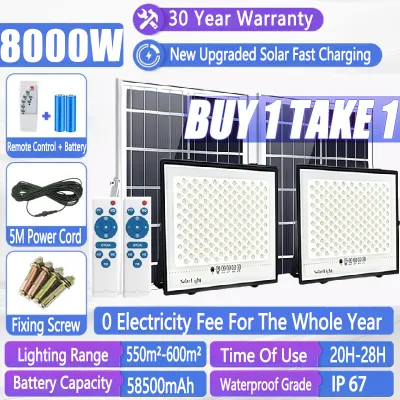
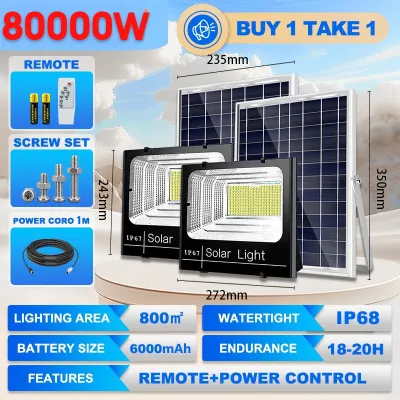
To navigate “Buy 1 Take 1” (B1T1) promotions successfully, you must first understand how sellers structure these retail offers. A genuine B1T1 deal delivers two identical, fully functional solar security lights at a price close to the standard retail rate of a single unit. However, many online listings use a bait-and-switch structure where you purchase a high-output security light and receive a tiny, low-lumen garden stake light as the “free” item. Another common tactic is bundling two low-tier, underpowered models that the seller has struggled to move individually.
Products mentioned in this guide
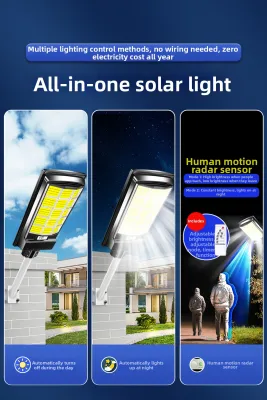
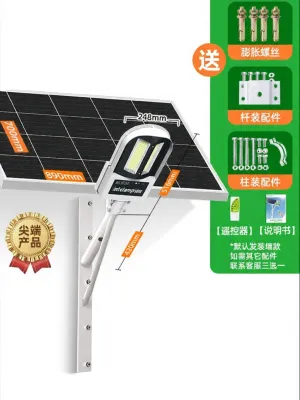
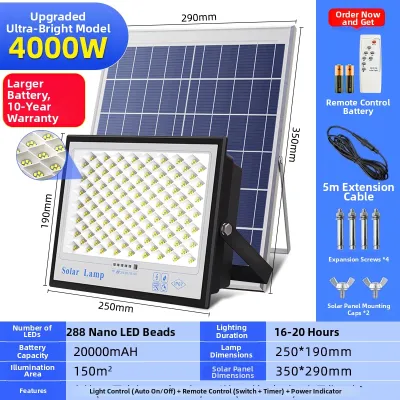
Prices are valid at publication and may change. Please refer to the product page for the latest price.
Retailers generally run legitimate promotions for clear business reasons. E-commerce merchants frequently clear out older inventory to make room for newer models right before the rainy season begins in June. New digital storefronts also use aggressive B1T1 promotions as loss leaders to quickly build up their follower count, earn positive platform reviews, and boost their search visibility.
Distinguishing real value from an inflated base price requires a quick market comparison. Deceptive sellers often double the baseline price of a single solar light, label it as a B1T1 package, and present it as a heavy discount. In reality, you are simply paying full price for both items. A promotion only offers true value if the primary unit meets your specific security needs and the combined package price is lower than the historical cost of buying two individual units.
Your primary decision logic should always prioritize utility over the allure of a freebie. A secondary light is only a bargain if the main unit successfully illuminates your gate, driveway, or perimeter. If the primary light fails to perform, the entire purchase becomes an expensive waste of plastic and electronics.
Where to Find Trustworthy Sellers for Solar Lighting Promotions
Locating reliable sellers in the Philippines involves choosing channels that offer genuine product warranties and authentic hardware. On major online marketplaces, prioritize official brand stores and authorized distributors over third-party merchants. Look for platform-verified badges that guarantee direct brand representation. These official stores are legally bound to uphold brand standards and are much more likely to offer authentic B1T1 promotions during major monthly sales campaigns.

Before clicking the buy button, perform a quick credential check on the digital storefront. A trustworthy online seller typically boasts a store age of at least two years, a positive feedback rating above 90%, and a high volume of completed transactions. Avoid newly created shops with randomized alphanumeric names, as these are often set up to dump substandard stock and disappear before buyers can file return claims.
For those who prefer a hands-on approach, prominent Philippine home improvement chains and specialized lighting showrooms are excellent alternatives. Retailers like Wilcon Depot, Ace Hardware, Handyman, and True Value regularly host seasonal warehouse clearances and weekend promotions. Shopping in a physical store allows you to inspect the build quality directly, feel the weight of the chassis, and verify that the product packaging contains all necessary mounting hardware.
Whether shopping online or offline, always verify the seller’s after-sales support terms. A legitimate seller will offer a clear local warranty of at least six months to one year. Be cautious of promotions that mark items as “final sale” or “non-returnable,” as well as overseas sellers who require you to ship defective products abroad at your own expense to claim a replacement.
Red Flags: How to Spot Fake Deals and Avoid Online Scams
Deceptive pricing is the most common pitfall in online solar light promotions. To protect yourself from the “price-hike” trick, monitor the prices of target solar models a few weeks before a major promotional event. If a seller lists a B1T1 package at ₱1,800 during a sale, but the single unit was selling for ₱900 a week prior, you are dealing with a simulated discount. Use price-tracking tools or keep a simple manual log to verify the true baseline market rate.
Be highly skeptical of listings that rely on stolen brand imagery, vague product descriptions, or missing technical specification sheets. Low-quality listings often feature heavily photoshopped graphics showing an impossibly bright beam of light illuminating an entire field, paired with a price tag that defies manufacturing logic. If a deal for two heavy-duty security lights seems incredibly cheap—such as under ₱300—the seller is likely substituting high-performance components with cheap, low-capacity alternatives.
Another major risk in the local market is the Cash on Delivery (COD) package scam. Fraudulent sellers use the high trust associated with COD to ship incorrect, low-value items. Once you hand over the cash to the delivery rider, the transaction is complete, and recovering your money from a fraudulent seller is extremely difficult. To safeguard your purchase, always inspect the package exterior for correct labeling, verify the tracking number against your online order history, and record a continuous unboxing video to serve as clear evidence in case of a dispute.
Customer reviews can be easily manipulated, so you must read them critically. Filter reviews to focus on 1-star and 2-star ratings to identify recurring product failures. Ignore generic five-star reviews that lack photos or detailed feedback. Instead, look for authentic reviews from local buyers that include real photos of the lights installed on concrete walls or gate posts. These real-world images will give you a clear idea of the actual product size, housing material, and nighttime brightness.
Essential Specs to Verify So You Don't Get Useless Freebies
To ensure your solar security lights actually protect your property, you must look past marketing buzzwords and verify the underlying technical specifications.
Brightness, Lumens, and Dimming Methods
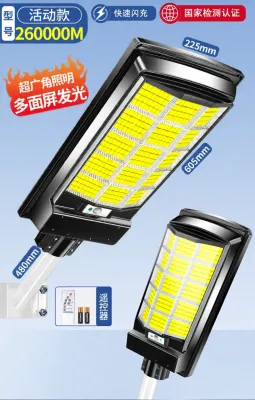
Ignore claims regarding “LED bead count” or arbitrary wattage ratings like “1000W,” which are mathematically impossible for compact solar units. Instead, look for the rated Lumens (lm), which measure actual light output. For critical security areas like gates and driveways, look for a minimum of 800 to 1,500 lumens. For secondary pathways or accent lighting, 100 to 300 lumens is perfectly adequate. Verify the dimming method as well; high-quality security lights utilize Passive Infrared (PIR) motion sensors to transition from a low energy-saving dim mode (or complete off) to full brightness when movement is detected.
Battery Capacity and Solar Panel Wattage
The internal battery voltage (typically 3.2V or 3.7V) and capacity determine how long the light will run. For the Philippine climate, prioritize Lithium Iron Phosphate (LiFePO4) batteries over standard Lithium-ion (Li-ion) cells. LiFePO4 chemistry offers superior thermal stability in high tropical heat and boasts a longer operational lifespan, often exceeding 2,000 charge cycles. Ensure the battery capacity is paired with an adequate solar panel wattage limit (typically 5W to 15W) to guarantee the system can fully charge within 6 to 8 hours of daily sunlight.
IP Rating and Installation Environment
Outdoor solar lights must withstand intense tropical downpours and high humidity. Verify that the product has an Ingress Protection rating of at least IP65, which guarantees the casing is dust-tight and protected against water jets. For highly exposed areas, an IP66 or IP67 rating is recommended. Additionally, evaluate your installation environment. Solar panels require unshaded, direct sunlight exposure—ideally facing south—to generate sufficient power.
Safe Installation Practices
While solar security lights operate on low-voltage DC power and do not require complex mains wiring, physical installation often involves working at height on roof eaves, high walls, or poles. Always use stable ladders, wear appropriate safety gear, and secure the mounting brackets firmly to withstand strong typhoon winds. If you plan to integrate your solar lights with any existing mains-powered security systems, always isolate the power at the circuit breaker and consult a qualified professional electrician.
Smart Buying Strategy: What to Compromise On and What to Demand
When evaluating a B1T1 solar light promotion, establishing a clear list of non-negotiables will help you maximize your investment without compromising on safety.
Your Non-Negotiable Requirements
Never compromise on weatherproofing, battery chemistry, or motion sensor reliability. A solar light with an IP rating below IP65 or a generic, unlabeled battery is highly prone to water damage or premature failure during the rainy season. Accurate PIR motion detection is also essential; a security light that fails to trigger when an intruder approaches fails its primary purpose.
Acceptable Areas for Compromise
You can, however, compromise on non-essential features to stay within a budget. Advanced smart home integration, Wi-Fi connectivity, app-based scheduling, and remote controls are convenient but unnecessary for basic security. You can also accept a standard ABS plastic housing instead of premium aluminum, provided the plastic is UV-treated to prevent cracking under the tropical sun.
Additionally, treat the perceived color temperature as a conditional preference. Cool white light (6000K to 6500K) is highly functional for security because it provides high-contrast visibility, whereas warm white light (3000K) is purely a aesthetic choice for a softer backyard ambiance.
When to Walk Away from a Deal
Walk away from a B1T1 deal immediately if the seller cannot provide a clear local warranty, if the technical specifications are missing or highly exaggerated, or if the shipping fee is inflated to cover the cost of the “free” light. If the seller’s communication is unresponsive or evasive when you ask about battery types or replacement parts, it is a clear sign to look elsewhere.
Final Checkout Checklist
Before finalizing your purchase, run through this quick checklist to ensure a secure transaction:
- Confirm Bundle Contents: Read the fine print to verify that you are receiving two complete, identical solar light units, including all mounting brackets and screws.
- Verify Total Pricing: Check that the final checkout price includes realistic shipping fees and that no hidden handling charges have been added.
- Document the Offer: Take a clear screenshot of the product listing, technical specifications, and advertised warranty terms for future reference.
- Double-Check Seller Ratings: Ensure the merchant's recent customer feedback remains high and free of complaints regarding fake promotional items.
Community discussion
Share your experience or ask a question. Comments are reviewed before publication.