
Finding the perfect replacement for a worn-out or damaged lamp shade requires more than just picking an appealing color or style. Successfully replacing a lamp shade depends on identifying the correct fitter type, measuring the base and hardware dimensions accurately, and calculating proportional clearance to ensure a balanced look. When you search for a “lamp shade cover only,” you are purchasing the shade structure itself without any of the supporting hardware like harps, finials, or adapters. This means you must reuse your existing hardware, making precise measurements of your current setup absolutely essential before finalizing your purchase. In tropical climates like the Philippines, where high humidity can affect the longevity of certain shade materials, choosing the right fit also ensures proper airflow and prevents premature wear.
Identify the Fitter Type First
Before you pull out a tape measure, you must determine how the shade physically attaches to your lamp base. The fitter is the inner metal framework of the shade that connects it to the light source. If you buy a lamp shade cover only, the new shade must match your existing setup exactly, as these products rarely come with extra mounting hardware. There are three primary fitter types you will encounter when inspecting your lamp: spider, uno, and clip-on fitters.
A spider fitter is the most common style for table and floor lamps. It features a metal frame with spokes (usually three or four) that meet at a small central ring. This ring sits on top of a metal support bracket called a harp, which arches over the light bulb, and is secured in place with a decorative screw-on cap known as a finial. If your current lamp has a metal wire arch surrounding the bulb, you have a spider fitter system.
Products mentioned in this guide
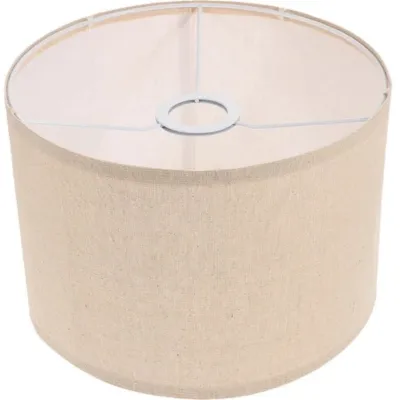
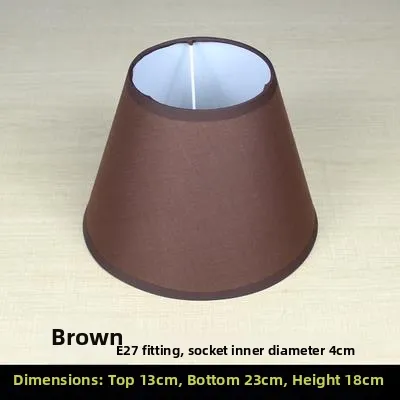
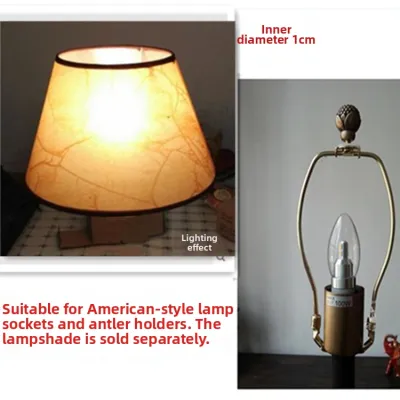
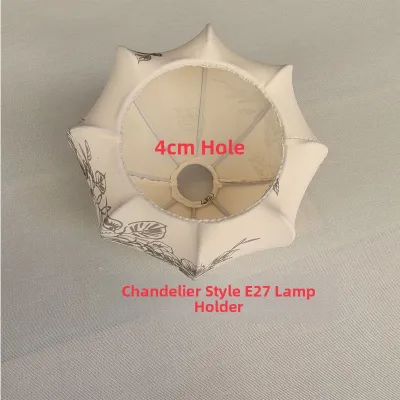
![KOQZM💖[HOT SALE]🎈🎈 E27 Plastic Lampshade Long Tube Conical PP Circular E14 Bulb Cover for Modern Interior Ceiling Pendant Lighting](https://img.lazcdn.com/g/p/87bea486a0c264e8cafc31a34b57c622.jpg_400x400q80.jpg_.webp)
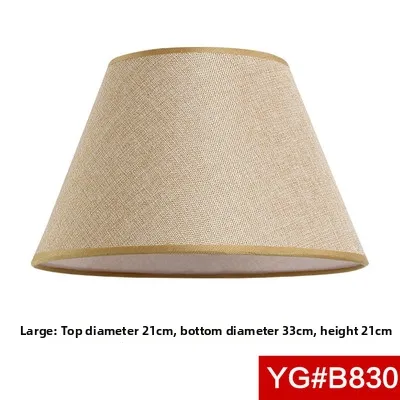
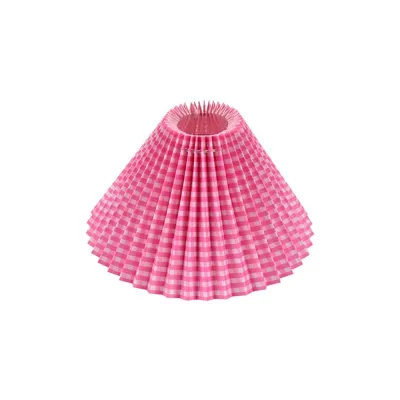
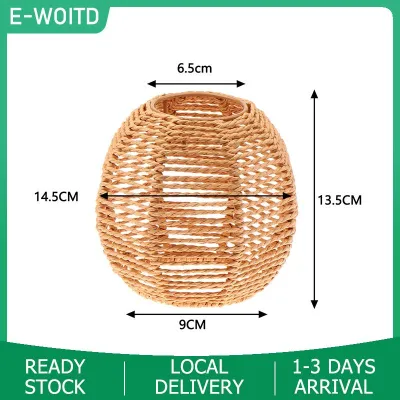
Prices are valid at publication and may change. Please refer to the product page for the latest price.
An uno fitter, by contrast, does not use a harp. Instead, it features a larger central ring that connects directly to the lamp socket. On many uno lamps, this ring is threaded so that it screws directly onto the socket shell before the bulb is installed. On others, it slips over the socket and is held in place by a separate threaded ring. This design is highly common in smaller bedside lamps and downward-pointing task lights.
A clip-on fitter is the simplest design, featuring wire loops that expand to grip the light bulb directly. These are typically found on very small accent lamps or chandeliers. Because they rely entirely on the physical shape of the bulb for support, they are only suitable for lightweight shades.
Identifying these visual cues is the critical first step. Because a “cover only” purchase assumes you will reuse your original hardware, buying a shade with the wrong fitter type will render it unusable without purchasing separate, often hard-to-find adapters.
Measure the Lamp Base and Hardware
Once you have identified your fitter type, you need to take precise physical measurements of your lamp base and its supporting hardware. Grab a reliable measuring tape and place your lamp on a flat, level surface.

Start by measuring the total height of the lamp base. Place the end of your tape measure at the very bottom of the lamp’s pedestal and extend it vertically to the top of the electrical socket, excluding the light bulb itself. This measurement provides the structural foundation for calculating the height of your replacement shade.
Next, measure the width of the base at its widest point. If you have a round ceramic base, measure the diameter across the widest curve. For square or multi-sided bases, measure from one flat edge to the opposite flat edge. This dimension is crucial because it establishes the physical proportion limits for the new shade, preventing you from choosing a cover that makes the lamp look top-heavy or unstable.
If your lamp uses a spider fitter, you must also measure the harp height. Measure from the very bottom of the harp (where it slots into the saddle below the socket) to the top of the flat metal post where the finial screws on. Knowing this height ensures your new shade will sit at the correct level to cover the electrical socket completely without exposing the bare hardware underneath.
Calculate the Ideal Shade Proportions
Achieving a visually balanced look is a matter of geometry and proportion. While personal preference plays a role in decorative style, following standard design guidelines helps ensure your new shade looks integrated rather than awkward.
As a general rule of thumb, aim for a shade height that is roughly two-thirds the height of the lamp base. For example, if your lamp base measures 30 centimeters from the bottom to the top of the socket, a shade height of approximately 20 centimeters will create a balanced silhouette. For the width, the bottom diameter of the shade should be roughly twice the width of the widest part of the lamp base.
These proportions do more than just look good; they serve a functional purpose. A shade with the correct bottom width ensures that the hot air rising from the bulb can escape freely, which is especially important in warm, humid environments. Furthermore, the width must be sufficient to hide the socket, harp, and neck of the lamp from normal viewing angles, ensuring a clean and polished appearance.
Keep in mind that these guidelines are a baseline. Different lamp styles—such as ultra-modern slim metal columns or bulky rustic ceramic jars—may require slight adjustments to these ratios. Always verify your calculated dimensions against the specific aesthetic intent of the lamp manufacturer if documentation is available.
Verify Bulb Clearance and Safety Limits
Safety must always take priority over aesthetics when selecting a replacement lamp shade. A shade that sits too close to the light bulb can trap heat, leading to scorched materials, damaged sockets, or even fire hazards.
First, check the lamp socket’s maximum wattage rating, which is typically printed on a sticker inside or around the metal socket cup. Your replacement shade must allow for adequate heat dissipation based on this rating. In the Philippines, where ambient indoor temperatures can be high, ensuring proper ventilation around the bulb is critical to prevent overheating.
You must maintain a safe minimum distance between the light bulb and the inner walls of the shade. For standard incandescent or halogen bulbs, which emit significant heat, aim for at least 5 to 8 centimeters of clearance on all sides. If you are using energy-efficient LED bulbs, the heat output is lower, but adequate clearance is still necessary to protect the shade material from long-term thermal degradation.
If you discover that the socket’s wattage rating label is missing, worn away, or illegible, or if your replacement shade is made of highly flammable materials like untreated paper or delicate fabrics, stop the selection process. Do not guess the safety limits. Consult the lamp manufacturer’s manual or contact a qualified electrician to inspect the fixture and verify safe operating conditions before installing a new cover.
Final Checklist for Buying a Cover-Only Shade
Before you click “buy” on that online marketplace or head to the local home improvement store, take a moment to run through a final verification checklist. This step prevents the hassle of returning an item that does not fit.
First, cross-reference your identified fitter type (spider, uno, or clip-on) with the product specifications of the shade you want to purchase. Double-check that your calculated base proportions and safety clearance measurements align with the top diameter, bottom diameter, and vertical slope height of the replacement cover.
Second, confirm that the product listing explicitly states “shade only” or “cover only.” Some listings can be misleading, showing images of complete lamps or including extra hardware that you do not need, saving you from spending extra ₱ on unnecessary duplicate hardware.
Finally, check the return and exchange policy of the retailer. Because physical dimensions can sometimes vary slightly from online descriptions, or because the visual weight of the shade might look different in your actual room lighting, having a flexible return option provides peace of mind.
Frequently Asked Questions (FAQ)
Can I use a spider shade on a lamp that requires an uno fitter?
Direct compatibility is not possible because the mounting mechanisms are entirely different; a spider shade requires a harp to rest on, while an uno shade must attach directly to the socket. You cannot simply rest a spider shade on an uno socket without physical modification or additional hardware. While fitter adapters and converter rings exist in the market to bridge this gap, you must check the weight limits and stability of your lamp base before using them, as adapters can shift the center of gravity and make the lamp prone to tipping over.
What should I do if my lamp base measurements fall between standard shade sizes?
If your measurements do not align perfectly with standard off-the-shelf shade sizes, it is generally best to round up rather than down, especially when it comes to the bottom width. Choosing a slightly larger shade ensures that all internal hardware, the harp, and the electrical socket remain fully concealed from view. When making this compromise, always prioritize the correct fitter type and safe bulb clearance over strict adherence to visual proportion rules, as safety and physical compatibility are non-negotiable.
Community discussion
Share your experience or ask a question. Comments are reviewed before publication.