
To choose the right replacement lampshade, you must measure the height of your lamp base from the bottom of the stand to the top of the socket, measure the widest part of the base, and identify whether your lamp uses a spider, Uno, or clip-on fitter. The standard design rule is that the shade height should be roughly two-thirds of the lamp base height, and the shade bottom width should be approximately double the widest part of the base. When you are shopping for a lamp shade cover only, matching these physical dimensions and hardware specifications is crucial to ensure a safe, secure, and visually balanced fit.
Tools and Preparation for Measuring Your Existing Base
To find a replacement shade that fits perfectly, you must gather a few simple household tools. You will need a flexible sewing tape measure, a rigid metal or plastic ruler, and a notepad or smartphone to write down your measurements. A flexible tape measure is excellent for wrapping around curved bases, while a rigid ruler helps you capture straight vertical heights and diameters accurately.
It is a common mistake to measure the old, damaged lampshade you are replacing. If the previous shade was already mismatched or came as an ill-fitting temporary option, copying its dimensions will only repeat those design errors. Instead, focus entirely on measuring the physical lamp base you already own. When shopping for a lamp shade cover only, the physical dimensions, weight, and hardware of your base are what dictate the exact requirements of your new purchase. Taking precise measurements of the base ensures the new shade will align with the lamp’s structural center of gravity and cover all unsightly internal hardware.
Products mentioned in this guide
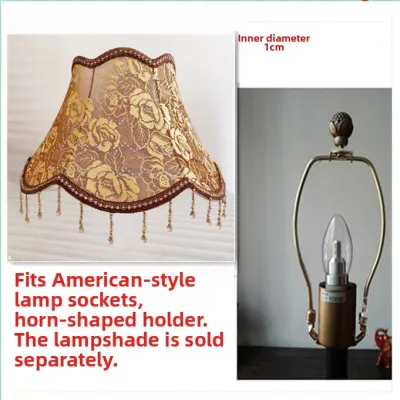
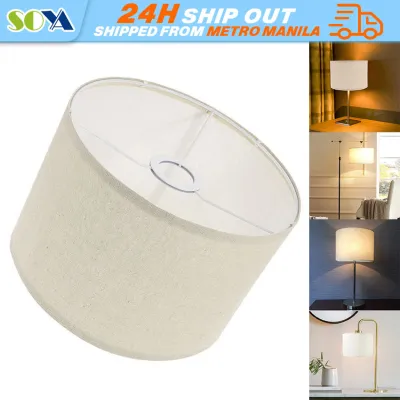
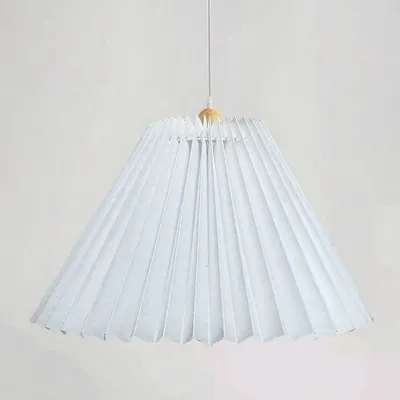
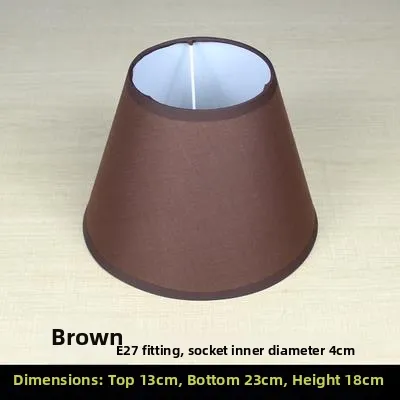
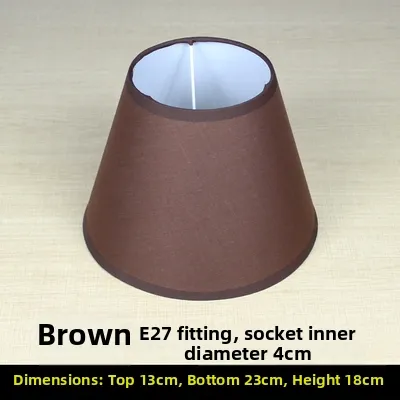
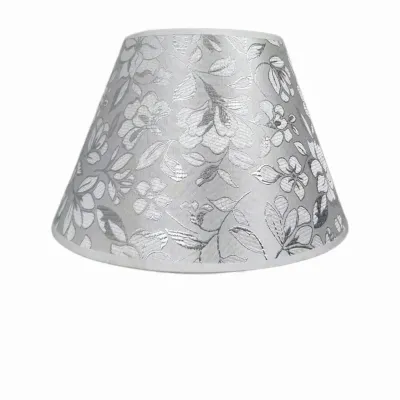
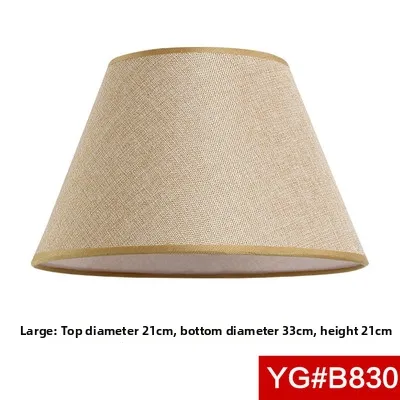
Prices are valid at publication and may change. Please refer to the product page for the latest price.
Identifying the Correct Fitter for a Lamp Shade Cover Only
Before you begin calculating heights and widths, you must determine how the shade physically attaches to your lamp base. This attachment mechanism is known as the fitter. The fitter is the integrated metal frame built into the top or bottom of the shade that connects it directly to the lamp’s hardware. If you buy a lamp shade cover only and the fitter type does not match your lamp’s hardware, you will not be able to mount the shade safely, regardless of how perfect the dimensions are. In the Philippines, table and floor lamps generally rely on three primary fitter configurations: spider, Uno, and clip-on fitters.

Spider Fitters and Harps
The spider fitter is the most common mounting system found on medium to large table lamps and floor lamps. This system consists of a U-shaped metal wire called a harp, which attaches to the lamp base just below the socket and rises up around the light bulb. The shade itself features a built-in, wheel-like metal frame with spokes (the spider) that meet at a small central ring. This central ring sits on top of the harp and is secured in place by screwing a decorative cap, known as a finial, onto the threaded top of the harp.
To measure a spider fitter system, you need to check the inner diameter of the central spider ring. This ring is typically standardized, but verifying its opening ensures it will slide easily over the threaded top of your harp. Next, measure the height of your existing harp from its bottom mounting bracket (the saddle) to the flat top where the spider ring rests. If your existing harp is in good, sturdy condition, you only need to match the spider ring size of the new shade cover. However, if the harp is rusted, bent, or unstable, you must purchase a replacement harp that matches the height of your new shade.
Uno Fitters
Uno fitters are commonly found on smaller table lamps, bedside reading lights, and some imported decorative fixtures. Unlike spider fitters, an Uno fitter does not use a harp or a finial. Instead, the shade has a large central metal ring built directly into its frame, which is designed to slip directly over the lamp’s electrical socket shell. There are two main types of Uno fitters: slip-on Uno fitters, which sit loosely on a ridge on the socket, and threaded Uno fitters, which screw onto threads built onto the outer casing of the socket shell itself.
To ensure compatibility, you must measure the outer diameter of your lamp’s socket shell using your rigid ruler. Because the Uno ring must slide over or thread onto this shell, a mismatch of even a few millimeters will prevent the shade from mounting. Always isolate the power supply by completely unplugging the lamp from the wall outlet before measuring or handling the socket. Installing or replacing an Uno fitter requires removing the light bulb and sometimes unscrewing a threaded collar on the socket shell. Verify your socket interface type (such as a standard E27 threaded socket, which is highly common in the Philippines) and compare it against the manufacturer’s specifications for the replacement shade.
Clip-On Fitters
Clip-on fitters are the simplest mounting style, designed primarily for small accent lamps, wall sconces, or multi-bulb chandeliers. This fitter features built-in wire loops that are engineered to squeeze and grip the glass body of the light bulb itself. Because the entire weight of the shade rests directly on the bulb, this system is strictly limited to lightweight shade covers and specific bulb shapes.
When assessing a lamp base for a clip-on fitter, you must check the shape and size of the bulb currently installed. Standard clip-on fitters are designed to grip a classic A-shape bulb (round, standard household bulb), while smaller flame-shaped or torpedo-shaped chandelier bulbs (often E14 bases) require a specialized, smaller clip-on mechanism. Ensure your light bulb is cool to the touch and the power is disconnected before testing any fit. Lightweight fabric or paper shades work best here; heavier glass or thick plastic covers should never be used with a clip-on fitter as they can crack the bulb or cause the lamp to tip over.
Calculating the Ideal Lampshade Dimensions for Your Base
Once you have identified your fitter type, you can begin calculating the ideal physical dimensions of your new shade. While personal aesthetic preferences play a role in home decor, following established design proportions prevents your lamp from looking top-heavy, bottom-heavy, or awkwardly out of scale. These mathematical guidelines create a harmonious balance between the solid mass of the base and the open volume of the shade.
Determining the Shade Height
To calculate the ideal height for your replacement shade, begin by measuring the height of your lamp base. Place your rigid ruler at the very bottom of the lamp’s foot or stand, and measure vertically up to the top of the electrical socket (just below where the glass bulb screws in). Do not include the bulb itself or the harp in this base height measurement.
As a general design guideline, the height of your shade should be roughly two-thirds of the height of your lamp base. For example, if your lamp base measures 30 centimeters from the bottom of the stand to the top of the socket, your ideal shade height should be approximately 20 centimeters. A shade that is too tall can make the entire fixture look unstable and top-heavy, especially on slim bases. Conversely, a shade that is too short will fail to cover the socket assembly, exposing the metallic harp brackets, wiring, and socket shell to direct view, which disrupts the clean look of your room.
Determining the Shade Width
To find the correct width, use your flexible measuring tape or rigid ruler to find the widest part of your lamp base. For a round base, this is the diameter of the bottom stand or the widest bulge of a ceramic urn-style base. For square or rectangular bases, measure the widest diagonal distance across the base.
The general rule for visual balance is that the bottom width (or diameter) of the shade should be at least 2 inches (about 5 centimeters) wider than the widest part of the base on each side. This means the total bottom diameter of your shade should be roughly twice the width of the widest part of your lamp base. For instance, if you have a ceramic vase-style lamp base with a maximum width of 15 centimeters, your replacement shade should have a bottom diameter of at least 30 centimeters.
Beyond the math, perform a visual check from a normal seated or standing position in your room. The bottom rim of the shade must sit low enough to fully cover the socket, harp saddle, and the neck of the bulb. If you can see the bare metal hardware or the glowing base of the bulb when sitting nearby, the shade’s bottom width or drop height is too small, resulting in harsh, glaring light escaping sideways into your eyes.
Safety Checks: Bulb Wattage and Heat Clearance
When retrofitting a lamp with a new shade, electrical and thermal safety must be your top priorities. Before purchasing any shade, locate the manufacturer’s safety label on your lamp socket or base. This label specifies the maximum allowable wattage (for example, “Max 60W”) and the voltage rating (typically 220V in the Philippines). You must never install a light bulb that exceeds this wattage rating, as doing so can melt the socket, degrade the wiring insulation, and pose a severe fire hazard. Always check the applied product’s label and the treated item’s manufacturer instructions before making any modifications. If instructions conflict, the item is unidentified, or the use is not covered, stop and consult the manufacturer or a qualified professional.
Furthermore, you must maintain adequate physical clearance between the light bulb and the inner walls of the shade cover. This space is called the critical heat clearance. For standard incandescent bulbs, there should be at least 2 to 3 inches (5 to 7.5 centimeters) of open space between the bulb’s glass surface and the shade material to allow heat to dissipate. Different shade materials have varying heat tolerances:
- Paper and Fabric: Highly sensitive to heat; require maximum clearance to prevent scorching, yellowing, or combustion. High tropical humidity in the Philippines can also make these materials more prone to degradation if subjected to constant high temperatures.
- Plastic and Acrylic: Can warp, discolor, or emit unpleasant chemical odors if positioned too close to a hot bulb.
- Glass and Metal: Highly heat-resistant, but they can become extremely hot to the touch and transfer heat to the lamp base if clearance is insufficient.
To mitigate these heat risks, consider upgrading your lamp to an LED bulb. LED bulbs emit significantly less radiant heat than traditional incandescent or halogen bulbs, making them much safer for tight-fitting shades or delicate materials like paper and fabric. Additionally, LEDs are highly energy-efficient and have a long lifespan, which is a practical benefit for managing household electricity costs. Always verify that your chosen LED bulb matches the socket interface (such as E27) and is compatible with your lamp’s dimming method if your base features a dimmer switch, and look for reputable electrical certifications (such as the ICC or PS mark in the Philippines) to guarantee safety.
Final Verification Before Buying a Shade Cover
Before you head to a local home improvement store or browse an online marketplace, compile your measurements into a quick reference checklist. Having these numbers organized will prevent buying errors and save you the hassle of returning a bulky item. Your final checklist should contain these three non-negotiable specifications:
- Fitter Type and Size: Note whether you need a Spider (with ring diameter), an Uno (with socket diameter), or a Clip-On fitter.
- Ideal Shade Height: The calculated range based on the two-thirds rule.
- Minimum Bottom Width: The calculated minimum diameter to ensure the base and hardware are properly balanced and covered.
It is highly recommended to take a clear, well-lit photo of your lamp base with your smartphone, showing the socket area and any existing harp hardware. You can show this photo to retail staff in lighting specialty shops to help them identify compatible options. If you are shopping on an online marketplace, compare your written measurements directly against the seller’s detailed dimension diagrams. Finally, always check the retailer’s return and exchange policy specifically for lampshades. Because minor visual proportions or subtle color differences under local lighting can affect your satisfaction, having a flexible return option is an excellent safeguard when buying a shade cover only.
Frequently Asked Questions (FAQ)
Can I use a lampshade from a different brand on my existing base?
Yes, you can absolutely use a lampshade from a different brand on your existing lamp base. Lampshade fitters and mounting dimensions are generally standardized across the lighting industry. As long as the fitter type (such as a standard spider ring, Uno ring, or clip-on wire) matches your lamp’s hardware and socket dimensions, the brand of the replacement shade cover does not matter. Always prioritize verifying the physical measurements, socket interface compatibility, and wattage limits over matching brand names.
What if my lamp has a non-standard or custom fitter?
If your lamp base features an unusual, antique, or proprietary fitter that does not match standard Spider, Uno, or Clip-On designs, you still have practical options. Look for fitter adapter rings or converter brackets on online marketplaces or in specialty lighting shops. For example, you can find reducer rings that shrink a large Uno opening to fit a smaller socket, or adapters that convert a spider fitter to sit securely on an Uno socket. If your lamp has highly specialized or fragile antique hardware and no standard adapters work, check the manufacturer’s care instructions, consult a local lighting repair specialist, or consider ordering a custom-made shade from a professional fabricator to ensure a safe and proper fit.

Community discussion
Share your experience or ask a question. Comments are reviewed before publication.