
Finding the perfect replacement tiffany lamp shade requires two essential steps: identifying the correct mechanical connection (the fitter type) and calculating the physical proportions of your lamp base. Because authentic stained glass shades are significantly heavier than standard fabric or paper shades, guessing the measurements can lead to unstable fixtures, poor light distribution, or even physical damage. By taking precise measurements of your existing hardware and base, you can ensure a secure, balanced, and aesthetically pleasing fit.
Understanding Tiffany Lamp Shade Fitter Types
To select a compatible tiffany lamp shade, you must first understand the hardware that connects the shade to the lamp base. This connection point is known as the fitter. The fitter is the integrated metal ring or structure built directly into the top or center of the glass shade. It must align perfectly with the mounting hardware on your lamp base to ensure stability.
The industry standard for a classic tiffany lamp shade is the spider fitter. Stained glass shades are constructed from dozens or hundreds of individual glass pieces joined by copper foil and lead solder, making them exceptionally heavy. A spider fitter consists of a small central metal ring with several metal spokes (or “legs”) extending outward to the shade’s rim. This central ring is designed to sit directly on top of a metal wire support structure called a harp, which arches over the light bulb. Once the spider fitter is placed over the top spindle of the harp, it is secured in place by screwing on a decorative metal cap known as a finial.
Products mentioned in this guide
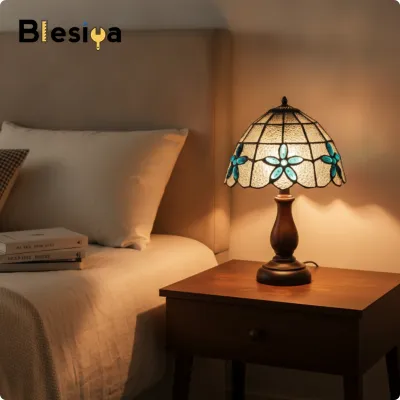
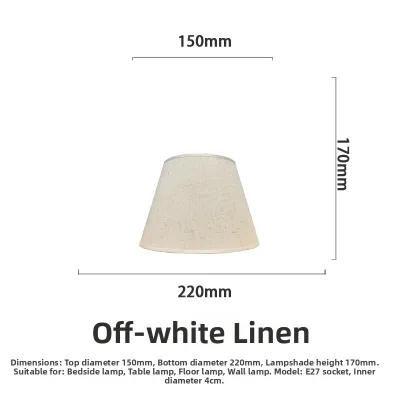
Prices are valid at publication and may change. Please refer to the product page for the latest price.
Other common fitter types are generally unsuitable or unsafe for heavy glass shades:
- Uno Fitters: These feature a threaded ring that screws directly onto the socket. While common for lightweight downward-pointing shades, they are rarely designed to support the substantial weight of a genuine stained glass shade.
- Clip-On Fitters: These attach directly to the glass bulb itself. Using a clip-on fitter with a heavy glass shade is highly dangerous, as the weight can easily shatter the light bulb, damage the socket, or cause the lamp to tip over.
When shopping for a replacement, you will frequently encounter the terms “fitter diameter” and “drop.” The fitter diameter refers to the measurement across the central ring of the spider fitter. The “drop” refers to the vertical distance between the top of the fitter ring and the bottom edge of the shade’s top aperture, which determines how low the shade will sit over the socket assembly.
Step-by-Step Guide to Measuring Your Lamp and Hardware
Measuring the Fitter Diameter and Drop
To ensure your new shade mounts securely without the need for unstable adapters, you must measure your existing hardware with a standard ruler or tape measure.

First, measure the inner diameter of the central ring on your existing spider fitter. For most standard lamps, this inner ring diameter is approximately 0.5 inches (about 1.27 centimeters) to match the standard threaded rod (or “pipe”) at the top of the harp. If your lamp base uses a different mounting style, such as a shade that sits inside a metal ring or collar, measure the outer diameter of that collar precisely.
Second, determine the drop of your shade. Place a flat ruler across the top opening of your current shade, and measure vertically down to the level of the fitter ring. A standard drop is typically 0.5 inches, but some deeper bowl-shaped or geometric shades may have a drop of 1 to 2 inches (2.54 to 5.08 centimeters). This drop is critical because it dictates whether the shade will sit low enough to cover the bulb socket.
If your original shade is missing entirely, you can estimate these requirements by measuring your lamp’s harp. Measure the width of the harp’s top flat seat (where the fitter will rest) and check the height of the harp. If the harp is too short or too tall for a standard drop, you may need to purchase a replacement harp alongside your new shade.
Measuring the Lamp Base for Visual Proportions
While mechanical compatibility ensures safety, matching the physical proportions of the shade to the lamp base ensures visual harmony. A shade that is too small will make the lamp look top-heavy and unfinished, while an oversized shade can overwhelm the base and make the fixture prone to tipping.
Start by measuring the total height of the lamp base. Place your tape measure at the very bottom of the base and measure up to the top edge of the electrical socket. Next, measure the width of the base at its widest point. This could be the diameter of a round brass base or the widest section of an urn-shaped body.
Apply these standard interior design guidelines to find the ideal shade dimensions:
- The Width Rule: The bottom diameter of your replacement tiffany lamp shade should be wider than the widest part of the lamp base. Ideally, the shade's bottom width should be roughly equal to, or slightly less than, the height of the lamp base (excluding the socket).
- The Height Rule: The height of the shade itself should ideally represent approximately one-third to one-half of the total height of the lamp (measured from the bottom of the base to the top of the socket).
- The Coverage Rule: When placed on the lamp, the bottom rim of the shade must extend low enough to completely conceal the electrical socket, harp saddle, and switch mechanisms when viewed from a normal seated or standing position. This prevents harsh, direct bulb glare from escaping underneath.
Selecting the Right Tiffany Shade Dimensions and Shape
Once you have your physical measurements, you must translate them into a purchasing decision that accounts for the unique characteristics of stained glass. Unlike fabric shades that diffuse light evenly through their sides, tiffany lamp shades are made of dense, hand-rolled art glass.
The shape of the shade significantly influences both its visual weight and how it projects light:
- Cone and Geometric Shapes: These shapes feature straight, sloping sides that direct the majority of the light downward. They are ideal for task lighting on desks or reading tables. Because they project light downward, you may want a slightly wider bottom diameter to spread the light across your work surface.
- Bell and Bowl Shapes: These curved shapes offer a softer profile and allow light to spread outward more horizontally. They work exceptionally well for ambient living room lighting.
- Globe or Dome Shapes: These deep, rounded shades enclose the bulb more fully, emphasizing the intricate glass patterns.
Because stained glass can feature highly saturated colors and opaque textures, these shades naturally block more light than translucent fabric. If your room relies on the lamp for general illumination rather than accent lighting, consider choosing a shade that is slightly larger or has a wider bottom aperture. This allows more light to escape and reflect off your table surface. Always cross-reference your calculated dimensions with the exact product specifications provided by the manufacturer, ensuring that the listed fitter type matches your hardware perfectly.
Safety Checks and Installation Tips for Heavy Glass Shades
Installing a heavy stained glass shade requires careful attention to structural integrity and electrical safety. Before beginning any installation or replacement, always isolate the power by unplugging the lamp from the wall outlet.
Because of the high humidity levels in tropical environments like the Philippines, metal components are highly susceptible to oxidation, rust, and corrosion. Inspect your lamp’s harp, socket threads, and finial for any signs of structural weakness. A rusted or brittle harp can buckle under the weight of a heavy glass shade, leading to a dangerous fall. If you notice rust, replace the hardware with a sturdy, thick-gauge brass or treated metal harp.
Additionally, verify the electrical specifications of your lamp base:
- Voltage and Socket Limits: In the Philippines, the standard household voltage is 220V. Ensure your lamp's socket is rated for this voltage and check the maximum wattage limit printed on the socket. Because glass shades trap heat more than fabric, do not exceed the recommended bulb wattage, or switch to a low-heat LED bulb to prevent heat buildup and potential damage to the lead solder joints.
- Certification: Verify that your lamp base or replacement electrical parts carry safety certifications, such as the Philippine Standard (PS) mark or Import Commodity Clearance (ICC) sticker, to ensure safe operation.
When installing the shade, support the heavy glass structure with both hands. Align the spider fitter carefully over the top of the harp spindle. While holding the shade steady, thread the decorative finial onto the spindle. Tighten the finial until it is secure enough to prevent the shade from wobbling, but avoid over-torquing or overtightening, as excessive pressure can crack the glass or solder around the fitter ring. Finally, perform a stability check. Gently nudge the lamp base to ensure it is sufficiently weighted at the bottom to counterbalance the top-heavy glass shade. If the lamp tips easily, the base may require additional weighting or a smaller shade.
Frequently Asked Questions (FAQ)
Can I use a lampshade reducer ring for a Tiffany shade?
While lampshade reducer rings or adapters are highly effective for lightweight fabric, paper, or plastic shades, they are generally not recommended for heavy tiffany lamp shades. Stained glass shades require a direct, flush fit on a heavy-duty harp to distribute their weight evenly. Introducing an adapter or reducer ring can shift the shade’s center of gravity, place uneven stress on the harp, and increase the risk of the shade slipping or falling. For maximum safety and stability, always choose a shade with a fitter that matches your hardware directly.
How do I know if my lamp base is heavy enough for a glass shade?
You can perform a simple physical stability test before purchasing a replacement glass shade. Place your bare lamp base on a flat, level table. Gently tap the top of the harp saddle to see how easily the base sways or lifts. To simulate the weight of a stained glass shade, carefully place a similarly weighted object, such as a small stack of books or a hand weight, onto the top of the harp. If the base wobbles, lifts, or tips over under this simulated weight, it is not heavy enough. In this case, you should select a smaller, lighter shade, or look into adding a weighted base plate to the bottom of your existing lamp base.

Community discussion
Share your experience or ask a question. Comments are reviewed before publication.