
Replacing an old, dusty, or damaged lampshade is one of the easiest ways to refresh your home’s interior decor. If you are looking for a new lampshades cover to restore your light fixture, accurate measurements are essential. Choosing the wrong size or fitting type can result in a shade that wobbles, sits too low, blocks too much light, or even poses a serious safety hazard. To get a perfect fit, you must measure your existing lamp and shade with precision.
By understanding how to measure the top diameter, bottom diameter, slant, and vertical height, you can confidently shop for a new cover. This guide breaks down the exact steps to measure your lamp, identify your hardware, and ensure a secure, visually balanced, and heat-safe installation.
Gather the Right Tools for Accurate Measuring
Before you begin taking measurements, gather a few simple tools to ensure accuracy. Having the correct measuring equipment on hand prevents errors that could lead to buying an incompatible cover.
Products mentioned in this guide
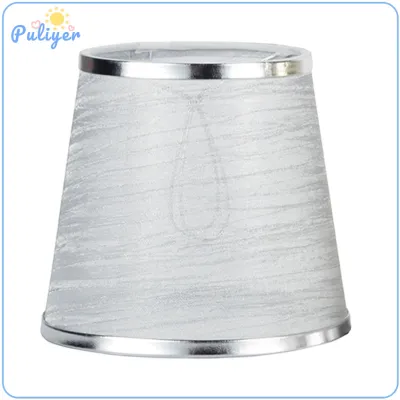
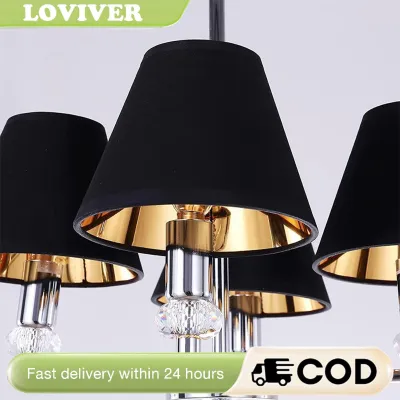
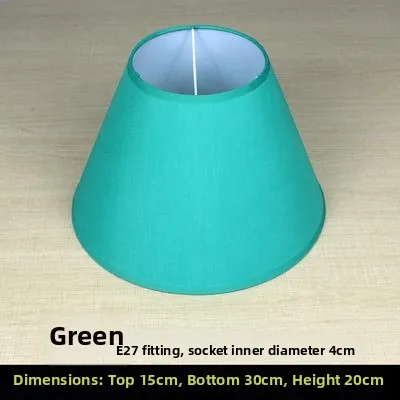
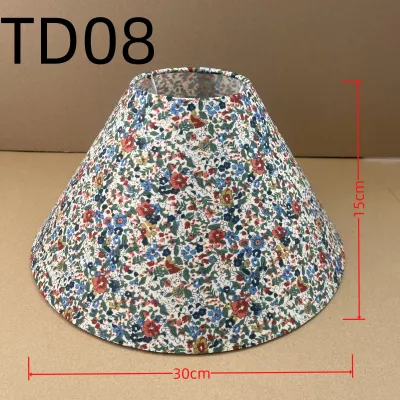
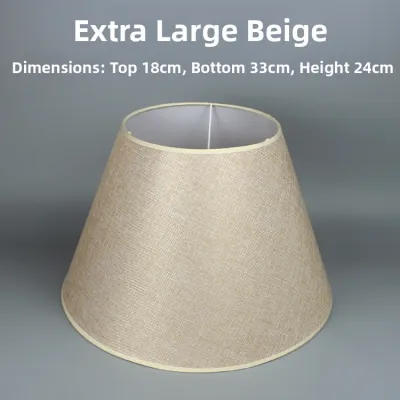
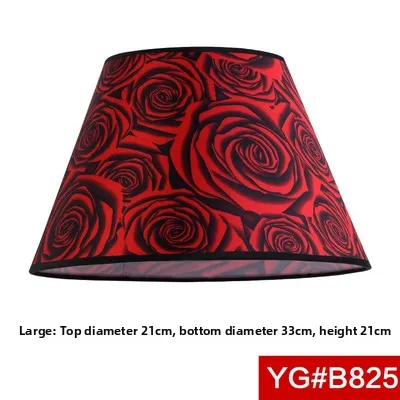
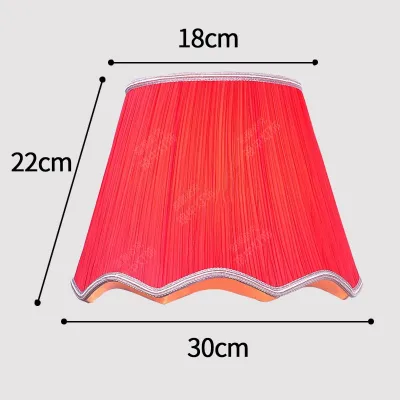
Prices are valid at publication and may change. Please refer to the product page for the latest price.
First, obtain a flexible sewing tape measure. This tool is absolutely essential for measuring the slant of curved, bell-shaped, or empire-style shades, as a rigid ruler cannot follow these contours accurately.
Second, keep a standard metal tape measure or a stiff wooden ruler nearby. These are ideal for taking straight vertical heights and measuring the flat, horizontal diameters of the top and bottom openings.
Third, have a notepad or your smartphone ready to record your findings immediately. Write down each dimension as you measure it, labeling them clearly to avoid confusing the top diameter with the bottom diameter later.
Finally, choose one unit of measurement—either inches or centimeters—and stick with it throughout the entire process. In the Philippines, home decor products on local online marketplaces are often listed in both systems, but keeping your notes in a single unit prevents conversion mistakes.
Step-by-Step: Measuring Your Lampshades Cover Dimensions
To find a replacement cover that fits your lamp perfectly, you must measure four critical dimensions. Manufacturers and retailers always list shades using these four specific metrics, typically in the order of top diameter, bottom diameter, vertical height, and slant.

Top Diameter To measure the top diameter, place your ruler or tape measure straight across the top opening of the shade. Measure from the outer edge of one side directly across the center to the outer edge of the opposite side. If your shade is square or rectangular, measure both the width and the depth of the top opening.
Bottom Diameter The bottom diameter determines how much light spreads downward and how much physical space the lamp occupies on your table or desk. Measure straight across the widest part of the bottom opening, from one outer edge to the opposite outer edge. For square, rectangular, or oval shades, measure both the longest front-to-back and side-to-side dimensions.
Slant (Diagonal) The slant measurement is the diagonal distance along the outer surface of the shade. Place your flexible measuring tape at the very top rim of the shade and run it flush against the outer fabric or material down to the bottom rim. This measurement is crucial for bell, empire, and tapered coolie shades, where the slope is a major design element.
Vertical Height Vertical height is the straight vertical distance from the top plane of the shade to the bottom plane. Set the lampshade flat on a table, hold a ruler vertically next to it, and measure straight up from the table surface to the level of the top rim. Do not confuse vertical height with the slant measurement; the vertical height is always shorter than the slant on any tapered shade.
Proportional Calculations for Missing Shades If your original shade is completely missing or damaged beyond measurement, you can calculate the ideal dimensions using the lamp base. First, measure the height of the visible lamp base from the very bottom of the stand to the bottom of the light bulb socket. The ideal vertical height of your replacement cover should be approximately two-thirds of this base height. Additionally, the bottom diameter of the new shade should be within two inches (about five centimeters) of the base height to maintain visual balance.
Identify Your Lamp's Fitting Type for a Secure Attachment
A replacement lampshade cover will only sit securely if its internal fitting matches your lamp’s hardware. Before purchasing, inspect the metal structure inside your current shade or look at the bare socket of your lamp base.
Spider Fitting The spider fitting is the most common style for table and floor lamps. It features a metal frame with spokes that meet at a small central ring. This ring sits on top of a metal wire frame called a harp, which arches over the light bulb. The shade is secured at the top with a decorative screw-on nut called a finial. If your lamp uses a spider fitting, measure the height of the harp from the saddle base (where it connects below the socket) to the top of the threaded post. This ensures your new shade has enough vertical clearance so the top frame does not rest directly on the bulb.
Uno Fitting An Uno fitting features a large central ring built directly into the shade’s inner frame. This ring threads directly onto the threaded socket of the lamp, holding the shade securely beneath the bulb. Uno fittings are highly common on smaller bedside table lamps and downward-facing reading lamps. To install or replace an Uno shade, you must first remove the light bulb, slide the fitting onto the socket, and then screw the bulb back in.
Clip-On Fitting Clip-on fittings attach directly to the glass envelope of the light bulb itself. The shade has a wire clip built into its top frame that grips the bulb. When choosing a clip-on replacement, check the specific bulb shape and size installed in your lamp. Standard round A-shape bulbs require a larger clip, while small flame-shaped chandelier bulbs require a smaller, narrower clip to grip securely without slipping.
Hardware Safety Warning Never force a mismatched fitting onto your lamp or attempt to bend the metal hardware to make a shade fit. Forcing components can damage the delicate ceramic or plastic light socket, strip the threads, expose live electrical wiring, or create a short-circuit fire hazard. Always verify that the replacement shade’s fitting matches your lamp’s physical interface.
Match the Shape and Proportion to Your Lamp Base
A visually appealing lamp relies on a balanced relationship between the base and the shade. When selecting a replacement lampshade cover, consider how the shapes and proportions interact to create a cohesive look.
Height Proportion As a general design rule, the vertical height of your lampshade should be roughly two-thirds the height of the visible lamp base. This ratio ensures that the lamp does not look top-heavy or bottom-heavy. Additionally, the shade should be tall enough to cover the internal hardware, including the socket and the neck of the lamp, without hiding the beautiful details of the base itself.
Width Proportion The bottom diameter of the shade should be wider than the widest part of the lamp base. Ideally, the shade’s bottom diameter should be approximately equal to the height of the lamp base. If you have a very wide ceramic or wooden base, choose a wider shade to maintain a stable, grounded appearance. A shade that is too narrow will make the lamp look awkward and disproportionate.
Shape Matching Pairing similar shapes is a reliable way to achieve a classic, harmonious aesthetic. For example, a round, spherical, or cylindrical lamp base pairs beautifully with a round drum, empire, or bell shade. Conversely, square or rectangular bases look excellent with square or rectangular shades. If you prefer a modern, eclectic look, you can mix shapes—such as pairing a sleek square base with a round drum shade—but ensure the proportions remain balanced.
Visual Verification Before committing to a purchase, create a quick mock-up. Cut a piece of cardboard or stiff paper to the planned top diameter, bottom diameter, and vertical height of your desired shade. Hold this template against your lamp base at the correct height. This simple visual check allows you to see exactly how the scale and shape will look in your room before spending money.
Verify Bulb Clearance and Heat Safety Before Installing
Safety is the most critical factor when installing a new lampshade cover. Because light bulbs generate heat, improper installation or incorrect dimensions can lead to scorched fabric, melted linings, or a fire.
Before installing any new lampshade cover, verify the electrical specifications of your fixture. Check the applied product’s label and the treated item’s manufacturer instructions for both the lamp base and the replacement shade. Ensure the voltage and base interface match your home’s electrical setup, and verify the maximum wattage limit printed on the lamp socket. Never install a bulb that exceeds this wattage rating, as excessive heat can degrade the shade’s inner lining or damage the socket. Additionally, check for proper electrical certification marks on both the fixture and the replacement parts to ensure safety.
If you are installing a shade on a fixed ceiling pendant or in a damp area like a bathroom or outdoor veranda, ensure the power is completely isolated at the main circuit breaker before starting. For suspended loads or complex installations, always follow the manufacturer’s installation instructions or hire a qualified professional to avoid electrical hazards.
Treat decorative style, perceived color temperature (such as warm white versus cool daylight), and spatial lighting effects as conditional preferences based on your room’s design, rather than universal performance facts. If instructions conflict, the item is unidentified, or the use is not covered, stop and consult the manufacturer or a qualified professional.
Ensure there is adequate physical clearance between the light bulb and the inner surface of the lampshade cover. For traditional incandescent bulbs, maintain at least two to three inches (five to eight centimeters) of space on all sides to allow heat to dissipate. Consider upgrading your lamp to an LED bulb. LED bulbs emit significantly less heat than traditional incandescent or halogen bulbs, making them much safer to use with tight-fitting or delicate fabric shades. This is especially beneficial in the warm, humid climate of the Philippines, where ambient room temperatures are already high and heat dissipation is slower.
Stop Condition If, during a brief test run, the lampshade rests directly against the bulb, blocks essential ventilation paths, or shows any signs of heat discoloration, scorching, or a burning smell, turn off the lamp immediately. Do not use this combination. If instructions conflict, the lamp base is unidentified, or the safety limits of the shade are not covered, stop using the setup and consult the manufacturer or a qualified professional electrician.
Frequently Asked Questions (FAQ)
Can I use a standard lampshade cover on a pendant or ceiling light?
Standard table lamp shades are generally not designed for direct use on pendant or ceiling light fixtures. Overhead fixtures often require specific Euro fitters, specialized UNO adapters, or collar rings that can handle gravity in a suspended position. Additionally, ceiling fixtures have strict weight limits to prevent strain on electrical cords and mounting brackets. Before attempting to adapt a standard shade for ceiling use, check the overhead fixture’s manual or consult a lighting professional to ensure safety and compatibility.
What should I do if my lamp base is missing its harp?
If your lamp base is missing its harp, you have several straightforward options. You can purchase a universal replacement harp kit, which is widely available online and in local home improvement stores in the Philippines for around ₱150 to ₱400. These kits include the saddle base and the wire harp, which are easy to install under the socket. Alternatively, you can search for a replacement lampshade cover that features an Uno fitting or a clip-on fitting, eliminating the need for a harp entirely.
Community discussion
Share your experience or ask a question. Comments are reviewed before publication.