
To make a small room feel significantly larger using a black mirror, position it directly opposite or perpendicular to a primary light source—such as a window or a well-placed lamp—and ensure it reflects an open, tidy view. The dark frame acts as a strong visual anchor, transforming the glass into a simulated doorway or window that draws the eye deeper into the room. In compact living spaces, such as studio apartments in Metro Manila, strategic mirror placement is a highly effective design technique to bypass physical structural limits.
By understanding how a black mirror interacts with light, furniture, and wall space, you can turn a cramped area into an airy, stylish sanctuary. Achieving this effect requires a balance of placement strategy, lighting coordination, and proper physical installation.
Why a Black Mirror Works in Compact Spaces
A mirror with a black frame or black accents operates on the principle of high contrast. While light-colored frames tend to blend into the wall, a bold black frame creates a sharp, defined boundary. This boundary tricks the brain into perceiving the mirror not as a flat object hanging on a wall, but as an actual opening or architectural portal leading into an adjacent space.
Products mentioned in this guide
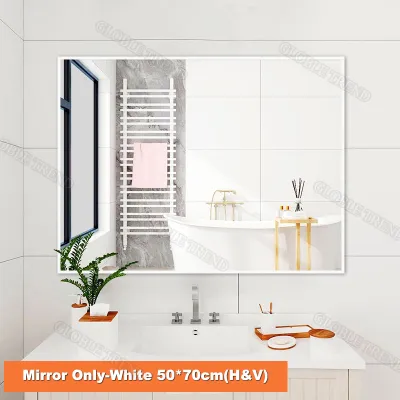
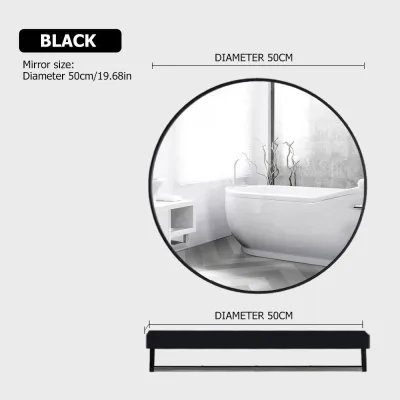
![FineMirrors [Buy 1 Take 1] Wall Mirror 12 x 16 Black](https://img.lazcdn.com/g/p/499c20604af1fa780f6ac7e77a777095.jpg_400x400q80.jpg_.webp)
Prices are valid at publication and may change. Please refer to the product page for the latest price.
This “window effect” is highly effective because the dark border outlines the bright reflection, emphasizing the depth within the glass. The contrast makes the reflected scene appear more vivid and distant, which visually pushes the wall backward.
Additionally, the reflective glass surface amplifies whatever light is available in the room. By bouncing light rays across a compact area, the mirror reduces dark corners and shadows that typically make a room feel cramped and enclosed. This light amplification is especially valuable in tight urban homes where natural light may be limited.
However, it is important to remember that a mirror does not physically create new space; its success relies entirely on how it interacts with your existing room layout, color scheme, and lighting sources. The spatial expansion is a conditional preference, depending on how well you curate the surrounding environment.
Optimal Placement Strategies for Spatial Illusion
Achieving the perfect spatial illusion requires deliberate planning rather than random hanging. Where you place the mirror determines whether it expands the room or simply duplicates a cluttered corner. Let us look at the most effective placement strategies to maximize the feeling of openness in your home.

Reflecting Natural Light Sources
Positioning your black mirror to capture natural daylight is one of the fastest ways to brighten and visually expand a room. To do this, hang the mirror on a wall directly opposite or perpendicular to your main window. This allows the glass to catch the incoming light and throw it deep into the darker zones of the room.
Be mindful of the angle at which the light hits the mirror. If you place it directly opposite a bright, sunlit window, you might experience harsh, blinding glare during the afternoon. To prevent this, tilt the mirror slightly or position it at a minor angle so the reflected light scatters softly across the ceiling or adjacent walls instead of shining directly into your eyes when you are seated.
Another excellent tactic is to align the mirror so that it reflects outdoor elements, such as tropical greenery, balcony plants, or the sky. Bringing these natural outdoor scenes inside breaks down the physical boundaries of your walls. This connection to the outdoors makes the indoor space feel far more expansive than its actual square footage.
Creating Depth Behind Furniture
Placing a large black mirror behind a key piece of furniture is a classic design technique that pushes the visual wall line backward. For instance, positioning a tall, black-framed mirror behind a console table in an entryway, or centering a horizontal one above a sofa or bed, creates a layered effect that tricks the eye into seeing more depth.
When executing this setup, always leave some “breathing room” between the top of the furniture and the bottom of the mirror frame. Pushing the furniture flush against the glass can block the reflection and create a cramped, cluttered look. A gap of at least 10 to 15 centimeters is generally recommended to maintain a clean visual separation.
Furthermore, ensure the mirror is perfectly aligned with the room’s symmetry or existing architectural lines. Aligning the mirror with the center of a sofa, a bedframe, or a structural alcove maintains visual order. This alignment prevents the dark frame from looking out of place or chaotic, which would otherwise disrupt the peaceful flow of a small room.
Expanding Tight Corners and Hallways
Awkward corners and narrow corridors often feel like dead ends that restrict the flow of a home. You can easily open these tight spots by leaning a large, black-framed floor mirror securely in a dark, unused corner. The vertical orientation of a tall floor mirror draws the eye upward, highlighting the ceiling height while turning a dead space into an active focal point.
In narrow hallways, placing a mirror at the very end of the corridor can eliminate the abrupt visual “stop” of a solid wall. The reflection effectively doubles the perceived length of the hallway, making the transition between rooms feel seamless and open.
However, you must avoid a common pitfall: do not place a mirror where it directly reflects a blank, plain wall in close proximity. Doing so only duplicates the empty wall, emphasizing the narrowness of the space rather than expanding it. Instead, ensure the mirror reflects a doorway, a piece of art, or a sliver of an adjacent, well-lit room to maintain the illusion of depth.
Pairing Lighting and Decor to Amplify the Effect
To fully unlock the potential of a black mirror, you must pair it with complementary lighting and thoughtful decor. During the evening, when natural light is unavailable, artificial lighting must step in to keep the spatial illusion alive.
Installing wall sconces on either side of the mirror or placing a stylish table lamp nearby creates secondary light bounces that soften the room’s boundaries. If you plan to install fixed-wired wall sconces, always isolate the power supply at the main circuit breaker before starting any electrical work. For complex wiring installations, damp environments, or working at heights, hire a qualified professional electrician to ensure compliance with local electrical safety standards.
Ensure any paired light fixtures match your home’s voltage (typically 220V in the Philippines) and do not exceed the maximum wattage limit of the fixtures. Checking these electrical specifications prevents overheating and ensures the safety of your home.
Balancing the bold visual weight of a black frame is also crucial. Because black is a heavy, dominant color, balance it by surrounding the mirror with lighter-colored walls, such as off-white, light gray, or soft beige. You can also flank the mirror with light wood floating shelves or minimalist artwork to integrate the dark frame smoothly into your overall decor.
Always curate the “reflection view” with care. Before permanently mounting your mirror, stand where you will most frequently sit or walk and look at what the mirror reflects. If it reflects a cluttered kitchen counter, a pile of laundry, or an open storage rack, it will visually double that clutter. Aim to reflect clean, organized areas, a beautiful indoor plant, or a neat decorative display.
Finally, use warm, diffused lighting (around 2700K to 3000K color temperature) to soften the stark contrast of the black frame. This creates a cozy, inviting ambiance that prevents the dark border from looking too harsh or clinical in a small room.
Placement Mistakes That Shrink the Room
While mirrors are excellent tools for creating space, incorrect placement can easily have the opposite effect, making a small room feel even more enclosed. Avoiding these common mistakes will ensure your design choices achieve the desired results.
One of the most frequent mistakes is hanging the mirror too high on the wall. When a mirror is placed high up, it disconnects from the human eye level and ends up reflecting only the ceiling and upper light fixtures. This fails to capture the usable living space and makes the room feel disjointed. As a general rule, the center of the mirror should sit roughly 150 centimeters from the floor, aligning with the average human eye level.
Another common error is choosing a mirror that is too small for the wall scale. A tiny black mirror on a large, empty wall looks like an afterthought and actually highlights the vastness of the empty wall, making the room feel small and poorly furnished. If you have a large wall, opt for a substantial mirror or group smaller mirrors together intentionally to create a cohesive gallery effect.
Lastly, avoid placing your mirror where it directly reflects dark, heavy wooden furniture or chaotic storage areas. Bouncing back dark colors and messy spaces multiplies the visual clutter and shadows. This instantly shrinks the room’s perceived volume and defeats the purpose of using a mirror to create light and space.
Safe Mounting and Wall Preparation
Before hanging your black mirror, you must address the physical installation requirements to ensure safety and durability. Black-framed mirrors, especially those made of solid wood, metal, or wrought iron, can be exceptionally heavy and require sturdy support.
First, identify your wall type. In many homes in the Philippines, walls are constructed from solid concrete or concrete hollow blocks (CHB), which require a masonry drill bit, plastic tox plugs, or heavy-duty metal expansion bolts. If your wall is made of drywall or gypsum board, you must locate the wooden or metal studs behind the wall using a stud finder, or use specialized toggle bolts designed for hollow walls. Never hang a heavy mirror on drywall using simple nails or adhesive strips.
If the mirror is oversized, exceptionally heavy, or if you are uncertain about your wall’s load-bearing capacity, stop and hire a qualified professional installer. This prevents dangerous falls that could cause severe injury, wall damage, or shattered glass.
Environmental factors also play a massive role in mirror longevity, particularly in tropical climates. The high humidity levels experienced in the Philippines, especially during the wet season, can seep into the backing of poorly sealed mirrors. This moisture causes desilvering—where the reflective backing peels away, leaving dark, unsightly spots—and can warp wooden frames over time.
Before installing, check the manufacturer’s care instructions and ensure the mirror’s backing is sealed or rated for high-humidity environments. If you plan to hang it in a damp area like a bathroom, verify that the frame material is moisture-resistant.
Always use a spirit level and measure at least twice before drilling. Ensuring your heavy black mirror is hung straight and securely on the first attempt protects your walls and guarantees a flawless spatial illusion for years to come.

Community discussion
Share your experience or ask a question. Comments are reviewed before publication.