
Placing a whole body mirror strategically can instantly double the perceived depth of a room, maximize natural light, and make cramped spaces feel open and airy. To achieve this illusion of expansive space, you must position the mirror where it can capture outdoor views, bounce ambient light, and reflect open pathways rather than cluttered corners. By understanding how light interacts with reflective surfaces, you can transform a small bedroom, a narrow hallway, or a dim living area into a bright, visually extended environment.
How Mirrors Create the Illusion of a Larger Space
Mirrors do not physically expand a room, but they trick the human brain by manipulating depth perception and light distribution. When light hits a mirror, it bounces back into the room rather than being absorbed by dark or matte wall surfaces. This reflected light brightens shadows and softens hard boundaries, making walls feel as though they have receded.
Visual continuity plays a major role in this spatial illusion. A large, unbroken reflective surface allows the eye to travel past the physical limits of the wall, creating a sense of extended floor space. When you look into a full-length mirror, your brain interprets the reflected scene as a continuation of the room, effectively doubling the visual footprint.
Products mentioned in this guide
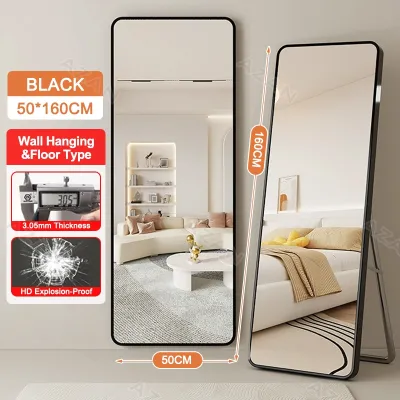
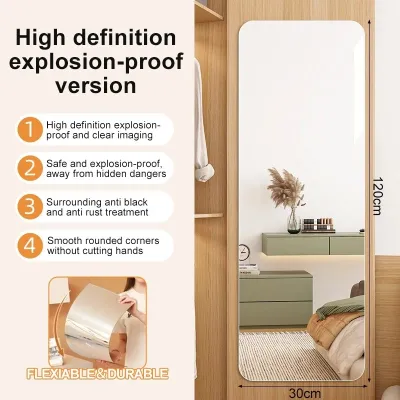
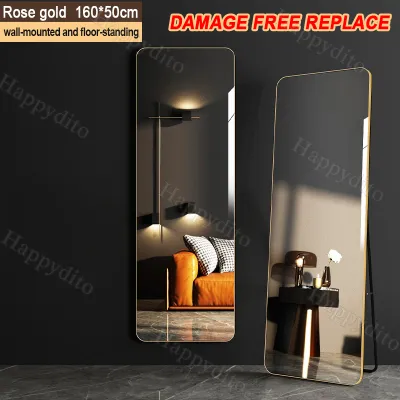
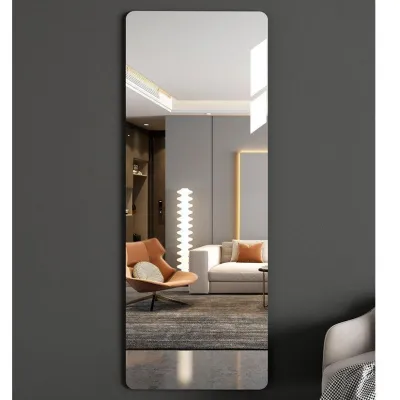
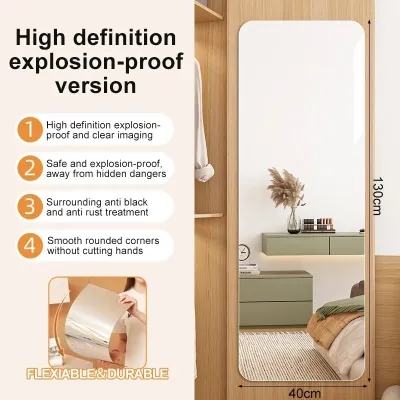
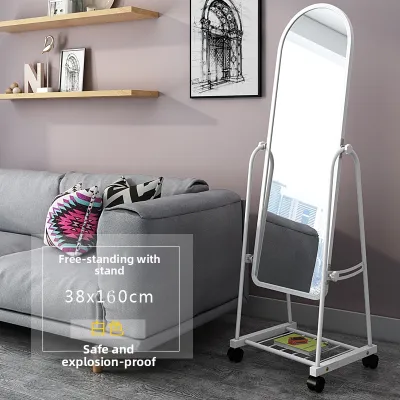
Prices are valid at publication and may change. Please refer to the product page for the latest price.
Fragmented mirrors, such as gallery walls of small mirrors, break up this visual continuity. While decorative, they scatter reflections and can make a small room feel busier. For a true spatial expansion, a single, continuous pane of glass is far more effective because it provides an uninterrupted view of the reflected space.
Optimal Locations for Placing a Whole Body Mirror
Finding the right spot for a whole body mirror requires analyzing how light moves through your home and identifying architectural bottlenecks. You want to place the mirror where it can capture the most active visual elements of the room while remaining clear of daily foot traffic.

Before mounting or leaning a heavy mirror, observe the room’s natural light paths throughout the day. Identify the primary focal points—such as an open doorway, a piece of art, or a window—and consider how reflecting these elements will alter the room’s balance. It is also essential to assess traffic flow to ensure the mirror does not obstruct movement or risk being bumped in high-activity zones.
Reflecting Natural Light and Windows
Positioning a whole body mirror near a window is one of the most effective ways to amplify daylight. Placing the mirror perpendicular or adjacent to a window allows it to catch incoming light at an angle, washing the adjacent walls with brightness and eliminating dark corners. This setup distributes natural light deeper into the room without creating a harsh, direct reflection of the sun.
Alternatively, placing the mirror directly opposite a window creates a “second window” effect. This technique is highly effective in smaller rooms, as it frames the outdoor view and pulls the natural landscape inside. The reflected view of trees, sky, or outdoor greenery adds a layer of organic depth that makes indoor spaces feel less confined.
However, in tropical climates like the Philippines, direct afternoon sunlight can be incredibly intense. Placing a mirror where it receives direct, unfiltered midday sun can cause uncomfortable glare and contribute to localized heat buildup. To prevent this, observe the sun’s path and position the mirror where it captures ambient daylight rather than the direct, scorching rays of the sun, or use sheer curtains to soften the incoming light.
Expanding Narrow Hallways and Corners
Narrow hallways and tight entryways often feel restrictive due to their close, parallel walls. Placing a whole body mirror at the end of a narrow hallway visually extends the corridor, making it appear twice as long. This simple adjustment breaks the visual dead end and makes the transition between rooms feel much more open.
Dark, unused corners can also benefit from a strategically angled mirror. By placing a floor-leaning mirror in a corner and angling it slightly toward the center of the room, you can bounce light into shadowy dead spaces. This eliminates the dark pockets that often make a room feel smaller and more enclosed.
When placing a large mirror in these tight transitional zones, always ensure there is adequate physical clearance. A mirror that protrudes too far into a narrow walkway can become a safety hazard. Opt for wall-mounted designs or ultra-slim profiles in high-traffic areas to keep the pathway completely clear and prevent accidental collisions.
Bouncing Focal Points and Deepening Views
A mirror should always have a purposeful view to reflect. Positioning your whole body mirror to reflect attractive focal points, such as a well-styled bookshelf, indoor plants, or an open doorway, creates a layered visual effect. This draws the eye across the room and gives the impression of a multi-dimensional space.
Reflecting indoor plants is particularly effective in tropical homes, as the lush green foliage reflected in the glass enhances the breezy, natural aesthetic of the room. When the mirror reflects an open doorway, it tricks the eye into seeing an additional room, which instantly reduces any feelings of claustrophobia.
Conversely, you must avoid reflecting cluttered areas or utilitarian spaces. If your mirror faces a messy clothes rack, a laundry basket, or a chaotic desk, it will double the visual noise and make the room feel more cramped. Always stand where the mirror will be placed and look at what it will reflect before finalizing the installation.
Positioning, Height, and Angling Techniques
The physical positioning of a whole body mirror determines how accurately it reflects the room and how well it expands the space. For floor-leaning mirrors, the angle of the tilt is critical. A mirror tilted too far backward will reflect the ceiling rather than the room, which can feel disorienting and fail to create the desired depth. A slight tilt of three to five degrees is usually sufficient to capture both a full-length reflection and a wide view of the room.
For wall-mounted mirrors, height alignment is key to maintaining natural proportions. Align the mirror so that the average eye level of the household falls within the upper third of the glass. This ensures that the reflection feels natural and comfortable to look at, while also maximizing the amount of floor and wall space captured in the reflection.
If you are dealing with uneven floors or walls, which are common in older homes, you can use small wooden shims or adjustable mounting brackets to fine-tune the tilt. This allows you to control the reflection field precisely, ensuring the mirror aligns perfectly with the room’s vertical lines. Always double-check the alignment with a spirit level before securing any mounting hardware.
Frame and Style Choices That Enhance Space
The design of the mirror itself plays a significant role in how it affects spatial perception. Heavy, ornate, or dark wooden frames can add visual weight to a room, making the wall feel closer and more crowded. To maximize the illusion of space, opt for frameless mirrors or those with ultra-thin metal frames. These minimalist designs allow the reflective surface to extend to the very edge, creating a seamless transition between the mirror and the wall.
Choosing a single, large pane of glass is always preferable to a collection of smaller mirrors. While a gallery wall of mirrors can be an interesting design choice, the multiple frames and gaps break up the reflection, which can make a small room feel cluttered. A single, expansive whole body mirror provides an uninterrupted view that is far more effective at stretching the room’s boundaries.
You should also match the mirror’s shape to the architectural lines of your room. Rectangular mirrors align well with tall ceilings and vertical door frames, drawing the eye upward. Arched or rounded full-length mirrors can soften harsh angles in a square room, adding a sense of architectural interest while still providing the necessary reflective surface to open up the space.
Safety, Mounting, and Structural Checks
Whole body mirrors are heavy, and installing them safely requires careful preparation and the right hardware. Before mounting a heavy mirror to a wall, you must verify the wall’s construction. In many homes, walls may be made of concrete, hollow blocks, or drywall. Each material requires specific anchors; standard plastic drywall plugs are not sufficient for heavy glass.
For drywall installations, always locate the wall studs using a stud finder and secure your mounting brackets directly into the wood. If a stud is not available in your desired location, use heavy-duty toggle bolts or threaded anchors rated for the specific weight of your mirror. For concrete or masonry walls, use masonry drill bits and expansion anchors to ensure a secure hold.
If you prefer a floor-leaning mirror, never rely solely on gravity to keep it in place. In a busy household, accidental bumps can easily cause a leaning mirror to slide and tip over. Always secure the top of the mirror to the wall using anti-tip straps, wall cleats, or heavy-duty adhesive brackets designed for this purpose.
High humidity levels, common in tropical climates like the Philippines, can affect both the wall structure and the mirror itself. Moisture can weaken drywall over time and cause cheap mirror backings to degrade or desilver. Ensure your room has adequate ventilation, and check the manufacturer’s instructions to verify if the mirror backing is moisture-resistant. If you are installing a lighted whole body mirror, verify the voltage, wattage limits, and electrical certifications to ensure safe operation in damp or humid environments. If you have any doubts about the structural integrity of your wall or the weight of the mirror, always consult a qualified professional to handle the installation.
Common Placement Mistakes to Avoid
One of the most common mistakes when placing a whole body mirror is failing to consider what lies directly opposite the glass. Reflecting a cluttered shelf, a trash bin, or a busy workspace doubles the visual clutter, making the room feel chaotic and smaller than it actually is. Always ensure the reflected view is clean, organized, or visually appealing.
Another mistake is facing a large mirror directly toward a blank, dark, or unlit wall. This creates a flat, uninviting visual dead end that does nothing to enhance the room’s depth. Instead, angle the mirror slightly to capture a doorway, a window, or a brightly lit area to create a sense of movement and flow.
Finally, avoid placing a mirror in a spot where it receives direct, harsh sunlight for extended periods. The intense heat can damage the mirror’s backing over time, and the resulting glare can make the room uncomfortable to inhabit. Position the mirror where it can catch indirect or filtered light to maintain a comfortable, bright atmosphere.
Frequently Asked Questions (FAQ)
Can I place a whole body mirror in a room with no windows?
Yes, you can successfully use a whole body mirror to open up a windowless room by focusing on artificial light sources. Position the mirror to reflect ambient light from ceiling fixtures, wall sconces, or strategically placed floor lamps. This bounces the artificial light around the room, eliminating dark corners and creating a sense of warmth and depth. Avoid placing the mirror where it reflects a completely dark, unlit corner, as this will only emphasize the lack of natural light.
Should a large mirror be hung vertically or horizontally to widen a room?
The choice between vertical and horizontal mounting depends on the specific dimensions you want to enhance. Hanging a whole body mirror vertically draws the eye upward, which is ideal for rooms with low ceilings as it creates the illusion of height. Hanging a large mirror horizontally along a wall stretches the visual width of the space, making it highly effective for narrow bedrooms or tight dining areas. Balance the orientation with your existing furniture, ensuring the mirror aligns harmoniously with the surrounding layout.

Community discussion
Share your experience or ask a question. Comments are reviewed before publication.