
Placing an led full body mirror in a small room is one of the most effective ways to instantly double the perceived square footage of your space. To achieve the maximum spatial expansion, position the mirror directly opposite a window to bounce natural daylight, tuck it into a dim corner to eliminate cramped shadows, or place it at the end of a narrow hallway to draw the eye forward. By combining the reflective depth of glass with the strategic illumination of integrated LEDs, you can transform a cramped studio apartment or a compact bedroom into an airy, light-filled sanctuary.
Maximizing a limited floor plan requires more than simply leaning a mirror against the nearest wall. The height, angle, light temperature, and physical safety of the installation all play critical roles in how your brain perceives the boundaries of the room. Understanding the relationship between light and visual depth allows you to make deliberate design choices that serve both functional and aesthetic purposes.
How Mirrors and Built-In Lighting Expand Small Spaces
Mirrors expand small spaces by tricking the brain into perceiving a virtual room beyond the physical wall. When light hits the silvered surface of a mirror, it bounces back into the room at the same angle, effectively duplicating the visual field. This reflection of open floor area, furniture, and wall space immediately breaks the visual boundary of a solid wall, making a tight room feel twice as deep.
Products mentioned in this guide
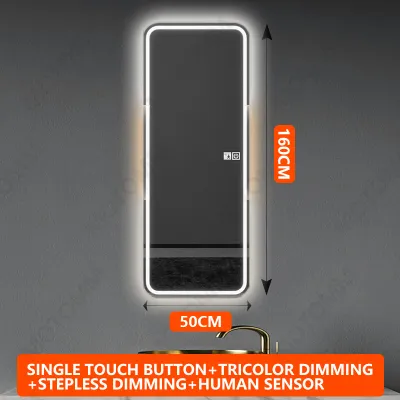
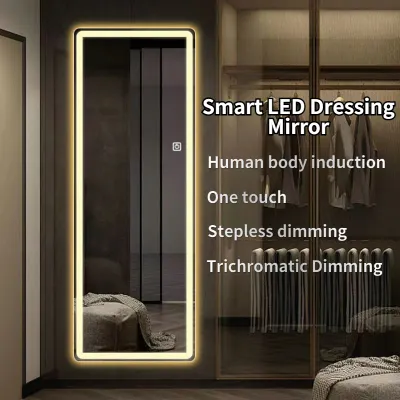
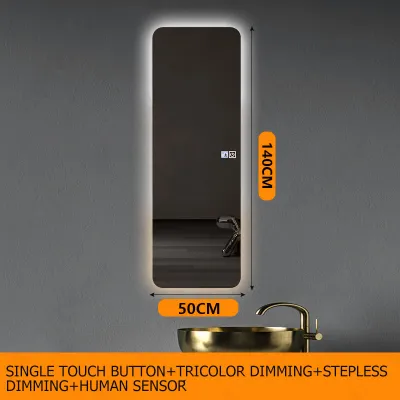
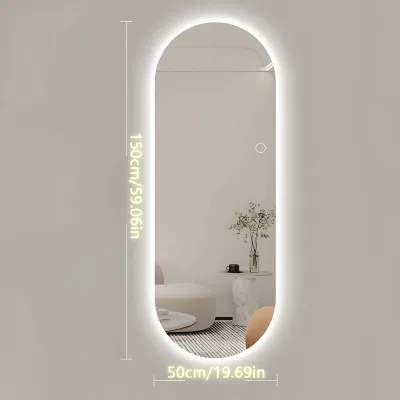
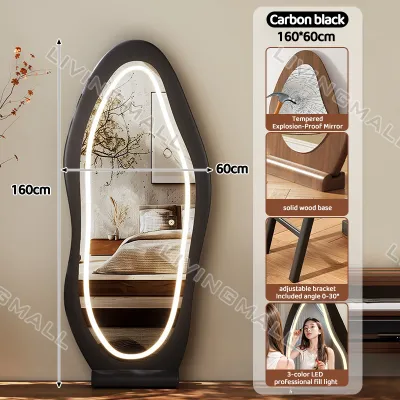
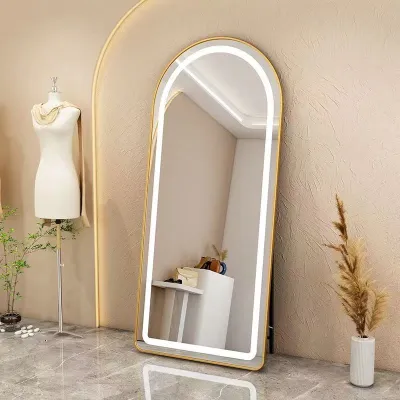
Prices are valid at publication and may change. Please refer to the product page for the latest price.
Standard mirrors, however, rely entirely on the existing ambient light of a room. In compact spaces, overhead fixtures often cast harsh downward shadows, while distant windows leave corners dark and neglected. These dark zones act as visual boundaries, drawing the eye inward and emphasizing the small dimensions of the space. An led full body mirror solves this issue by introducing a dedicated, forward-facing light source that softens these high-contrast shadows.
By integrating the light source directly onto the frame, the mirror ensures that the reflected image and the surrounding wall are evenly illuminated. This continuous glow eliminates dark borders, making the physical limits of your room feel softer and more expansive. Combining natural light reflection during the day with the gentle glow of integrated LEDs at night ensures your room maintains an open, airy atmosphere around the clock.
The Best Locations to Place Your LED Full Body Mirror
To unlock the full spatial potential of your mirror, you must be highly selective about its placement. The primary goal is to position the mirror where it can capture and project the most open space or light, rather than reflecting cluttered areas. A misplaced mirror will simply duplicate visual noise, making a small room feel chaotic rather than spacious.

Before mounting or positioning your mirror, spend a day observing how light moves through your room. Identify where the shadows pool in the afternoon and where the natural light hits strongest. This observation will help you choose one of the high-impact placement strategies outlined below to optimize both daylight and integrated LED illumination.
Opposite a Window to Bounce Natural Light
Positioning your mirror directly across from or adjacent to a window is the most effective way to amplify daytime brightness. The mirror acts as a visual “second window,” capturing the outdoor view and throwing natural light deep into the interior of the room. This simple placement can make a dim, north-facing room feel as bright and open as a spacious corner unit.
In tropical environments where afternoon sunlight can be incredibly intense, direct exposure can sometimes cause uncomfortable glare on the glass or the LED frame. To prevent this, angle the mirror slightly away from the direct path of the sun. This minor adjustment retains the light-boosting benefits while redirecting harsh reflections away from your bed, desk, or primary seating areas.
In a Dark Corner to Eliminate Shadows
Unused, shadowy corners are notorious for shrinking the perceived size of a room. Placing an led full body mirror in a dim corner instantly reclaims this dead space. When you turn on the integrated LED backlight, the corner is bathed in a soft, diffused glow that visually pushes the walls outward and makes the entire floor plan feel cohesive.
When choosing a corner, physical proximity to a power source is a vital practical consideration. You must ensure a nearby wall outlet is safely accessible without stretching power cords across walkways. Exposed, taut cables are not only unsightly but also present a serious tripping hazard in compact living spaces.
Along a Narrow Pathway to Create Depth
Many compact apartments and studio units feature narrow entryways or tight pathways between furniture. Placing a full-body mirror at the far end of a narrow hallway draws the eye forward, creating an illusion of continuous space. This setup tricks the mind into believing the pathway extends much further than it actually does.
If the end of the hallway is not viable, mounting the mirror along the side wall of a narrow corridor works exceptionally well. As you walk past, the side reflection breaks up the restrictive, tunnel-like feel of the walls, making the transition between different zones of your home feel seamless and unconfined.
Adjusting Angles, Height, and LED Settings for Maximum Depth
Once you have selected the ideal location, fine-tuning the physical orientation and lighting properties of your mirror will maximize its spatial impact. Small adjustments in height, tilt, and brightness can dramatically alter how the room’s volume is perceived.
- Wall-Mounting vs. Leaning: Wall-mounting keeps the mirror flush against the wall, preserving 100% of your valuable floor space. This is highly recommended for exceptionally tight rooms. Leaning the mirror against a wall adds a relaxed, modern aesthetic and naturally tilts the glass upward. However, a leaning mirror requires about 10 to 15 centimeters of clearance from the baseboard, which slightly reduces usable floor area.
- Height Placement: If you choose to mount the mirror, position it so the top edge sits at least 15 to 20 centimeters above eye level. Capturing the reflection of the ceiling or the upper portions of your walls introduces a sense of vertical height, which is incredibly effective in rooms with low ceilings.
- LED Brightness and Color Temperature: Opt for cooler, brighter color temperatures (such as 4000K to 5000K, often labeled as cool white or daylight) during the daytime to mimic natural light and keep the space feeling clean and crisp. In the evening, utilize the mirror's dimming function to lower the brightness. This prevents the mirror from becoming an overwhelming, high-contrast light source that accidentally highlights the room's small boundaries in the dark.
- Tilt and Angle: A slight upward tilt—inherent in leaning mirrors—reflects more of the ceiling and upper walls, enhancing the feeling of volume. Be careful to avoid extreme angles that reflect cluttered overhead areas, exposed ceiling joists, or dusty light fixtures, as this will defeat the purpose of creating a clean, expansive look.
Safe Mounting and Power Setup for Compact Rooms
Installing a heavy, powered mirror in a compact space requires careful attention to physical and electrical safety. Because these mirrors contain glass, metal frames, and sensitive electronic drivers, they are significantly heavier than standard decorative mirrors and demand a secure installation.
First, verify the manufacturer’s weight specifications and inspect your wall type. In many residential buildings, walls are constructed from solid concrete, concrete hollow blocks, or drywall. For concrete or masonry walls, you must use a hammer drill, masonry bits, and heavy-duty plastic wall plugs (often locally referred to as tox plugs) or expansion shields. If you are mounting on drywall, use a stud finder to locate the wooden or metal studs; never rely solely on standard drywall anchors for a heavy full-body mirror.
Managing the power cord cleanly is essential for both safety and aesthetics. Run cables flat along your baseboards using paintable plastic cord covers or wire channels. This keeps the installation looking professional and prevents anyone from catching their foot on a loose wire in a high-traffic area.
Electrical safety must always be your top priority. Ensure the mirror’s transformer is compatible with the standard local voltage (typically 220V at 60Hz). Always switch off the power at the main circuit breaker before attempting any hardwiring or outlet modifications. If your chosen placement lacks a nearby outlet, requires hardwiring into your home’s electrical system, or if you are uncertain about the structural integrity of your wall, stop immediately and consult a qualified professional electrician.
Finally, perform an environmental check. High relative humidity in tropical climates can cause moisture to accumulate on electronic components. If you plan to place the mirror near an en-suite bathroom door or in a poorly ventilated room, check the manufacturer’s guidelines and verify the mirror’s IP (Ingress Protection) rating. An IP44 rating or higher is recommended for damp environments to protect the internal LED driver and wiring from moisture damage.
Common Placement Mistakes That Shrink Your Space
Even a premium led full body mirror can make a room feel smaller if placed incorrectly. Avoiding these common design and layout mistakes will ensure your investment successfully opens up your living space.
- Reflecting Clutter: A mirror duplicates whatever is in front of it. If your mirror directly faces a messy desk, a laundry basket, or an open, crowded closet, it will visually double the clutter. This added visual noise makes a small room feel twice as cramped and chaotic.
- Glare and Light Pollution: Avoid positioning the mirror where its brightest LED setting shines directly onto your bed, pillows, or primary workspace. This direct glare can cause eye strain, disrupt your sleep patterns, and make the room feel harsh and uncomfortable at night.
- Blocking Flow: Do not place a leaning mirror in a high-traffic pathway where it can easily be bumped or obstructed. Not only does this present a safety hazard, but squeezing past a large piece of glass also reinforces the feeling of physical restriction in a tight room.
Frequently Asked Questions (FAQ)
What LED color temperature is best for making a small room look bigger?
Cooler color temperatures ranging from 4000K to 5000K (cool white to daylight) are highly recommended for spatial expansion. These temperatures mimic natural outdoor light, which makes surfaces look crisp, clean, and distant. Warm white light (2700K to 3000K) is excellent for creating a cozy atmosphere, but it tends to draw the walls inward visually, making a compact room feel smaller.
Is it safe to lean a heavy LED mirror against the wall without anchoring it?
No, leaning a heavy mirror without securing it is a major safety hazard, particularly in compact rooms where furniture is close together and foot traffic is concentrated. Vibrations from walking, opening doors, or accidental bumps can cause the mirror to slide at the base and fall. Even if a mirror is designed to lean, you should always secure the top of the frame to the wall using heavy-duty anti-tip safety straps or wall brackets anchored into a stud or concrete wall.
Community discussion
Share your experience or ask a question. Comments are reviewed before publication.