
Using a strategic mirror for house decoration is one of the most reliable ways to visually expand a compact living space. By reflecting light and extending sightlines, a well-positioned mirror can transform a cramped room into an open, airy environment. In tropical climates like the Philippines, where urban homes often feature compact layouts or narrow townhouses, maximizing every square inch of visual space is essential. A thoughtfully placed mirror acts as an extra window, breaking up solid walls and making tight rooms feel breezy and open.
Assess Your Room's Lighting and Focal Points
Before hammering any nails or drilling into concrete walls, you must analyze how light and sightlines interact in your room. Walk around the space during different times of the day to locate where natural light enters and where your artificial light fixtures cast their glow. Positioning a mirror to catch these light sources allows you to bounce brightness deep into darker corners, which immediately makes the room feel larger.
Next, identify the visual anchors in your room. A mirror does not just create space; it duplicates whatever is directly opposite its surface. Aim to reflect visually pleasing elements, such as a vibrant indoor plant, a textured accent wall, or a piece of artwork. This duplication doubles the visual impact of your decor and adds layers of depth, making the entire room feel more curated and intentional.
Products mentioned in this guide
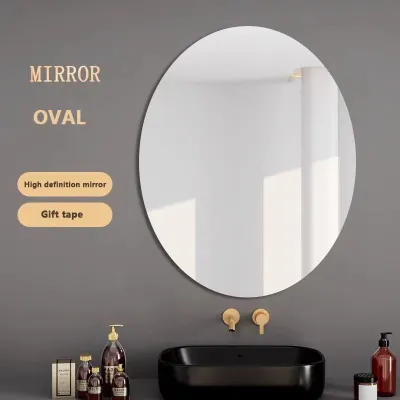
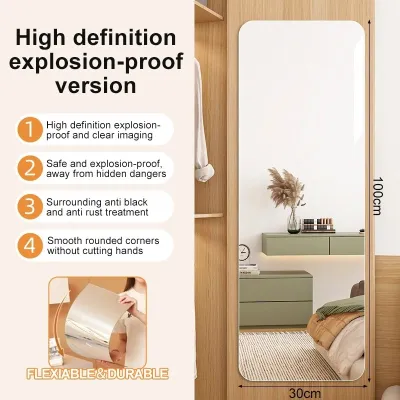
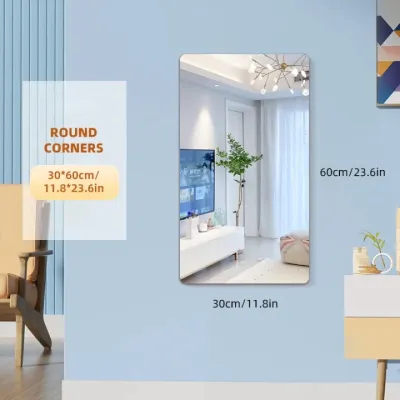
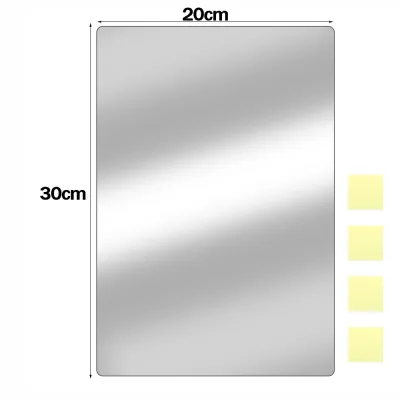
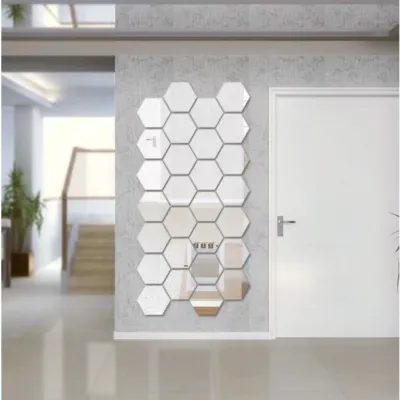
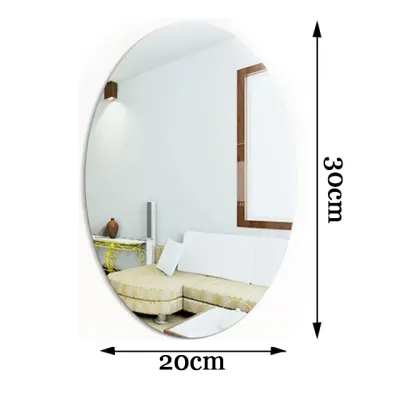
Prices are valid at publication and may change. Please refer to the product page for the latest price.
Conversely, be mindful of what you might accidentally highlight. Avoid placing a mirror where it will constantly reflect cluttered shelves, utility areas, or blank, unpainted walls. Additionally, check for potential glare from harsh overhead bulbs or direct afternoon sunlight, which can cause visual discomfort rather than a sense of openness. Taking the time to map out these reflections ensures your mirror enhances the room rather than cluttering it visually.
Strategic Mirror Placement Techniques
To truly transform your home’s spatial dynamics, you need to apply specific positioning strategies that challenge the physical boundaries of your walls.

Placing a mirror directly opposite or adjacent to a window is a classic technique for a reason. It captures incoming natural light and reflects the outdoor view, effectively creating the illusion of a second window. In compact urban apartments, this simple placement can make a small living room feel twice as bright and significantly more connected to the outdoors. The reflected natural light also helps reduce the need for artificial lighting during the day, keeping the space feeling fresh.
Narrow corridors and entryways often suffer from a claustrophobic tunnel effect. Hanging a mirror at the far end of a hallway draws the eye forward, elongating the passage and making the transition between rooms feel seamless. If the hallway is exceptionally tight, a series of smaller, aligned mirrors along one side can also widen the perceived corridor, breaking up the monotony of long, blank walls.
Positioning a large mirror behind major furniture pieces, such as a sofa, a console table, or a dining set, creates an illusion of layered depth. It makes the wall appear to recede, pushing the visual boundary of the room outward. For instance, a low-profile console table paired with a tall mirror resting behind it creates an elegant focal point that elevates the entire room’s scale. This layering technique tricks the brain into thinking there is more floor space than actually exists.
Corners in small rooms often become dead space that emphasizes the room’s boxy dimensions. Placing an angled floor mirror or a corner-specific mirror setup breaks up these sharp 90-degree angles. This softens the room’s perimeter and coaxes the eye to glide smoothly around the space, making the layout feel more organic, expansive, and less restrictive.
Choosing the Right Mirror Size and Style for Your House
Selecting the perfect mirror for house interiors requires balancing proportions, frame styles, and shapes to complement your existing decor.
When deciding between a single oversized floor mirror and a curated gallery wall of smaller mirrors, consider the visual weight. A large, full-length floor mirror leaning against a wall creates a dramatic, unbroken reflection that maximizes the illusion of height and depth. On the other hand, a gallery wall of smaller mirrors offers a more decorative, artistic touch, though it breaks up the reflection and may not expand the space as cohesively as a single large pane. For maximum spatial expansion, a single large mirror is generally the more effective choice.
Frame choices also play a critical role in spatial perception. Frameless mirrors or those with ultra-thin metal edges blend seamlessly into the wall, offering an uninterrupted transition that makes the mirror feel like a natural extension of the room. If you prefer framed options, choose slim, light-colored, or metallic frames that reflect light. Substantial, heavy wooden frames can work well, but they act as strong visual anchors and are best reserved for larger focal walls where they won’t overwhelm the surrounding space.
The shape of the mirror directs how the eye moves through the room. Round and oval mirrors are excellent for softening sharp architectural lines, making tight spaces feel more relaxed and fluid. Rectangular and square mirrors reinforce clean, modern lines and can be hung vertically to emphasize ceiling height, or horizontally to stretch the perceived width of a narrow wall. Choose a shape that contrasts with your furniture to create a balanced visual rhythm.
Safe Installation and Mounting Guidelines
Hanging a mirror securely is paramount, especially in tropical regions where humidity can affect wall integrity over time, or in homes with solid concrete walls.
First, identify your wall type. Many homes in the Philippines feature solid concrete or hollow block walls, which require masonry drill bits, plastic wall plugs, or heavy-duty concrete anchors. If you are mounting on drywall or plasterboard, you must use specialized toggle bolts or hollow-wall anchors, and ideally, secure the mounting brackets directly into the wooden or metal wall studs. Never rely on simple nails or adhesive strips for heavy mirrors, as the high humidity can weaken adhesives over time, leading to dangerous falls.
Always verify the weight capacity of both the mirror and your mounting hardware before installation. Weigh the mirror on a scale if the packaging does not specify its weight, and choose hardware rated for at least double that amount to ensure a safe margin. This precaution prevents the hardware from pulling out of the wall under constant tension.
For integrated LED mirrors or those with built-in backlighting, safety requires extra steps. Always verify the voltage compatibility (typically 220V in the Philippines), base interface, wattage limits, dimensions, dimming method, installation environment, and electrical certifications before connecting any wiring. If the mirror is going into a damp environment like a bathroom, ensure it has the appropriate IP (Ingress Protection) rating for moisture resistance. Always isolate the power source before attempting any electrical connections.
Know when to stop and call a qualified professional. If you are dealing with exceptionally heavy oversized mirrors, complex fixed electrical wiring, mounting on fragile surfaces like glass tiles, or working at heights, do not attempt a DIY installation. Isolate the power before touching any electrical components, and follow the manufacturer’s instructions strictly to prevent accidents or structural damage.
Common Placement Mistakes to Avoid
While mirrors are incredibly versatile, improper placement can disrupt the flow of your home and create visual confusion.
One common mistake is placing a mirror where it reflects a dead end, the back of a door, or a blank ceiling. This does nothing to enhance the room’s depth and can make the space feel disjointed. Ensure the reflected image always offers something of visual interest or open space, which helps maintain the illusion of continuity.
Avoid hanging mirrors at awkward heights. A mirror hung too high will only reflect the ceiling and upper light fixtures, often causing harsh glare. Conversely, hanging a mirror too low can cut off the reflection of a standing person’s head. As a general rule, the center of the mirror should align close to average eye level to ensure it remains functional and visually pleasing.
Finally, resist the urge to over-mirror a single small room. Placing large mirrors on opposite walls directly facing each other creates a disorienting “funhouse” infinite reflection effect. This can cause visual fatigue and make the room feel unstable rather than spacious. Limit yourself to one or two strategic mirrors per room to maintain a balanced, comfortable atmosphere.
Frequently Asked Questions (FAQ)
Can I place a mirror directly facing the bed?
While placing a mirror in a small bedroom can help it feel more spacious, positioning it directly opposite your bed is generally not recommended. The reflection of movement in the dark or the bounce of early morning light can disrupt your sleep patterns and cause sudden startle responses. If you have limited wall space, consider angling the mirror slightly away from the bed, placing it on the inside of a closet door, or using a standing floor mirror that can be easily turned or covered at night.
How high should I hang a wall mirror?
For standalone wall mirrors, the standard guideline is to position the center of the glass roughly 150 to 152 centimeters (about 59 to 60 inches) from the floor, which aligns with average eye level. If you are hanging a mirror above a piece of furniture like a console table, sofa, or sideboard, leave a gap of about 15 to 20 centimeters (6 to 8 inches) between the bottom of the frame and the top of the furniture. This maintains a cohesive visual connection between the pieces rather than making the mirror look like it is floating aimlessly.
Community discussion
Share your experience or ask a question. Comments are reviewed before publication.