
To make a small room feel significantly larger and more open, the strategic placement of a body mirror with a stand is one of the most effective, non-permanent design solutions available. By positioning the mirror where it can capture natural light—such as perpendicular to a window—and angling it to reflect open areas rather than empty walls or cluttered corners, you can instantly double the perceived depth of your space. This approach relies on simple optical principles to maximize ambient brightness and create visual pathways that trick the brain into seeing a continuous room.
For renters, urban condo dwellers, or anyone dealing with compact living arrangements, a freestanding mirror offers a flexible alternative to heavy, permanently mounted wall mirrors. It allows you to experiment with different layouts as your furniture or seasonal lighting conditions change. While a mirror cannot physically add square meters to your floor plan, mastering its placement can dramatically alter how you experience your home.
How a Body Mirror with Stand Creates the Illusion of Space
The primary magic of a mirror lies in the physics of reflection. When light waves strike the flat, highly polished glass surface of a mirror, they bounce back at the exact same angle they arrived. In a small room, this reflective action serves two critical functions: it redistributes existing light to eliminate dark, oppressive shadows, and it duplicates the visual elements in front of it, creating a simulated sense of depth. Your eyes perceive the reflected image as an extension of the room itself, effectively “pushing back” the wall where the mirror is placed.
Products mentioned in this guide
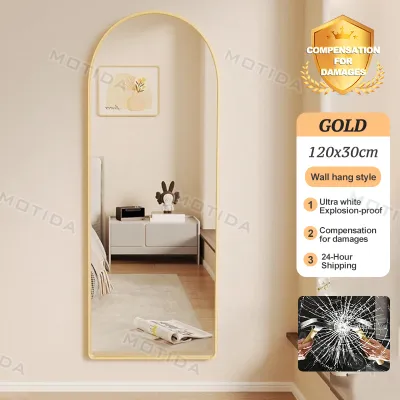
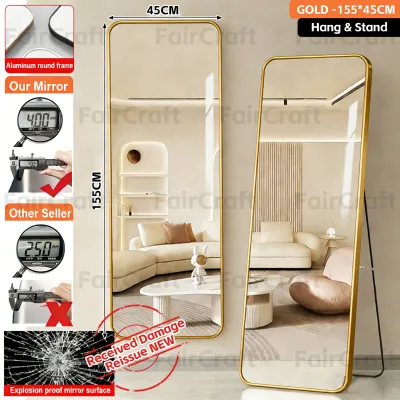
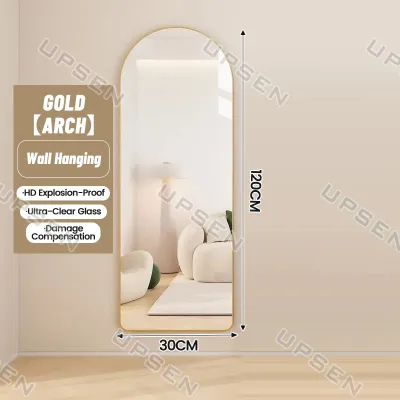
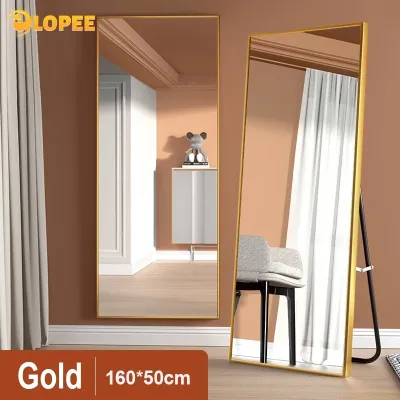
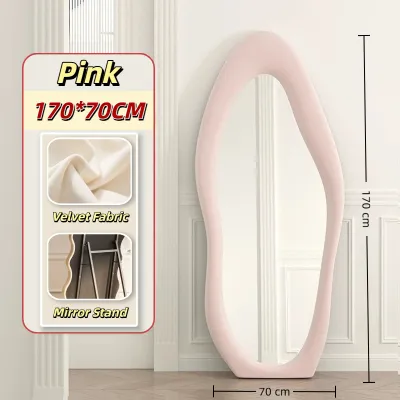
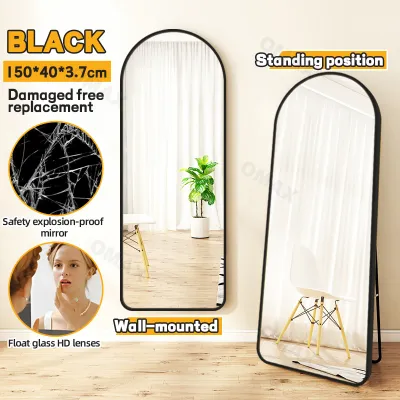
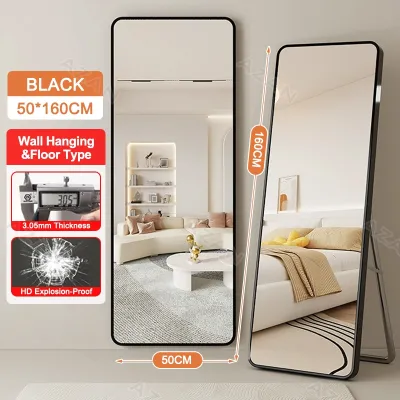
Prices are valid at publication and may change. Please refer to the product page for the latest price.
Unlike wall-mounted models that require drilling, anchoring, and permanent placement, a body mirror with a stand provides exceptional layout flexibility. In compact rental homes or modern studio apartments where wall modifications are often restricted, a freestanding mirror can be set up instantly without risking security deposits. It can be easily pivoted, tilted, or relocated to adapt to changing sunlight patterns throughout the year or to accommodate new furniture arrangements.
However, it is important to establish realistic expectations: a decorative mirror is a visual styling tool, not a structural renovation. The spatial expansion it provides is an optical effect dependent on human perception, lighting quality, and surrounding decor. Understanding how to manipulate these visual variables is the key to turning a simple piece of glass into a powerful spatial design asset.
Strategic Placements to Visually Expand Your Room
Maximizing the spatial impact of your freestanding mirror requires careful positioning relative to your room’s main features. Randomly placing a mirror in a corner rarely yields the desired effect; instead, you must map out how light and sightlines interact within your specific layout.

Bouncing Natural Light to Brighten Tight Corners
One of the most effective ways to make a compact room feel airy is to use your mirror as a light amplifier. Placing a body mirror with a stand perpendicular to or directly opposite a window allows it to catch incoming daylight and bounce it deep into the room. In tropical regions like the Philippines, where sunlight can be intense, this technique helps distribute soft, indirect light without requiring you to open heavy drapes or expose your room to direct solar heat.
To optimize this setup, observe how sunlight moves across your room at different times of the day. During peak afternoon hours, a mirror placed directly opposite a west-facing window might create a blinding glare. To prevent this, slightly angle the mirror’s stand away from the direct path of the sun, or position it perpendicular to the window. This adjustment still catches the ambient brightness while dispersing it gently across the walls, effectively illuminating dark, windowless corners that would otherwise feel cramped and isolated.
If you choose a modern body mirror with integrated LED lighting to assist with low-light corners, always verify its electrical specifications. In the Philippines, residential outlets run on a standard 220V at 60Hz. Ensure any built-in lighting features are compatible with this voltage, carry local safety certifications, and are positioned safely near a wall outlet to prevent loose cords from becoming tripping hazards in tight quarters.
Reflecting Depth and Focal Points to Double Visual Space
A mirror should always have a clear, pleasant view to reflect. If your mirror faces a blank, flat wall, it simply duplicates a sterile surface, which can make the room feel boxed in or visually stagnant. Instead, aim the mirror toward an open doorway, a neatly arranged seating area, or a vibrant focal point such as an indoor plant or a piece of wall art.
This technique relies on the concept of “visual continuation.” When a mirror reflects an open pathway or a doorway, your brain naturally interprets the reflection as a physical extension of the living space, making the boundaries of the room feel less restrictive. Reflecting lush indoor greenery—such as a thriving snake plant or a monstera—not only adds depth but also brings a refreshing, natural element into the room, enhancing the overall sense of openness.
Before finalizing the position, stand in different areas of the room to check what is visible in the reflection. Ensure that the mirror does not accidentally highlight chaotic zones, such as an open wardrobe or a utility area, which can double the perceived clutter and counteract your efforts to create a clean, spacious environment.
Expanding Narrow Areas and Hallways
Narrow corridors, tight entryways, and awkward alcoves are notoriously difficult to decorate without making them feel even smaller. A body mirror with a stand can break up this visual tightness when placed strategically. Positioning the mirror at the far end of a short hallway or narrow walkway visually extends the path, making the corridor appear twice as long as its actual physical dimensions.
In a compact bedroom, you can place the mirror in the narrow gap between large furniture pieces, such as between your bed and a wardrobe. This placement breaks up the heavy, solid visual weight of the furniture, preventing the room from feeling like a series of wooden boxes. The reflective surface introduces a pocket of light and depth right where the space feels most compressed.
When placing a freestanding mirror in a narrow walkway, you must ensure its base does not create a physical obstruction. Choose a model with a slim, low-profile stand or a retractable U-frame that can sit flush against the wall. A visual expansion trick is counterproductive if you find yourself constantly bumping into the mirror’s legs or having to squeeze past it daily.
Adjusting Angles and Tilts to Maximize Depth and Height
The physical structure of a body mirror with a stand—specifically its ability to lean or tilt—gives you unique control over how space is perceived. By adjusting the vertical angle of the mirror, you can emphasize either the horizontal depth or the vertical height of your room.
- Upright vs. Leaning: A mirror that stands perfectly vertical (90 degrees to the floor) provides a direct, true-to-life reflection of the room's horizontal plane. This is excellent for duplicating floor space and extending sightlines across a room. However, leaning the mirror slightly backward can introduce a dramatic change in perspective.
- The Upward Tilt: When you tilt the top of the mirror slightly backward, the glass reflects more of the ceiling and the upper portion of your walls. This upward angle draws the viewer's eye toward the ceiling, creating the illusion of loftier, taller walls. This is particularly beneficial in standard apartments or condos with low ceilings, as it minimizes the heavy, compressed feeling overhead.
- Managing Glare and Reflections: When adjusting the tilt, pay close attention to how the angle affects the comfort of those using the room. A mirror tilted too far upward might catch overhead light fixtures, creating harsh glare for anyone sitting on a nearby sofa or lying in bed. Fine-tune the angle so that it captures soft ambient light from the ceiling rather than direct light bulbs.
- Anchoring the Base: Ensure the stand's base is adjusted to hold the mirror securely at your chosen angle. The base should look solid and intentional, grounding the mirror as a deliberate piece of furniture rather than a temporary addition that might slip or slide out of position.
Placement Mistakes That Accidentally Shrink Your Space
While mirrors are excellent tools for creating space, poor placement can easily backfire, making a small room feel chaotic, dark, or physically restricted.
- Reflecting Clutter: A mirror duplicates whatever is in front of it. If your mirror directly faces an unmade bed, a pile of laundry, or an open shelf packed with miscellaneous items, it effectively doubles the visual noise in the room. This added visual clutter makes the space feel instantly smaller and more disorganized.
- Creating "Black Holes": Placing a large mirror in a deeply shadowed corner without any direct or ambient light source can have a negative effect. Instead of brightening the room, the mirror will reflect the darkness of the corner, creating a heavy, dark void that visually shrinks the room's boundaries.
- Overly Heavy Frames: In a small room, the frame of the mirror matters as much as the glass. A body mirror with an exceptionally thick, dark, or heavily ornate frame can visually dominate a compact space, making the room feel crowded. For small areas, opt for thin metal frames, light-colored wood, or frameless designs that blend seamlessly into the background.
- Obstructing Traffic Flow: Never sacrifice physical usability for a visual trick. If a freestanding mirror blocks a pathway, prevents a cabinet door from opening fully, or forces you to walk awkwardly around it, it does not belong in that spot. The physical frustration of navigating a blocked room will quickly outweigh any optical illusion of space.
Ensuring Stability and Safety in Compact Layouts
Because a body mirror with a stand is a large, heavy object resting on the floor, safety must be your top priority—especially in compact layouts where space is limited and accidental bumps are more likely to occur.
Before placing your mirror, verify the manufacturer’s specifications regarding stand weight capacity, base footprint, and overall stability. If you live in an earthquake-prone region like the Philippines, or if your household includes active pets or young children, relying solely on a basic folding stand is a safety hazard. In these environments, it is highly recommended to use anti-tip straps, heavy-duty furniture tethers, or discrete wall anchors to secure the top of the mirror frame directly to a wall stud.
Additionally, check that your flooring is perfectly level. Uneven floor tiles, warped wooden planks, or thick rugs can cause a freestanding stand to wobble. To prevent sliding and protect your floors from scratches, place non-slip rubber or felt pads under the base of the stand.
Safety Boundary: If your freestanding mirror wobbles, feels top-heavy, or cannot be secured safely due to uneven flooring or high traffic, do not attempt to use it in a narrow walkway. In such cases, stop and consult the manufacturer’s instructions, or hire a qualified professional to safely wall-mount the mirror or install secure anchoring hardware.
Frequently Asked Questions (FAQ)
Can I place a body mirror with a stand in a room with no windows?
Yes, a body mirror with a stand can still be highly effective in a windowless room, such as an interior bathroom or a basement studio. Instead of natural daylight, position the mirror to reflect strategic artificial light sources, such as a warm floor lamp, wall sconces, or overhead ambient lighting. Ensure the mirror faces light-colored, uncluttered walls to maximize the reflection of light and create a brighter, more open atmosphere.
Does the shape of the mirror affect how big the room looks?
Yes, the shape of the mirror influences how your eyes perceive the proportions of a room. Tall, rectangular mirrors emphasize vertical lines, drawing the eye upward and making low ceilings feel higher. Arched or round-top mirrors, on the other hand, introduce soft curves that break up the harsh, boxy angles of a small room, adding a sense of softness and architectural interest while still providing the depth-enhancing benefits of a standard full-length mirror.

Community discussion
Share your experience or ask a question. Comments are reviewed before publication.