
Hanging a mirror on a door is one of the smartest design choices you can make to expand a cramped bedroom, a narrow hallway, or a compact studio apartment. By utilizing otherwise unused vertical space, you avoid cluttering your walls while introducing a powerful tool for bouncing light around the room. The key to success lies in strategic placement, ensuring the glass captures open space and natural light rather than reflecting chaotic corners or bulky furniture.
To achieve the ultimate illusion of depth, you must align the mirror with the room’s natural light paths and structural layout. A well-positioned door mirror acts like a virtual window, tricking the eye into perceiving a room that extends far beyond its physical boundaries. Achieving this effect requires a careful assessment of your door’s structure, the surrounding layout, and the specific mounting methods that keep your mirror secure in a high-traffic area.
Assess Your Door Type and Room Layout First
Before purchasing any hardware or unboxing a new mirror, you must evaluate the physical condition and structural limits of the door itself. Doors in many modern homes and apartments, particularly interior bedroom or bathroom doors, are often hollow-core structures made of thin plywood or composite panels over a honeycomb cardboard interior. These doors cannot support heavy, solid-wood framed mirrors mounted with standard screws, as the thin outer skin lacks the density to hold threads under tension.
Products mentioned in this guide
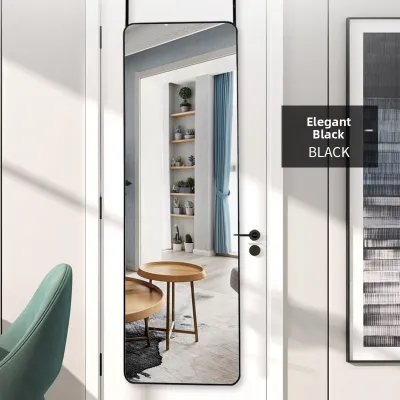
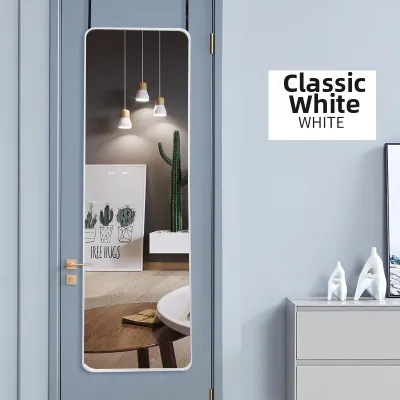
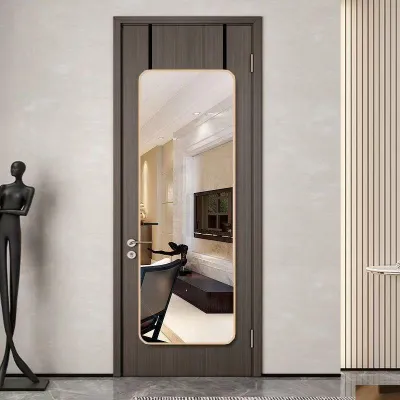
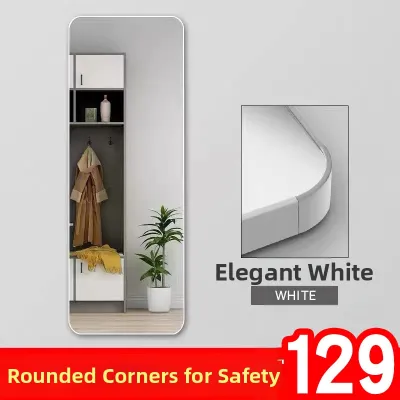
Prices are valid at publication and may change. Please refer to the product page for the latest price.
Conversely, solid-core wooden doors offer a robust foundation that can easily support heavier glass and substantial frames. You can identify a hollow-core door by tapping on the center panel; a hollow, drum-like sound indicates a lightweight interior, while a solid, dull thud suggests a solid-core structure. Additionally, check the condition of the door hinges and the clearance between the top of the door and the frame, as even a slight sag can cause the door to scrape against the floor once the weight of a mirror is added.
Finally, observe the door’s swing path and the surrounding room layout. A door that swings open into a narrow corridor or directly against a wardrobe requires a low-profile mirror that will not obstruct movement or strike adjacent surfaces. Take note of what the mirror will reflect when the door is fully open, half-open, and completely closed, ensuring that the glass consistently captures light and open space rather than a cluttered laundry basket or a dark, narrow gap behind a wardrobe.
Best Placements to Maximize the Illusion of Space
The proportions of your mirror relative to the door panel play a crucial role in how effectively it expands the room. A full-length mirror is generally the most effective choice for creating an illusion of height and depth, as it draws the eye upward and reflects both the floor and the ceiling. Half-length or accent mirrors can also work, but they must be carefully proportioned so they do not look like an afterthought or visually slice the door panel in half.

To create a seamless visual transition, the center of the mirror should ideally align with the average eye level of the room’s occupants, which is typically around 1.5 meters from the floor. This height ensures that when you look across the room, the reflection feels like a natural extension of the living space rather than a distorted, low-angle view. If your room has low ceilings, positioning the mirror slightly higher on the door panel can draw the gaze upward, making the entire space feel loftier and more open.
Hanging the Mirror on the Back of the Door
Placing the mirror on the back of the door—the side that faces the interior of the room when the door is closed—is an excellent strategy for rooms where space is at an absolute premium. This placement is particularly effective for doors that remain open for most of the day, such as those in home offices or guest bedrooms. When the door is swung open flat against an adjacent wall, the mirror can reflect the opposite side of the room, instantly doubling the visual width of a narrow entryway or corner.
However, you must verify that the mirror frame and mounting hardware will not strike the wall, baseboards, or nearby furniture when the door is opened fully. In tropical climates where high humidity can cause wooden doors to swell or warp slightly, maintaining a small clearance gap is essential to prevent the mirror from rubbing against the door frame. Installing a soft doorstop on the floor or wall is a simple, highly effective way to prevent accidental impacts that could shatter the glass.
Mounting the Mirror on the Front Door Panel
Mounting the mirror on the front-facing panel of the door—the side visible when the door is closed—is ideal for maximizing ambient light and expanding visual depth in dark or windowless entryways. When the door is closed, the mirror acts as a prominent focal point that catches light from nearby windows or hallway fixtures, bouncing it deep into the room’s interior. This setup is highly beneficial for small studio apartments where the main entrance opens directly into the living area.
When choosing this placement, pay close attention to what the mirror reflects from various angles in the room. Avoid positioning the door so that the mirror directly reflects high-glare light sources, such as unshaded bulbs or intense afternoon sun, which can cause uncomfortable eye strain. Instead, aim to capture soft, indirect natural light or a pleasant view of a well-decorated wall, which helps to blur the physical boundaries of the room and make it feel significantly larger.
Adjusting Angles and Managing Reflections
While most door mirrors are mounted flat against the door surface, introducing a very slight forward tilt at the top can dramatically enhance the spatial illusion. A subtle downward angle allows the mirror to capture more of the floor plane and the lower half of the room, which visually elongates the floor area and makes the room feel wider. This technique is especially useful in narrow bedrooms where the distance between the door and the opposite wall is limited.
To make the illusion convincing, you must curate the reflection by treating the mirror like a picture frame. Position the mirror so that its reflection captures a deliberate, visually appealing focal point, such as a healthy indoor plant, a piece of artwork, or a neatly styled bookshelf. This creates a sense of depth and purpose, drawing the eye into the reflection and making the room feel like it has an additional alcove or adjoining space.
Conversely, you must actively avoid reflecting heavy, bulky furniture pieces, such as a massive dark wood wardrobe or a cluttered desk. Reflecting these items essentially doubles their visual weight in the room, making the space feel more cramped, enclosed, and chaotic than it actually is. If your room layout forces the mirror to reflect a large piece of furniture, try shifting the furniture slightly or using lighter-colored covers to soften the visual impact.
Safe Installation and Door Mirror Hanging Methods
Selecting the right hardware and mounting technique is critical to ensuring your mirror remains securely attached to the door during daily use. Over-the-door hooks are a popular, non-invasive option that is highly suitable for lightweight mirrors and rental properties where drilling is prohibited. When using these hooks, check the bracket thickness to ensure they fit snugly over the top of the door without interfering with the door’s ability to close smoothly within the frame.
For hollow-core doors where drilling is risky, heavy-duty adhesive strips or mounting tapes offer a secure, drill-free alternative. When using adhesives, it is vital to clean both the door surface and the mirror backing with rubbing alcohol to remove dust and oils, ensuring a strong bond. Always verify the weight limits specified on the adhesive product label and ensure the total weight of your mirror falls well within those limits, keeping in mind that high humidity can sometimes weaken adhesive bonds over time.
For heavier, solid-wood framed mirrors mounted on solid-core doors, screws and wall anchors provide the most reliable and permanent solution. Always pre-drill pilot holes using a drill bit slightly smaller than the screw shank to prevent the wood from splitting or cracking. Use sturdy mounting brackets or D-rings attached directly to the mirror frame, and ensure the screws penetrate deep enough into the solid wood core to support the weight without pulling out under stress.
Regardless of the mounting method you choose, always cross-reference the mirror manufacturer’s weight specifications with your door’s structural limits before beginning the installation. If you are unsure about the door’s material or lack the tools to perform a secure installation, consulting a qualified local handyman or carpenter is a wise step to prevent damage to your home or potential injury from a falling mirror.
Common Placement and Installation Mistakes to Avoid
One of the most common mistakes when hanging a door mirror is positioning it too high or too low on the door panel. A mirror hung too high will only reflect the ceiling and the tops of door frames, which does nothing to enhance the room’s depth and cuts off the reflection of anyone trying to use it. Conversely, a mirror hung too low can make the room feel bottom-heavy and fail to capture the light streaming in from windows.
Another frequent error is ignoring the physical layout of the door’s hardware, such as the handle, lockset, or decorative panels. Placing a wide mirror too close to the door handle can make it difficult to grasp the knob or operate the key, leading to accidental scratches on the mirror frame or glass over time. Always leave a comfortable clearance of at least a few centimeters between the edge of the mirror and any moving door hardware.
Finally, using inadequate or mismatched mounting hardware is a recipe for disaster in a high-traffic area. Standard wall hangers or thin wire loops are not designed to withstand the constant movement, vibrations, and occasional slamming of a door. Using weak hardware can cause the mirror to swing wildly, scratch the door’s paint or wood finish, or eventually slip and shatter on the floor, creating a safety hazard for everyone in the household.
Frequently Asked Questions (FAQ)
Can I hang a heavy mirror on a hollow-core door?
Hollow-core doors do not have the internal structural density to support heavy screws, anchors, or substantial weight, as their interiors are mostly empty space or cardboard honeycomb. Attempting to hang a heavy mirror on a hollow-core door using standard screws will likely result in the hardware pulling out and damaging the door. For these doors, it is highly recommended to use lightweight acrylic mirrors or to strictly adhere to the weight limits of heavy-duty, moisture-resistant adhesive strips designed for smooth surfaces.
Will a door mirror scratch the paint or wood finish?
A door mirror can easily scratch or scuff the door’s finish if it is allowed to swing or vibrate against the panel during daily use. To prevent this damage, apply soft felt pads, silicone bumpers, or double-sided foam tape to the back of the mirror frame and behind any over-the-door hooks before hanging. These protective barriers absorb vibrations and prevent direct contact between the hard mirror frame and the door’s painted or varnished surface.
How do I stop the mirror from rattling when the door closes?
To eliminate annoying rattles and keep your mirror secure, you need to dampen the movement between the mirror backing and the door panel. Applying small strips of foam weatherstripping or double-sided foam tape to the bottom corners of the mirror backing will absorb the impact of the door closing. Additionally, if you are using over-the-door brackets, ensure they match the exact thickness of your door, or insert small cardboard or felt shims into any gaps to prevent the brackets from shifting.

Community discussion
Share your experience or ask a question. Comments are reviewed before publication.