
Positioning a full-length mirror strategically is one of the most effective ways to visually expand a compact room. By capturing natural light, reflecting open pathways, and drawing the eye upward, a well-placed mirror breaks the physical boundaries of a tight space. Rather than serving as a simple decorative accessory, a large mirror acts as an architectural tool that alters how you perceive depth and volume in your home.
To achieve this spacious effect, you must look beyond empty wall space and focus on what the mirror will reflect. Strategic placement requires an understanding of light behavior, room geometry, and safety. Whether you are dealing with a cramped bedroom, a narrow entryway, or a windowless corner, the right positioning techniques will instantly make your living space feel brighter, loftier, and more open.
Understanding How Mirrors Create the Illusion of Space
Mirrors do not actually add square footage, but they fundamentally change how human eyes perceive a room’s boundaries. In small or poorly lit rooms, shadows tend to pool in corners and along walls, making the physical limits of the space feel rigid and constricting. A full-length mirror counteracts this by catching both natural daylight and artificial light, bouncing it back into dark areas to soften harsh shadows and create a more uniform brightness.
Products mentioned in this guide
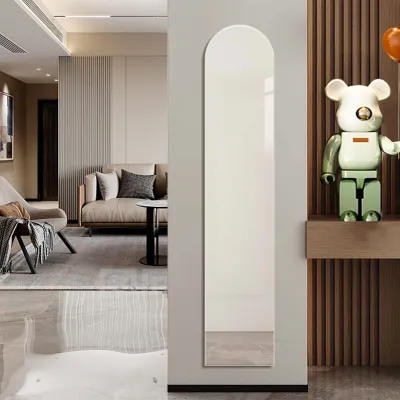
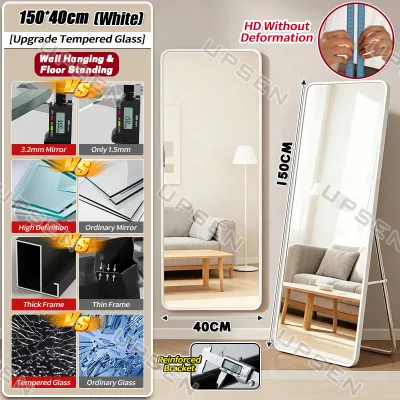
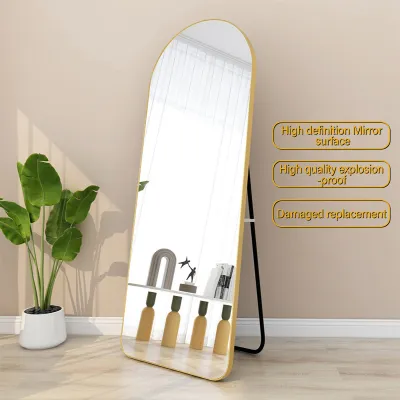
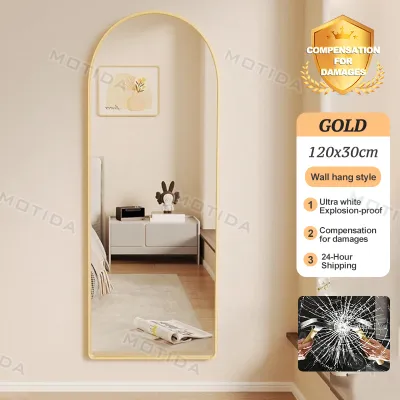
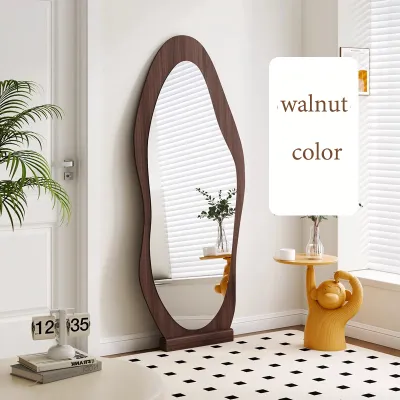
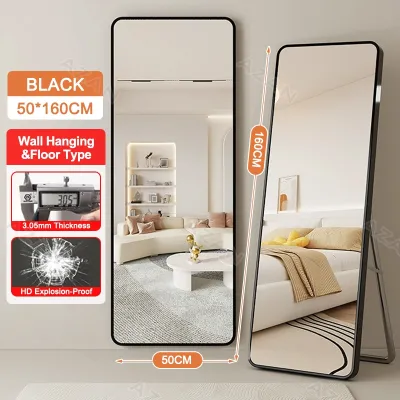
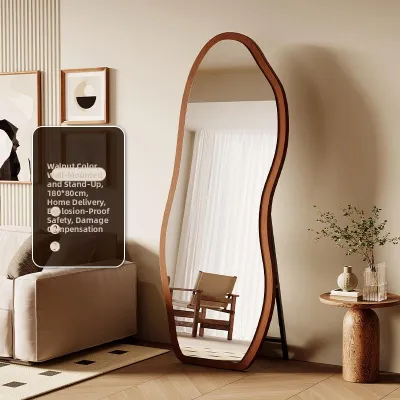
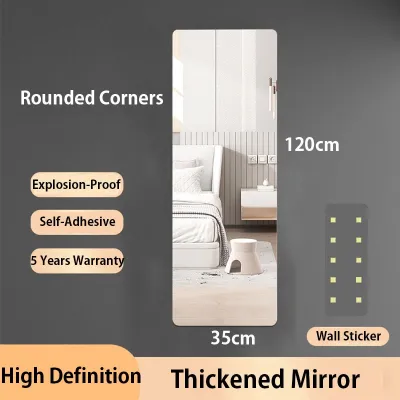
Prices are valid at publication and may change. Please refer to the product page for the latest price.
This reflection of light also tricks the brain into perceiving depth where there is none. When you look into a mirror, your visual cortex processes the reflected space as a continuation of the physical room, effectively doubling the apparent distance to the wall. This visual extension breaks the box-like feel of a small room, making the walls seem to recede.
To maximize this spatial illusion, you must treat the mirror as a dynamic frame. Every object, wall color, and light source directly opposite the glass will be duplicated in your living area. Successful placement relies entirely on curating this reflected view, ensuring that the mirror captures open areas and bright surfaces rather than clutter or dark, empty corners.
Best Placements for a Full-Length Mirror in a Small Room
Finding the perfect location for a full-length mirror requires a careful evaluation of your room’s layout, traffic flow, and existing furniture. In compact homes, floor space is highly valuable, meaning you must choose between wall-mounted designs, door-integrated options, or free-standing floor models. Each option interacts differently with the room’s structural lines and light paths.

By placing your mirror at key focal points, you can manipulate the room’s perceived geometry. A well-chosen spot can make a narrow room look wider, a short room look longer, or a low-ceilinged room feel significantly taller. The following placements are highly effective for opening up tight living areas.
Opposite a Window or Primary Light Source
Placing a full-length mirror directly opposite or adjacent to a window is the most powerful way to amplify light in a small room. In tropical climates like the Philippines, where natural daylight is intense and abundant, this setup captures the bright outdoor sunshine and distributes it deep into the interior. This natural illumination reduces the reliance on artificial lighting during the day and makes the entire room feel fresh and airy.
When you align the mirror with a window, it also serves as a visual bridge to the outdoors. The glass reflects the outside environment—whether that is a balcony garden, tropical greenery, or the open sky—effectively mimicking the presence of an extra window. If your window does not offer an appealing view, angle the mirror slightly to reflect a well-lit interior feature, such as a styled bookshelf or a clean accent wall, to keep the visual field interesting.
Behind a Door or in a Narrow Entryway
In studio apartments or compact bedrooms, main wall space is often fully occupied by wardrobes, beds, or desks. Utilizing transitional zones like the back of a door is an excellent way to save floor space while gaining all the benefits of a full-length mirror. Mounting a lightweight mirror securely to the back of a bedroom or wooden closet door keeps it tucked away during active hours while remaining fully functional when the door is closed.
For narrow entryways and hallways, which often feel dark and claustrophobic, a mirror can completely transform the spatial experience. Positioning a mirror at the far end of a hallway visually doubles the length of the corridor, making the transition between rooms feel grander. Alternatively, mounting a wide mirror along the side wall of an entryway widens the passage, welcoming guests into an environment that feels immediately spacious.
In an Empty or Awkward Corner
Corners are frequently treated as dead spaces in small room layouts, often accumulating clutter or remaining completely empty. Placing a full-length mirror—particularly a leaning floor model—into a sharp 90-degree corner breaks up the harsh intersecting lines of the walls. This softening effect makes the perimeter of the room feel continuous and less restrictive.
To elevate this corner placement, pair the mirror with a small styled vignette. Placing a low-maintenance indoor plant, such as a potted snake plant or a peace lily, next to the base of the mirror allows the lush green leaves to reflect beautifully, doubling the natural texture in the room. You can also place a small floor lamp nearby; its warm light will reflect off the glass, scattering a cozy, inviting glow across the room during evening hours.
Angling and Leaning Techniques to Maximize Depth
Hanging a mirror flush against the wall offers a clean, space-saving look, but leaning a full-length mirror against the wall introduces a dynamic tilt that can dramatically alter your perspective of the room. The physical angle of the glass changes what is reflected, allowing you to manipulate both the vertical and horizontal perception of the space.
When you lean a floor mirror, the top of the frame tilts slightly away from the wall. This upward angle directs the reflection toward the upper half of the room and the ceiling, rather than the floor. In rooms with low ceilings, this simple tilt draws the eye upward, creating an illusion of loftiness and vertical grandeur that makes the entire living area feel less cramped.
If you want to maximize horizontal depth, try angling the mirror slightly toward the center of the room rather than keeping it perfectly flat against the wall. This diagonal positioning allows the mirror to capture and reflect the longest distance across the room, rather than just pointing at the opposite wall. This wider perspective makes square or rectangular rooms feel significantly broader.
Your choice of frame style also impacts how well the mirror integrates with your room’s architecture. A frameless full-length mirror or one with an ultra-thin metal frame blends seamlessly into the background, making the reflection look like an actual doorway or an open passage. Conversely, a thick timber frame acts as a bold architectural statement, defining the mirror as a distinct decorative feature while still providing all the spatial benefits of reflection.
Common Placement Mistakes That Shrink a Room
While a well-positioned mirror can make a room feel twice its size, poor placement can have the opposite effect, making a compact space feel cluttered, dark, and chaotic. One of the most common mistakes is placing a full-length mirror directly opposite a messy area, such as an open wardrobe, a cluttered desk, or a laundry basket. Because the mirror duplicates everything in its path, reflecting visual clutter instantly doubles the perceived mess, making the room feel incredibly cramped.
Another mistake is mounting a mirror directly facing a dark, blank, or heavily textured wall. If the mirror has no light or open space to reflect, it will simply duplicate a dark surface, which can make the room feel closed-in and oppressive. Always aim to direct the mirror’s reflection toward open pathways, light-colored walls, or active living zones.
Avoid placing a full-length mirror in a spot where it blocks natural walking paths or is highly susceptible to being bumped. Additionally, pay close attention to artificial light sources. Positioning a mirror directly opposite an unshielded light bulb or a harsh spotlight will cause intense, blinding glare, creating visual discomfort and making the room unpleasant to spend time in.
Finally, be mindful of how the mirror interacts with your primary seating or sleeping areas. Placing a mirror where it constantly reflects the back of your head while you are sitting at your desk or resting in bed can be highly distracting and psychologically unsettling. Keep the mirror positioned so that it enhances the room’s flow without disrupting your sense of privacy and calm.
Installation and Safety Guidelines for Heavy Mirrors
Installing a large, heavy full-length mirror requires careful planning to prevent accidents and damage to your home. Before you begin drilling or hanging, you must identify your wall type. In the Philippines, interior walls are commonly constructed from concrete, concrete hollow blocks (CHB), or plaster over masonry, though some modern partitions use drywall or plywood. Standard drywall screws will not hold in concrete, and attempting to hang a heavy mirror without the correct wall plugs can lead to a dangerous fall.
Always check the exact weight of your mirror before purchasing installation hardware. Select heavy-duty wall anchors, plastic tox plugs, or French cleats that are explicitly rated to support that weight. For high-humidity environments, mechanical fasteners like metal brackets and screws are highly recommended over adhesive mounting tapes, which can degrade and lose their grip over time due to moisture.
If you choose to use a leaning floor mirror, you must secure it to prevent it from sliding or tipping over. Even a heavy mirror can slip on polished tiles or glossy wood floors, especially if bumped by pets or children. Always use anti-tip safety straps, steel cables, or D-rings anchored firmly into the wall stud or concrete to secure the top of the mirror while its base rests on the floor.
Safety should always be your top priority when handling large glass panels. If your full-length mirror is exceptionally heavy, if you are uncertain about your wall’s internal structure, or if the installation requires drilling through delicate wall finishes like ceramic tiles, stop immediately. Consult a qualified professional installer to ensure your mirror is mounted securely, protecting both your investment and your household.
Frequently Asked Questions (FAQ)
How high should a full-length mirror be hung to see my whole body?
To view your entire body, a full-length mirror does not need to be as tall as you are. According to optical physics, a mirror only needs to be half your height to show a complete head-to-toe reflection. When mounting the mirror on a wall, position the top edge of the glass slightly above your eye level (typically around 60 to 65 inches from the floor to the center of the mirror). This height ensures that the bottom edge remains low enough to capture your feet from a normal standing distance.
Is it bad to place a full-length mirror facing the bed?
Whether to place a mirror facing your bed is entirely a matter of personal comfort and design preference. Traditional design philosophies, such as Feng Shui, advise against placing mirrors directly opposite the bed because reflecting movement can cause restlessness and disrupt your sleep. From a practical standpoint, catching your own reflection in the dark can be startling. If limited layout options force you to place the mirror near your bed, consider mounting it on the inside of a closet door, or use a lightweight folding screen to cover it during sleeping hours.

Community discussion
Share your experience or ask a question. Comments are reviewed before publication.