
Positioning a rotating standing mirror cabinet to make a small room feel larger relies on maximizing natural light reflection, extending sightlines along the room’s longest diagonals, and hiding visual clutter behind the rotating storage unit. By placing this multi-functional piece in strategic zones—such as adjacent to windows or at the end of narrow pathways—and angling the mirror to reflect open spaces, you create a convincing illusion of depth.
Unlike traditional static mirrors, a rotating unit allows you to dynamically adjust the angle of reflection throughout the day. This flexibility means you can redirect light as the sun moves, ensuring your room remains bright, open, and visually spacious without the need to constantly rearrange heavy furniture.
Why a Rotating Standing Mirror Cabinet Works for Small Spaces
Mirrors are classic tools for spatial illusion because they trick the brain into perceiving twice the actual floor area. They bounce light and mimic the presence of an extra window, which instantly softens the boundaries of a cramped room. When a mirror reflects the room’s dimensions back to the viewer, the visual field expands, making walls seem to recede.
Products mentioned in this guide
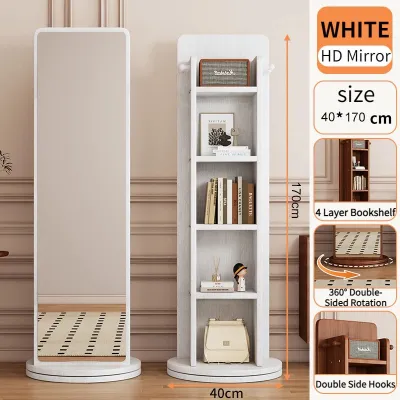
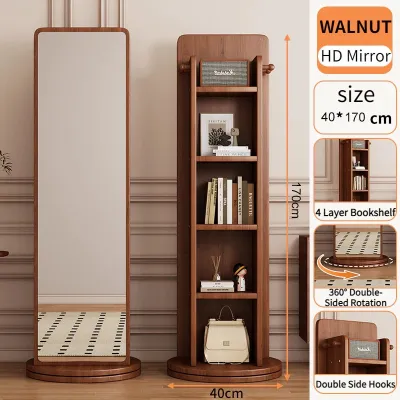
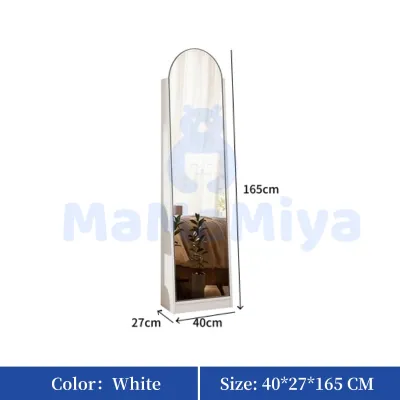
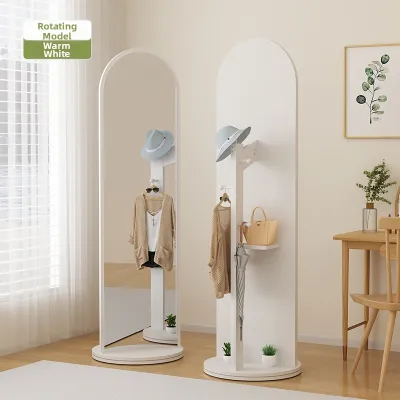
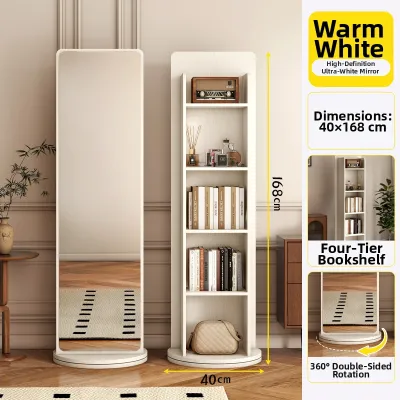
Prices are valid at publication and may change. Please refer to the product page for the latest price.
However, a standard full-length mirror often presents a challenge in compact living areas because it occupies valuable floor space without offering any utility beyond reflection. A rotating standing mirror cabinet solves this dilemma by combining a full-length reflective surface with concealed shelving on the reverse or interior. This dual-purpose design is highly effective for compact urban dwellings, such as studio apartments or condominiums, where physical floor space is at a premium.
By consolidating storage and reflection into a single vertical footprint, you eliminate the need for separate, bulky storage units that crowd the room. The rotating mechanism serves as a dynamic tool for spatial control. With a simple pivot, you can transition the unit from a sleek, space-expanding mirror to an accessible storage hub, allowing you to manage both visual depth and physical organization instantly.
Optimal Placement Zones to Expand Your Room
Finding the right spot for your cabinet requires balancing foot traffic, light sources, and the existing room layout. Placing the unit in one of these strategic zones will maximize its space-expanding potential.

Opposite or Adjacent to Windows
Placing your cabinet near a window is one of the most effective ways to brighten a small room. When the mirror is positioned to catch incoming sunlight, it bounces that natural light deep into the darker corners of the space. This bright, distributed light makes the entire room feel airier and less confined.
To achieve the best effect, position the cabinet adjacent to the window rather than directly opposite it. A direct opposite placement can sometimes catch the midday sun at an angle that creates a blinding glare, making the room uncomfortable to sit in. By placing it at an angle adjacent to the window, you capture the bright sky and outdoor views, reflecting them into the room to create a virtual second window without the harsh glare.
At the End of Narrow Pathways or Hallways
In elongated, cramped spaces like hallways or narrow walkways between bedroom furniture, the eye easily registers dead ends, which reinforces the feeling of confinement. Placing a rotating standing mirror cabinet at the end of these narrow pathways acts as a visual terminus.
As you walk toward the cabinet, the mirror reflects the pathway back, creating the illusion that the corridor continues onward. This simple trick pushes the visual boundary of the room outward, making tight transition zones feel much longer and more open than they actually are.
In Dark or Cramped Corners
Corners in small rooms frequently become visual dead zones that collect shadows, making the room feel boxy and restricted. A freestanding rotating cabinet is uniquely suited for these areas because its vertical shape fits neatly into corner spaces.
By angling the mirror outward from the corner, you reflect the well-lit, open parts of the room back into the shadows, effectively opening up the visual block. Because the cabinet rotates, you can turn the storage side toward the corner walls to keep your daily items completely hidden, leaving only the clean, reflective glass visible to the rest of the room.
Adjusting the Rotation and Angle for the Best Illusion
Once you have selected the ideal zone, fine-tuning the rotation angle is key to perfecting the spatial illusion. Small adjustments can dictate whether the mirror truly expands the room or simply reflects a flat surface.
Angling to Reflect Open Space and Focal Points
To make a room feel larger, the mirror must reflect something that suggests depth or visual interest. If the mirror is angled to reflect a blank wall just a few feet away, it creates a flat, closed-in feeling.
Instead, rotate the mirror so that it captures the longest diagonal line of the room—for example, from one corner across to an open doorway or a far window. Reflecting the open floor space or a high ceiling maximizes the perception of volume and square footage. You can also angle it to reflect attractive, uncluttered focal points, such as a neat dining setup or a well-placed indoor plant, which draws the eye forward and creates a sense of purposeful design.
Managing the Cabinet Side for Visual Balance
Because these units feature storage shelves or hooks on the back, rotating the cabinet to access your items temporarily brings the storage side into view. If this side is overloaded with colorful accessories, bags, or jewelry, it can introduce visual clutter, which instantly shrinks the room.
To maintain visual balance, keep the items on the open shelves organized and color-coordinated where possible. When you are finished using the cabinet, rotate the mirror side back toward the main viewing angle of the room. If you must leave the storage side partially exposed, position the unit so that the open shelves face away from the room’s main entrance, keeping the visual presentation clean and seamless.
Safety, Stability, and Climate Checks for Freestanding Units
Because a rotating standing mirror cabinet is tall, heavy, and features moving parts, ensuring its physical safety and stability is crucial, especially in high-traffic or compact areas.
First, recognize that rotating the heavy mirror side shifts the unit’s center of gravity. To prevent tipping hazards, verify that the floor surface is perfectly level. If you place the cabinet on uneven tiles, transition strips, or thick rugs, the base may wobble when spun. Always check the manufacturer’s instructions for weight limits, rotation lock features, and the use of anti-tip wall anchors or safety straps, which are highly recommended if you have children or pets.
In tropical climates like the Philippines, high humidity and temperature shifts can affect furniture longevity. If you place your cabinet near open windows or balconies to catch natural light, ensure the materials are rated for humid conditions. Unsealed backing materials or low-grade engineered wood can absorb moisture over time, leading to warping or swelling that can jam the rotating mechanism. Additionally, high humidity can cause poor-quality mirror silvering to degrade, resulting in black spots around the edges.
When choosing a unit, look for moisture-resistant backings or protective coatings. If the cabinet ever feels unstable, wobbles during rotation, or makes scraping noises, stop using the moving parts immediately and consult the manufacturer’s guide to inspect the swivel base.
Placement Mistakes That Make Small Rooms Feel Cluttered
While a rotating mirror cabinet is an excellent tool for spatial expansion, poor placement choices can easily negate its benefits and make your room feel smaller.
- Reflecting Clutter: Avoid angling the mirror toward unmade beds, laundry baskets, open closets, or messy desks. Reflecting disorganized areas visually doubles the chaos, making a small room feel twice as cluttered.
- Blocking Natural Pathways: Do not place the cabinet where its physical footprint or its rotation radius obstructs walking paths. If you have to squeeze past the unit, or if the cabinet bumps into other furniture when you spin it, the physical restriction will outweigh any visual illusion of space.
- Facing Blank, Close Walls: Positioning the mirror to face a plain wall only a few inches or feet away creates a claustrophobic effect. Without depth, light, or an interesting view to reflect, the mirror acts as a visual barrier rather than an expansion tool. Always ensure the mirror has a clear, long-distance view of the room's interior.
Community discussion
Share your experience or ask a question. Comments are reviewed before publication.