
Placing a mirror strategically is one of the most effective, budget-friendly ways to make a compact room feel open, bright, and airy. In typical urban residences, such as high-rise condominiums or studio apartments in the Philippines, floor space is often limited. Maximizing these compact layouts requires understanding how glass surfaces interact with both natural tropical sunlight and indoor lighting fixtures. By choosing the right placement, you can visually double your square footage and create a more comfortable living environment without structural renovations.
To achieve this spatial illusion, you must look beyond simple aesthetics. The size, angle, and height of your mirror all play critical roles in how light bounces throughout the room. When properly aligned, a mirror does not just reflect your room; it actively reshapes how you perceive its boundaries.
Understanding Light and Reflection in Small Spaces
To begin, observe how light moves through your room during the day. In tropical climates, natural light can be intense but highly directional. A window facing east or west will receive harsh, direct sunlight at specific hours, while north- or south-facing windows offer more consistent, diffused illumination. Tracking these light paths helps you determine where a mirror can be most effective without causing uncomfortable glare.
Products mentioned in this guide
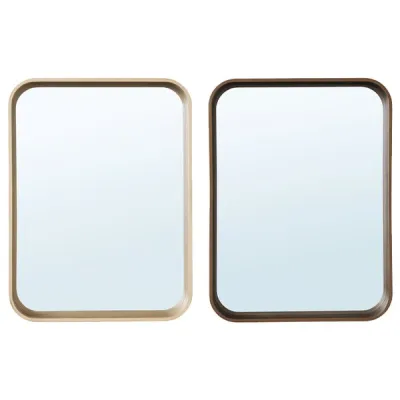

Prices are valid at publication and may change. Please refer to the product page for the latest price.
Positioning a mirror to catch this light requires careful angling. If you place a mirror directly opposite a bright window, it can create a blinding reflection that makes the room uncomfortable to sit in. Instead, try placing the mirror on an adjacent wall. This allows the glass to catch the incoming light at an angle, bouncing it deeper into the darker corners of the room without reflecting the direct sun back into your eyes.
Dark corners and narrow hallways are prime candidates for visual expansion. These areas often suffer from a lack of natural light, making them feel cramped and uninviting. A well-placed wall mirror can act as an artificial window, capturing ambient light from nearby rooms and redirecting it into the dim space to make the entire layout feel more cohesive.
Consider your wall colors and textures as well. Glossy paints and light-colored walls naturally reflect more light, amplifying the effect of your mirror. Conversely, dark or highly textured walls absorb light. If your walls are dark, a larger mirror or a series of smaller mirrors becomes even more critical to help break up the light-absorbing surfaces and introduce much-needed brightness.
If you are using backlit mirrors or integrating wall sconces near your mirror, always verify the electrical specifications. Ensure any integrated lighting matches your home’s voltage and has the appropriate electrical certification for safety, especially if installed in high-humidity zones like bathrooms or semi-outdoor hallways.
Best Wall Placements to Create the Illusion of Depth
The most classic technique for expanding a room is placing a large mirror directly opposite or adjacent to a window. This setup essentially duplicates the outdoor view, bringing elements of nature, sky, or the surrounding cityscape inside. In dense urban areas, this connection to the outdoors breaks the feeling of confinement, making the walls feel less like barriers and more like transitions to the outside world.

Another powerful placement is positioning a large wall mirror behind major furniture pieces. For instance, hanging a wide, horizontal mirror above a sofa or a dining table pushes the visual boundaries of the room backward. When guests sit at the table, the reflection creates the illusion of an adjacent dining area, instantly making the room feel twice its actual size.
For those who prefer a more curated look, a gallery wall composed of smaller mirrors offers a stylish alternative. Instead of one massive sheet of glass, you can arrange several smaller, uniquely shaped mirrors—such as round, hexagonal, or arched designs—in a tight cluster. This arrangement adds layered depth and visual interest. The multiple frames break up the reflection, creating a dynamic, mosaic-like effect that distracts the eye from the room’s limited dimensions.
When planning a gallery wall, keep the frames consistent in material or color to prevent the wall from looking cluttered. In smaller rooms, a cluttered wall can have the opposite effect, making the space feel smaller and more chaotic. Opt for thin, minimalist frames or frameless mirrors to maintain a clean, streamlined aesthetic.
Floor and Furniture Positioning for Spatial Expansion
Freestanding and leaning mirrors offer excellent flexibility, especially for renters who want to avoid drilling permanent holes in their walls. Leaning a tall, full-length mirror against a wall is a highly effective way to draw the eye upward. This vertical movement is particularly useful in rooms with low ceilings, as it emphasizes the height of the space rather than its limited floor area.
When leaning a mirror, safety is paramount. Even if the mirror is designed to lean, it should always be anchored to the wall using safety brackets to prevent it from slipping, especially in households with pets, children, or high foot traffic. Ensure the base of the mirror rests on a non-slip surface or is secured to prevent outward sliding.
Positioning mirrors behind console tables, sideboards, or low shelving units is another excellent way to create layered depth. By placing a mirror behind these furniture pieces, you create a sense of mystery and depth, as if the room continues behind the furniture. You can place decorative items, such as a small potted plant or a warm table lamp, in front of the mirror. The reflection of these items adds a three-dimensional quality that enhances the spatial illusion.
Mirrored closet doors and wardrobe inserts are highly functional, space-saving solutions for small bedrooms. Instead of dedicating valuable wall or floor space to a separate mirror, integrating reflective surfaces directly into your furniture serves a dual purpose. Large mirrored wardrobe doors can make a cramped bedroom feel expansive and bright, while keeping your daily dressing area highly functional.
Safety and Installation Checks for Large Mirrors
Before hanging any heavy glass, it is crucial to perform thorough safety and structural checks. Mirrors are heavy, and improper mounting can lead to severe damage or injury. Start by identifying your wall type. In many modern apartments and condominiums, walls are constructed from solid concrete, hollow concrete blocks, or masonry. These walls require a masonry drill bit, plastic or metal wall plugs (tox), and heavy-duty screws.
If you are mounting on drywall or light partition walls, you must locate the wooden or metal studs behind the wall. Hanging a heavy mirror directly onto drywall without securing it to a stud or using specialized hollow-wall anchors can cause the drywall to fail under the weight. Always check the specific weight of your mirror and compare it to the load capacity of your selected anchors.
Carefully review the assembly and mounting instructions provided with your product. Many mirrors do not include wall-mounting screws or plugs in the box, as the correct hardware depends entirely on your specific wall material. You will need to purchase these separately at a local hardware store, which typically costs only a few pesos (₱) but is essential for a secure installation.
Always identify when to stop and consult a qualified professional. If you are working at height, mounting a mirror on a ceiling, dealing with complex electrical wiring for backlit models, or if you are unsure of your wall’s structural integrity, hiring a professional installer is the safest choice. Additionally, in high-humidity environments like bathrooms, ensure the mirror is rated for damp areas and that the mounting hardware is rust-resistant to prevent structural failure over time.
Common Placement Mistakes to Avoid
While mirrors are excellent tools for spatial expansion, poor placement can actually make a room feel smaller, darker, or more chaotic. One of the most common mistakes is positioning a mirror where it reflects a cluttered or untidy area. If your mirror directly faces an open wardrobe, a laundry drying rack, or a busy kitchen counter, it will double the visual clutter, making the room feel twice as messy and cramped.
Another mistake is failing to account for harsh glare. Placing a mirror directly opposite a television screen, a computer monitor, or an unshaded light bulb can create distracting reflections and uncomfortable glare. Always test the placement by holding the mirror in position at different times of the day before permanently mounting it.
Scale is also critical. A mirror that is too small for the wall it occupies will look lost and fail to make a significant spatial impact. Conversely, a massive mirror on a tiny, fragile wall can overwhelm the room visually and structurally. Ensure the mirror’s proportions harmonize with the adjacent furniture and the overall scale of the room.
Frequently Asked Questions (FAQ)
Can I place a large mirror directly facing the main door?
Placing a large mirror directly opposite the main entrance is generally not recommended for small entryways. While it can make the entry feel larger, it can also startle guests as they walk in and see their own reflection immediately. Additionally, from a practical standpoint, it can bounce natural light straight out of the open door rather than dispersing it into the home. A better approach is to place the mirror on a wall adjacent to the door, which still expands the entryway without the direct confrontation.
How high should a wall mirror be hung in a small room?
As a general guideline, the center of a wall-mounted mirror should hang at eye level, which is approximately 1.5 meters (or 57 to 60 inches) from the floor. However, in a small room, you must also consider the height of adjacent furniture. If you are hanging a mirror above a console table or sofa, leave a gap of about 15 to 20 centimeters (6 to 8 inches) between the bottom of the mirror frame and the top of the furniture to ensure the arrangement looks cohesive and balanced.

Community discussion
Share your experience or ask a question. Comments are reviewed before publication.