
The Philippine rainy season brings intense monsoons, sudden downpours, and relentless humidity that can quickly ruin outdoor lighting. To ensure your outdoor solar string lights survive these harsh tropical conditions, you must look beyond generic marketing claims and verify their actual waterproof capabilities. True water resistance depends on standardized Ingress Protection ratings, robust physical construction, and high-quality sealing at key vulnerability points. By systematically evaluating these factors before and after purchase, you can protect your investment and keep your outdoor spaces safely illuminated throughout the wet months.
Understanding Waterproof Ratings for Outdoor Solar Lights
When shopping for outdoor lighting, the most reliable indicator of water resistance is the Ingress Protection rating, commonly known as the IP rating. This standardized classification system uses two digits to define how well an electrical enclosure is sealed against solids and liquids. The first digit, ranging from zero to six, indicates protection against solid objects like dust and dirt. The second digit, ranging from zero to nine, measures protection against moisture and water ingress, which is the primary concern during the wet season.
For outdoor solar string lights, you will typically encounter three common ratings: IP44, IP65, and IP67. An IP44 rating means the light is protected against splashing water from any direction, making it suitable for light rain or semi-sheltered areas like covered patios. However, IP44 lights often struggle to withstand heavy, wind-driven monsoon downpours. An IP65 rating indicates protection against water jets from any angle, which serves as the recommended baseline for unsheltered outdoor installations. For maximum protection, an IP67 rating certifies that the device can withstand temporary immersion in water up to one meter deep, offering superior resilience against severe storms and localized pooling.
Products mentioned in this guide
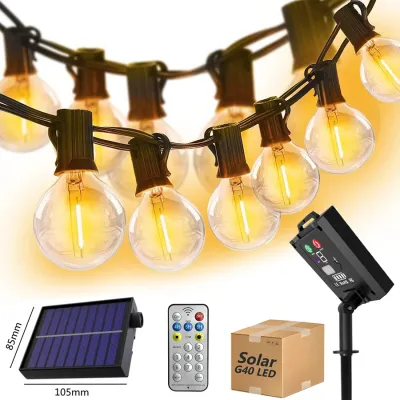
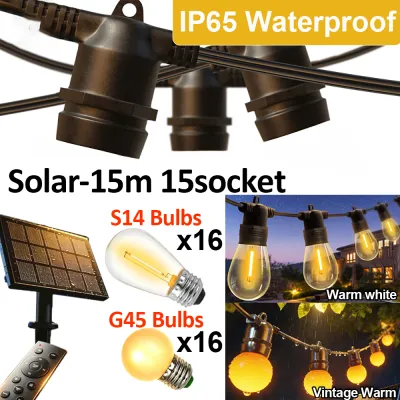
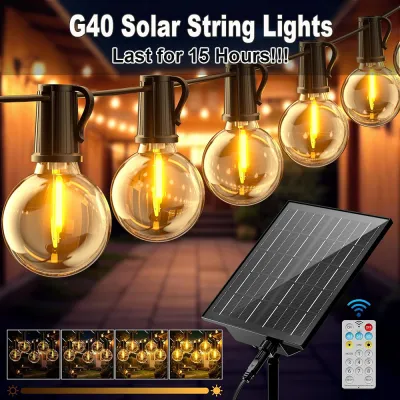
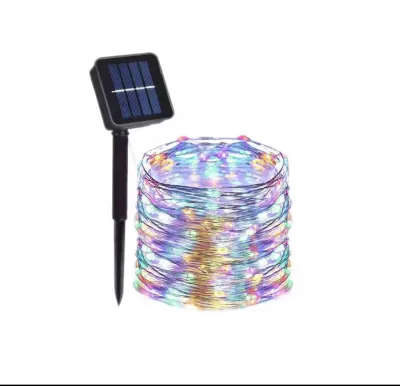
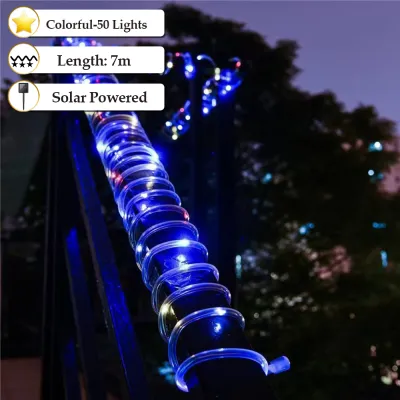
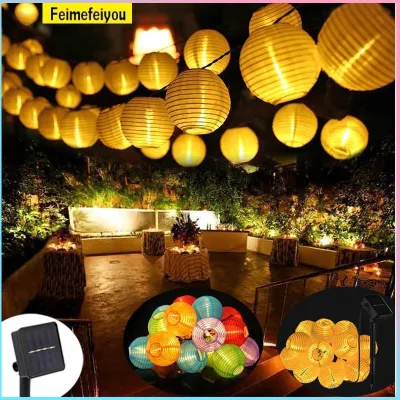
Prices are valid at publication and may change. Please refer to the product page for the latest price.
To verify these claims, locate the official IP rating printed directly on the product packaging, the user manual, or the physical label on the back of the solar panel unit. If a product only uses vague marketing terms like “waterproof,” “weatherproof,” or “rain-resistant” without specifying an IP rating, treat it with caution. Standardized laboratory testing is the only reliable way to confirm these claims, and reputable manufacturers will always display the exact IP rating clearly on their specifications.
Key Vulnerability Points in Solar String Lights
Even with a high IP rating, physical build quality determines how well a light fixture performs over time. The first critical area to inspect is the solar panel housing and the battery compartment. This enclosure contains the sensitive electronic controls and rechargeable batteries that power the system. Look for a thick, flexible rubber or silicone gasket lining the battery compartment door. If the compartment is secured with screws, ensure they tighten evenly to compress the gasket, creating a tight seal that prevents humid air and rainwater from seeping inside.

The second vulnerability point lies in the wire connection joints and the transition points between the main cable and individual LED bulbs. Inspect these junctions for heavy-duty rubber boots or heat-shrink tubing that reinforces the connection. The insulation should be thick, flexible, and tightly sealed around the wire. Loose, thin, or exposed wiring at these junctions will allow rainwater to slide down the cable and seep directly into the electrical connections, leading to short circuits and rapid corrosion.
Finally, evaluate the physical integrity and material thickness of the individual LED bulb casings. Heavy-duty plastic or thick glass covers should be securely sealed to the socket base with a rubber O-ring or silicone sealant. If the bulbs are replaceable, ensure the threads are clean and the bulb can be screwed in tightly enough to compress the sealing ring. Thin, brittle plastic covers can easily crack under intense tropical heat, allowing rainwater to enter during the subsequent downpour.
Evaluating Humidity and Material Durability
High humidity in tropical climates accelerates electrochemical corrosion, which can destroy outdoor electronics even without direct rain contact. When reviewing product specifications, look for rust-resistant hardware and corrosion-resistant contact points made of stainless steel, brass, or copper. Avoid lights that use cheap, untreated iron or steel screws, as they will quickly rust when exposed to constant moisture, making battery replacement impossible and degrading the electrical connections.
Intense tropical sunlight also degrades plastic and rubber over time, making them brittle and prone to cracking. Look for wire insulation made of UV-resistant materials like heavy-duty PVC or rubber, which can withstand prolonged sun exposure without degrading. Additionally, high-quality bulb covers may feature anti-condensation designs or small, protected weep holes at the very bottom of the socket to allow any trapped moisture to escape safely without pooling around the electrical contacts.
Even inside a sealed solar panel housing, prolonged high humidity can cause moisture to condense on the internal circuitry. This can lead to short circuits, mold growth on the circuit board, and rapid battery self-discharge. High-quality outdoor lights often feature conformal coating—a thin protective chemical film applied directly to the internal circuit boards—to shield the electronics from airborne moisture and prevent corrosion.
Installation Practices to Maximize Water Resistance
Proper installation is just as important as product quality when it comes to surviving the rainy season. When mounting the solar panel, angle it at a slope of fifteen to thirty degrees rather than flat. This encourages rainwater to run off the surface immediately instead of pooling on top of the panel or around the edges of the housing seams. Proper angling also ensures maximum sunlight absorption during the day while keeping the charging surface clean of rain-splattered dirt.
Avoid hanging the string lights in a perfectly straight, tight line or letting them sag into deep, low-hanging loops where water can collect. Instead, create a small downward curve, known as a drip loop, in the wire right before it enters the solar panel housing or any connection joint. A drip loop forces rainwater to flow to the lowest point of the curve and drip safely onto the ground, rather than running directly into the connection point.
Whenever possible, secure the main control box, solar panel, and primary wire connections in semi-sheltered areas, such as under the eaves of a roof, a pergola beam, or a balcony ceiling. While the lights themselves are designed for outdoor exposure, keeping the main electronic components shielded from direct, wind-driven downpours significantly reduces the risk of water ingress and extends the overall lifespan of the system.
Maintenance and Troubleshooting During the Wet Season
Regular maintenance is essential to keep your solar string lights functioning safely throughout the wet months. Periodically wipe down the solar panel surface with a soft, damp microfiber cloth to remove rain splatter, dust, and fallen leaves. Accumulated debris blocks sunlight, reducing the battery’s ability to charge fully during the shorter, cloudier days of the rainy season. Avoid using abrasive cleaners or harsh chemicals that could scratch the protective surface and compromise its weather seal.
Perform regular visual checks for moisture condensation inside the bulb casings or the main battery housing. If you notice fogging, water droplets, or rust stains inside a bulb, it indicates that the seal has failed. Addressing this early can prevent the moisture from traveling further down the wire or causing a short circuit.
If you suspect water ingress, immediately turn off the device using the physical power switch. Carefully remove the batteries if the compartment is accessible, and wipe down all components with a dry cloth. Allow the unit to air-dry completely in a well-ventilated, dry indoor area for at least twenty-four to forty-eight hours before reassembling and testing it. If the lights fail to turn on or show signs of scorched circuitry, stop using the device immediately and consult the manufacturer or a qualified professional for repair or replacement options.
Frequently Asked Questions (FAQ)
Can I leave solar string lights outside during a typhoon?
No, it is highly recommended to take down your solar string lights and store them indoors before a typhoon hits. While high-quality lights may have excellent waterproof ratings like IP65 or IP67, these ratings only certify protection against water ingress under standard conditions. They do not account for the extreme wind speeds, flying debris, and severe flooding associated with typhoons. Strong winds can tear the wires from their mountings, debris can shatter the bulb casings or solar panels, and prolonged submersion in floodwaters can permanently damage the internal electronics.
What should I do if water gets inside the solar panel unit?
If you detect water inside the solar panel housing, turn off the power switch immediately to prevent an electrical short. Carefully open the battery compartment, remove the rechargeable batteries, and dry the interior with a clean, lint-free cloth. Leave the compartment door open and place the entire unit in a dry, warm, and well-ventilated indoor space for at least twenty-four to forty-eight hours to ensure all residual moisture evaporates. Do not use high-heat sources like hair dryers, as extreme heat can warp the plastic housing or damage the delicate electronic components. Once completely dry, reinstall the batteries and test the unit; if it malfunctions, contact the manufacturer.
Do waterproof solar string lights require special batteries?
Waterproof solar string lights do not require a unique battery chemistry, but they do require high-quality rechargeable batteries that match the exact specifications, such as NiMH or lithium-ion, voltage, and capacity, outlined in the manufacturer’s manual. In high-humidity environments, standard batteries can corrode or degrade more rapidly. Always use batteries with flat or button tops as specified by the manufacturer, and ensure they are rated for outdoor solar use. When replacing batteries, inspect the compartment contacts for any signs of rust or oxidation, and clean them gently with a dry cotton swab before inserting the new cells to maintain a secure, conductive connection.
Community discussion
Share your experience or ask a question. Comments are reviewed before publication.