
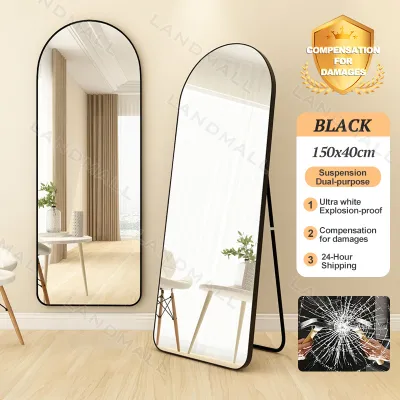
For compact Philippine bedrooms, the ideal full-size mirror dimensions balance full-body visibility with the room’s limited physical footprint. A mirror measuring 40 to 50 centimeters wide and 150 to 160 centimeters tall serves as the optimal baseline. This size provides a complete head-to-toe view for most individuals while occupying minimal wall or floor space.
According to the optical rules of reflection, a flat mirror must be at least half your height to show your entire body. If you stand 160 cm tall, you need a mirror that is at least 80 cm tall, positioned at the correct height. However, to allow comfortable viewing from various distances—especially in tight quarters where you cannot step back very far—a taller mirror of 150 to 160 cm is highly recommended. This extra height accommodates different heights of family members and allows you to stand closer to the glass while still seeing your shoes and head.
Standard full-size mirrors on the market often span 60 to 80 cm in width. While these wide profiles look luxurious in spacious walk-in closets, they can easily overwhelm a compact 10-square-meter bedroom or a typical studio condo in Metro Manila. Opting for a narrower 40 to 50 cm width preserves valuable wall space for other essentials like wardrobes, study desks, or light switches.
Products mentioned in this guide
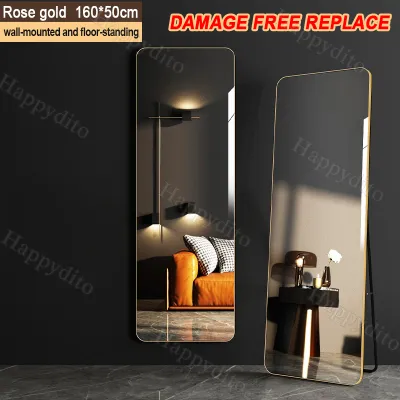
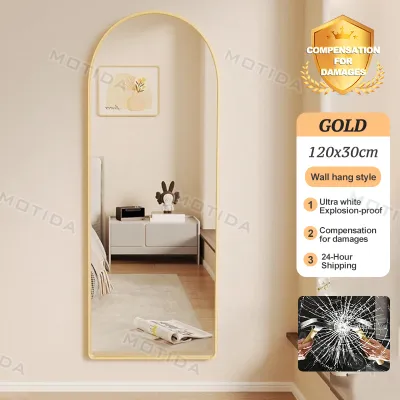
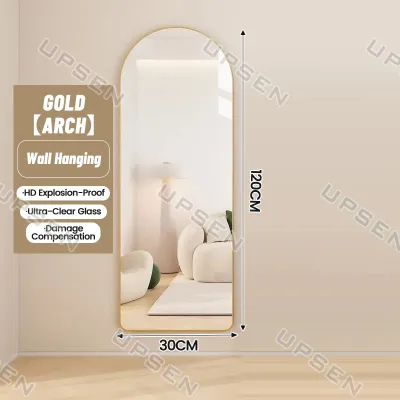
Prices are valid at publication and may change. Please refer to the product page for the latest price.
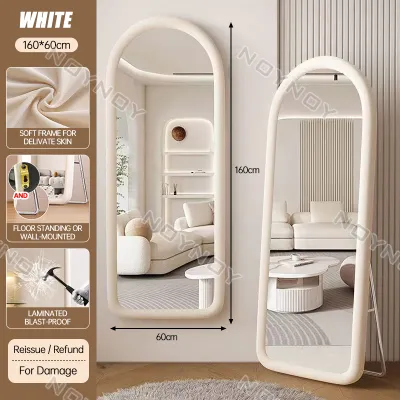
The physical glass size is only part of the equation; the frame plays a massive role in how “heavy” the mirror feels in a small room. Thick, ornate wooden frames or chunky plastic borders add several centimeters to the overall dimensions and create a strong visual boundary that makes a tight space feel even more enclosed. In contrast, frameless designs, subtle beveled edges, or ultra-thin metal frames (often less than 1 cm wide) minimize visual clutter, allowing the mirror to blend seamlessly into the wall.
Recommended Dimensions Based on Room Layout
Before browsing online marketplaces or local furniture boutiques in the Philippines, you must measure your available wall and floor space. In compact bedrooms, even a discrepancy of five centimeters can block a wardrobe door or overlap with an electrical outlet. Use a metal measuring tape to map out the physical boundaries, and use painter’s tape to outline the proposed mirror dimensions on the wall to visualize its true scale.
Narrow Walls and Tight Corners
In many Philippine homes and high-rise apartments, the only open wall space is a narrow strip between the bedroom door and a closet, or a small corner next to the window. For these restricted zones, a tall and slender profile measuring 40 to 50 cm wide by 150 to 160 cm tall is the perfect fit.
This narrow footprint ensures the mirror does not spill over into door frames or light switches. From a design perspective, tall, vertical lines draw the eye upward toward the ceiling. This vertical emphasis creates an optical illusion of height, making low-ceilinged rooms feel more spacious and airy.
Above Dressers or Floating Shelves
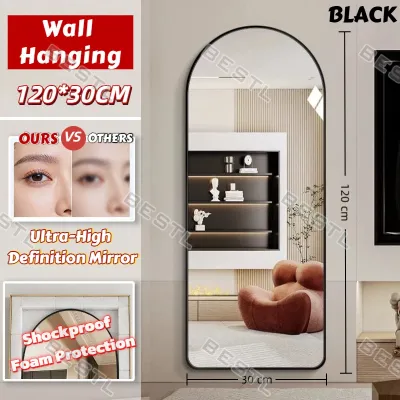
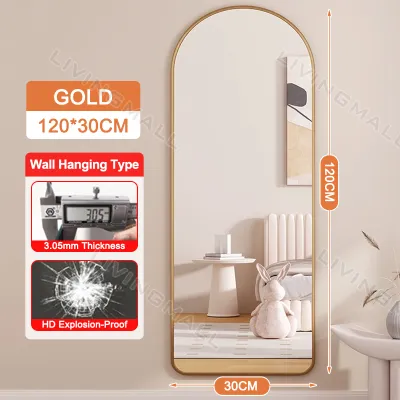
If your floor space is entirely occupied by your bed and wardrobe, mounting a full-length mirror horizontally or slightly elevated above a low chest of drawers or a floating shelf is an excellent alternative. For this configuration, look for wider, slightly shorter proportions, such as 60 to 80 cm wide by 120 to 140 cm tall.
When mounting a mirror above furniture, apply the classic design rule: the mirror’s width should be narrower than the furniture piece below it. Ideally, the mirror should cover about 60% to 80% of the dresser’s width. This ratio prevents the setup from looking top-heavy or unstable, maintaining a balanced and grounded aesthetic in your sleeping area.
Over-the-Door and Hidden Nooks
When wall space is completely unavailable, the back of your bedroom door or the inside of a wardrobe door offers prime real estate. Over-the-door mirrors typically require a compact width limit of 35 to 45 cm and a height of 120 to 150 cm to fit within standard Philippine door frames, which often measure 70 to 80 cm wide.
Before purchasing an over-the-door model, measure your door’s width and check the clearance at the top and bottom of the frame to ensure the hanging brackets will not prevent the door from closing. Additionally, verify the hinge weight capacity. Standard hollow-core doors common in modern Philippine developments cannot support heavy, glass-heavy mirrors without risking damage or sagging hinges over time.
Installation Methods and Space Clearance
How you mount your full-size mirror directly affects both your safety and the usable square footage of your bedroom. Each installation method has unique requirements, especially given the structural realities of Philippine homes.

Wall-Mounted: Hanging your mirror flat against the wall is the ultimate space-saving choice because it leaves 100% of your floor space free. However, you must identify your wall type before drilling. Most residential walls in the Philippines are made of solid concrete, hollow concrete blocks, or plaster-coated masonry, which require a masonry drill bit, plastic wall plugs, and heavy-duty screws to hold the weight safely. If you are mounting on drywall or gypsum board partitions, you must locate the wooden or metal studs or use specialized toggle bolts. If you are installing an LED-backlit mirror, always isolate the power supply at the circuit breaker before connecting any fixed wiring, check that the mirror’s voltage matches the local 220V standard, and hire a qualified electrician if you are not experienced with electrical work.
Leaning/Floor Mirrors: Leaning a large mirror against the wall creates a relaxed, contemporary vibe, but it requires dedicated floor clearance. To prevent the mirror from slipping, the base must sit approximately 10 to 15 cm away from the wall, creating a slight tilt. This tilt means the mirror occupies physical floor space, which can be a hazard in tight walkways. To prevent catastrophic accidents—especially in earthquake-prone regions like the Philippines—you must secure the top of the leaning mirror to the wall using heavy-duty anti-tip straps or discrete furniture tethers.
Door-Mounted: Utilizing hanging brackets over a door is quick and requires no drilling, making it popular for renters. However, because many interior doors are hollow-core, a heavy mirror can cause the door panel to warp or pull the hinges loose. Limit door-mounted mirrors to lightweight, plastic-framed, or frameless options weighing under 5 kilograms, and use double-sided adhesive foam pads on the back of the mirror to prevent it from slamming against the door when opened or closed.
Always check the manufacturer’s specified weight limits and installation instructions. If you have any doubts about your wall’s load-bearing capacity or do not have the proper tools, consult a professional handyman to ensure a secure installation.
Visual Tricks to Make Small Bedrooms Feel Larger
A strategically placed full-size mirror does more than show your outfit; it acts as an architectural tool to expand your room’s visual boundaries. The key is to leverage natural light and control what the glass reflects.
Position your mirror opposite or adjacent to a window. In the tropical climate of the Philippines, natural daylight is abundant. Placing the mirror to catch this incoming light will bounce it deep into the darker corners of the bedroom, instantly making the space feel twice as bright and much larger than its actual dimensions.
Choose your frame style wisely. Heavy, dark, or highly ornate wooden frames act as visual stop signs, drawing attention to the physical limits of the room. Instead, opt for frameless mirrors, mirrors with delicate beveled edges, or those with thin, light-colored metal frames (such as matte black, brushed brass, or white). These minimalist designs allow the eye to travel across the reflection without interruption, enhancing the illusion of continuous space.
Be mindful of the reflection path. Before finalizing the position, stand where the mirror will go and look at what it will reflect. If the mirror directly faces a cluttered clothes rack, an open laundry basket, or a messy desk, it will visually double the clutter, making your compact bedroom feel chaotic and cramped. Aim to reflect a clean wall, a minimalist headboard, or a view of outdoor greenery instead.
Common Sizing and Placement Mistakes to Avoid
Integrating a large decor piece into a small room requires precision. Avoiding these common pitfalls will save you from frustration and safety hazards:
- Ignoring door swing paths and walkway clearance: A mirror that protrudes into a high-traffic walkway or blocks the swing of your wardrobe or bedroom door is a constant annoyance. Ensure there is at least 60 cm of clear walkway in front of any floor or leaning mirror so you do not accidentally bump into it with your elbows or bags.
- Incorrect mounting height: Hanging a mirror too high is a frequent mistake. If the center of the mirror is above your eye level, or if the bottom of the mirror is mounted too high, you will cut off the reflection of your feet or head. For a standard 150 cm tall mirror, the top of the glass should be positioned roughly 180 to 190 cm from the floor to accommodate average heights comfortably.
- Zero breathing room on the sides: Choosing a mirror that spans the exact width of a narrow wall strip looks cramped and awkward. Always leave at least 5 to 10 cm of empty wall space on either side of the frame. This breathing room prevents the mirror from looking like a poorly integrated architectural mistake and maintains a clean, intentional aesthetic.
Frequently Asked Questions (FAQ)
Can a full-size mirror be too big for a small bedroom?
Yes, a mirror can overwhelm a small room if it lacks proper proportion and framing. While a large mirror is excellent for reflecting light, one that covers an entire wall without any negative space around it can feel oppressive, making you feel as though you are sleeping in a commercial fitting room. Maintaining balanced framing and leaving exposed wall space around the edges is essential for a comfortable, cozy atmosphere.
What is the minimum width needed to see my whole body?
The absolute minimum width required for a single person to view their entire body comfortably is approximately 40 centimeters. At this width, as long as the mirror is hung straight and you stand at least one to two meters away, you will easily see your full silhouette. Wider mirrors (60 cm or more) are only necessary if you share the dressing space or prefer a wider viewing angle that captures more of the room’s background.
Community discussion
Share your experience or ask a question. Comments are reviewed before publication.