
Choosing between an indoor and outdoor Christmas projector depends primarily on the installation environment’s exposure to weather, ambient light levels, and available space. While outdoor setups require robust weatherproofing and high light output to compete with streetlights, indoor displays prioritize compact throw distances, quiet heat dissipation, and neat cable management. Selecting the right setup involves verifying the manufacturer’s specifications on the product label to match your specific holiday display needs.
Core Differences Between Indoor and Outdoor Christmas Projectors
Physical construction is the most critical distinction between indoor and outdoor Christmas projectors. Outdoor projectors feature sealed housings, rubber gaskets, and weather-resistant materials designed to withstand environmental exposure such as high humidity and sudden tropical downpours. Indoor projectors, by contrast, prioritize lightweight plastics, compact aesthetics, and open ventilation grilles, making them highly vulnerable to moisture and dust.
Light output requirements also differ significantly between the two environments. Outdoor projectors must compete with ambient light sources, including street lamps, security lights, and passing vehicle headlights. This requires a much higher light output, measured in lumens, to project a clear, visible image over several meters. Indoor projectors operate in controlled, darker rooms where you can easily draw curtains, allowing lower-lumen devices to deliver vibrant images without causing uncomfortable glare or eye strain.
Products mentioned in this guide
![[Free Delivery]Christmas LED Projection Light 20 Xmas Patterns Laser Light Projector Lamp for Outdoor Stage Garden House Party Decor Kids Toy](https://img.lazcdn.com/g/p/6c44c3e00ad0a29d0349869fa44496f2.jpg_400x400q80.jpg_.webp)
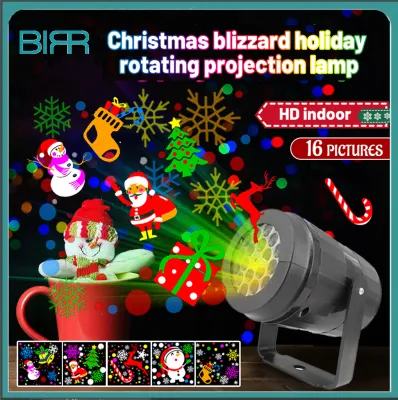
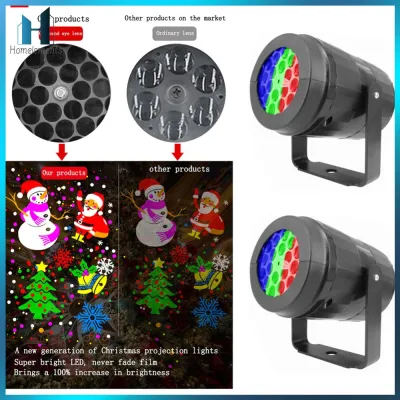
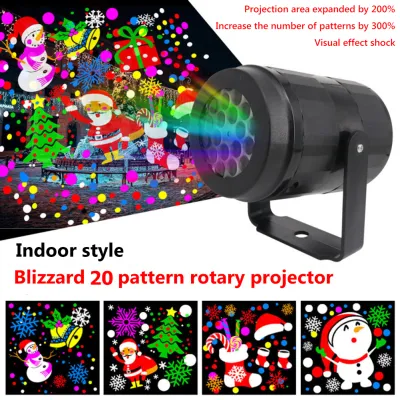
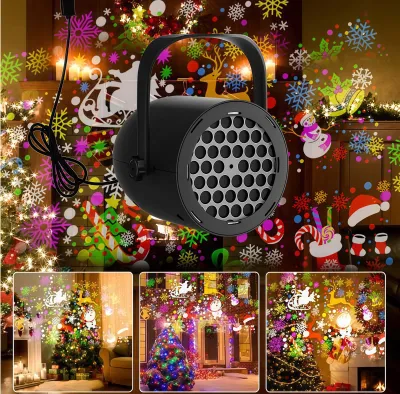
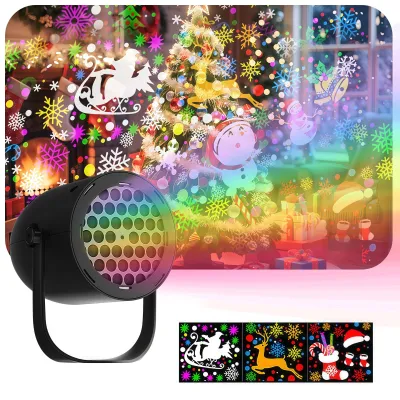
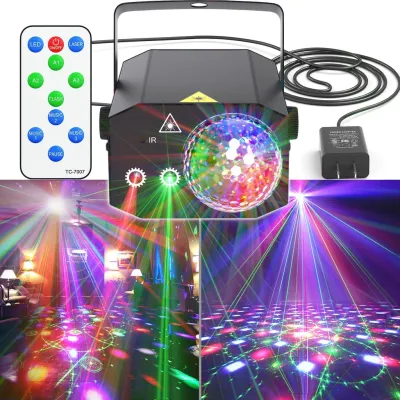
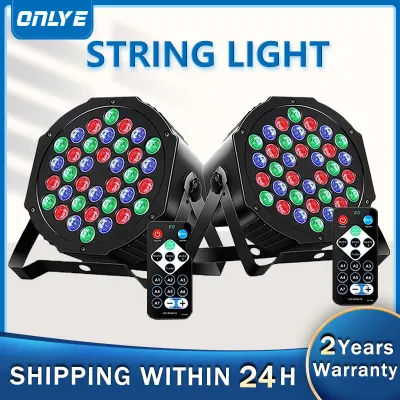
Prices are valid at publication and may change. Please refer to the product page for the latest price.
Power delivery and safety standards represent another major difference. Outdoor models utilize heavy-duty, grounded power cables and sealed transformers designed to handle moisture exposure safely. Indoor models often rely on standard thin-gauge wires, USB connections, or non-waterproof wall adapters. Using an indoor power supply in an exterior setting poses severe electrical hazards, while outdoor power supplies, though safe indoors, are often bulky and difficult to conceal in a living room.
Key Specifications to Verify for Outdoor Holiday Displays
When selecting a Christmas projector for outdoor use, the Ingress Protection (IP) rating is the most important specification to verify on the manufacturer’s label. The IP rating consists of two digits: the first measures protection against solid objects like dust, and the second measures protection against liquids. For outdoor holiday displays, look for a minimum rating of IP44, which protects against splashing water from any direction. In regions prone to heavy rain or high humidity, choosing a device rated IP65 or higher ensures the internal electronics remain completely dry and functional.

Lumen output is another essential specification to check before purchasing. Outdoor projection surfaces, such as rough concrete walls, brick, or dark painted wood, absorb more light than smooth indoor drywall. Review the product specifications to ensure the light output is sufficient for the size of your target wall. Keep in mind that choosing between warm white holiday patterns or vibrant multi-color laser effects is a matter of personal decorative preference rather than a measure of projector quality, but both styles require adequate brightness to remain visible against dark exterior surfaces.
Always inspect the product label to verify that the power adapter, transformer, and any integrated cables are explicitly rated for outdoor use. Do not assume the entire product is waterproof just because the projector head carries an IP rating. Many outdoor projectors feature an IP-rated body but include a non-waterproof adapter that must either be plugged into an indoor outlet or housed inside a certified weatherproof electrical enclosure. If your setup requires installing permanent outdoor outlets or mounting projectors at height on eaves, always isolate the power at the breaker, follow the manufacturer’s installation instructions, and consult a qualified professional or licensed electrician.
Choosing the Right Projector for Indoor Spaces
Indoor rooms have physical boundaries like walls, furniture, and low ceilings that dictate how you position your projector. Before purchasing, check the manufacturer’s throw ratio, which determines how wide the projected image will be at a specific distance from the wall. A short-throw projector is ideal for small living rooms, allowing you to place the device close to the target surface without creating a distorted, oversized, or blurry image that spills onto adjacent walls.
Projectors generate heat during operation, especially when run for several hours during holiday gatherings. Indoor models must be placed in well-ventilated areas with at least a few inches of clearance around all cooling vents to prevent heat buildup. Avoid placing a projector too close to curtains, soft upholstery, or inside tight shelving units, as restricted airflow can trigger automatic thermal shutdown or permanently damage the internal light source.
Cable routing is a critical safety consideration in high-traffic indoor areas. Indoor setups often require running power cords across living spaces to reach an outlet, creating potential tripping hazards for guests, children, and pets. To prevent accidents and protect your equipment from being pulled off tables, route cables along baseboards or secure them with low-profile cord covers. Never run power cords under rugs or carpets, as walking over them can wear down the insulation and create a hidden fire hazard.
Can You Use an Indoor Projector Outdoors (or Vice Versa)?
Using an indoor projector outdoors is highly discouraged due to immediate safety risks and equipment damage. Even on a clear night, ambient humidity, evening dew, and sudden temperature shifts can introduce moisture into the unsealed vents of an indoor model. This moisture exposure can cause immediate short circuits, permanent electrical failure, or dangerous electrical shocks to anyone touching the device.
While using an outdoor projector indoors is physically safe from a water-resistance standpoint, it is rarely practical for daily use. Outdoor units are typically bulkier, feature louder cooling fans to handle higher wattages, and emit an intense level of brightness that can cause uncomfortable glare in a confined, dark room. Additionally, the heavy-duty, rigid cables of outdoor models are difficult to route neatly around indoor furniture.
Always adhere strictly to the manufacturer’s designated environment rating printed on the packaging or user manual. If a product is marketed as a dual-use or indoor/outdoor model, carefully read the instructions to identify any specific limitations. Often, these models require the power adapter to remain indoors or inside a dry location while only the projector head is placed outside, meaning you must still manage the transition between the two environments safely.
Installation and Safety Checklist for Your Setup
Before plugging in any holiday lighting equipment, verify that the device and its power supply carry recognized safety certifications, such as national standards marks or equivalent international safety certifications. This ensures the product has undergone rigorous testing for electrical safety, voltage stability, and fire prevention. Check that the input voltage of the projector matches your home’s electrical outlets to prevent overloading the internal circuitry.
Securely mount your projector to prevent it from tipping over, shifting, or falling. For outdoor installations, drive the provided ground stake firmly into stable soil, avoiding loose mud, steep slopes, or low-lying areas prone to pooling water. For indoor setups, place the projector on a flat, non-slip surface away from the edges of tables or shelves where it could be easily bumped or knocked down.
Keep all electrical connections dry and protected from the elements. When connecting the projector to an extension cord outdoors, elevate the plug connection off the ground using a dedicated weatherproof safety cover or connection box. This prevents ground moisture, puddles, or heavy rain runoff from coming into contact with live electrical terminals, ensuring a safe and reliable holiday display throughout the season.
Frequently Asked Questions (FAQ)
Do I need a special extension cord for an outdoor Christmas projector?
Yes, you must use an extension cord specifically rated for outdoor use. Look for cords marked with a weather-resistant designation on the jacket, which indicates insulation designed to withstand moisture, temperature fluctuations, and sunlight. Ensure the cord’s gauge and power capacity are compatible with your projector’s wattage requirements. Keep all connection points elevated off the ground, and avoid daisy-chaining multiple cords together to prevent voltage drops and overheating.
How far should I place the projector from the wall or house?
Consult the throw distance guidelines in your product manual to determine the correct placement, as optimal distance varies by model. Generally, moving the projector further away increases the size of the projected image but reduces its overall brightness and sharpness. Position the device within the manufacturer’s recommended distance range to maintain a clear, vibrant display, and ensure the light path is completely free of obstructions like garden shrubs, outdoor furniture, or architectural pillars.
Community discussion
Share your experience or ask a question. Comments are reviewed before publication.