
Quick Answer: When a 10W Solar Panel Works (and When It Doesn't)
A 10W solar panel can successfully power a modest garden pathway lighting system, but its capability is highly conditional. If your setup consists of two to four low-wattage LED path lights (typically 1 to 2 watts each) designed to run for four to six hours a night, a 10W panel is generally up to the task. However, this setup will fall short if you expect all-night illumination, power high-lumen security floodlights, or attempt to string together a larger array of six or more fixtures.
The viability of a 10W solar panel depends on three interconnected variables: the cumulative wattage of your light fixtures, the storage capacity of your battery, and the actual solar energy harvested in your location. In tropical climates like the Philippines, seasonal shifts between intense sunny days and prolonged overcast rainy periods directly dictate how much power your panel can actually deliver to the battery.
How to Calculate Your Pathway Lighting Energy Needs
Before purchasing hardware or mounting a panel, you must perform a basic energy audit. Relying on guesswork often leads to dim lights, dead batteries, or systems that fail after only a couple of hours of operation. Calculating your exact energy requirements ensures your solar panel and battery are properly matched to your expectations.
Products mentioned in this guide
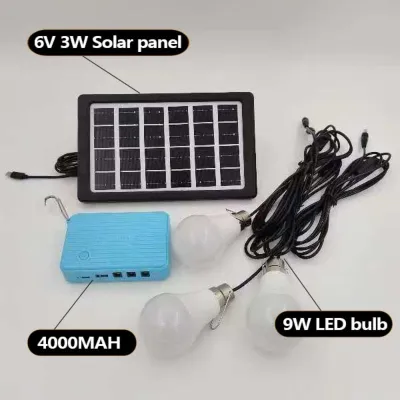
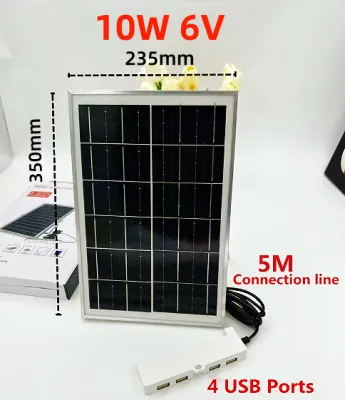
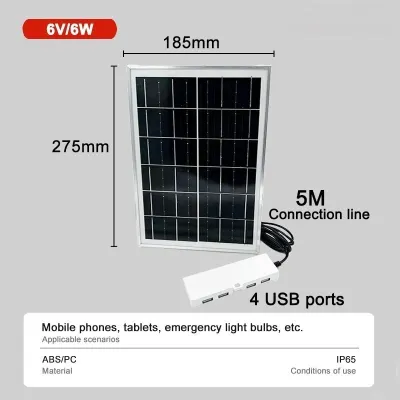
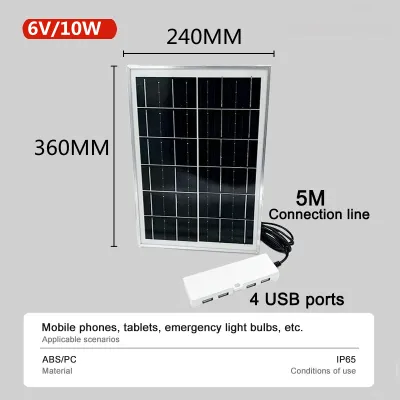
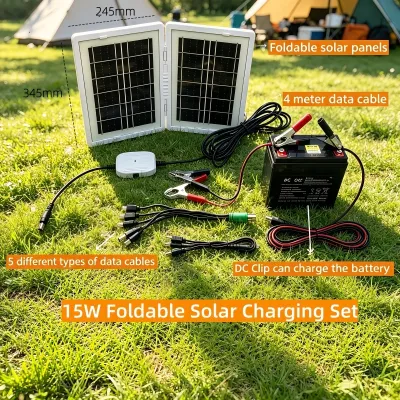
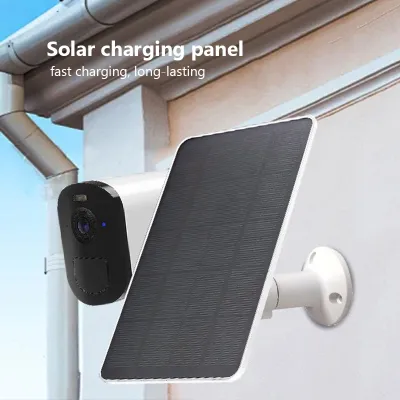
Prices are valid at publication and may change. Please refer to the product page for the latest price.

Step 1: Tally Your Total Light Wattage and Usage Hours
To determine if a 10W solar panel is sufficient, you must first calculate your daily energy consumption in Watt-hours (Wh). This begins by checking the physical labels or manufacturer specifications of your pathway lights to find their wattage rating. Most modern decorative LED pathway lights consume between 1W and 3W, while brighter security-focused path lights may draw 5W or more.
Once you have the wattage per fixture, use this formula to find your daily energy target: (Wattage per Light × Number of Lights) × Desired Hours of Illumination = Daily Watt-hours (Wh) Needed
Let us look at a practical scenario. Suppose you install four decorative LED path lights along your garden walkway. Each light is rated at 1.5 watts, and you want them to remain illuminated for 8 hours every night, from dusk until dawn. Using the formula: (1.5W × 4 lights) × 8 hours = 48 Watt-hours (Wh) per day.
If you were to expand this setup to eight lights of the same wattage, your daily energy requirement would double to 96 Wh. This simple calculation demonstrates how quickly your daily energy demand escalates when you add more fixtures or extend their operational runtime.
Step 2: Factor in Battery Capacity and Usable Storage
A solar panel does not power your lights directly; it acts as a generator that refills a battery during daylight hours. The battery is the component that actually sustains your lights after the sun goes down. Therefore, your battery must be large enough to store the energy your lights require, and your 10W panel must be capable of fully recharging that battery during the day.
Battery capacity is typically measured in Amp-hours (Ah) or Milliamp-hours (mAh) at a specific voltage, which can be converted to Watt-hours using the formula: Amp-hours × Voltage = Watt-hours. For example, a standard 12V 7Ah sealed lead-acid battery provides 84 Wh of total capacity (12V × 7Ah). A 3.2V 10Ah (10,000 mAh) Lithium Iron Phosphate (LiFePO4) battery provides 32 Wh of capacity.
However, you cannot use 100% of a battery’s stored energy without damaging it. Different battery chemistries have strict safe depth-of-discharge (DoD) limits:
- Lead-Acid Batteries: Should rarely be discharged past 50% of their total capacity to prevent premature degradation.
- Lithium-Ion (Li-ion) Batteries: Can safely discharge up to 80%.
- Lithium Iron Phosphate (LiFePO4) Batteries: Highly resilient, allowing for a safe depth-of-discharge of up to 80% to 90%.
Because of these limits, if your daily lighting requirement is 48 Wh, a lead-acid battery must have a total capacity of at least 96 Wh to avoid damage. Consequently, your 10W solar panel must generate enough surplus energy during the day to replace those 48 Wh while accounting for system inefficiencies (such as heat loss in the charge controller and wiring), which typically drain 15% to 20% of the generated power.
Real-World Factors Affecting 10W Solar Output in the Philippines
While a solar panel carries a “10W” rating, this figure represents peak performance under ideal laboratory conditions. In real-world installations, environmental and geographical factors significantly alter the actual energy harvest.
Peak Sun Hours vs. Total Daylight
A common misconception is that a 10W solar panel will produce 10 watts of power for every hour the sun is in the sky. In reality, solar panels only approach their rated capacity during “peak sun hours”—typically when the sun is directly overhead and unobstructed by atmospheric haze, clouds, or humidity.
In the Philippines, the average daily peak sun hours fluctuate between 4.0 and 5.5 hours depending on the region and the season. During the dry season (March to May), you can expect strong, direct sunlight yielding around 5 to 5.5 peak sun hours. A 10W panel can realistically generate between 40 Wh and 50 Wh of usable energy per day (accounting for standard system losses).
However, during the wet season (June to November), frequent monsoon rains, tropical depressions, and heavy cloud cover can reduce peak sun hours to 2.0 hours or fewer. During these overcast days, your 10W panel might only produce 10 Wh to 15 Wh of energy, leaving your battery partially charged and your lights struggling to stay on through the night.
Installation Angle, Shading, and Maintenance
To maximize the energy harvested by your 10W panel, you must pay close attention to physical installation variables. Because the Philippines is located in the Northern Hemisphere (close to the equator), solar panels should generally face south. A tilt angle of approximately 10 to 15 degrees is recommended to ensure rainwater runs off the surface naturally while capturing optimal year-round sunlight.
Even minor shading can drastically reduce a panel’s output. If a nearby tree canopy, roof eave, or garden wall casts a shadow over just a small portion of your 10W panel, the electrical current through the entire panel can drop by 50% or more. Ensure the installation spot remains completely unshaded during the peak hours of 10:00 AM to 2:00 PM.
High humidity, coastal salt air, and tropical dust storms can quickly coat your solar panel in a layer of grime. Wiping the glass surface with a soft, damp microfiber cloth every few weeks to remove dust, bird droppings, and pollen is a safe, simple maintenance step that prevents light blockage and maintains charging efficiency. Avoid using abrasive cleaners or harsh chemicals that could scratch the protective glass.
Diagnosing Your Setup: Signs Your 10W Panel is Undersized
If you have already installed a 10W solar panel and are experiencing issues, your system will exhibit clear, observable symptoms indicating that the power supply is inadequate for your demand.
- Early Morning Blackouts: If your pathway lights turn on bright at dusk but dim noticeably or shut down completely by midnight or 2:00 AM, your battery is running out of charge. This indicates that either your daily energy consumption exceeds your battery's capacity, or your 10W panel is failing to generate enough power to fully charge the battery during the day.
- Multi-Day Recovery Failure: After a day or two of heavy rain or overcast weather, a properly sized system should recover once the sun returns. If your lights fail to turn on at all, or only flicker briefly even after a full day of clear sunlight, your 10W panel is too small to simultaneously power the lights and recover the deeply drained battery.
- Premature Battery Failure: When a battery is consistently forced into a deep state of discharge because the 10W panel cannot provide a complete charge cycle, the battery's internal chemistry degrades rapidly. If you find yourself needing to replace your rechargeable batteries every few months instead of every few years, your solar panel is likely undersized, leaving the battery perpetually undercharged.
How to Adjust or Upgrade Your Solar Lighting System
If your diagnostic calculations or physical symptoms reveal that your 10W solar panel is insufficient, you have several options to restore balance to your garden lighting system.
Adjusting Your Current Usage Before spending money on new hardware, you can optimize your existing setup to match the output of your 10W panel:
- Reduce Fixture Count: Temporarily disconnect one or two lights to lower the daily Watt-hour demand.
- Switch to Low-Lumen Modes: If your pathway lights feature adjustable brightness settings or dimming options, select a lower lumen output. While color temperature and decorative style are matters of personal preference, lower brightness directly reduces power consumption.
- Install Motion Sensors: Configure your lights to run at a low standby glow (e.g., 10% brightness) and only ramp up to 100% brightness when motion is detected. This significantly preserves battery life.
Upgrading Your Hardware Safely If you require consistent, bright, all-night illumination, upgrading your hardware is the most reliable path forward. Swapping your 10W panel for a 20W or 30W solar panel will double or triple your daily energy harvest. In the Philippines, a 20W panel typically costs between ₱800 and ₱1,500, making it a cost-effective upgrade. Pair your larger panel with a higher-capacity battery (such as a 12V 12Ah LiFePO4 battery) to provide multi-day autonomy, ensuring your lights stay on even through consecutive rainy days.
Safety and Compatibility Boundaries When modifying any solar lighting system, safety must be your primary focus. Before replacing your solar panel or adding a second 10W panel in parallel, check the specifications of your solar charge controller. Ensure the controller’s maximum input voltage (Voc) and current (Isc) limits can safely handle the increased power.
Ensure all replacement components carry recognized electrical certifications (such as CE, RoHS, or local safety marks) and feature an ingress protection rating of at least IP65 to withstand tropical downpours and high humidity. Always isolate the battery and solar panel connections before performing any wiring adjustments. Connect the battery to the charge controller first, and then connect the solar panel to prevent voltage spikes.
If your pathway lighting involves fixed 220V AC wiring, damp underground conduits, work at height, or complex electrical integrations, do not attempt DIY modifications. Always consult a qualified professional electrician to ensure compliance with local electrical codes and safety standards.
Frequently Asked Questions (FAQ)
Can I connect multiple 10W solar panels to power more lights?
Yes, you can connect multiple 10W solar panels in parallel (connecting positive to positive, and negative to negative) to increase your total charging current while keeping the voltage the same. However, you must verify that your solar charge controller and battery are rated to handle the combined amperage. Always follow the manufacturer’s instructions for parallel wiring to avoid short circuits.
Will a 10W solar panel keep lights on during the rainy season?
During the rainy season in the Philippines, a 10W solar panel will struggle to keep lights on all night. Thick cloud cover can reduce solar output by 70% or more. To ensure reliable, continuous lighting during wet months, you will need to upgrade to a larger 20W or 30W panel and a battery with enough capacity to provide at least three days of backup power (autonomy).
Community discussion
Share your experience or ask a question. Comments are reviewed before publication.