
Installing a high-output solar fixture like the Bosca solar light original 300 watts on a condo balcony can easily turn a cozy outdoor retreat into an overly bright, uncomfortable space. While these powerful fixtures are excellent for wide yards, driveways, and security lighting, they are often far too intense for the confined footprint of a typical high-rise balcony. However, with the right positioning, physical diffusion, and setting adjustments, you can successfully adapt a high-wattage solar light to create a comfortable evening ambiance without blinding yourself or your neighbors.
To determine if this setup will work for your specific home, you must look past the marketing numbers and evaluate how light behaves in a small, semi-enclosed space. Balancing the physical dimensions of your balcony with the technical specifications of the fixture is the key to achieving a functional and inviting outdoor setup.
Decoding the "300W" Label on Solar Lights
When browsing online marketplaces for outdoor lighting, the “300W” label on a solar fixture can be highly misleading. In the solar lighting industry, wattage ratings on packaging rarely represent actual electrical power consumption from a grid. Instead, manufacturers often use these numbers as a marketing equivalent to suggest the fixture produces a similar light output to an older, high-wattage incandescent or halogen floodlight.
Products mentioned in this guide
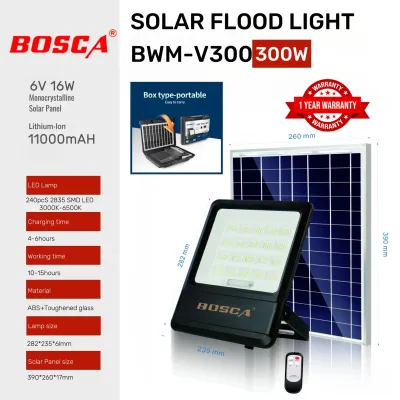
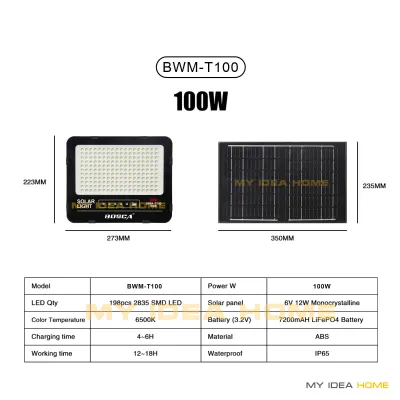
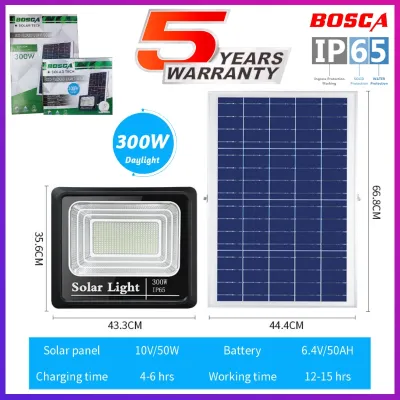

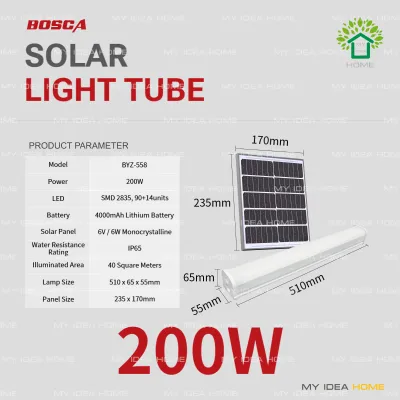
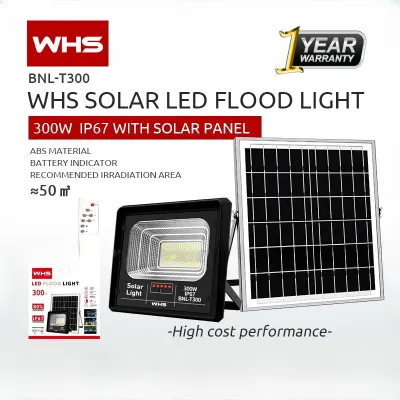
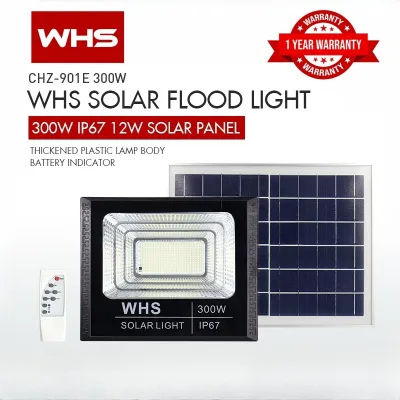
Prices are valid at publication and may change. Please refer to the product page for the latest price.
To understand the true brightness of the fixture, you must locate the actual lumen rating on the product packaging or specification sheet. Lumens measure the total amount of visible light emitted by the source. A true high-lumen fixture designed for security can emit thousands of lumens, which is far more light than a small balcony requires for casual relaxation.
In addition to lumens, pay close attention to the color temperature, measured in Kelvin (K). Many high-output solar floodlights emit a cool white or daylight color temperature, typically ranging from 5000K to 6500K. While this crisp, bluish-white light is excellent for visibility and security, it can feel clinical and harsh on a balcony where a warm, inviting glow (around 2700K to 3000K) is usually preferred.
Finally, consider the beam angle and reflector design of the fixture. A wide beam angle of 120 degrees or more will flood the entire balcony and adjacent rooms with light. Conversely, a fixture with integrated lenses or deep reflectors might concentrate the light into a intense, focused beam, creating harsh shadows and extreme glare in a confined space.
Matching Light Output to Your Balcony Dimensions
Before mounting a high-output solar light, measure the square footage of your balcony and evaluate its materials. Typical condominium balconies in urban areas are relatively compact. If your balcony features highly reflective surfaces—such as glass railings, large sliding glass doors, or light-colored ceramic floor tiles—a bright light will bounce off these surfaces, multiplying the perceived brightness and causing significant visual discomfort.

It is also important to distinguish between ambient lighting and task lighting. Ambient lighting is meant to provide a soft, low-level background glow that allows you to navigate the space safely and relax. Task lighting is brighter and focused on specific areas, such as a small balcony dining table or a reading chair. A 300W-equivalent solar light is fundamentally designed for security and wide-area task lighting, meaning it will naturally overwhelm an ambient lighting scheme unless heavily modified.
Furthermore, high-density condo living requires consideration for your community. High-output fixtures can easily cause light spill, sending unwanted glare directly into neighboring units or common courtyards. Before installing any exterior fixture, review your condominium association’s house rules regarding exterior modifications, light pollution, and permissible aesthetic designs to avoid fines or complaints.
Positioning Strategies to Prevent Glare and Light Spill
If you choose to use a high-output solar light, strategic positioning is your best tool to mitigate harsh glare. Avoid mounting the fixture at eye level or pointing it directly outward toward your seating area. Instead, mount the light at a higher point and tilt the fixture downward, directing the beam toward the balcony floor or a specific corner to minimize direct eye contact with the LED chips.
Another effective strategy is to use indirect lighting by bouncing the beam off a matte, non-reflective surface. Pointing the light toward a solid concrete accent wall or tucking it behind architectural features can create a soft, diffused glow. This technique hides the intense light source while still illuminating the balcony safely.
Natural barriers can also help soften the light. Positioning large, leafy potted tropical plants—such as palms, snake plants, or pocket gardens—directly in front of the light path will naturally break up and diffuse the beam. This creates beautiful, organic shadow patterns on your balcony while blocking harsh, direct glare from reaching your seating area or neighboring windows.
For fixtures with a detached solar panel connected by a cable, you have more flexibility. You can position the light fixture in a shaded, comfortable spot under the balcony ceiling while routing the cable to mount the solar panel where it receives optimal sun exposure. When installing fixtures near the edge of a high-rise balcony, always prioritize safety, secure all tools to prevent accidental drops, and consult a qualified professional if the installation requires working at heights or drilling into exterior building envelopes.
Practical Ways to Soften Harsh Solar Lighting
If your solar light proves too bright for your balcony, look for built-in adjustment features. Many modern solar fixtures include a remote control that allows you to select lower brightness modes, such as 30% or 50% output. Utilizing these lower settings not only creates a more appropriate ambiance but also significantly extends the battery life of the fixture during consecutive rainy days.
Another option is to utilize motion-sensor settings rather than a continuous-on mode. By configuring the light to remain at a dim, low-level standby glow and only boost to full brightness when motion is detected, you preserve a peaceful balcony atmosphere while retaining the security benefits of a high-output light when entering the space.
If the fixture lacks built-in dimming controls, you can apply physical, reversible modifications. Applying a heat-safe, weather-resistant light-diffusing film directly over the protective glass cover of the fixture can scatter the light rays, reducing glare and softening the overall output. Ensure any film or cover you use is rated for outdoor temperatures and does not block the fixture’s heat dissipation vents.
If these adjustments still do not yield a comfortable environment, it may be more practical to replace the fixture. Swapping a high-output security floodlight for low-lumen solar string lights, small solar lanterns, or dedicated step lights will easily provide the warm, relaxing ambiance ideal for a small outdoor balcony.
Frequently Asked Questions (FAQ)
Will a high-output solar light disturb my neighbors?
Yes, a high-output solar light can easily disturb your neighbors if it is not positioned carefully. In high-density condominium buildings, wide beam angles and high mounting positions can cause light trespass, shining directly into adjacent balconies or bedroom windows. To prevent this, always direct the light downward, use physical barriers like privacy screens or plants, and verify that your installation complies with your local condominium association’s guidelines regarding exterior lighting.
Does a 300W solar light require direct sunlight all day?
To operate at its rated performance and duration, a high-capacity solar battery requires several hours of direct, unobstructed sunlight daily. Balconies with deep concrete overhangs, north-facing orientations, or obstructions from neighboring towers may not receive enough direct sunlight to fully charge the battery. If your balcony is mostly shaded, the light may run out of power quickly at night or fail to turn on entirely, making a lower-power fixture or a detached solar panel mounted on the outer railing a more reliable choice.
Can I install an external dimmer switch on a standard solar light?
No, you should not attempt to splice or install an external dimmer switch on a standard solar light. Solar fixtures operate on self-contained direct current (DC) low-voltage circuits, and cutting into the sealed wiring will compromise the fixture’s weatherproofing, void the manufacturer’s warranty, and risk damaging the internal control board. Instead of modifying the electrical circuit, use the fixture’s built-in remote control settings or apply physical, heat-safe diffusing films over the lens to safely reduce the brightness.
Community discussion
Share your experience or ask a question. Comments are reviewed before publication.