
Finding the right small table lamp for working from home or studying requires balancing space-saving design with precise lighting performance. A suitable compact lamp must offer adjustable brightness and customizable color temperature to adapt to different tasks and times of day. It should feature a small footprint to keep your workspace organized, alongside eye-care technologies like flicker-free operation and glare reduction to prevent strain during long sessions. In the Philippines, where study desks in homes or condominiums are often compact and shared, choosing a lamp with these features ensures a comfortable, productive environment. Selecting the right model involves verifying key electrical specifications, physical dimensions, and light quality indicators to match your specific study or work habits.
Adjustability: Brightness and Color Temperature
Adjustable brightness is a critical feature for managing contrast on your desk. When you work on a computer screen or read printed documents, the ambient light should match the brightness of your task surface. High contrast between a bright monitor and a dark room causes rapid eye fatigue, while excessive brightness directly on paper creates distracting glare. A lamp with adjustable output allows you to balance these light levels throughout the day as natural daylight changes.
Color temperature is another essential factor to verify on product labels, usually measured in Kelvin (K). Warm white light (around 2700K to 3000K) creates a relaxing atmosphere, making it ideal for casual evening reading or winding down. Neutral white light (around 4000K) closely mimics natural daylight, which is highly suitable for general paperwork and daytime tasks. Cool white light (5000K to 6500K) promotes alertness and focus, making it excellent for intense study sessions or detailed technical work.
Products mentioned in this guide
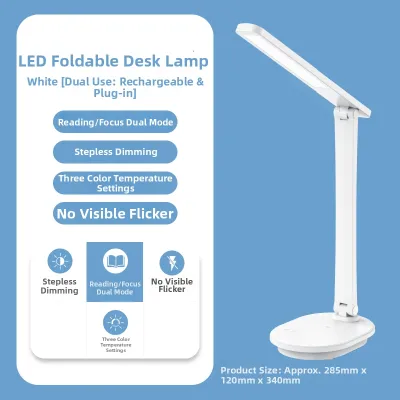
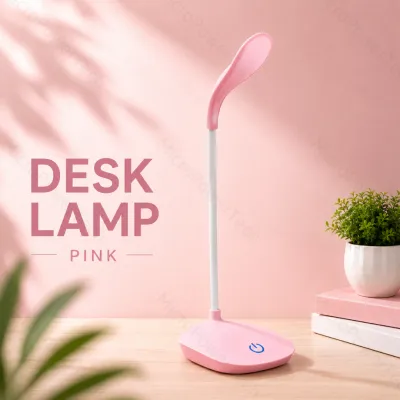

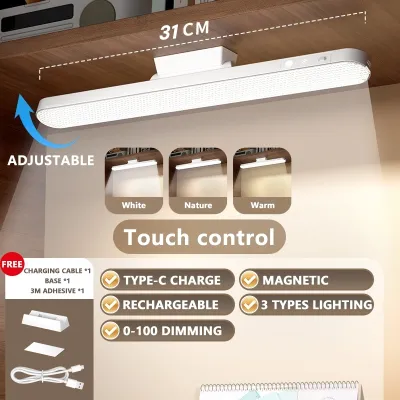
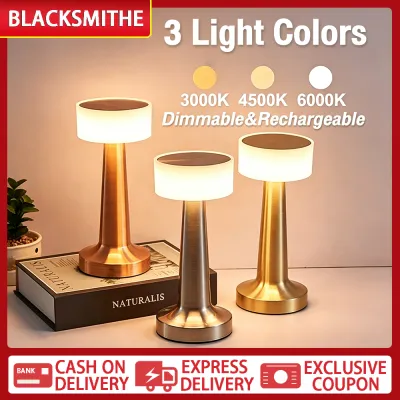
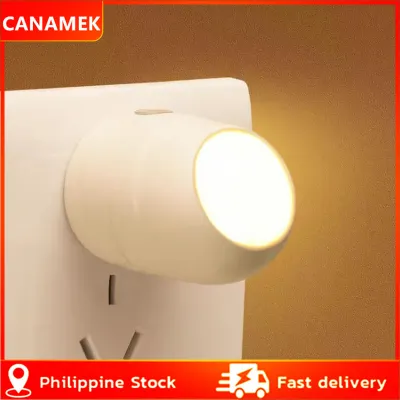
Prices are valid at publication and may change. Please refer to the product page for the latest price.
When evaluating adjustability, consider the difference between step dimming and continuous dimming controls. Step dimming offers a few preset brightness levels, such as low, medium, and high, which are simple to operate but offer limited flexibility. Continuous dimming allows you to adjust the brightness smoothly to any level, often by holding down a touch-sensitive button. This precise control helps you find the exact setting that prevents glare and matches your comfort level.
Eye-Care Features and Light Quality
Prolonged study or work sessions require high-quality light that minimizes visual fatigue. One of the most important specifications to check is flicker-free technology. Low-quality LED lamps can exhibit rapid, invisible flickering that leads to headaches, eye strain, and general discomfort over time. Look for manufacturers that explicitly specify flicker-free operation or constant-current drivers on their packaging or product manuals.

Diffused light is equally important for reducing harsh shadows across your workspace. Lamps equipped with a frosted diffuser or a specialized optical lens soften the light beam, spreading it evenly across your desk. This prevents high-contrast shadows from forming around your hands, pens, or keyboard, allowing for a more comfortable and natural reading experience.
Color Rendering Index (CRI) is a critical metric for verifying how accurately a light source reveals the true colors of objects. Measured on a scale up to 100, a higher CRI indicates better color accuracy. For studying, reading, or any detail-oriented work, look for a lamp with a CRI rating of 80 or higher (Ra > 80). This ensures that text on paper remains crisp and diagrams or color-coded notes are easy to distinguish.
Finally, evaluate the lamp’s shade design and beam angle to prevent direct bulb visibility. If the light source is exposed directly to your eyes while you are seated, it will cause discomforting glare. Choose a lamp with a deep-set light source or an adjustable shade that directs the light downward, keeping the bulb hidden from your direct line of sight.
Size, Footprint, and Desk Compatibility
A small table lamp must fit seamlessly into your physical workspace without cluttering your desk. Before purchasing, measure the available surface area on your desk and compare it with the lamp’s base dimensions. If your desk is particularly crowded with a monitor, keyboard, and books, consider a lamp with a clamp-on base. Clamp-on models secure directly to the edge of the desk, freeing up valuable surface space for other essential items.
While a compact base is desirable, you must evaluate the balance between a small footprint and the risk of tipping. A lamp with a very light base may become unstable and tip over when the arm or head is fully extended. Look for models with a weighted base that provides stability, or choose a sturdy clamp that locks firmly onto the desk edge. Verify that your desk’s material and edge thickness are compatible with the clamp’s specifications.
Consider the lamp’s maximum height and arm reach relative to your seating position and monitor height. The lamp head should sit above your eye level to prevent direct glare, but below the top of your computer monitor to avoid casting reflections on the screen. An adjustable gooseneck or a multi-jointed folding arm allows you to position the light precisely where you need it, adapting easily to different tasks and desk layouts.
Power Sources, Controls, and Practical Features
Choosing the right power source depends on your desk layout and local power reliability. Standard plug-in lamps offer consistent, uninterrupted power, making them highly reliable for daily use. However, in areas prone to power fluctuations or brief interruptions, a rechargeable desk lamp with a built-in battery provides excellent backup lighting. If you opt for a rechargeable model, verify the battery capacity in milliampere-hours (mAh) and check the manufacturer’s estimated runtime at your preferred brightness level.
Control mechanisms also affect daily convenience. Touch-sensitive panels offer a sleek, modern interface that is easy to wipe clean, while physical buttons provide tactile feedback that is simple to operate in the dark. Smart app integration allows you to control brightness and color temperature from your smartphone, though this feature requires a stable wireless connection and compatible software.
Many modern desk lamps include practical additions like built-in USB charging ports or wireless charging pads on the base. If you plan to use these features, verify the power output specifications, such as 5V/1A or 5V/2.1A, to ensure they are compatible with your mobile devices. Additionally, always check that the lamp’s voltage rating matches the local standard (220V in the Philippines) and look for safety certifications, such as the Philippine Standard (PS) mark or Import Commodity Clearance (ICC) sticker, to ensure safe electrical operation.
Setup Tips for Prolonged Working and Studying
Proper positioning of your small table lamp is essential for maximizing comfort and reducing eye strain. Place the lamp on the opposite side of your dominant hand—on the left side if you are right-handed, or on the right side if you are left-handed. This simple adjustment prevents your hand from casting distracting shadows across your writing paper or notebook. Angle the lamp head slightly away from your eyes and screen to eliminate reflections on glossy surfaces.
Avoid working in a completely dark room with only your desk lamp turned on. This high-contrast environment forces your pupils to adjust constantly between the bright desk and the dark surroundings, leading to rapid eye fatigue. Instead, combine your task lamp with soft ambient room lighting, such as a ceiling light or a warm floor lamp, to create a balanced and comfortable visual field.
To ensure safety and longevity, always follow the manufacturer’s guidelines for cleaning and maintenance. Unplug the lamp from the power source before wiping it down. Use a dry or slightly damp microfiber cloth to remove dust, especially in humid tropical climates where moisture can cause dust to cling to electrical components. Avoid using harsh chemical solvents or abrasive pads, which can damage the lamp’s finish or compromise its electrical insulation.
Frequently Asked Questions (FAQ)
Can a small table lamp provide enough light for a large desk?
Physical size does not always dictate light output. Modern LED technology allows compact lamps to produce high lumen levels. Check the lumen (lm) specification on the product label; a rating of 300 to 500 lumens is generally sufficient for focused task work. For a very large desk, use the small lamp to illuminate your immediate working area (task lighting) while relying on overhead ceiling lights or ambient floor lamps to illuminate the rest of the room.
Is it better to use warm or cool light for studying at night?
For nighttime study, it is best to transition from cool or neutral light to warm light. Cooler light (5000K to 6500K) keeps you alert but can disrupt your natural sleep cycle by suppressing melatonin production. As bedtime approaches, switch your lamp to a warm setting (2700K to 3000K) to reduce blue light exposure and help your body prepare for rest. Choosing a lamp with customizable color temperature presets makes this transition seamless.

Community discussion
Share your experience or ask a question. Comments are reviewed before publication.