
Selecting the right ceiling lights for a bedroom with dim capabilities requires balancing daily task requirements with evening relaxation. Standard on-off lighting fixtures often fail to provide this balance, leaving you with a space that is either too bright for winding down or too dim for functional tasks. A high-quality dimmable recessed panel light offers a clean, modern aesthetic while providing the precise control needed to transition your bedroom from a bright dressing area to a serene sanctuary. To find the ideal fixture, you must evaluate key features such as color temperature flexibility, color rendering accuracy, dimming depth, driver quality, and physical installation safety.
Why Your Bedroom Needs Specialized Dimming Features
Your bedroom is a multi-functional space that demands highly adaptable lighting. In the morning, you need bright, clear illumination to wake up, get dressed, and clean the room. In the evening, you require low-level, warm lighting that signals to your brain that it is time to rest. Standard on-off switches do not accommodate this transition, forcing your eyes to adjust to harsh glare late at night or leaving you in semi-darkness during the day.
Recessed panel lights provide a streamlined solution for modern bedroom ceilings. Unlike bulky pendant lights or surface-mounted fixtures that collect dust and interrupt the visual plane, recessed panels sit flush with the ceiling. This design creates a clean, minimalist look that makes low ceilings feel higher and small bedrooms feel more spacious. The wide, diffused light output of a panel ensures that light is distributed evenly across the room, eliminating harsh shadows in corners and wardrobes.
Products mentioned in this guide
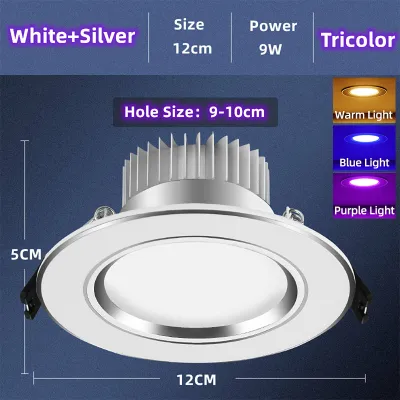
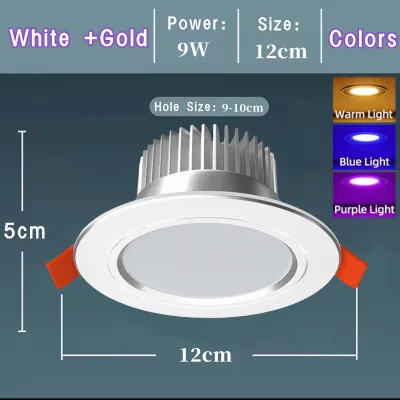
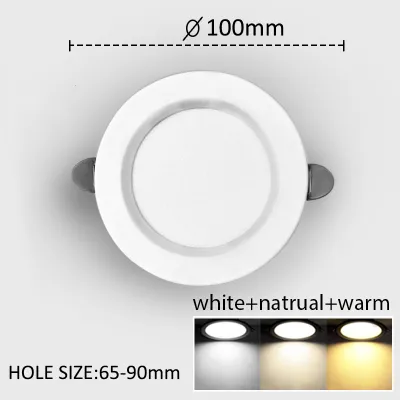
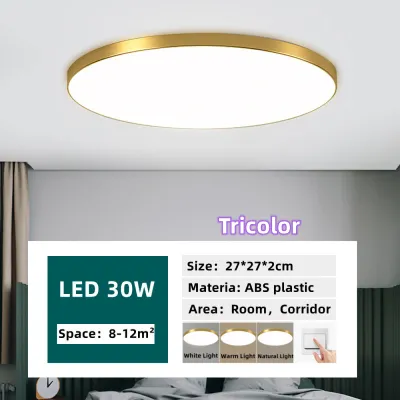
Prices are valid at publication and may change. Please refer to the product page for the latest price.
Standard lighting fixtures with limited dimming ranges often fail to support your body’s natural circadian rhythms. Exposure to bright, cool-toned light in the evening suppresses the production of melatonin, a hormone necessary for sleep. If your ceiling lights cannot dim to a soft, low-intensity glow, navigating your bedroom at night can disrupt your sleep cycle. A specialized dimmable system allows you to lower the light levels gradually, easing your transition into deep sleep.
Key Light Qualities for Sleep and Daily Tasks
To achieve the perfect balance of function and comfort, you must look closely at the light quality specifications of any recessed panel light you consider. The primary factors to evaluate are color temperature, color rendering, and glare control.

Color Temperature (CCT) and Tunable White
Correlated Color Temperature (CCT) is measured in Kelvin (K) and determines whether a light looks warm and yellow or cool and blue. For evening relaxation in the bedroom, a warm white light between 2700K and 3000K is ideal because it mimics the warm glow of sunset. However, a fixed warm light can make morning preparation feel sluggish.
Tunable white panels offer a premium solution by allowing you to adjust the color temperature throughout the day. With a tunable system, you can set the light to a crisp cool white (around 4000K) in the morning to promote alertness, and then shift to a cozy warm white (2700K) as night approaches. This feature is highly customizable and can be adjusted based on your personal daily routine.
Color Rendering Index (CRI)
The Color Rendering Index (CRI) measures how accurately a light source reveals the true colors of objects compared to natural sunlight. For a bedroom, selecting a panel light with a high CRI of 90 or above is highly recommended.
When you are choosing outfits, applying makeup, or matching colors in your bedroom, a low-CRI light can distort shades, making blues look black or skin tones appear washed out. High-CRI lighting ensures that your clothes and decor look vibrant and true to life, preventing frustrating color mismatches before you leave the house.
Glare Control and Diffusion
Because you spend a significant amount of time lying down and looking upward in a bedroom, direct glare from ceiling lights can cause immediate discomfort. Traditional downlights often project a concentrated beam of light directly into your eyes.
To prevent this, look for recessed panel lights that feature an edge-lit design or a low Unified Glare Rating (UGR < 19). Edge-lit panels place the LED chips along the inner frame of the fixture, bouncing the light sideways into a PMMA diffuser plate before it projects downward. This design creates an incredibly soft, uniform glow across the entire surface of the panel, eliminating hot spots and protecting your eyes from harsh glare while you rest in bed.
Dimming Range, Flicker Control, and Switch Compatibility
The technical components behind a dimmable LED panel light dictate how smoothly the fixture operates at lower light levels. Poorly matched components can lead to buzzing, flickering, or a limited dimming range.
Deep Dimming Range
Many standard dimmable LED fixtures on the market can only dim down to 10% or 20% of their maximum brightness. In a bedroom, a 10% light level can still feel incredibly bright when your eyes are adjusted to the dark.
For optimal bedroom comfort, look for high-performance panels that offer a deep dimming range down to 1% or 5%. This ultra-low light level allows the panel to function as a gentle nightlight or a subtle guide light for late-night navigation without waking up your partner or straining your eyes.
Flicker-Free Operation
LED dimming is often controlled by turning the light on and off at high speeds, a process known as Pulse Width Modulation (PWM). If the LED driver is of low quality, this rapid cycling can create visible or invisible flickering, especially at lower dimming levels.
Even when flicker is invisible to the naked eye, it can cause significant eye strain, headaches, and general fatigue over time. When shopping for bedroom ceiling lights, always verify that the product specifications explicitly state “flicker-free” operation. A high-quality, constant-current driver ensures stable light output across the entire dimming spectrum.
Dimmer Switch Compatibility
Not all dimmable LED panels work with all dimmer switches. Traditional incandescent dimmers (leading-edge or TRIAC dimmers) often cause modern LED panels to buzz, hum, or flicker because they are designed for much higher electrical loads.
Most modern dimmable LED panels perform best when paired with trailing-edge (electronic low-voltage, or ELV) dimmers. Before purchasing a panel light, always consult the manufacturer’s dimmer compatibility list to ensure the fixture and the wall switch will work together harmoniously. Using incompatible parts can void your warranty and shorten the lifespan of both the driver and the LEDs.
Smart vs. Traditional Controls
Traditional wall-mounted dimmers offer a reliable, physical way to adjust your lights, but they require dedicated wiring from the switch to the fixture. If you want to avoid complex rewiring, smart recessed panel lights are an excellent alternative.
Smart panels connect directly to your home’s Wi-Fi or Bluetooth network. This setup allows you to dim the lights, change color temperatures, and set automated schedules using a smartphone app or voice assistants. You can program your lights to slowly brighten in the morning to simulate a natural sunrise, or dim automatically at bedtime, all without changing your existing wall switches.
Sizing, Ceiling Clearance, and Installation Safety
Before purchasing your new bedroom lights, you must take precise physical measurements of your ceiling space and understand the safety parameters of the installation process.
Size and Cut-Out Dimensions
Recessed panel lights come in various shapes and sizes, including small 4-inch or 6-inch circular downlight panels, as well as larger 2×2 feet or 1×4 feet rectangular architectural panels.
If you are replacing existing fixtures, measure the diameter or width of the current ceiling cut-outs carefully. If you are installing panels in a new drywall ceiling, check the spacing of your ceiling joists to ensure the larger panels will fit between the wooden or metal framing without requiring structural modifications.
Clearance and Heat Dissipation
Although LED lights generate significantly less heat than old incandescent bulbs, their electronic drivers and metal backplates still produce warmth that must be dissipated. Adequate clearance within the ceiling cavity is essential to prevent heat buildup.
In tropical environments like the Philippines, attic and ceiling spaces can reach very high temperatures during the day. Ensure that there is sufficient empty space around the panel’s external driver box and heat sink for air to circulate. If your ceiling features thick thermal insulation, you must purchase fixtures that are explicitly rated for insulation contact (IC-rated) to prevent fire hazards.
Installation Safety Boundaries
Working with electrical wiring carries inherent risks of shock and fire. Before inspecting your existing ceiling fixtures or attempting any installation work, you must turn off the main circuit breaker at your home’s service panel. Never rely solely on a wall switch to isolate the power.
Always verify that the voltage rating of the panel light matches your local utility supply. In the Philippines, the standard residential voltage is 220V–240V at a frequency of 60Hz. Ensure that any fixture you purchase carries local safety certifications, such as the Philippine Standard (PS) mark or the Import Commodity Clearance (ICC) sticker.
Always read and follow the manufacturer’s printed installation instructions carefully. If your installation involves running new fixed wiring, modifying the ceiling’s support structures, or integrating complex dimming switches, do not attempt to do it yourself. Hire a licensed electrician in the Philippines to handle the electrical work, ensuring that all connections are secure, safe, and fully compliant with the Philippine Electrical Code.
Frequently Asked Questions (FAQ)
Can I install a dimmable recessed panel light in a bedroom with a low ceiling?
Yes, you can easily install a dimmable recessed panel light in a bedroom with a low ceiling. Ultra-slim or edge-lit LED panels are specifically engineered for tight spaces, with many models requiring less than two inches of ceiling cavity depth. Because the driver is often housed in a separate, low-profile box connected by a flexible cable, these fixtures can fit into almost any standard ceiling structure. Always measure the exact depth of your ceiling cavity and compare it against the product’s clearance specifications before purchasing.
Do dimmable LED panel lights consume less power when dimmed?
Yes, dimmable LED panel lights consume less power when they are dimmed. Because LEDs are highly efficient, reducing the brightness lowers the electrical current flowing through the light-emitting diodes, which decreases the overall wattage used. For example, dimming a panel light to 50% of its maximum brightness will generally reduce its energy consumption by nearly half. The exact power savings will depend on the efficiency of the specific LED driver at lower operating levels, but dimming remains an excellent way to save energy and extend the lifespan of your fixtures.
Community discussion
Share your experience or ask a question. Comments are reviewed before publication.