
Creating a dedicated reading corner requires more than just a comfortable chair; it demands a lighting solution that protects your eyes and enhances focus. A standard living room floor lamp often falls short if it lacks the specific task-oriented features necessary to prevent visual strain. To establish an ergonomically sound reading nook, you must look for a floor lamp that offers precise physical adjustability, customizable brightness levels, and adaptable color temperatures.
Why Your Reading Corner Needs Dedicated Task Lighting
Relying solely on general ambient lighting—such as a central ceiling fixture or decorative wall sconces—is a common mistake when designing a reading space. Ambient light is designed to disperse evenly across a room, which naturally dilutes its intensity by the time it reaches your book or tablet. This lack of focused illumination forces your eyes to work harder to distinguish letters, leading to rapid visual fatigue, headaches, and physical discomfort over time.
Furthermore, poor lighting design introduces two major obstacles to comfortable reading: glare and harsh shadows. Glare occurs when light reflects directly off a page or digital screen into your eyes, washing out text and causing immediate strain. Conversely, if the light source is positioned behind you or far to the side, your head, shoulders, or hands will cast dark shadows over the reading material, forcing constant, tiring visual adjustments.
Products mentioned in this guide
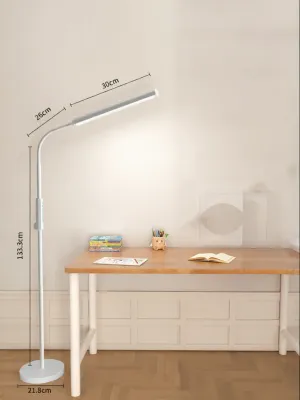
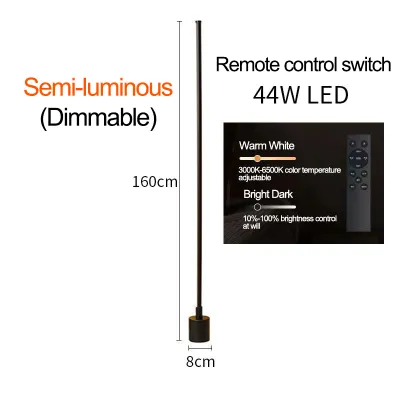
![[Free Bulb] Floor Lamp Living Room Bedroom Bedside Lamp Modern Creative Fabric Decorati Study Floor Light](https://img.lazcdn.com/g/p/6fbd0a8d0da73272a99a4af63204e2bb.jpg_400x400q80.jpg_.webp)
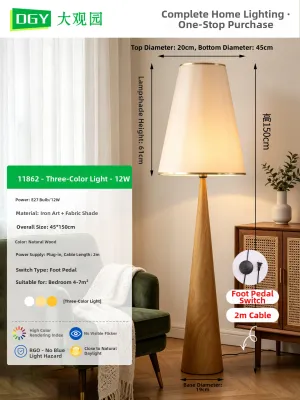
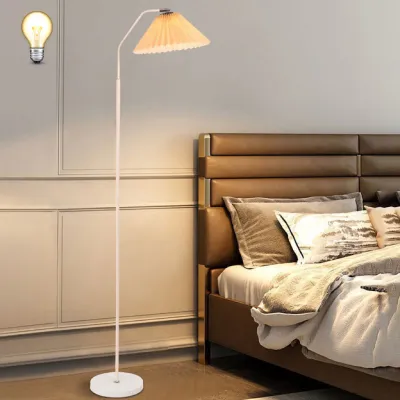
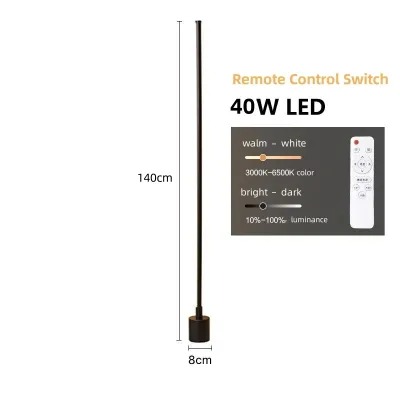
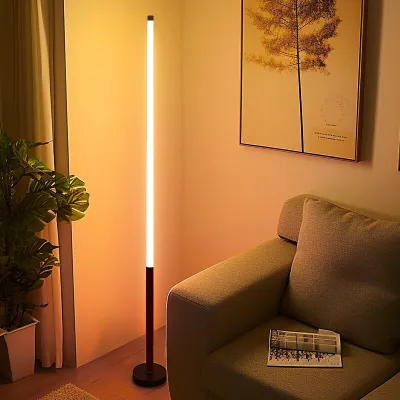
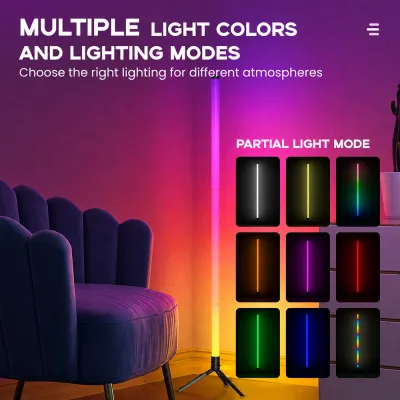
Prices are valid at publication and may change. Please refer to the product page for the latest price.
A dedicated floor lamp serves as task lighting, which is engineered to deliver high-contrast, localized illumination exactly where it is needed. Instead of forcing your body to adapt to static room lighting, a high-quality task lamp adapts to your posture, your chair’s height, and the specific material you are reading. This targeted approach minimizes the contrast between the illuminated page and the surrounding environment, creating a balanced visual field that supports long, comfortable reading sessions.
Core Floor Lamp Features That Reduce Eye Strain
Selecting the right floor lamp requires looking past purely aesthetic designs to evaluate the mechanical and optical specifications that support visual ergonomics. A lamp that merely looks beautiful may still leave you squinting if it cannot direct light properly or if its output is too harsh.

To achieve optimal reading comfort, your selection process should focus on three core pillars: physical adjustability, brightness control, and color temperature. When these three elements are carefully balanced, they work in harmony to eliminate glare, soften shadows, and provide the precise amount of light required for your specific visual needs.
Adjustable Arms and Heads
Physical flexibility is the foundation of any effective task lamp. Without the ability to adjust the angle and height of the light source, you are highly likely to experience either direct glare from an exposed bulb or insufficient illumination on your page. Look for floor lamps equipped with multi-jointed arms, flexible goosenecks, or pivoting heads that allow you to manipulate the light path with ease.
These mechanical features allow you to position the lamp head below your seated eye level while directing the beam downward onto your book. This specific positioning ensures that the light source itself remains completely out of your direct line of sight, preventing the harsh glare that occurs when looking directly at a bulb. It also allows you to adjust the light dynamically if you shift your posture, transition from a physical book to an e-reader, or change seats.
When evaluating adjustable lamps, pay close attention to the build quality and tension of the joints. In warm, humid tropical environments like the Philippines, moisture can accelerate wear on mechanical hinges, leading to loosening over time. High-quality fixtures feature adjustable tension screws or robust internal springs that allow you to tighten the joints manually, ensuring the lamp head remains securely in position without drooping or sagging after months of daily use.
Brightness Levels and Dimming Capabilities
The amount of light required for comfortable reading varies significantly depending on the time of day, your age, and the medium you are reading. While a bright, high-contrast light is necessary to read small print clearly, an excessively bright light can cause discomforting glare on white paper. Conversely, dim light forces your eyes to strain to differentiate text from the background, accelerating fatigue.
To accommodate these changing needs, prioritize floor lamps that feature built-in dimmers, touch-sensitive controls, or step-dimming switches. These features allow you to dial in the exact level of brightness needed, whether you are reading next to a sunny window in the afternoon or winding down in a completely dark room at night. Touch controls located on the lamp pole or head are particularly convenient, as they allow you to adjust the light without standing up from your chair.
When comparing light output, always check the maximum lumen rating on the product specifications rather than relying on wattage. Wattage simply measures electrical power consumption, whereas lumens measure the actual volume of visible light emitted. Because modern LED bulbs are highly efficient and vary widely in their performance, evaluating lumens is the only accurate way to ensure the lamp can deliver sufficient brightness for detailed task work.
Color Temperature and Eye Comfort
Color temperature, measured in Kelvins (K), dictates the color appearance of the light and plays a crucial role in managing eye strain and mental focus. Light that is too blue or cool can disrupt your circadian rhythm and cause eye fatigue during late-night reading, while light that is too yellow or warm may not provide enough contrast for highly detailed text.
For the ultimate reading experience, look for floor lamps that offer adjustable color temperature settings, or select a bulb that falls within the neutral-to-warm white spectrum. Warm white light, typically ranging from 2700K to 3000K, mimics the soft glow of traditional incandescent bulbs; it is highly relaxing, minimizes blue light exposure, and is ideal for evening reading. Neutral white light, between 3500K and 4500K, provides a cleaner, crisper contrast that enhances focus and makes text easier to read without being overly harsh.
Before purchasing, verify the Kelvin rating on the fixture’s product label or the packaged bulb specifications. Choosing a lamp with customizable color temperature controls allows you to transition seamlessly from a high-contrast neutral light for daytime study to a soft, warm light that prepares your mind and eyes for sleep as the night progresses.
Space Planning: Placement, Stability, and Light Diffusion
Integrating a floor lamp into your reading corner requires careful consideration of physical space, safety, and light behavior. The physical layout of your room, the height of your furniture, and even the daily activity level in your home all influence where and how the lamp should be positioned.
First and foremost, prioritize a lamp with a heavily weighted or wide base. A sturdy base is essential for preventing accidental tipping, especially in homes with active children, pets, or high foot traffic. In tropical climates like the Philippines, where stand fans or ceiling fans are frequently operated at high speeds, a lightweight or poorly balanced lamp can easily wobble or tip over under steady air currents. A heavy base ensures the fixture remains anchored securely to the floor, protecting both the lamp and your household.
The spatial relationship between the lamp shade and your seating is equally critical. Ideally, the bottom of the lampshade should align with or sit slightly below your eye level when you are seated in your reading chair. If the shade is too high, you will be exposed to the direct, unshielded glare of the bulb; if it is too low, the light will not spread widely enough to illuminate your entire reading area. Measure the height of your favorite reading chair and your seated eye level before selecting a lamp to ensure a perfect physical match.
The material and design of the lampshade also determine how light is diffused across your reading space. Opaque shades, such as those made of spun metal or dense plastic, concentrate the light into a focused, downward beam, which is highly effective for dedicated task reading. Translucent shades, made of fabric, paper, or frosted glass, allow a portion of the light to filter outward, softening harsh shadows and providing a gentle ambient glow that warms the surrounding corner. For a dedicated reading spot, a semi-opaque or adjustable metal shade often provides the best balance of targeted task lighting and eye protection.
Finally, do not overlook the practical management of power cords. In a cozy, compact reading nook, loose or trailing electrical cords present a significant tripping hazard. Position your lamp close to an electrical outlet to minimize the length of exposed cord, and use cable clips, cord covers, or discreet ties to secure the wire along the baseboards or behind furniture. Keeping the pathway clear not only improves the safety of your space but also preserves the clean, uncluttered aesthetic of your reading retreat.
Electrical Compatibility and Safety Boundaries
Ensuring electrical compatibility and observing safety boundaries is paramount when introducing any new lighting fixture into your home. Electrical standards vary globally, so you must verify that the floor lamp is rated for the standard electrical system in the Philippines, which operates at 220 volts (V) and 60 hertz (Hz). Operating a lamp designed solely for 110V systems without a proper transformer can lead to immediate electrical failure, short circuits, or fire hazards.
When selecting a lamp, pay close attention to the socket type and the maximum wattage limit specified by the manufacturer. The standard screw-type base, often designated as E27, is the most common and widely available socket style locally, making bulb replacements simple. Never exceed the maximum wattage rating printed on the fixture’s socket or label. Installing a bulb that exceeds this limit generates excessive heat, which can melt plastic components, damage the internal wiring, and pose a severe fire risk.
You must also choose between integrated LED fixtures and replaceable bulb designs. Integrated LED floor lamps feature built-in light-emitting diodes that are engineered to last for tens of thousands of hours, allowing for incredibly slim, modern, and energy-efficient designs. However, because the LEDs are permanently fixed, the entire lamp must typically be replaced if the light source eventually fails. Replaceable bulb fixtures, while sometimes bulkier, offer the convenience of easily swapping out bulbs to change brightness, color temperature, or smart capabilities as your needs evolve.
Always establish strict safety boundaries during installation and maintenance. If you notice any signs of wear, such as a frayed power cord, cracked plug, or flickering light, disconnect the lamp from the wall outlet immediately and do not use it until it has been inspected. For any complex setups, smart home integrations, or repairs, always consult the manufacturer’s manual or hire a qualified electrician. Before adjusting the lamp’s physical joints, cleaning the fixture, or changing a bulb, ensure the power is completely isolated by unplugging the unit, and allow the bulb to cool down entirely to avoid electrical shocks or burn injuries.
Quick Evaluation Checklist for Reading Floor Lamps
To simplify your shopping process and help you compare different models online or in-store, use this structured checklist to evaluate potential floor lamps against your personal reading needs:
- Adjustability Range: Does the lamp feature a flexible gooseneck, swing arm, or pivoting head that allows you to direct light precisely onto your page without shining into your eyes?
- Dimming Options: Does the fixture offer built-in dimming capabilities, touch controls, or step-dimming switches to easily adapt to changing daylight conditions?
- Color Temperature Flexibility: Can you adjust the light color between warm white (2700K–3000K) for evening relaxation and neutral white (3500K–4500K) for focused reading?
- Base Stability: Is the base sufficiently weighted and wide enough to prevent the lamp from tipping over due to pets, children, or air currents from fans?
- Bulb and Electrical Compatibility: Is the lamp rated for 220V/60Hz electrical systems, and does it feature a standard socket (such as E27) with a safe, clearly defined maximum wattage limit?
Remember that the ideal floor lamp is not necessarily the most expensive model or the one with the most complex smart features. The best choice is the one that physically fits the dimensions of your reading chair, matches your aesthetic preferences, and provides the precise optical control needed to protect your eyes from fatigue.
Frequently Asked Questions (FAQ)
How tall should a floor lamp be for reading?
For optimal reading comfort and eye protection, the height of your floor lamp should align with your seated eye level. Generally, when you are sitting in your reading chair, the bottom of the lampshade should be positioned at or slightly below your eye level—typically between 115 and 125 centimeters from the floor. This specific height ensures that the physical shade blocks the bright, unshielded bulb from shining directly into your eyes, preventing direct glare. At the same time, it allows the cone of light to cast downward over your shoulder or from the side, providing uniform illumination across your book or tablet. Before purchasing a lamp, measure the distance from the floor to your eyes while seated in your favorite reading chair to determine the ideal height range for your setup.
Are arc floor lamps suitable for reading corners?
Arc floor lamps can be suitable for reading corners, but they represent a trade-off between striking aesthetic design and precise ergonomic utility. On the positive side, an arc lamp features a long, curved neck that allows the light source to hang directly over the center of your seating area without requiring a side table or placing the lamp base immediately next to your chair. This makes them highly effective for deep sectional sofas or large lounge chairs. However, arc lamps require a very large, heavily weighted base to offset the cantilevered weight of the arching arm, which requires significant floor space. Additionally, they often lack the fine physical adjustability, such as pivoting joints or height-adjustable heads, found in dedicated task lamps. If you prioritize visual ergonomics and read for hours at a time, a highly adjustable task floor lamp is generally the superior choice; if you seek a dramatic design statement for casual reading, an arc lamp can work well if paired with a high-quality, dimmable bulb.
Community discussion
Share your experience or ask a question. Comments are reviewed before publication.