
When setting up a workspace or study area, a rechargeable LED desk lamp offers exceptional flexibility. These portable fixtures are highly practical in regions like the Philippines, where they serve as reliable backup lighting during unexpected power outages or brownouts. They also allow you to work comfortably at desks that lack nearby wall outlets.
To choose a model that truly supports your productivity, you must look past flashy marketing and focus on the technical specifications. Prioritizing battery runtime, adjustable brightness, and color temperature will ensure you get a reliable light source that protects your eyes during long hours of focus.
Quick Answer: The Most Critical Specs for Work and Study
When shopping for a rechargeable LED desk lamp, three core specifications should dictate your decision: battery runtime, adjustable brightness, and color temperature. A lamp that excels in these three areas will provide steady, comfortable illumination throughout your entire work or study session.
Products mentioned in this guide
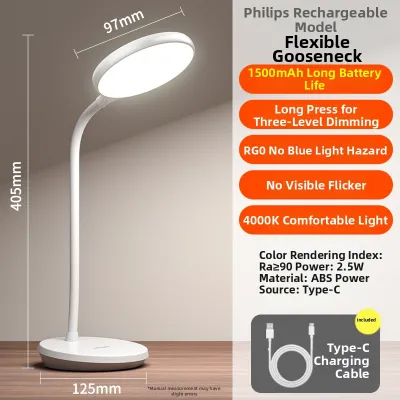
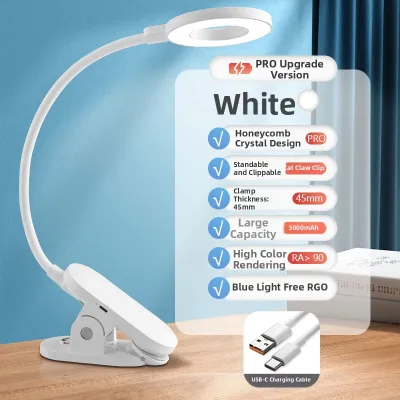
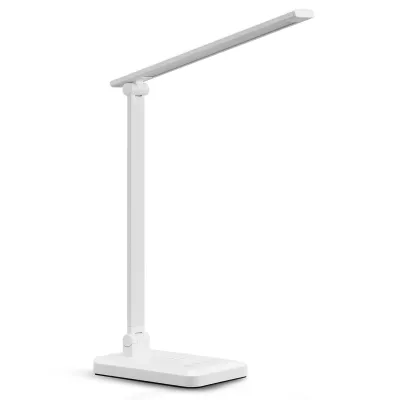
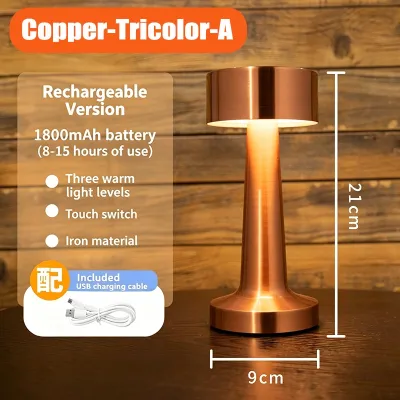
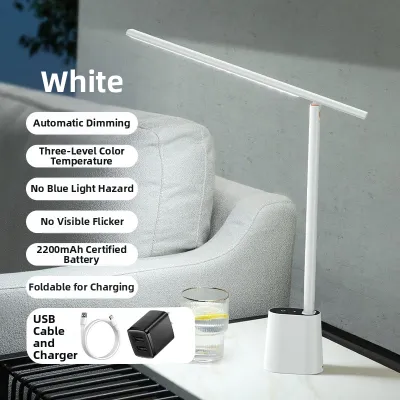
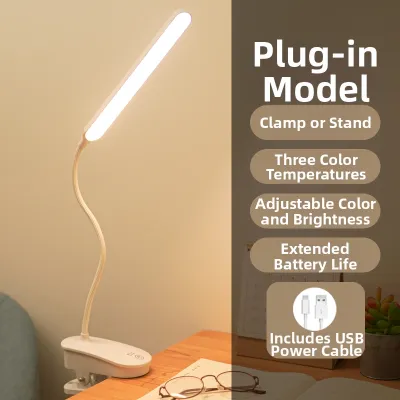
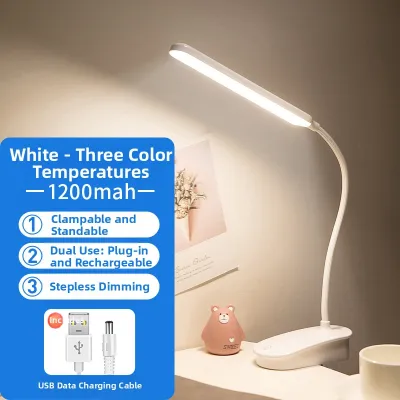

Prices are valid at publication and may change. Please refer to the product page for the latest price.
Secondary features, such as built-in phone stands, digital clocks, or ambient color-changing bases, are convenient but do not improve the quality of your primary task light. It is best to treat these as optional extras rather than primary decision factors.
Keep in mind the fundamental trade-off of portable lighting: running a lamp at its highest brightness setting drains the battery rapidly. To get the most out of your purchase, look for a model that balances efficient power consumption with a high-capacity battery.
Battery Capacity vs. Real-World Runtime: What You Actually Need
Battery capacity is typically measured in milliampere-hours (mAh). While a higher mAh rating generally indicates a larger energy reservoir, it does not automatically guarantee a long runtime because different LED configurations draw different amounts of power.

To estimate your required capacity, consider your typical daily desk hours. If you study or work for four hours at a time, you need a lamp that can comfortably sustain your preferred brightness level for at least that duration without requiring a charging cable.
Always check the manufacturer’s specification sheet for detailed runtime breakdowns. Reliable brands specify runtime at different output levels—such as 3 hours at 100% brightness versus 20 hours at a lower ambient setting—rather than listing a single, vague maximum hour figure that only applies to the dimmest mode.
Brightness and Color Temperature: Optimizing for Eye Comfort
Brightness is measured in lumens, which represent the total amount of visible light emitted by the lamp. For focused desk work, look for a lamp that delivers sufficient illumination to your work surface without causing harsh glare. Stepless dimming or multi-level dimming allows you to adapt the light smoothly as natural daylight fades.
Color temperature, measured in Kelvin (K), dictates the color appearance of the light. Cooler light (around 5000K to 6500K) mimics daylight and is often preferred for high-focus tasks, while warmer light (around 2700K to 3000K) is gentler on the eyes during late-night reading. Because perceived color temperature is a highly subjective preference, selecting a lamp with adjustable color modes is highly recommended.
Flicker can cause subtle eye strain and headaches over long hours of reading. While many products claim to be “flicker-free,” you should verify this by checking the technical specifications for high-frequency modulation or looking for recognized electrical safety and quality certification marks on the packaging.
Charging Interfaces and Physical Footprint: Fitting Your Desk Setup
Most modern rechargeable lamps use standardized USB interfaces, such as USB-C or Micro-USB. USB-C is generally preferred because it supports faster charging speeds and allows you to use the same cable as your modern smartphone, reducing cable clutter on your desk.
Physical stability is another crucial factor for a productive workspace. A lamp with a weighted base prevents tipping when you adjust the neck or arm. In humid tropical environments, look for durable matte plastics or treated metals that resist corrosion and moisture degradation over time.
Before plugging the charging cable into a wall adapter, verify the input voltage and current requirements, which are typically 5V/1A or 5V/2A. Using an incompatible or underpowered adapter can lead to extremely slow charging times or cause the battery compartment to overheat.
Spotting Misleading Claims: How to Read Online Spec Sheets
When browsing online marketplaces, do not rely solely on bold promotional headlines or stylized product images. Scroll down to the detailed technical specification table to confirm the exact battery capacity, lumen output, and materials used.
User reviews can provide valuable clues about real-world performance. Look for feedback regarding hinge stiffness, battery degradation after several months of use, and whether the light spreads evenly across the desk or creates a harsh, narrow spotlight.
Be cautious of listings that omit critical details. Red flags include missing Kelvin ranges, vague battery descriptions like “long-lasting” without a mAh rating, or a complete lack of basic electrical safety markings.
Frequently Asked Questions (FAQ)
Can You Use the Lamp While It Is Plugged In?
Many modern rechargeable LED lamps support pass-through charging, meaning you can use the light while it charges. However, doing this continuously can generate excess heat, which may accelerate battery degradation over time. Always consult the manufacturer’s manual to see if the device has a dedicated bypass circuit designed for continuous plugged-in use.
Does Higher Wattage Always Mean a Brighter Lamp?
No. Wattage measures electrical power consumption, not light output. Because LED technology is highly efficient, a low-wattage LED can produce the same brightness as a much higher-wattage traditional bulb. To compare brightness accurately, always look at the lumen rating and the optical design of the lamp head rather than the wattage.

Community discussion
Share your experience or ask a question. Comments are reviewed before publication.