
Selecting the right LED pendant light for a billiard table requires balancing fixture length, light output, color rendering, and mounting height to achieve even, shadow-free illumination. To ensure a clear view of every pocket and ball, you must verify that the fixture’s dimensions match your table’s playing surface and that its light distribution prevents harsh glare. By checking key specifications on the product label and planning your installation carefully, you can create a professional-grade playing environment in your home game room.
Matching Fixture Length to Your Table Size
To achieve consistent lighting from corner to corner, the physical length of your pendant light must correspond directly to the size of your billiard table. A common guideline is to choose a fixture that is approximately one-half to two-thirds the length of the table’s playing surface. When taking measurements, focus solely on the inner felt area and exclude the outer wooden rails to get an accurate representation of the active play zone.
The structural design of the fixture plays a major role in how light spreads across the table. Multi-light linear fixtures, which feature several bulbs spaced along a single bar, offer excellent longitudinal coverage for longer tables. In contrast, single wide shades or dome-style pendants tend to concentrate light in a circular pattern, which may leave the corners of a large table in shadow unless multiple units are spaced out.
Products mentioned in this guide
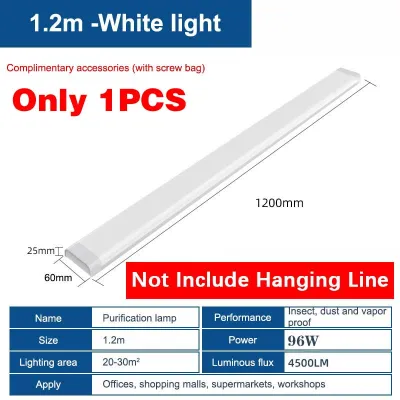
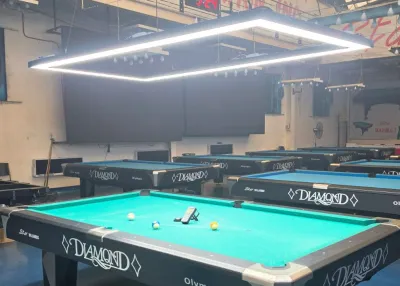

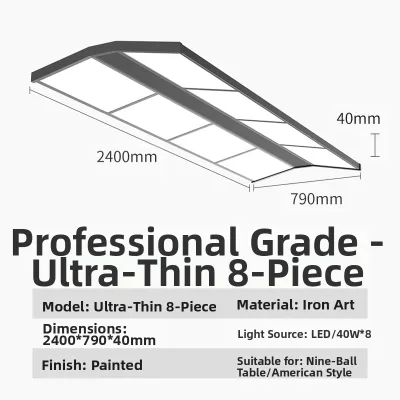
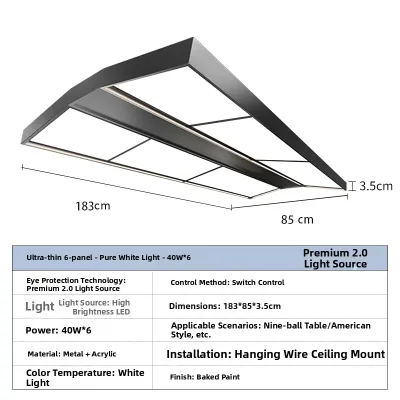
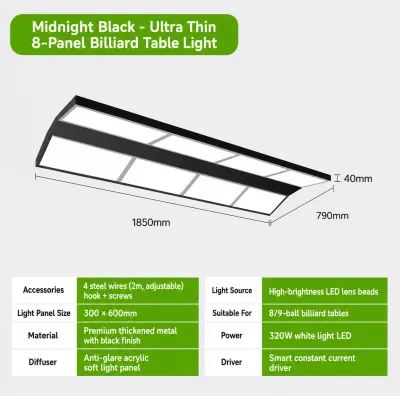
Prices are valid at publication and may change. Please refer to the product page for the latest price.
Before making a purchase, always verify the manufacturer’s stated fixture dimensions against your ceiling space. Ensure that the physical length of the light does not exceed the flat surface of your ceiling, especially if you have decorative tray ceilings or exposed beams. You should also confirm that the fixture’s width does not extend past the edges of the table, as this can lead to light spilling into players’ eyes during a shot.
Understanding Light Output and Distribution
Evaluating the total lumen rating on the product packaging is essential for ensuring the playing surface is sufficiently bright. The required light output scales with the size of your table, meaning larger tables demand higher overall lumens to maintain the same level of visibility. Checking the product specifications for the total lumen output helps you avoid choosing a fixture that is too dim for precise aiming.

To prevent harsh glare and distracting reflections on the felt, look for fixtures equipped with built-in diffusers, frosted glass panels, or deep open-bottom shades. These design elements soften the light source, distributing it more evenly and eliminating intense hotspots directly beneath the bulbs. In tropical climates where high humidity can cause subtle condensation on surfaces, a well-diffused light also helps minimize micro-reflections on the balls.
When reviewing product details, prioritize fixtures that specify a uniform light distribution pattern. Avoid relying solely on peak brightness claims, which often indicate a concentrated beam directly under the center of the fixture rather than even coverage across the entire table. A wide, consistent beam angle ensures that the cushions and pockets receive the same level of illumination as the center of the table.
Selecting Color Temperature and Rendering
Color temperature, measured in Kelvin (K), determines the visual tone of your game room and directly affects eye strain during long playing sessions. Lower Kelvin ratings, such as 2700K to 3000K, produce a warm, yellowish glow that creates a cozy, traditional pub atmosphere. Higher ratings, ranging from 4000K to 5000K, deliver a neutral to cool white light that mimics natural daylight, which many players prefer for enhanced focus and clarity.
Equally important is the Color Rendering Index (CRI), which measures how accurately a light source reveals the true colors of objects. For a billiard table, a high CRI rating is crucial for distinguishing between similarly colored balls, identifying subtle chalk marks, and reading the texture of the felt. Check the product specifications for a CRI rating of 90 or higher to ensure optimal color accuracy and visual contrast.
Ultimately, the ideal color temperature and rendering setup depends on your personal preference and the existing ambient lighting in your room. If your game space already features warm accent lighting, choosing a matching warm pendant maintains visual harmony. If you prefer a highly competitive, tournament-like feel, a neutral or cool white setup is often the more practical choice.
Determining the Correct Mounting Height
Calculating the correct hanging height is a delicate balance between maximizing table illumination and maintaining player clearance. The standard method is to measure the vertical distance from the table bed—the flat playing surface—up to the lowest point of the pendant fixture. Measuring from the floor or the table rails can lead to inaccurate heights due to variations in table designs and leg heights.
Hanging the light too low can obstruct a player’s view, interfere with high cue strokes, and create intense, localized glare. Conversely, mounting the fixture too high causes the light to spread too wide, resulting in distracting shadows along the table cushions and unwanted light spill into the rest of the room. Finding the sweet spot ensures the entire playing surface is bright while keeping the light source out of the players’ direct line of sight.
To simplify this adjustment, look for pendant fixtures that feature adjustable cords, cables, or chains. Verify the maximum and minimum drop lengths listed in the product specifications to ensure the fixture can accommodate your ceiling height. This adjustability allows you to fine-tune the height during installation to suit your specific table setup and player preferences.
Electrical and Installation Requirements
Before installing your new pendant light, you must verify that its voltage rating and wiring configuration are fully compatible with your home’s electrical system. In the Philippines, standard residential electrical systems operate at 220V, so ensuring your fixture matches this specification is critical to prevent damage or electrical hazards. Check the product label to confirm compatibility with your local ceiling junction box.
You must also verify that your ceiling structure can safely support the total weight of the fixture. Heavy multi-light linear pendants or solid metal fixtures require robust support, often demanding direct attachment to a ceiling joist rather than relying solely on a standard drywall junction box. Inspecting the mounting hardware and reinforcing the ceiling support if necessary prevents sagging or accidental falls.
Because working with electrical wiring carries inherent risks, any task involving hardwiring, modifying ceiling boxes, or running new electrical lines should be handled with care. If you do not have professional experience with electrical installations, it is highly recommended to hire a qualified electrician. A professional ensures that the fixture is safely wired, grounded, and securely mounted to meet local building codes.
Frequently Asked Questions (FAQ)
Can I use a dimmable LED pendant light for a billiard table?
Yes, you can use a dimmable LED pendant light, but you must ensure that the fixture’s built-in LED driver is explicitly rated as dimmable. Additionally, you must pair the fixture with a compatible wall dimmer switch designed specifically for LED technology. Using mismatched components can lead to performance issues, such as annoying flickering, buzzing sounds, or a significantly reduced lifespan for the LEDs.
Do I need a specialized billiard light or can I use a standard dining pendant?
While you can use a standard dining pendant, specialized billiard lights are specifically engineered to provide a wide, linear light spread that covers the rectangular shape of a pool table. Standard dining pendants often feature a more focused, downward cone of light designed for circular or square tables. Using a non-specialized fixture increases the risk of dark shadows near the cushions and corners, which can interfere with your accuracy during play.
Community discussion
Share your experience or ask a question. Comments are reviewed before publication.