
Selecting the right led logo signage is one of the most impactful visual branding decisions a small business owner in the Philippines can make. A well-designed, professionally manufactured sign acts as a silent salesperson, establishing brand identity, attracting foot traffic, and ensuring your storefront remains visible through heavy rains and dark tropical nights. However, choosing the perfect sign requires balancing aesthetic preferences with critical technical specifications, local environmental challenges, and safety standards.
To make an investment that lasts, business owners must navigate a crowded market of custom fabricators and ready-made options. This guide breaks down the essential technical considerations, explores the most popular signage styles, provides precise sizing and placement rules, and outlines critical maintenance practices tailored to the unique climate of the Philippines.
How to Choose the Right LED Logo Signage for Your Business
Selecting led logo signage requires a clear understanding of your brand identity, target audience, and the physical environment where the sign will operate. A high-end wellness spa in Makati demands a completely different visual approach than a trendy late-night diner in Quezon City. Before committing to a specific design, you must align the visual style of the signage with the expectations of your customers. A sleek, minimalist sign communicates luxury and professionalism, while vibrant, flashing lights signal energy, affordability, and casual fun.
Products mentioned in this guide
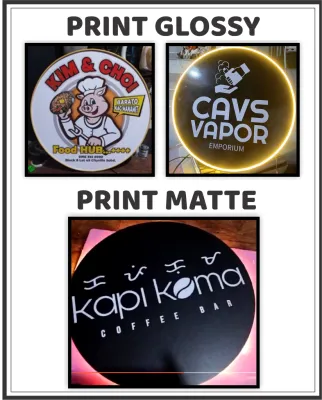
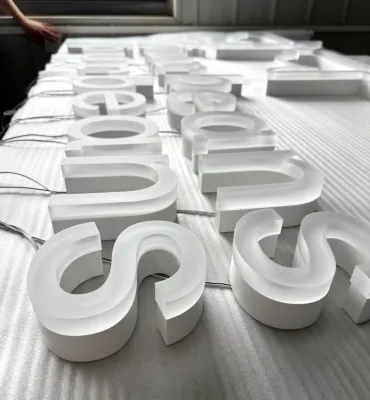
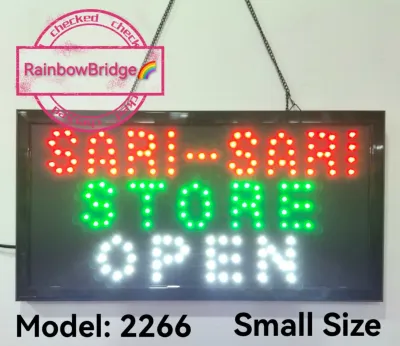
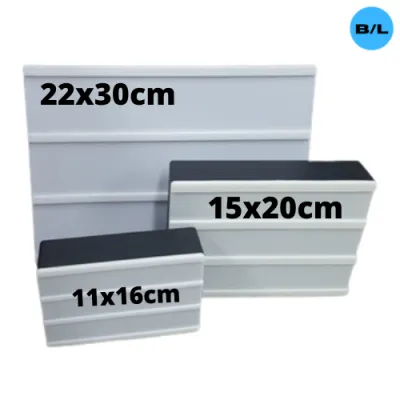
Prices are valid at publication and may change. Please refer to the product page for the latest price.
Beyond aesthetics, verifying technical specifications is paramount to ensure safety, durability, and compliance with local building codes. In the Philippines, the standard electrical grid operates at 220V at 60Hz. Many imported, pre-made LED signs are built for 110V systems; plugging these directly into a local outlet without a compatible step-down transformer or a dedicated 220V-to-12V/24V DC power adapter will cause immediate, irreversible damage to the LEDs and poses a severe fire hazard. Always inspect the product label or manufacturer specification sheet to verify that the input voltage of the power supply is rated for 220V.
Another critical technical factor is the Ingress Protection (IP) rating, which defines the sign’s resistance to dust and moisture. For indoor installations, such as behind a reception desk or on an interior feature wall, an IP20 rating is generally sufficient. However, if the sign is placed in a window display exposed to intense afternoon sun, or mounted semi-outdoors under an awning, you must select a higher rating. Outdoor signage fully exposed to the elements requires at least an IP65 rating to withstand heavy downpours, while IP67 or IP68 ratings offer superior protection against temporary submersion or severe tropical storms.
Power supply capacity must also be carefully calculated to prevent premature component failure. As a rule of thumb, the power supply (often called an LED driver or transformer) should have a wattage capacity that is at least 20% higher than the total wattage draw of the LED sign. Operating a power supply at 100% capacity continuously generates excessive heat, which degrades the internal capacitors and shortens the lifespan of the LEDs.
Finally, consider the installation method. Plug-and-play configurations utilize a standard wall adapter and are ideal for temporary setups, indoor window displays, or leased spaces where permanent wall modifications are restricted. Hardwired configurations, on the other hand, connect directly to your building’s electrical wiring. These are preferred for permanent, high-load exterior installations because they allow for clean, concealed cable management and can be integrated into central timer switches or photo-sensitive controllers. Always look for recognized electrical certifications on the power supply unit, such as the Philippine Standard (PS) mark, Import Commodity Clearance (ICC), CE, UL, or RoHS, rather than relying solely on unverified online product descriptions.
Top LED Logo Signage Styles for Different Business Needs
Modern manufacturing techniques have expanded the varieties of led logo signage available to small businesses. The ideal style for your establishment depends heavily on your brand’s core aesthetic, the physical characteristics of the mounting surface, and the ambient light levels of your location. By understanding the distinct advantages and structural requirements of each style, you can select a design that maximizes visual impact while remaining highly functional.

Neon-Style LED Flex Signs
Neon-style LED flex signs have become incredibly popular among modern cafes, boutique retail shops, bars, and lifestyle brands. These signs utilize high-density LED strips encased in a flexible, light-diffusing silicone or PVC jacket. This construction mimics the continuous, vibrant glow of traditional glass neon tubes without the associated fragility, high energy consumption, and extreme operating temperatures. LED flex signs run cool to the touch, operate on low-voltage DC power (typically 12V or 24V), and consume up to 80% less electricity than classic glass neon, making them highly cost-effective for small businesses that keep their lights on for long hours.
Despite their versatility, LED flex signs have specific customization limitations. Because the silicone or PVC jackets must house physical LED strips, there is a limit to how tightly the material can be bent. Extremely intricate logos, ultra-thin cursive fonts, or microscopic design details may be impossible to replicate. Most fabricators require a minimum stroke width of around 8mm to 12mm to ensure the tubing can bend smoothly without kinking or damaging the internal circuitry.
When planning the placement of an LED flex sign, consider the ambient lighting of the space. While these signs look stunning in low-light environments or indoors, their visibility drops significantly under direct, harsh sunlight. If you plan to hang an LED flex sign in a street-facing window, verify that the outer jacket is rated for UV resistance. Standard PVC jackets can turn yellow, brittle, and cloudy when exposed to intense sunlight over time, whereas high-quality silicone jackets maintain their clarity and flexibility even under prolonged UV exposure.
Acrylic Backlit LED Letters
For businesses seeking a premium, corporate, or highly professional aesthetic, acrylic backlit LED letters—often referred to as halo-lit or channel letters—are the premier choice. This style is commonly utilized by law firms, medical clinics, high-end beauty salons, and upscale boutiques. The visual effect is created by mounting individual, three-dimensional letters slightly off the wall, with the LEDs positioned inside the letters pointing backward toward the mounting surface. When illuminated, this design bathes the wall in a soft, ambient glow that frames the crisp, dark silhouette of the letters, creating a sophisticated “halo” effect.
These signs can be constructed in two primary ways: using opaque metal returns (the sides of the letters) with acrylic faces, or utilizing fully acrylic structures. Metal returns, typically made of stainless steel or aluminum, completely block lateral light escape, focusing the illumination strictly backward for a sharp halo effect. Fully acrylic letters allow light to diffuse through both the face and the sides, resulting in a brighter, more integrated glow that increases side-angle visibility.
Installing acrylic backlit letters requires high precision. Because each letter is a separate physical unit, they must be mounted individually using a printed paper template to ensure perfect alignment and spacing. You must verify the compatibility of your mounting wall before ordering. Solid concrete, brick, or stone walls provide excellent support but require heavy-duty masonry drilling and anchors. Drywall or hollow block walls may need specialized toggle bolts or internal wood blocking to support the weight of larger letters. Furthermore, backlit signs require complex wiring networks behind the wall to connect each individual letter to a central power supply. This usually necessitates professional drilling, wire fishing, and drywall patching to achieve a clean, wireless finish.
Marquee and Bulb-Style LED Signs
Marquee and bulb-style signs offer a nostalgic, vintage aesthetic that works exceptionally well for retro-themed diners, hair salons, theater lobbies, pop-up retail booths, and event venues. These signs feature exposed, spherical LED bulbs arranged along the borders or contours of bold, dimensional metal or wooden letters. The high-contrast, point-source illumination of individual bulbs creates an eye-catching, high-visibility display that instantly draws the eye, even in busy commercial areas with competing visual distractions.
Because marquee signs often utilize heavy sheet metal or structural steel framing to hold the socket arrays and support the vintage aesthetic, they are significantly heavier than LED flex or slim acrylic signs. This weight requires careful structural planning. Before mounting a marquee sign, you must verify the load-bearing capacity of the wall, ceiling joists, or hanging brackets. Using inadequate mounting hardware or securing the sign to unsupported drywall can lead to structural failure and severe safety hazards.
Heat dissipation is another critical consideration for bulb-style signs. Although modern LED filament bulbs generate a fraction of the heat produced by old incandescent bulbs, an array of 20 to 50 bulbs clustered together can still create a localized temperature rise. Ensure there is adequate air clearance around the back and sides of the sign to allow natural convection to cool the components. During routine maintenance, inspect the individual bulb sockets for signs of corrosion or loose wiring, as the vibration from nearby street traffic or building ventilation systems can slowly loosen screw-in bulbs over time.
Sizing, Placement, and Visibility Guidelines
To ensure your led logo signage successfully communicates your brand message, you must carefully calculate its physical dimensions and determine the optimal mounting location. A sign that is too small will be ignored or unreadable, while an oversized sign can overwhelm a storefront and look unprofessional. A reliable industry standard for calculating text legibility is the 1-to-10 rule: for every 10 feet (approximately 3 meters) of viewing distance, your lettering should be at least 1 inch (approximately 2.5 centimeters) in height. If your target customers are drivers traveling along a busy road 60 feet away, your sign’s primary letters must be at least 6 inches tall to be easily read in a split second.
| Target Viewing Distance | Recommended Minimum Letter Height | Typical Business Scenario |
|---|---|---|
| 10 feet (approx. 3 meters) | 1 inch (approx. 2.5 cm) | Indoor reception desk or hallway display |
| 30 feet (approx. 9 meters) | 3 inches (approx. 7.5 cm) | Pedestrian foot traffic on a sidewalk |
| 60 feet (approx. 18 meters) | 6 inches (approx. 15.0 cm) | Slow-moving vehicular traffic on local streets |
| 100 feet (approx. 30 meters) | 10 inches (approx. 25.4 cm) | High-speed roads or distant commercial plazas |
Strategic placement options should be evaluated based on your specific business layout:
- Interior Feature Walls: Positioned directly behind a reception desk or on a prominent accent wall, these signs serve as a backdrop for customer photos, generating organic social media marketing.
- Window Displays: Hanging a sign at eye level in a street-facing window captures the attention of passing pedestrians. Ensure the sign is securely suspended and that the power cables are neatly routed to avoid creating a tripping hazard.
- Above-Door Exterior Fascia: This is the primary location for brand identification. Exterior signs must be mounted high enough to clear pedestrian traffic and any low-hanging awnings, while remaining clearly visible to oncoming vehicles.
Ambient light conditions play a major role in determining the required brightness and color temperature of your LEDs. In areas with high ambient light, such as bright shopping mall corridors or streets lined with intense municipal lighting, your sign needs a higher lumen output (measured in nits or lumens per meter) to prevent it from looking washed out. Conversely, in dimly lit neighborhoods or cozy indoor settings, excessive brightness can cause painful glare and make the sign unreadable.
Color temperature, measured in Kelvin (K), also influences spatial perception. Cool white light (5000K – 6500K) offers high contrast and a clean, modern feel, making it excellent for medical clinics or tech retail. Warm white light (2700K – 3000K) creates a welcoming, cozy, and relaxed atmosphere, ideal for cafes, restaurants, and boutique hotels. Before finalizing your order with a fabricator, create a full-scale mockup of your logo using large sheets of cardboard or paper. Tape this mockup to the intended wall and view it from various distances and angles. This simple, cost-free exercise will help you visualize the scale, spot potential sightline obstructions, and adjust the dimensions before production begins.
Installation, Safety, and Maintenance in Tropical Climates
Operating electrical equipment in the tropical climate of the Philippines introduces unique challenges that must be addressed to ensure safety and longevity. The combination of high ambient temperatures, relentless relative humidity, and salt-laden air in coastal regions can rapidly accelerate the degradation of low-quality electrical components, adhesives, and metal frames.
Electrical safety must always be your top priority during installation and maintenance:
- Isolate the Power: Before attempting any installation, wiring adjustments, or deep cleaning, always turn off the main circuit breaker feeding the signage circuit.
- Consult a Professional: For any permanent exterior installations, signs requiring structural steel framing, or hardwired setups, always hire a licensed electrician and a qualified structural installer. This ensures compliance with the Philippine Electrical Code (PEC) and local municipal building permit requirements.
- Protect the Power Supply: The LED driver is the most vulnerable component of your signage system. In tropical climates, drivers should never be sealed in tight, unventilated cavities where heat can build up. Mount the power supply in a cool, well-ventilated indoor location, or house it in a dedicated, weather-sealed IP65 enclosure if outdoor mounting is unavoidable.
Moisture protection is critical for long-term survival in typhoon-prone regions. Ensure that all outdoor wiring connections are sealed using waterproof junction boxes, silicone-filled wire nuts, and heavy-duty, UV-resistant outdoor-rated cabling. Standard interior electrical tape will quickly unravel when exposed to tropical heat and humidity, leading to short circuits and ground faults.
Regular maintenance will extend the life of your led logo signage and keep it looking pristine. Acrylic surfaces are highly susceptible to scratching and chemical damage. To clean acrylic faces or backings, always turn off and unplug the sign first to prevent static charge buildup. Use a clean, ultra-soft microfiber cloth dampened with water and a tiny drop of mild, non-abrasive dishwashing liquid. Gently wipe the surface in straight, single-direction strokes rather than circular motions, which can trap abrasive dust particles and create swirl marks.
Never use glass cleaners containing ammonia (such as standard Windex), rubbing alcohol, acetone, or gasoline on acrylic. These harsh chemical solvents break down the polymer chains in the acrylic, causing a permanent, irreversible network of microscopic cracks known as “crazing,” which clouds the material and ruins the light diffusion. For silicone or PVC neon jackets, a gentle wipe with a dry or slightly damp microfiber cloth is sufficient to remove accumulated dust. Regularly inspect the mounting brackets, chains, and screws for signs of rust or structural fatigue, especially after the passage of a major typhoon.
Frequently Asked Questions (FAQ)
This section provides quick, actionable answers to common logistical, financial, and technical questions regarding the acquisition and long-term care of LED logo signage for your business.
How much does custom LED logo signage typically cost?
The cost of custom led logo signage in the Philippines varies widely based on the overall dimensions, the complexity of your logo, the materials used, and the installation environment. Small, simple desktop or window-mounted LED neon signs typically range from ₱1,500 to ₱5,000. Medium-sized custom wall signs suitable for indoor reception areas generally cost between ₱8,000 and ₱25,000. Large, outdoor-rated acrylic backlit channel letters or heavy marquee signs for storefront facades can range from ₱30,000 to over ₱100,000, depending on structural engineering needs and installation height. When ordering, always ask fabricators if their quotes include the power supply, mounting hardware, delivery, and installation fees.
Can I install outdoor LED signage myself?
While you can safely hang small, lightweight, plug-and-play LED signs inside a front window, you should not attempt to install permanent outdoor storefront signage yourself. Exterior signs must be structurally secured to withstand high winds during typhoon season and must be properly weatherproofed to prevent water intrusion. Hardwiring a sign into your building’s electrical panel requires professional knowledge of load balancing, circuit protection, and grounding. Hiring a licensed electrician and a professional installer ensures your sign complies with local building codes, preserves your product warranty, and protects your business from electrical fires or falling hazards.
How do I clean and maintain acrylic LED letters?
To clean acrylic LED letters safely, first turn off the power at the breaker or unplug the sign from the wall outlet and allow the components to cool completely. Gently wipe away loose dust using a clean, dry microfiber cloth. For deeper cleaning, dampen the microfiber cloth with a solution of warm water and a mild, ammonia-free dish soap. Never use paper towels, abrasive sponges, or household chemical solvents like alcohol or acetone, as these will scratch or crack the acrylic. Inspect the wiring connections and the power supply housing every six months to ensure no dust, moisture, or insects have accumulated inside the electrical enclosures.
Community discussion
Share your experience or ask a question. Comments are reviewed before publication.