
Modern LED desk lamps are generally the superior choice for extended study sessions, offering a highly customizable, energy-efficient, and low-heat solution that directly addresses the challenges of long-term reading. Traditional lamps, such as incandescent and halogen options, provide excellent color rendering and a continuous light spectrum that feels natural to the human eye, but they fall short in critical areas like heat management, energy conservation, and modern eye-comfort adjustments. For students and professionals in the Philippines, where studying in warm, humid conditions is common, the heavy heat emission of a traditional bulb can make your study space uncomfortable while driving up your electricity bill. By contrast, a high-quality LED desklamp for study table setups provides adjustable color temperatures and brightness levels, allowing you to tailor your light to your exact cognitive tasks while keeping your workspace completely cool.
Eye Comfort and Light Quality for Long Reading Sessions
Light quality is a multidimensional factor that directly affects your cognitive endurance, focus, and physical comfort during long-term reading sessions. It is a common misconception that simply increasing the brightness of your desk lamp will make studying easier; in reality, poorly distributed light, high glare, and invisible flicker can cause severe visual fatigue within an hour. Understanding how different light sources distribute their output, manage their spectral composition, and maintain stability is essential for creating a workspace that supports your eyes over hours of continuous focus.
Flicker, Glare, and Blue Light Concerns
Flicker is one of the most common causes of eye strain, headaches, and general fatigue during late-night study sessions. Traditional incandescent and halogen bulbs naturally have minimal invisible flicker because their thermal filaments do not cool down fast enough to register the rapid cycles of alternating current. LEDs, however, rely on electronic drivers to convert alternating current (AC) to direct current (DC). If an LED lamp uses a cheap, poorly designed driver, it can produce high-frequency flicker that, while invisible to the naked eye, forces your eye muscles to adjust constantly, leading to rapid fatigue. This is especially true for lamps that use low-frequency Pulse-Width Modulation (PWM) for dimming, which rapidly switches the light on and off to create the illusion of lower brightness. When shopping for an LED desklamp for study table use, always check the product specifications for “flicker-free” technology or compliance with IEEE 1789 standards to ensure a stable, continuous light output. Constant-Current Reduction (CCR) dimming is generally preferred as it lowers the physical current to dim the light without introducing rapid on-off cycles.
Products mentioned in this guide
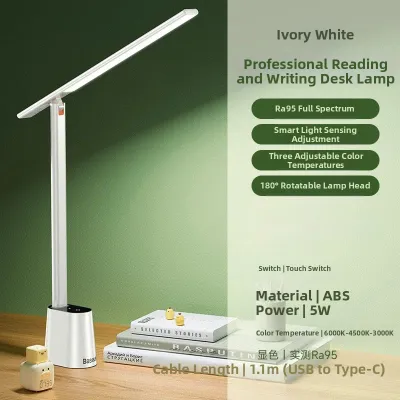
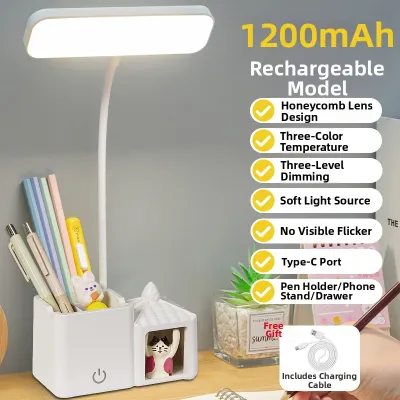
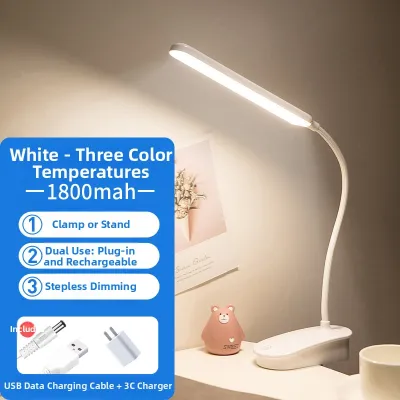
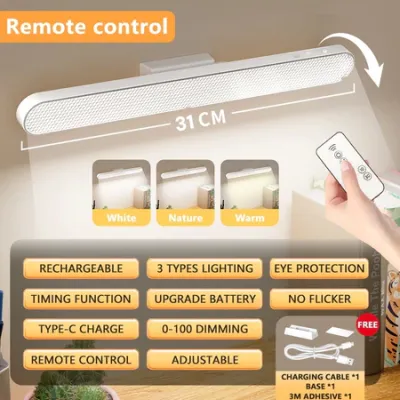
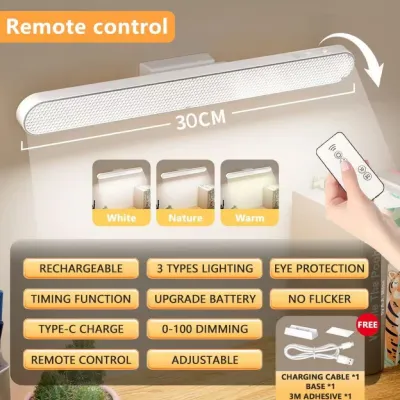
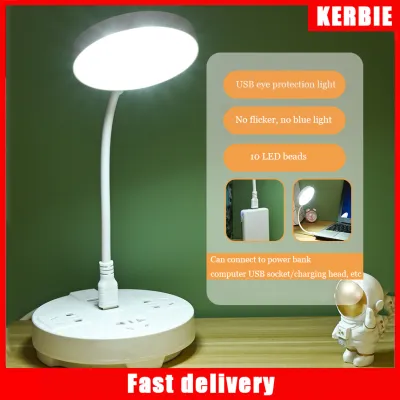
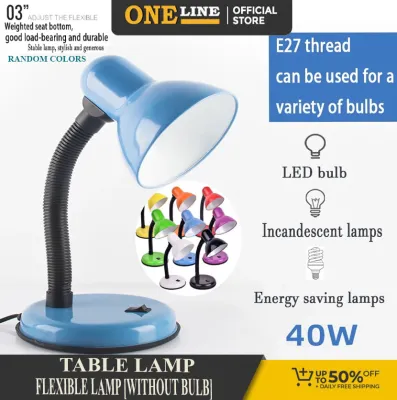
Prices are valid at publication and may change. Please refer to the product page for the latest price.
Glare is another major obstacle to comfortable reading, particularly when studying from glossy textbook pages, tablet screens, or laptop monitors. Traditional bulbs emit light in all directions, which can create harsh, concentrated hot spots on your work surface. Modern LED study lamps often feature physical diffusers, polarized filters, or asymmetric optical designs that direct light at an angle across your desk, illuminating your materials without reflecting directly back into your eyes. This is particularly useful when reading for hours, as it prevents the reflective “veiling glare” that washes out printed text and forces your eyes to strain to read.
Blue light emission is a unique consideration for LED technology, especially during evening study sessions. Cool-white LEDs (typically 5000K to 6500K) contain a high concentration of blue wavelengths, which can suppress the production of melatonin, the hormone responsible for sleep. While this blue-enriched light can boost alertness and concentration during daytime study, using it late at night can disrupt your circadian rhythm and make it difficult to fall asleep after you close your books. To mitigate this risk, look for LED lamps that allow you to adjust the color spectrum or feature dedicated warm-white modes that reduce blue light output during the evening. Physical diffusers also help by scattering the light, softening the harsh blue peaks and creating a more balanced, comfortable visual environment.
Color Temperature and Color Rendering (CRI)
Color temperature, measured in Kelvin (K), dictates the color appearance of the light, ranging from warm yellow to cool blue. Traditional incandescent bulbs inherently provide a warm, soothing light of around 2700K, which is highly comfortable for casual reading but can sometimes feel too relaxing, potentially inducing sleepiness during intense study sessions. LEDs offer a distinct advantage here by providing adjustable color temperatures. This allows you to switch between a warm, relaxing light (around 3000K) for light reading, a neutral white light (around 4000K) for active studying, and a cool white light (around 5000K) for high-focus tasks like technical drawing or proofreading.
Color Rendering Index (CRI) measures how accurately a light source reveals the true colors of objects compared to natural sunlight, scored on a scale up to 100. Traditional incandescent and halogen bulbs naturally score a near-perfect CRI of 100, making them excellent for art, design, and color-sensitive study tasks. Early LED models struggled with color accuracy, often making colors look dull or distorted, which can cause subtle eye strain as your brain works harder to interpret colored diagrams or fine text. However, modern high-quality LED desk lamps easily achieve a CRI of 90 or higher. When selecting an LED lamp, always check the packaging or manufacturer specifications for the CRI rating; aiming for a CRI of 90+ ensures that diagrams, maps, and text remain vivid and easy to distinguish, reducing the cognitive load on your brain as you process visual information.
Energy Efficiency, Heat Output, and Running Costs
When evaluating a desklamp for study table use over months or years of preparation for academic or professional milestones, operational costs and physical comfort become major decision factors. Traditional incandescent bulbs are highly inefficient, converting only about 5% to 10% of their electrical energy into visible light, while the remaining 90% to 95% is wasted as heat. A standard 60-watt incandescent bulb can be replaced by an LED bulb consuming only 6 to 9 watts of power to produce the same level of brightness (lumens). Over a typical four-hour daily study session, this difference in power consumption accumulates significantly, especially under the electricity tariff structures of utility providers in the Philippines, such as Meralco, where residential rates are among the highest in the Southeast Asian region.

To illustrate the financial impact, let us look at a simple comparison. If you study for 4 hours a day using a traditional 60-watt incandescent bulb, you consume approximately 87.6 kilowatt-hours (kWh) of electricity per year. At an average residential rate of ₱11.50 per kWh, this single bulb costs about ₱1,007.40 annually to run. Switching to an efficient 8-watt LED bulb reduces your annual consumption for the same study schedule to just 11.68 kWh, costing only ₱134.32 per year. This represents a direct saving of over ₱870 annually per lamp. For households with multiple students or those preparing for long-term licensure exams, these savings quickly offset the slightly higher initial purchase price of a quality LED fixture.
In a tropical climate, the heat output of your study lamp is not just an efficiency issue—it is a matter of direct physical comfort. Traditional halogen and incandescent bulbs become extremely hot to the touch within minutes of operation, radiating heat directly onto your face, hands, and study materials. In a typical warm, humid evening in Manila, Cebu, or Davao, this extra heat source can make your workspace feel stifling, forcing you to run electric fans or air conditioning units at higher speeds, which further escalates your household energy expenses. LEDs generate very little forward heat radiation because they use highly efficient heat sinks to dissipate thermal energy away from the light source. This keeps the lamp head and the surrounding air cool, allowing you to study comfortably for hours without sweating or feeling the oppressive warmth of a nearby bulb.
Lifespan, Durability, and Maintenance
The long-term value of your study lamp depends heavily on its build quality, lifespan, and maintenance requirements. Traditional incandescent bulbs have an incredibly short lifespan, typically lasting between 1,000 and 2,000 hours, while halogen bulbs extend this slightly to around 3,000 to 4,000 hours. If you study for three hours every day, you can expect to replace a traditional bulb every one to two years. Furthermore, traditional bulbs are highly fragile, utilizing delicate glass envelopes and thin tungsten filaments that can easily break if the lamp is accidentally bumped or knocked over on your desk.
In contrast, high-quality LED desk lamps boast an exceptional operational lifespan, often rated between 25,000 and 50,000 hours. At three hours of daily use, an LED lamp can theoretically last for over two decades before its brightness degrades to 70% of its original output. LEDs are solid-state lighting devices, meaning they contain no fragile filaments or glass components, making them highly resistant to physical shocks and vibrations. This is a massive advantage for busy student desks where books, laptops, and bags are constantly being moved around.
However, this longevity introduces a critical maintenance trade-off that you must consider before purchasing. Traditional desk lamps feature standard screw-in bases (such as E27 or E14), allowing you to replace a burnt-out bulb in seconds for a very low cost, usually under ₱100 for a basic replacement bulb. Many modern LED desk lamps, especially those with ultra-slim, minimalist designs, utilize integrated LED arrays. This means the light-emitting diodes are permanently soldered to the internal circuit board. If the internal driver or the LEDs themselves fail—whether due to a power surge, voltage fluctuations, or component degradation—you cannot simply swap out a bulb; you will likely have to replace the entire lamp fixture. In regions of the Philippines where power fluctuations or brief outages (brownouts) are common, these electrical surges can damage sensitive integrated LED drivers. To protect your investment, it is highly recommended to choose LED lamps from reputable brands that offer robust warranty terms (ideally one to two years) and built-in surge protection, or opt for a high-quality traditional fixture fitted with a replaceable LED bulb.
How to Choose the Right Desklamp for Study Table Setup
To make the best decision for your study space, you must balance your specific academic habits, physical environment, and budget. Use the following structured guidelines to determine which lighting technology aligns with your daily routine:
- Choose an LED desk lamp if: You regularly study for multiple hours at a time, require adjustable brightness and color temperatures to match different times of day, want to minimize the heat generated around your face and hands, and prefer a modern, long-term energy-efficient solution that reduces your monthly electricity bills.
- Choose a traditional desk lamp if: You prioritize absolute spectral continuity and perfect color rendering for highly detailed artistic, design, or architectural tasks, already own a high-quality vintage or decorative desk fixture that you want to preserve, and do not mind the higher heat output and frequent bulb replacements.
- Verify first if: You are purchasing an integrated LED lamp, in which case you must check the driver quality, brand reputation, and warranty coverage to ensure it will not fail prematurely. If you choose a traditional lamp fixture, always verify the manufacturer's maximum wattage limit printed on the socket (typically 40W or 60W) to prevent overheating, melting plastic components, or creating a fire hazard on your study table.
Essential Specifications to Verify Before Buying
Before making your final purchase, check the product packaging, user manual, or online specification sheet to ensure the lamp meets high-quality standards for studying:
- Lumens (Brightness): Look for a lamp that delivers between 400 and 800 lumens of light. This range provides sufficient illumination for reading fine print without causing excessive glare. Avoid relying solely on wattage to judge brightness, as a 6W LED can produce the same lumens as a 60W incandescent bulb.
- Color Rendering Index (CRI): Ensure the lamp has a CRI rating of 90 or higher (often labeled as Ra > 90). This guarantees accurate color representation, which is vital for reading colored diagrams, maps, and textbooks.
- Color Temperature Range: Opt for a lamp with adjustable color temperatures, ideally spanning from 3000K (warm white) for relaxing evening reading to 4000K (neutral white) or 5000K (cool white) for high-focus daytime study sessions.
- Flicker-Free Certification: Verify that the lamp features a high-quality electronic driver certified as flicker-free to protect your eyes from invisible, fatigue-inducing oscillations.
- Physical Adjustability: Choose a lamp with a highly adjustable arm, a rotating head, and stable joints. This allows you to position the light source precisely where you need it, keeping the light below eye level and angled away from your direct line of sight to prevent glare.
- Voltage and Electrical Certification: In the Philippines, verify that the lamp is rated for the standard domestic voltage of 220V-240V at 60Hz. Look for safety marks such as the Philippine Standard (PS) mark or Import Commodity Clearance (ICC) sticker to ensure the electrical components have undergone rigorous safety testing.
Frequently Asked Questions (FAQ)
Finding the perfect lighting setup often brings up practical questions about eye health, daily habits, and modern lamp features. Below are answers to some of the most common queries regarding study table illumination.
Can poor lighting cause permanent eye damage?
No, reading or studying in poor lighting, high glare, or under flickering lights does not typically cause permanent, irreversible structural damage to your eyes. However, it does cause significant short-term discomfort, including digital eye strain, dry eyes, blurred vision, and tension headaches. To minimize these symptoms during long study sessions, always pair your desk lamp with adequate ambient room lighting to reduce the harsh contrast between your illuminated desk and a dark room. Additionally, practice the 20-20-20 rule: every 20 minutes, take a 20-second break to look at an object at least 20 feet (about 6 meters) away to allow your eye muscles to relax.
Are smart features necessary for a study lamp?
No, smart features such as mobile app control, voice assistant integration, and automated circadian scheduling are convenient additions, but they are not necessary for an effective study environment. While auto-dimming sensors that adjust brightness based on ambient room light can be highly useful, your primary focus should always be on the core optical specifications of the lamp. A basic, manually adjustable desk lamp with a high CRI, a flicker-free driver, and physical adjustability will provide far superior eye comfort and study support than a highly connected smart lamp with poor light quality.
Community discussion
Share your experience or ask a question. Comments are reviewed before publication.