
Choosing the perfect light for bedtime reading is a balance between personal comfort, spatial constraints, and room dynamics. For decades, the traditional bedside lamp has been the standard choice, anchoring nightstands with its familiar warm glow. However, the rise of compact, versatile magnetic LED lights has introduced a modern alternative that challenges conventional lighting setups.
Neither option is universally superior for every reader. The ideal choice depends heavily on your bedroom layout, your daily reading habits, and whether you share your sleeping space with a partner. While one person might value a stable, decorative piece that bathes the entire room in soft light, another might require a focused, space-saving beam that keeps the rest of the room completely dark.
Magnetic LED lights excel in tight spaces, offering highly targeted illumination that prevents partner disturbance while freeing up valuable nightstand real estate. Traditional bedside lamps, on the other hand, provide broader ambient lighting, require zero battery maintenance, and serve as permanent design statements. By evaluating how each option performs across key practical categories, you can select the fixture that best supports your nightly routine.
Products mentioned in this guide
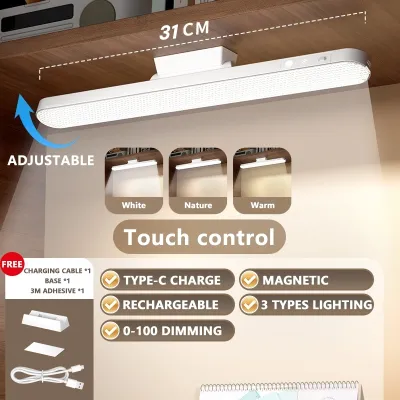
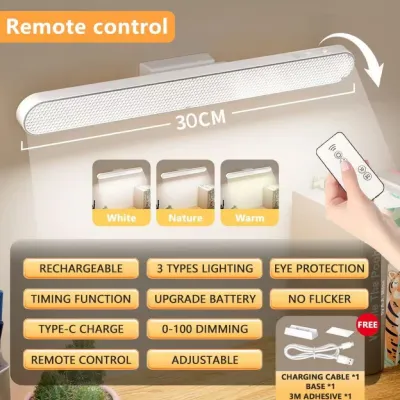
Prices are valid at publication and may change. Please refer to the product page for the latest price.
Core Differences at a Glance
To help you quickly compare these two distinct lighting solutions, the matrix below outlines their primary design and operational differences. These factors represent the core practical trade-offs you will navigate when choosing between a magnetic LED fixture and a traditional lamp.
| Feature | Magnetic LED Light | Traditional Bedside Lamp |
|---|---|---|
| Light Directionality | Highly focused, narrow beam | Broad, diffused ambient cone |
| Adjustability | Multi-axis rotation (ball joints or swivels) | Fixed position or limited single-axis arm |
| Power Source | Rechargeable lithium battery or USB cable | Plug-in power cord (direct AC power) |
| Space Footprint | Zero nightstand footprint (wall or headboard mount) | Requires dedicated flat surface on nightstand |
| Installation | Adhesive backing, magnetic base, or screw mount | Plug-and-play (requires nearby wall outlet) |
| Primary Use Case | Targeted task lighting and small-space utility | General room ambiance and stable decor |
Reading Comfort: Glare, Shadows, and Partner Disturbance
The primary job of any reading light is to illuminate your pages clearly without straining your eyes. Magnetic LED lights and traditional bedside lamps distribute light in fundamentally different ways, which directly impacts your visual comfort and your bedroom environment.

Magnetic LED lights are typically designed as compact light bars, pucks, or spot-style fixtures. Because they utilize directional LED diodes, they project a highly focused, narrow beam of light. When mounted directly above your shoulder or on your headboard, this focused beam targets your book or e-reader with minimal light spill. This precise directionality is incredibly beneficial if you share a bed, as it allows you to read late into the night without casting a bright glare across your partner’s face.
Traditional bedside lamps rely on fabric, glass, or plastic shades to diffuse light. This diffusion creates a wide, soft cone of ambient light that illuminates a large portion of the room. While this broad wash is excellent for creating a relaxing atmosphere as you prepare for sleep, it is less efficient for targeted reading. The wide-angle light can create distracting reflections and glare on glossy tablet screens or e-readers, and the overall brightness is much more likely to disrupt a sleeping partner.
Shadows are another common source of eye strain during late-night reading. Because a traditional lamp sits to the side of the bed on a nightstand, the light must travel horizontally across your body. Your head, shoulders, or even the hand holding your book can easily block this light path, casting frustrating shadows across the text. A magnetic LED light mounted directly overhead or slightly behind your reading position projects light along your direct line of sight, illuminating the pages evenly and eliminating body-cast shadows.
When evaluating eye care, color temperature and dimming capabilities are critical specifications to verify. Bedtime reading requires a warm, amber light—ideally between 2700K and 3000K—to minimize blue light exposure, which can interfere with your body’s natural melatonin production and disrupt sleep cycles. Many modern magnetic LED lights offer adjustable color temperatures and stepless dimming, allowing you to fine-tune the brightness as your eyes adjust to the darkness. Traditional lamps can achieve similar results, but you must verify that the lamp is paired with a high-quality dimmable LED bulb that features a high Color Rendering Index (CRI of 90 or above) to ensure text remains crisp and highly legible.
Space and Adjustability: Nightstand Footprint vs Precise Angles
How a light physically integrates into your bedroom layout can dramatically affect your daily comfort and organization. Bedside space is often limited, making physical footprint and mechanical adjustability key deciding factors.
Space-saving is the standout advantage of magnetic LED lights. These fixtures do not sit on your furniture; instead, they attach to walls, headboards, or bed frames. By moving the light source off the nightstand, you completely reclaim that surface area. This is a massive benefit for smaller bedrooms or minimalist layouts where nightstands are compact or non-existent. You can use the freed-up space for other bedtime essentials like glasses, a glass of water, or your physical book collection.
Traditional bedside lamps require a stable, flat surface and a dedicated physical footprint. A standard nightstand can quickly become cluttered when forced to accommodate a lamp base alongside your daily items. If you enjoy a spacious, clutter-free bedside table, or if your room layout prevents you from placing a nightstand next to the bed, a traditional lamp can feel restrictive and cumbersome.
In terms of mechanical adjustability, magnetic LED lights offer exceptional flexibility. Most magnetic systems utilize a ball-and-socket joint, allowing the light head to rotate a full 360 degrees and tilt along multiple axes. You can easily adjust the light angle with a gentle touch, adapting the beam to your posture whether you are sitting upright, propped up on pillows, or lying on your side. Traditional lamps are typically static. While some swing-arm or gooseneck lamps exist, their range of motion is strictly limited by the position of their heavy base, and adjusting them often requires loosening and tightening manual knobs.
However, the convenience of a magnetic light comes with specific installation requirements. These lights rely on a separate metal base plate that must be secured to a surface. Manufacturers usually provide double-sided adhesive pads or mounting screws. If you have a solid wood or metal headboard, installation is straightforward. However, if your headboard is upholstered in delicate fabric or leather, applying a strong adhesive can cause permanent damage, and screws will leave permanent holes. Always verify your headboard material and check the manufacturer’s care instructions before choosing an installation method.
Furthermore, environmental factors can play a role in installation success. In tropical climates with high humidity, such as the Philippines, standard double-sided adhesives can degrade over time. A magnetic base that feels secure in dry conditions may slip or fall when high humidity weakens the adhesive bond. For long-term safety and reliability in humid environments, opting for a screw-mounted base plate or ensuring the adhesive is rated for high-temperature and high-humidity environments is highly recommended.
Power and Convenience: Plug-in Reliability vs Rechargeable Flexibility
Managing how your light receives power is a major part of its daily usability. The choice between a wired and wireless setup involves clear trade-offs in runtime, maintenance, and safety.
Traditional bedside lamps offer unmatched “plug-and-forget” reliability. Because they connect directly to a wall outlet, they provide continuous, unlimited power. You never have to worry about the light dimming mid-chapter, and there are no batteries to monitor or recharge. This makes traditional lamps the ideal choice for readers who prioritize low-maintenance appliances.
The most popular consumer magnetic LED lights are cordless and rely on rechargeable lithium-ion batteries. While this wireless design eliminates messy cords running down your walls, it introduces the chore of battery management. Depending on your brightness settings, you will need to detach the light head from its magnetic base every few days or weeks to charge it via a USB cable. Over years of use, the capacity of these internal lithium batteries will naturally degrade, gradually shortening the run-time between charges.
Despite the need for recharging, cordless magnetic lights offer a unique safety and practical advantage in areas prone to power fluctuations or seasonal brownouts. If the electrical grid fails, a fully charged magnetic LED light continues to operate normally. It can easily be detached from its base to serve as a portable flashlight or emergency light source. A traditional plug-in lamp will immediately go dark during a power outage unless it is connected to a dedicated backup generator or an uninterruptible power supply (UPS).
Electrical safety is a critical consideration for both lighting styles. Both categories primarily use LED technology, which runs significantly cooler than vintage incandescent bulbs. However, compact, enclosed magnetic fixtures can still accumulate heat if run at maximum brightness for extended periods. Always check the manufacturer’s instructions for continuous run-time limits and thermal dissipation guidelines.
For traditional plug-in lamps, ensure that all electrical cords are routed safely behind furniture to prevent tripping hazards, pinching, or fraying. When purchasing a plug-in lamp, verify that it is compatible with the standard local voltage (220V in the Philippines) and carries recognized safety certifications, such as the Product Safety (PS) mark or an Import Commodity Clearance (ICC) sticker. If you choose a magnetic LED light that requires fixed wiring into your home’s electrical system, always isolate the power at the circuit breaker first, follow the provided installation instructions carefully, and consult a qualified professional to complete the wiring safely.
Smart features are widely available across both categories, but they are model-specific rather than inherent to either design. You can find magnetic lights with touch-sensitive controls, remote dimming, and sleep timers, while traditional lamps can easily be upgraded with smart LED bulbs compatible with home automation systems. Rather than assuming one style is smarter, verify the specific control interfaces and smart compatibility of the individual model you are considering.
How to Choose: Decision Rules for Your Bedroom
To make your final decision, evaluate your specific bedroom layout, daily habits, and physical constraints. Use the following guidelines to identify which lighting style fits your lifestyle.
Choose a Magnetic LED Light if:
- You have limited space: Your bedroom is compact, you have a small nightstand, or you do not have room for a bedside table at all.
- You share a bed: You need a highly directional, low-spill light source that allows you to read comfortably without waking a sleeping partner.
- Outlet access is poor: Your bed is positioned far from wall outlets, making a cordless, rechargeable light much safer and more practical than running long extension cords.
- You want emergency backup: You live in an area prone to power outages and value having a detachable, rechargeable light source ready for emergency use.
Choose a Traditional Bedside Lamp if:
- You prefer low maintenance: You want a reliable, plug-and-forget light source that never requires recharging or battery management.
- You want ambient room lighting: You prefer a soft, wide-angle wash of light that can illuminate the entire bedroom rather than a focused spotlight.
- You prioritize bedroom decor: You want your lighting fixture to serve as a permanent design statement that complements your bedroom's aesthetic style.
- You have a spacious nightstand: Your bedside table is large enough to easily accommodate a stable lamp base without crowding your personal items.
Verify First:
- For Magnetic Lights: Inspect your headboard or wall surface. Ensure it can support the adhesive or screw-in mounting base without risking cosmetic damage. If using adhesive in a humid environment, verify that the surface is thoroughly cleaned with isopropyl alcohol before application to ensure a strong bond.
- For Traditional Lamps: Measure your nightstand to guarantee the lamp base fits securely without overhanging. Check the distance to the nearest wall outlet to ensure the power cord can reach safely without being pulled taut, and confirm that the fixture carries appropriate electrical safety certifications for your local voltage.
Frequently Asked Questions (FAQ)
Can I use a magnetic LED light on a wooden or upholstered headboard?
Yes, but the ideal installation method depends entirely on your headboard’s material. While the magnetic light itself requires a metal surface to cling to, almost all magnetic light kits include a companion metal base plate. For wooden headboards, you can secure this base plate using either the provided double-sided adhesive or small mounting screws. Screws offer a highly secure, permanent hold but will leave small holes if you ever decide to remove the fixture. For upholstered or fabric headboards, avoid using strong adhesives, as they can tear the fibers or leave sticky, hard-to-clean residues. Instead, consider mounting the metal base plate to the wall directly above the headboard, or look for a model that features a clamp-on mechanism. Always consult your headboard manufacturer’s care instructions before applying any permanent adhesives or drilling holes.
Are battery-powered magnetic lights bright enough for reading books?
Yes, most modern rechargeable magnetic LED lights are more than bright enough for comfortable reading. Because these lights can be mounted very close to your book or e-reader—often just a few feet directly above your shoulders—they do not need as many total lumens as a traditional lamp to achieve the same level of readability on the page. When shopping, look for models that specify their brightness output (ideally offering between 100 to 300 lumens) and feature adjustable brightness levels. Having multiple dimming steps or stepless dimming is highly beneficial, as it allows you to lower the intensity as your eyes adjust to the dark, preventing eye strain and extending the light’s battery life between charges.
Community discussion
Share your experience or ask a question. Comments are reviewed before publication.