
Condo living in the Philippines often requires a thoughtful balance between space-saving functionality and personal style. When it comes to creating a relaxing evening sanctuary away from the bustling city, ambient lighting is one of the most effective tools at your disposal. If you want a striking, high-tech centerpiece that immediately draws the eye and serves as an active conversation starter, a magnetic moon lamp is an exceptional choice. However, if you prefer a subtle, highly portable mood light that you can easily move from your bedside table to a cozy reading nook without worrying about power cords or complex setups, a regular static moon lamp is the more practical and budget-friendly option.
The ultimate decision rests on whether you prioritize visual novelty and a dedicated display spot over cost-efficiency and placement flexibility. Both lamps offer unique ways to illuminate your living space, but they cater to very different lifestyles, maintenance preferences, and spatial constraints. Understanding these practical differences will help you invest in the right light for your home.
Key Differences in Design and Placement
To choose the right lamp for your condo, you must first look at how each device is constructed and where it can safely sit. A magnetic moon lamp requires a substantial, specialized base that houses powerful electromagnets and control sensors. This base is relatively heavy and must be placed on a completely flat, rigid surface. In a condo setting, shelves mounted on lightweight drywall or thin partitions can experience slight vibrations when doors slam or when heavy appliances like washing machines run. These minor vibrations can destabilize the magnetic field, causing the levitating sphere to fall.
Products mentioned in this guide
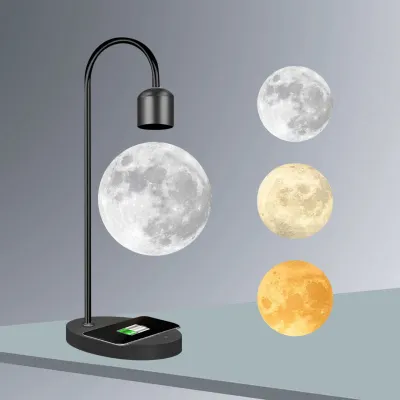
Prices are valid at publication and may change. Please refer to the product page for the latest price.
In contrast, a regular moon lamp typically rests on a simple, lightweight wooden or plastic cradle. Because it has no sensitive electronic sensors in its stand, it can tolerate minor bumps, vibrations, and slightly uneven surfaces without any issue. This makes the regular version far more forgiving when placed on busy desks, bedside tables, or high-traffic shelves.
Power delivery is another major differentiator. Regular moon lamps frequently feature internal rechargeable lithium-ion batteries. You can charge them using a standard USB cable and then place them anywhere—even in the middle of a dining table or on a floating shelf far from an electrical outlet. This cordless freedom is highly advantageous for flexible condo layouts. Conversely, a magnetic moon lamp is strictly tethered to a wall outlet. The base must receive constant power to generate the magnetic field that keeps the sphere suspended. If you want to hide the power cord, you must plan your furniture placement carefully around your condo’s existing electrical outlets.
| Feature | Magnetic Moon Lamp | Regular Moon Lamp |
|---|---|---|
| Base Footprint | Larger, heavier electromagnetic base (Verify dimensions on product label) | Compact, lightweight stand (Check product specifications) |
| Power Source | Continuous AC power required | Rechargeable battery or direct USB power |
| Portability | Low (tethered to outlet and sensitive to movement) | High (cordless options can be moved easily) |
| Vibration Sensitivity | High (vibrations can cause the sphere to fall) | Low (stable on almost any flat surface) |
| Primary Use Case | Active visual centerpiece and high-tech accent | Passive ambient lighting and bedside nightlight |
Ambient Lighting and Visual Impact
Beyond physical placement, the way these two lamps distribute light dramatically alters the mood of a room. A regular moon lamp sits nestled directly in its stand, which partially blocks the light casting downward. This design creates a warm, cozy, and highly localized glow that is perfect for a bedside table or a quiet reading corner. The 3D-printed texture of the moon—mimicking real lunar craters and seas—is highlighted by the internal LED light, creating a beautiful, static display that blends seamlessly into the background.

A magnetic moon lamp, however, floats a few centimeters above its base. This physical gap allows light to escape in all directions, including downward, reflecting off the top surface of the base to create a striking halo effect. Because the sphere floats, it also rotates slowly and continuously. This gentle, kinetic movement causes the shadows cast by the 3D craters to shift constantly, adding a dynamic, mesmerizing quality to the room. This active visual focus makes the magnetic version an excellent centerpiece for a living room console or an entryway table.
Color temperatures and spatial effects are highly subjective preferences, but they play a key role in tropical living. Both lamp types usually offer adjustable color modes, typically switching between cool white, warm white, and yellow. In the warm climate of the Philippines, choosing a cool white or a soft, neutral white can make an indoor space feel breezy, clean, and open during hot afternoons. Switching to a warm yellow in the evening helps signal the body to relax, making it an excellent choice for wind-down routines before sleep.
Setup, Maintenance, and Daily Use
Operating these lamps reveals a clear contrast in daily convenience. Setting up a magnetic moon lamp requires patience and a steady hand. Finding the “magnetic sweet spot” where the forces of gravity and electromagnetism balance perfectly is a hands-on skill that takes practice. You must hold the sphere firmly with both hands, slowly lower it toward the exact center of the powered base, and feel for a gentle upward tug before releasing it. If you release it too quickly or off-center, the magnets will pull the sphere violently down to the base. A regular moon lamp, by comparison, is purely plug-and-play, requiring no learning curve.
Power interruptions are a critical consideration for any electronic device. In many urban areas, brief power fluctuations or sudden brownouts can occur, especially during the rainy season. If the power cuts out, the electromagnetic field in a magnetic lamp base instantly deactivates. Without the magnetic force, gravity takes over, and the sphere drops. While many high-quality models feature a safety mechanism where the sphere is pulled down to the base by a permanent magnet during power loss, a sudden drop can still risk scratching the delicate 3D-printed surface or damaging the internal induction coils. A regular moon lamp, especially one with a built-in rechargeable battery, will simply remain lit or turn off safely without any physical risk to the device.
Cleaning and environmental factors also require care. High humidity is a common characteristic of tropical living. While regular moon lamps are relatively sealed and simple to wipe down, the electromagnetic base of a magnetic lamp contains sensitive circuitry. It should never be placed in high-humidity zones, such as near an open bathroom door, close to an indoor plant humidifier, or right next to an open window during the rainy season. Dusting should be done with a dry, anti-static microfiber cloth. Always unplug the base before cleaning to prevent static discharge or electrical issues.
Price and Value Considerations
The price difference is a major deciding factor for most condo owners. A regular moon lamp is highly affordable, making it an easy impulse buy or a versatile gift. A magnetic moon lamp, however, represents a significant investment in ₱. This premium price is not for the light itself, but for the engineering required to make it float: the electromagnetic coils, the levitation sensors, the wireless power induction system (which powers the LED inside the floating sphere without wires), and the robust base materials.
Before purchasing, it is essential to verify key technical specifications on the product label rather than relying on marketing claims:
- Voltage Compatibility: Ensure the adapter is rated for 220V, 60Hz, which is the standard electrical supply in the Philippines. Using an incompatible adapter can overheat the base or damage the levitation sensors.
- Electrical Certification: Look for safety certifications (such as CE, FCC, or local safety marks) to ensure the power adapter and internal wiring meet basic safety standards.
- LED Lifespan and Dimming: Verify if the LEDs are rated for long-term use and whether the lamp supports dimming, which is crucial for adjusting the light level in a small condo bedroom.
- Warranty: Because magnetic lamps have moving magnetic fields and complex sensors, check the manufacturer's warranty terms. A reliable warranty covering the electromagnetic base is highly recommended.
Final Verdict: Choose the Right Moon Lamp for Your Space
To make your final decision, evaluate your daily habits, your condo’s layout, and your aesthetic goals. Both lamps offer beautiful ambient lighting, but they serve different purposes.
Choose the magnetic moon lamp if:
- You want a high-impact, dynamic centerpiece for a prominent shelf, desk, or console table.
- You have a stable, vibration-free surface near a reliable power outlet.
- You enjoy high-tech, kinetic decor and do not mind a slight learning curve during setup.
Choose the regular moon lamp if:
- You want a portable, cordless light source that can be easily moved around your condo.
- You prefer a simple, hassle-free setup that is safe from power outages and accidental bumps.
- You want a soft, static nightlight for a bedroom or a child's room on a modest budget.
Before making your purchase, always measure the depth of your shelves and verify their weight capacity, as the electromagnetic base of a magnetic model can be surprisingly heavy.
Frequently Asked Questions (FAQ)
Is the magnetic field from a floating moon lamp safe for nearby electronics?
Yes, the electromagnetic field generated by consumer-grade levitating lamps is generally localized and safe for modern electronics like smartphones, laptops, and Wi-Fi routers. However, as a precaution, it is best to keep sensitive items—such as mechanical watches, pacemakers, external hard drives, and magnetic stripe cards—at a safe distance. Always check the manufacturer’s safety manual for specific clearance recommendations to ensure absolute safety for your personal devices.
Can I use a smart plug or timer with a magnetic moon lamp?
It is not recommended to use a smart plug or timer to turn off a magnetic moon lamp by cutting its power. Severing the electrical supply collapses the magnetic field, causing the sphere to drop abruptly onto the base. Over time, repeated sudden drops can damage the internal induction coils, scratch the 3D-printed sphere, or misalign the levitation sensors. Instead, use the lamp’s built-in controls or touch switches to turn off the light while keeping the levitation active, or consult the manual for approved control methods.
Community discussion
Share your experience or ask a question. Comments are reviewed before publication.