
Selecting the right Bosca motion sensor for your garden depends on matching the sensor’s detection technology to the specific layout and environmental conditions of each zone. For narrow pathways, a focused Passive Infrared (PIR) sensor prevents unnecessary triggers, while wide-angle or long-range sensors are better suited for open yards and entry gates. In the tropical climate of the Philippines, where heavy rains, high humidity, and lush foliage are common, choosing the correct sensor type and verifying its weatherproofing specifications is essential for reliable outdoor performance.
Identifying Lighting and Security Needs by Garden Zone
Before purchasing any outdoor lighting equipment, it is important to assess what you want each light to achieve. Pathway lighting primarily serves a safety function, guiding family members and guests along walkways to prevent trips and falls. For these areas, you need gentle, immediate illumination that covers the ground without blinding the walker.
In contrast, entry points and perimeter fences require security deterrence, where a sudden, bright light can startle potential intruders and alert household members to movement. These distinct functional requirements dictate the type of sensor and light fixture you should install.
Products mentioned in this guide
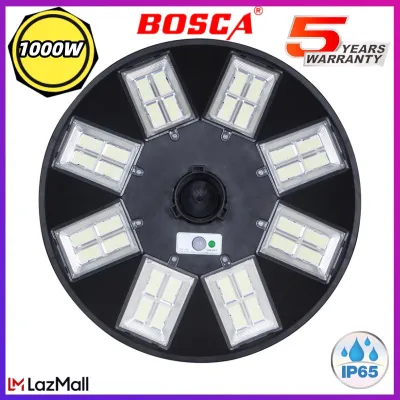
Prices are valid at publication and may change. Please refer to the product page for the latest price.
Environmental factors in a tropical garden play a significant role in how motion sensors behave. Lush foliage, large palm fronds, and hanging vines move constantly in the breeze, which can easily trigger highly sensitive sensors. Additionally, local wildlife such as stray cats, geckos, and birds can cause frequent false alarms if the sensor is not properly configured.
Understanding these factors helps you determine the exact detection range and coverage angle required for each specific zone of your property. By mapping out these zones before buying, you can avoid the frustration of lights that either fail to turn on when needed or flash constantly throughout the night.
Matching Sensor Detection Types to Garden Areas
Different motion sensor technologies handle environmental challenges in distinct ways. Passive Infrared (PIR) sensors are the most common type used in residential gardens. These sensors work by detecting changes in heat signatures, or infrared radiation, within their field of view.

Because PIR sensors require a direct line of sight to function, they are highly effective at ignoring movement behind solid barriers like fences or thick tree trunks. This makes them ideal for controlled, linear spaces where you only want to detect objects directly in front of the sensor.
Microwave and dual-technology sensors offer alternative solutions for more complex garden layouts. Microwave sensors emit high-frequency signals and measure the reflection off moving objects, allowing them to detect motion through light foliage, glass, or thin wooden barriers. While this provides excellent coverage in dense gardens, it also increases the risk of false triggers from wind-blown leaves.
Dual-technology sensors solve this by combining both PIR and microwave technologies, requiring both heat and physical movement to trigger the light, which drastically reduces false alarms in open, windy areas. Always verify the specific Bosca product packaging to confirm which sensor technology is utilized in their various outdoor models.
Pathways and Walkways
For narrow, linear garden paths, a sensor with a narrow detection angle is the most practical choice. A focused field of view, typically between 90 and 110 degrees, ensures the sensor only triggers when someone is actually walking on the path, preventing the light from spilling into neighboring properties or triggering from street traffic.
Immediate response times are critical for pathway safety. The sensor must activate the connected lights instantly as a person steps onto the walkway, ensuring they are never left walking in the dark. Additionally, look for models that offer adjustable sensitivity settings, allowing you to fine-tune the sensor to ignore small ground-level wildlife while still detecting human movement.
Entry Points and Gates
Transition zones like front doors, back patios, and garden gates require a different approach. These areas benefit from wider detection angles, often 180 degrees or more, to capture lateral movement as someone approaches the entrance from the side or around a corner.
Adjustable time-delay settings are highly valuable at entry points. When you are unlocking a gate, carrying heavy groceries, or searching for your keys, you need the light to remain illuminated for several minutes even if you stand relatively still. It is also important to check the recommended mounting height limits printed on the Bosca packaging, as mounting a sensor too high or too low can create blind spots right at your doorstep.
Open Yard and Perimeter Areas
Covering large, exposed spaces like open lawns or long perimeter walls requires long-range detection capabilities and wide-angle coverage. Sensors designed for these zones often feature detection ranges of 10 meters or more and coverage angles up to 270 degrees, which are ideal for corner-mount installations.
Mitigating false triggers is the primary challenge in open yards due to wind, moving tree branches, and distant street traffic. Selecting a sensor with adjustable detection zones or physical shutter limiters allows you to block out busy streets or highly active garden foliage.
In the Philippines, open yards expose electrical equipment to intense sunlight, high humidity, and heavy seasonal rains. When selecting a sensor for an exposed perimeter wall, always check the Ingress Protection (IP) rating on the product label. A minimum rating of IP44 is acceptable for sheltered outdoor areas, but an IP65 or higher rating is highly recommended for fully exposed installations to ensure long-term durability against water ingress.
Key Specifications to Verify on Bosca Product Labels
When shopping for a Bosca motion sensor in-store or on an online marketplace, reviewing the technical specifications on the product label is the best way to ensure compatibility and performance. First, check the detection angle (measured in degrees) and the maximum range (measured in meters) to confirm the sensor can cover your intended garden zone.
Next, verify the Ingress Protection (IP) rating to ensure the unit can withstand outdoor conditions. The first digit of the IP rating indicates protection against solid objects like dust, while the second digit indicates water resistance. For outdoor landscape lighting in tropical climates, prioritizing a higher second digit is essential for preventing moisture buildup inside the housing.
Look for adjustable parameters on the sensor housing, which are typically controlled by small dials or switches. These include the Lux setting, which determines whether the sensor operates 24 hours a day or only after sunset; the Time setting, which controls how long the connected lights remain on after motion stops; and the Sensitivity setting, which adjusts how easily the sensor is triggered.
Finally, verify the electrical compatibility of the sensor. Check the voltage rating to ensure it matches the standard 220V-240V electrical grid in the Philippines, and pay close attention to the maximum wattage limit. Connecting a high-wattage floodlight to a sensor rated only for low-wattage LEDs can damage the sensor’s internal relay or create a fire hazard. Look for local electrical safety certifications on the packaging to ensure the product meets national standards.
Installation Boundaries and Safety Checks
Working with outdoor electrical installations requires strict adherence to safety protocols. Before attempting to mount, wire, or adjust any fixed-wiring Bosca motion sensor, always isolate the power by turning off the corresponding circuit breaker at your home’s main electrical panel. Use a reliable voltage tester to confirm that the wires are completely dead before proceeding with the installation.
Always consult the specific Bosca installation manual for detailed wiring diagrams, wire color codes, and recommended mounting clearances. Outdoor wiring must be properly insulated and protected from moisture, using weatherproof junction boxes and conduit where necessary to prevent short circuits caused by humidity or rain.
While simple battery-powered or solar-integrated motion sensors can be safely installed as a DIY project, any installation involving fixed electrical wiring, connection to the main household grid, or working at significant heights must be handled by a licensed electrician. Hiring a qualified professional ensures that your garden lighting system complies with the Philippine Electrical Code and remains safe for your family and property.
Frequently Asked Questions (FAQ)
Can one Bosca motion sensor cover both a pathway and an open yard?
Using a single sensor to cover both zones is possible but often leads to trade-offs in performance. A wide-angle sensor positioned to cover an open yard may frequently trigger the pathway lights due to distant movement, leading to unnecessary energy use and light pollution. If you must use a single sensor, look for a model that features adjustable masking shields or zone-specific sensitivity settings, allowing you to physically block out or desensitize the areas of the yard you do not wish to monitor.
How do I prevent garden wildlife from triggering the lights at night?
To minimize false alarms from local animals, start by lowering the sensitivity dial on the sensor unit, which requires a larger heat signature or more significant movement to trigger the light. Alternatively, you can physically tilt the sensor slightly upward or adjust its mounting height. By angling the sensor’s detection field so that it starts above the height of small animals, you can effectively ignore ground-level wildlife while still capturing human-sized targets approaching your home.
Community discussion
Share your experience or ask a question. Comments are reviewed before publication.