
Selecting the right Bosca solar street light for your property requires matching the physical layout of your outdoor space with the technical specifications listed on the product packaging. Because outdoor security relies on consistent illumination, understanding how to read these specifications ensures you select a fixture that can withstand tropical weather while providing reliable light throughout the night. Whether you are securing a wide driveway, a high-traffic gate, or a dark perimeter fence, evaluating your specific environmental conditions will help you choose a model that delivers the right balance of brightness, battery life, and sensor responsiveness.
By focusing on verifiable product features rather than generic performance claims, you can avoid common pitfalls such as underpowered lighting or premature battery failure. This guide outlines how to assess your property, interpret manufacturer labels, and safely install your solar lighting system to achieve optimal security and longevity.
Assessing Your Outdoor Security Lighting Needs
Every outdoor zone presents unique challenges that dictate the type of solar light required. A driveway, for instance, demands continuous, even visibility to ensure safe vehicle navigation and prevent accidents. In contrast, property perimeters often benefit more from motion-activated deterrence, where a sudden increase in brightness alerts you to movement and discourages unauthorized entry.
Products mentioned in this guide
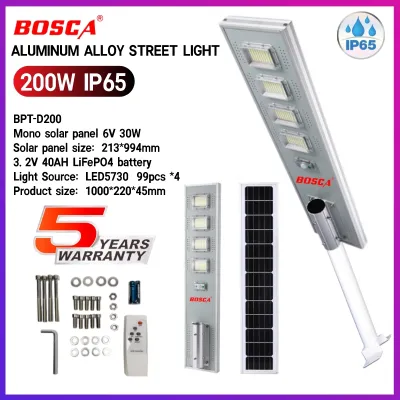
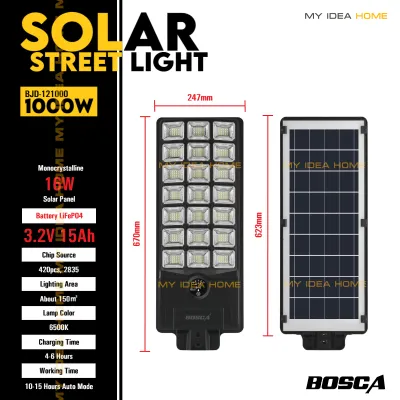
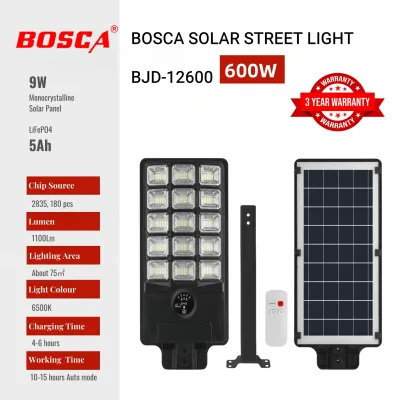
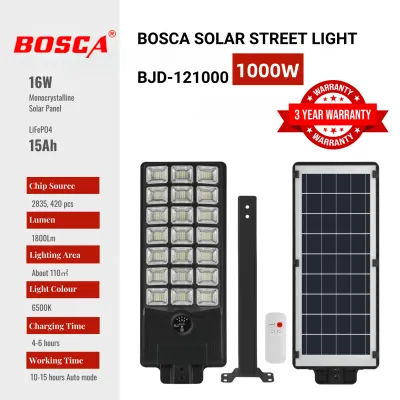
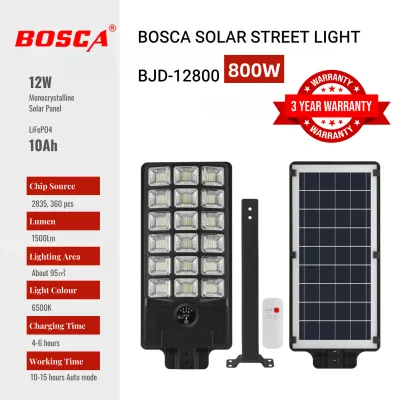
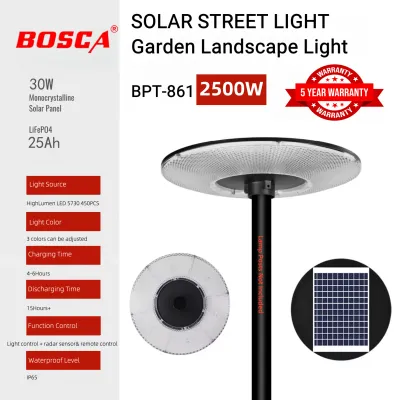
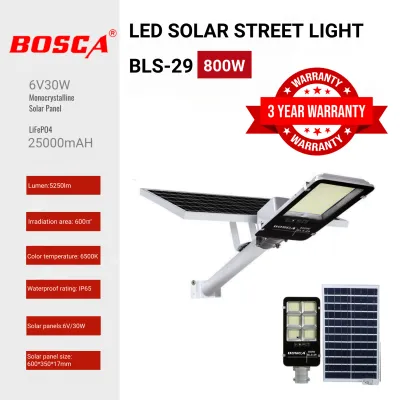
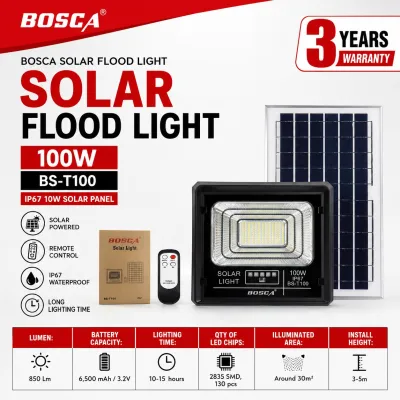
Prices are valid at publication and may change. Please refer to the product page for the latest price.
Before purchasing any lighting fixture, walk your property to identify potential physical obstructions. Overhanging tree branches, roof eaves, and adjacent structures can block sunlight from reaching the solar panel during the day, severely limiting the battery’s charge. Additionally, take note of ambient light pollution from nearby streetlights or neighboring properties, as excessive ambient light can trick dusk-to-dawn sensors into staying off when they should be active.
Finally, determine the layout of the area you need to illuminate. Wide, open spaces like parking areas or broad driveways require flood illumination with a wide beam spread to cover maximum ground. Narrow pathways or specific entry points, such as a side gate, are better served by focused spotlighting that directs intense light exactly where foot traffic occurs.
Key Specifications to Verify on Bosca Product Labels
When browsing Bosca solar street lights on online marketplaces or at local hardware stores, the product label and specification sheet are your most reliable tools. Verifying these technical details before buying prevents compatibility and performance issues later.

Lumen Output and Beam Angle
Do not rely solely on wattage ratings to estimate brightness, as LED efficiency varies. Instead, look for the stated lumen output on the product packaging. For general driveway or gate security, a higher lumen rating is typically required to ensure clear visibility, while lower lumen outputs may suffice for closely spaced perimeter lights. Additionally, check the beam angle specification; a wider beam angle (such as 120 degrees) distributes light over a larger surface area, whereas a narrower angle concentrates the light beam for targeted security.
Battery Capacity and Autonomy
Because solar lights rely entirely on stored energy, battery capacity is a critical specification. Look for the battery rating, usually listed in milliampere-hours (mAh) or watt-hours (Wh), alongside the manufacturer’s estimated working hours. In tropical regions like the Philippines, where heavy rain and prolonged overcast skies are common during the wet season, look for fixtures that specify multiple days of autonomy. This means the battery and control system are designed to keep the light functioning at a lower or sensor-activated brightness level even after consecutive days without direct sunlight.
Ingress Protection (IP) Rating
Outdoor fixtures must withstand harsh environmental elements, including driving rain, high humidity, and dust. Always verify the Ingress Protection (IP) rating on the Bosca product label. A rating of IP65 indicates the fixture is dust-tight and protected against water jets from any angle, making it highly suitable for general outdoor use. For areas highly exposed to severe tropical storms or coastal winds, look for an IP66 or higher rating to ensure long-term moisture protection and prevent internal corrosion.
Sensor Technology
Bosca solar street lights generally utilize one of two sensor types to detect motion: passive infrared (PIR) or microwave sensors. PIR sensors detect changes in heat signatures, making them highly effective at identifying moving people or vehicles while ignoring wind-blown debris. Microwave sensors emit continuous electromagnetic waves and detect reflections off moving objects; they offer a wider detection angle and longer range, but their high sensitivity means they can sometimes be triggered by swaying tree branches or light rain. Check the product manual to confirm the sensor type and its specified detection range to match your security goals.
Matching Light Features to Specific Security Scenarios
Different areas of your home require distinct lighting behaviors. Aligning the technical features of your solar street light with the practical demands of each zone ensures efficient energy use and effective security.
Driveway Illumination
To illuminate a driveway safely, you must consider both mounting height and light distribution. Verify the manufacturer’s recommended installation height on the product packaging. Mounting a high-lumen street light too low can create intense glare that blinds oncoming drivers, while mounting a low-lumen light too high results in weak, ineffective illumination on the ground.
Pay close attention to the light’s beam angle to prevent light trespass. If your driveway runs close to a neighbor’s property, choose a fixture or mounting angle that directs light downward rather than spilling into adjacent windows. If your preferred mounting pole location is partially shaded by trees or a roofline during the day, look for Bosca models that feature an adjustable solar panel. This allows you to tilt and rotate the panel toward the sun while keeping the light fixture pointed directly at the driveway.
Gate and Entryway Security
Your front gate is the primary barrier between your home and the street, making reliable detection essential. Review the sensor’s specified detection distance and angle to ensure the light triggers before a visitor or vehicle actually reaches the gate. A sensor with a short detection range may only turn on when someone is already standing directly beneath it, defeating the purpose of early deterrence.
To avoid annoying your household and neighbors, look for models that offer adjustable sensitivity settings or customizable detection zones. This allows you to fine-tune the sensor so it does not trigger every time a car passes on the public street or a small animal runs along the fence. Furthermore, ensure the light’s color temperature provides sufficient clarity for security cameras. While warm white light is often preferred for its soft aesthetic, cool white light (typically around 5000K to 6500K) generally provides better contrast for facial recognition and license plate visibility on digital camera feeds.
Property Perimeter Lighting
Securing a long perimeter fence requires a balance between continuous monitoring and energy conservation. For these areas, prioritize solar street lights that offer a dusk-to-dawn dim mode. These fixtures operate at a low, energy-saving brightness level (such as 10% to 20% capacity) throughout the night, then instantly switch to 100% brightness when the motion sensor detects an approach. This active transition serves as an excellent visual warning to potential intruders while preserving battery life.
To plan your perimeter setup, check the manufacturer’s specified coverage area for each unit. Use these dimensions to calculate how many fixtures you need to install along your fence line to eliminate dark spots and blind zones. Finally, verify the structural integrity of your mounting surfaces. Perimeter fences, especially those made of wood or light sheet metal, must be strong enough to support the weight of the street light fixture and withstand the wind load generated during severe weather.
Installation and Safety Checks for Solar Street Lights
Proper installation is just as important as choosing the right specifications. Following basic safety and positioning guidelines ensures your solar street lights operate at peak efficiency and remain securely mounted for years.
First, optimize your solar panel orientation. In the Philippines, solar panels should generally face south at a slight tilt to maximize daily sun exposure throughout the year. Ensure the installation site is completely free from shadows cast by tree canopies, power lines, or roof overhangs during peak daylight hours. Even partial shading on a single section of the solar panel can drastically reduce its charging efficiency, leading to shorter runtimes at night.
Second, inspect all mounting hardware before beginning installation. Ensure that the mounting poles, wall brackets, and expansion bolts are made of corrosion-resistant materials, such as galvanized steel or stainless steel, to withstand high humidity. The mounting structure must be rated to support the physical weight of the light fixture and resist the strong wind forces common during typhoon season.
Finally, establish clear safety boundaries. If your installation requires working at dangerous heights, mounting fixtures onto high poles, or modifying any existing electrical wiring (such as integrating a hybrid backup power source), stop and consult a qualified contractor or licensed electrician. Always prioritize personal safety and structural integrity over a DIY approach.
Frequently Asked Questions (FAQ)
How do I maintain the solar panel for optimal charging?
To maintain charging efficiency, periodically wipe the solar panel surface with a soft, damp microfiber cloth to remove accumulated dust, pollen, bird droppings, and salt residue. Avoid using abrasive sponges, harsh chemical cleaners, or high-pressure water sprays, as these can scratch or crack the tempered glass. Additionally, regularly inspect the surrounding area and trim back any overgrown tree branches or foliage that have grown to cast shadows over the panel during the day.
What should I do if the motion sensor triggers falsely?
If your light triggers repeatedly without any obvious cause, consult the product manual to see if your model features physical dials or remote-control settings to adjust sensor sensitivity. If sensitivity cannot be adjusted, try slightly changing the angle of the light fixture or the sensor head to direct its field of view away from swaying tree branches, busy public sidewalks, or distant street traffic. You can also use small pieces of opaque tape on the edges of a PIR sensor lens to physically restrict its detection angle and block out troublesome zones.
Community discussion
Share your experience or ask a question. Comments are reviewed before publication.