
Why Modern Recessed Panels Elevate Contemporary Filipino Homes
Modern residential architecture in the Philippines increasingly favors clean lines, open spatial layouts, and uncluttered surfaces. As urban centers become more densely populated, high-density condominiums and modern townhouses have become the standard housing choice for many Filipino families. These properties often feature standard ceiling heights ranging from 2.4 to 2.7 meters. Traditional hanging fixtures or bulky surface-mounted lights can make these spaces feel cramped and visually restricted.
Integrating ceiling lights modern design concepts through recessed panel lights offers an elegant solution to this architectural constraint. Because recessed panels sit completely flush with the ceiling plasterboard, they eliminate visual noise and create an uninterrupted overhead plane. This seamless integration trickles down to the rest of the room, making standard ceilings feel significantly higher and rooms feel more spacious.
This clean, unobtrusive aesthetic aligns perfectly with popular interior design movements in the Philippines, such as Japandi, modern minimalism, and contemporary tropical design. These styles prioritize natural light, clean lines, and functional simplicity. Recessed panels act as quiet architectural elements during the day and provide smooth, even illumination at night, allowing your carefully selected furniture, local hardwood accents, and indoor plants to take center stage.
Products mentioned in this guide
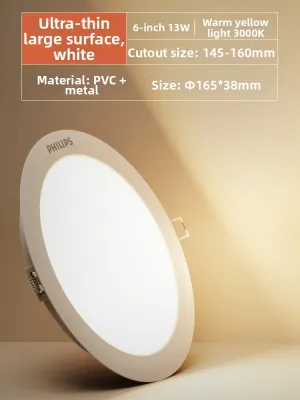
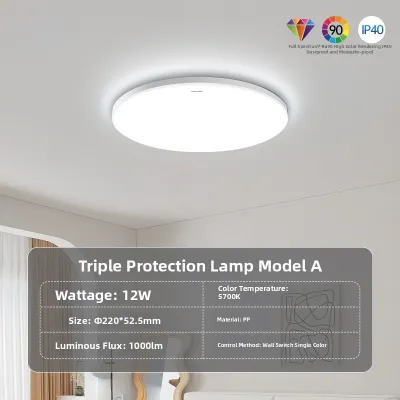
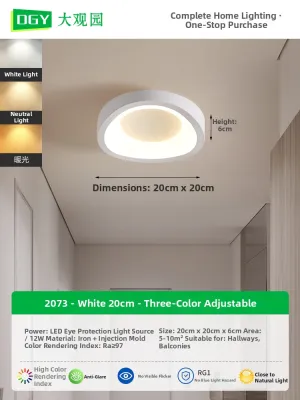
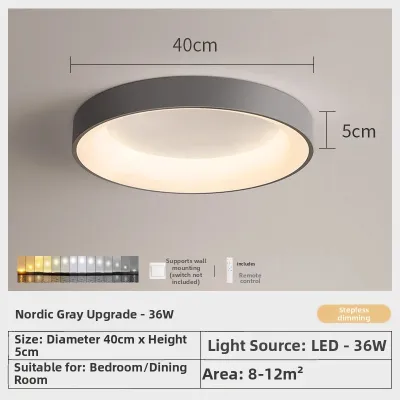
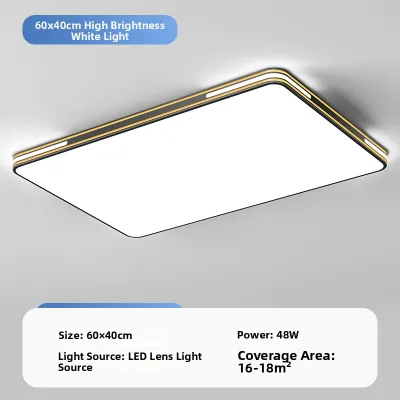
Prices are valid at publication and may change. Please refer to the product page for the latest price.
Beyond aesthetics, upgrading to modern LED recessed panels provides crucial functional benefits over older halogen or incandescent downlights, particularly in a tropical climate. Halogen bulbs operate at extremely high temperatures, emitting substantial radiant heat directly into the living space. In the Philippines, where ambient temperatures and humidity are consistently high, this extra heat puts a direct strain on residential air conditioning units, leading to higher monthly electricity bills. Modern LED panels convert energy far more efficiently, emitting minimal heat and drastically reducing power consumption.
Top Styles: Choosing Ceiling Lights Modern Design for Your Spaces
Selecting the right style of recessed panel light involves balancing your aesthetic goals with the specific functional requirements of each room. Modern designs have evolved far beyond the basic industrial office panels of the past, offering sophisticated options tailored for residential interiors.

Frameless and Ultra-Slim Edge Panels
Frameless and ultra-slim edge-lit panels represent the pinnacle of minimalist ceiling lights modern design. Unlike traditional recessed lights that feature a thick plastic or metal outer bezel, frameless models extend the light-emitting surface right to the very edge of the fixture. When installed, they appear as seamless, glowing geometric shapes embedded directly into the ceiling plane.
These fixtures are highly recommended for open-plan living rooms, modern kitchens, and long hallways where you want to maintain a continuous, unbroken ceiling line. They distribute light horizontally across a wide beam angle, typically around 120 degrees, which helps eliminate harsh shadows and provides excellent, uniform ambient illumination throughout the entire space.
However, the frameless design requires absolute precision during the installation phase. Because there is no outer flange or bezel to cover up rough edges or minor cutting mistakes, your ceiling cut-outs must match the manufacturer’s specified dimensions exactly. Even a minor deviation of a few millimeters can leave visible gaps or prevent the spring clips from securing the fixture properly. Always use the provided cutting templates and verify your measurements multiple times before making any cuts.
Anti-Glare (Deep Recessed) Panels
While wide-angle flat panels are excellent for general ambient lighting, they can sometimes cause visual discomfort or direct glare, especially in rooms where you spend long hours looking at screens. Anti-glare or deep recessed panels address this issue by positioning the actual light source and diffuser several centimeters back inside the fixture housing.
This physical recess, often combined with specialized micro-prismatic diffusers or dark baffle cones, ensures that the light source is shielded from direct line of sight at normal viewing angles. The result is a highly comfortable, glare-free illumination that reduces eye strain and enhances visual focus.
These fixtures are the ideal choice for home offices, study areas, reading nooks, and media rooms. It is important to note that deep recessed panels naturally have a narrower beam angle, typically between 30 and 60 degrees, compared to edge-lit models. This concentrated beam makes them excellent for task lighting but means you may need to install more fixtures or space them closer together to achieve uniform ambient light across a large room.
Smart and Tunable White Panels
For multi-purpose residential spaces, static lighting can feel limiting. Smart and tunable white recessed panels allow you to dynamically adjust both the color temperature and the brightness of your lights to suit different times of day and activities. These fixtures can transition seamlessly from a crisp, energizing cool daylight to a soft, relaxing warm white.
In a typical Filipino household, a single living room might serve as a home school or remote work office during the day, a lively dining space in the evening, and a quiet movie zone at night. With tunable white panels, you can set the lights to a cool 5000K to boost concentration and alertness during the day, and then dial it down to a warm 3000K or 2700K in the evening to help your family wind down and prepare for sleep.
Before purchasing smart panels, it is essential to verify their compatibility with your existing home setup. Some systems operate on standard Wi-Fi and connect directly to mobile applications or voice assistants, while others require a dedicated smart home hub or specialized zigbee protocols. Additionally, standard LED panels should never be paired with traditional analog wall dimmers, as this can cause severe flickering and damage the electronic driver; smart panels require digital dimming control via apps, compatible smart switches, or dedicated remote controls.
Geometric and Asymmetric Panel Shapes
If you want to make a bold architectural statement, geometric and asymmetric panel shapes offer an alternative to standard circular and square fixtures. Manufacturers now produce recessed panels in hexagonal, triangular, and elongated linear rectangular formats, allowing homeowners to create custom, integrated ceiling patterns.
These unique shapes work exceptionally well in dining rooms, entryways, or positioned directly above kitchen islands. By grouping multiple hexagonal panels together, for example, you can create a custom honeycomb light installation that serves as both a primary light source and a striking piece of modern ceiling art.
Implementing these designs requires meticulous planning. You must map out the exact layout of the fixtures on paper or design software before touching your ceiling. This spatial coordination is critical to ensure that the layout does not run into hidden ceiling joists, electrical conduits, or air conditioning ducts, and that the final pattern aligns perfectly with your room’s furniture layout.
Essential Specifications to Verify Before Purchasing
To ensure your chosen modern ceiling lights are safe, durable, and fully compatible with local infrastructure, you must verify several key technical specifications before making a purchase.
- Electrical Compatibility: The standard residential electrical grid in the Philippines operates at a nominal voltage of 220V to 240V with a frequency of 60Hz. Many recessed panel lights sold on international e-commerce platforms are designed for 110V/50Hz systems. Installing a 110V fixture directly into a local 220V line will immediately destroy the LED driver and can pose a serious fire hazard. Always check the product label to ensure it is explicitly rated for 220V-240V at 60Hz. Look for safety marks such as the Philippine Standard (PS) quality mark or the Import Commodity Clearance (ICC) sticker to verify compliance with local safety regulations.
- Cut-Out Size vs. Joist Spacing: Recessed panel lights require a hole to be cut into your ceiling material. The "cut-out size" specified by the manufacturer is the actual diameter or dimension of the hole required, which is always slightly smaller than the outer face of the light fixture. Before purchasing, you must locate the joists behind your ceiling. Standard ceiling framing in the Philippines uses either wooden studs or light-gauge metal double furring channels, typically spaced 40cm or 60cm apart. Ensure that your chosen panel's cut-out size fits comfortably between these joists; cutting through a structural ceiling joist to accommodate a light fixture can compromise the structural safety of your ceiling.
- IP Ratings for Humid Zones: The Philippines experiences high relative humidity year-round, and certain areas of the home are prone to moisture accumulation. For installations in bathrooms, kitchens, laundry areas, or covered outdoor spaces like balconies and patios, check the Ingress Protection (IP) rating of the fixture. A rating of IP44 or higher is highly recommended for these zones. This ensures that the internal electronics are sealed against splashing water, high humidity levels, and the entry of small insects, which are attracted to light and can cause short circuits inside the driver.
- Lumen Output and CRI: To achieve high-quality lighting, look for fixtures with a high Color Rendering Index (CRI). A CRI of 80 or above is standard for residential spaces, while a CRI of 90 or higher is ideal for areas where color accuracy is important, such as above kitchen countertops or near closets. To determine how many lumens you need, calculate the area of your room in square meters. As a general guideline, living areas require approximately 150 to 200 lumens per square meter (lux), while kitchens and workspaces benefit from 300 to 400 lux. Multiply your room's square footage by these values to determine the total lumen output your fixtures need to deliver.
Ceiling Compatibility and Safe Installation Practices
The physical structure of your ceiling dictates how easily you can install recessed panel lights and what safety measures you must implement.
Ceiling Materials and Structural Feasibility
Standard gypsum board or plasterboard ceilings are the most suitable materials for retrofitting recessed panel lights. They are lightweight, easy to cut cleanly with a standard drywall utility saw, and can easily support the weight of modern ultra-slim LED panels using the fixture’s integrated spring clips.
Plywood ceilings, which are common in many older or traditional Filipino homes, are also compatible but require more effort to install. Cutting plywood requires a hole saw or jigsaw, and care must be taken to prevent the wood from splintering along the cut edges. Because wood is a combustible material, it is critical to ensure that the electrical connections are housed in a proper, non-combustible junction box.
Solid concrete ceilings, which are standard in many high-rise condominium buildings, cannot accommodate true recessed panel lights. There is no hollow cavity to conceal the fixture body, spring clips, or external driver. Attempting to chip or channel into a structural concrete slab is highly dangerous and structurally prohibited. For solid concrete ceilings, you should opt for surface-mounted modern panel lights or track lighting systems instead.
Heat Dissipation and Clearance
Although LED technology is highly efficient and runs much cooler than traditional lighting, the electronic driver and the LED chips themselves still generate heat during operation. This heat must be dissipated effectively to prevent damage to the components.
When installing recessed panels, ensure there is adequate physical clearance—ideally at least 5 to 10 centimeters of free space—above and around the fixture within the ceiling cavity. Never cover the light fixture or its driver with thermal insulation material unless the fixture is explicitly certified as “IC Rated” (Insulation Contact). Trapping heat inside the ceiling cavity will drastically shorten the lifespan of the LED driver, cause the light to degrade prematurely, and increase the risk of an electrical fire.
Safety Boundary and Electrical Isolation
Working with electrical wiring carries inherent risks of severe electrical shock, burns, and fire. Before undertaking any installation, inspection, or replacement of ceiling lights, you must isolate the power.
Go to your home’s main distribution panel and turn off the specific circuit breaker that controls the lighting loop you are working on. Do not rely solely on the wall switch, as it may only cut the live wire, leaving a neutral wire that can still carry current under certain fault conditions. Use a non-contact voltage tester to verify that the wires are completely dead before touching them.
Any fixed hardwiring, modification of existing electrical loops, or work near main junction boxes must be performed by a licensed electrician or qualified professional. Always follow the manufacturer’s provided installation instructions and consult your home’s structural guidelines before making modifications.
Maintaining Your Panels in a Tropical Climate
The tropical environment of the Philippines presents unique challenges for maintaining electronic fixtures. High humidity, airborne salt particles in coastal areas, fine dust, and persistent insect activity can all take a toll on your recessed panel lights over time.
Small insects, such as ants, termites, and midges, are naturally drawn to the warmth and light emitted by electrical fixtures. They can crawl into the ceiling cavity and find their way inside poorly sealed light diffusers, creating unsightly dark spots or causing short circuits on the driver board. Dust can also settle on the exterior of the panel, gradually reducing the overall light output and altering the color quality.
To keep your modern ceiling lights performing optimally, establish a regular, low-risk cleaning routine:
- Power Isolation: Always turn off the light switch and, if possible, the circuit breaker before cleaning to eliminate any risk of electrical shock.
- Cooling Period: Allow the light panel to cool down completely for at least 15 minutes. Wiping a hot acrylic or polycarbonate diffuser with a damp cloth can cause thermal stress, leading to hairline cracks or warping.
- Dry Wiping: Use a clean, dry, high-quality microfiber cloth to gently wipe away loose dust and cobwebs from the face of the panel and the surrounding ceiling trim.
- Damp Cleaning: For stubborn dirt, grease, or insect residue, slightly dampen the microfiber cloth with clean water. Do not spray water or cleaning solutions directly onto the fixture. Never use harsh chemical solvents, alcohol, gasoline, or abrasive scrubbing pads. These chemicals can react with the acrylic or polycarbonate plastic, causing it to turn yellow, become brittle, or lose its light-diffusing properties.
Regularly inspect your fixtures for early signs of electrical or thermal stress. If you notice your panel lights flickering, humming, buzzing, or taking longer than usual to turn on, these are classic indicators of a failing LED driver. Addressing these signs early by consulting a licensed professional to inspect the wiring or replace the driver can prevent complete fixture failure and ensure your home remains safely and beautifully illuminated.
Frequently Asked Questions (FAQ)
Can I install recessed panel lights in a solid concrete ceiling?
No, true recessed panel lights cannot be installed directly into a solid concrete ceiling. Recessed fixtures require a hollow ceiling cavity (such as a gypsum drop ceiling or a false ceiling) to house the depth of the fixture, the mounting spring clips, and the external LED driver. Chipping or drilling deep holes into a solid concrete slab to fit these components is structurally unsafe and generally prohibited in residential buildings.
If your home has solid concrete ceilings, you can achieve a similar clean, contemporary look by using surface-mounted modern panel lights. These fixtures look almost identical to recessed panels but feature a slim mounting bracket that screws directly into the concrete surface, requiring only a small hole for the electrical supply wire. Alternatively, you can install a gypsum drop ceiling to create the necessary cavity for true recessed lighting, or use modern track lighting systems.
What is the ideal color temperature for a modern living room?
For a modern living room in a Philippine home, a color temperature of 3000K (Warm White) or 4000K (Natural White) is highly recommended. These color temperatures strike the perfect balance between modern sophistication and cozy comfort. A 3000K light provides a soft, welcoming glow that highlights the natural warmth of wood finishes, indoor plants, and cozy textiles, making it perfect for evening relaxation and family gatherings. A 4000K light offers a cleaner, more neutral white light that mimics natural daylight, which is excellent for reading, socializing, and maintaining a bright, open feel during the day.
We strongly advise against using 6500K (Cool Daylight) in your primary living and relaxation areas. While 6500K is highly functional for task-oriented spaces like kitchens, laundry rooms, garages, and home offices, its high blue-light content can feel harsh, clinical, and sterile in a living room, disrupting your body’s natural circadian rhythm and making it difficult to wind down in the evening.
Community discussion
Share your experience or ask a question. Comments are reviewed before publication.