
Condo living in the Philippines offers modern convenience, but many units still feature outdated, harsh fluorescent lighting. Upgrading to smart bulbs can transform your home, allowing you to adjust color temperatures, set automated schedules, and dim the lights to suit your daily mood. However, choosing the right brand requires evaluating your budget, existing smart home ecosystem, and willingness to use a dedicated hub.
There is no single “best” brand for every resident. Philips Hue is the premier choice for those prioritizing rock-solid stability, premium ecosystem integration, and advanced automation, provided they accept a higher upfront cost and a hub requirement. Conversely, Xiaomi and Yeelight are ideal for budget-conscious condo dwellers who want hub-free convenience, straightforward Wi-Fi or Bluetooth connectivity, and excellent value.
Successfully replacing traditional fluorescent lighting with a “flourescent led light” equivalent depends less on the brand and more on selecting the correct specifications. To replicate the bright, clean look of legacy fluorescent tubes, you must select smart bulbs with the proper color temperature (4000K–6500K) and sufficient lumen output to illuminate your space.
Products mentioned in this guide
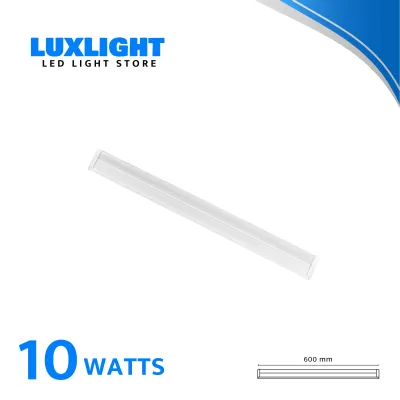
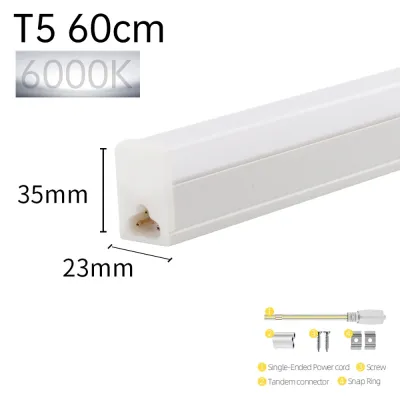
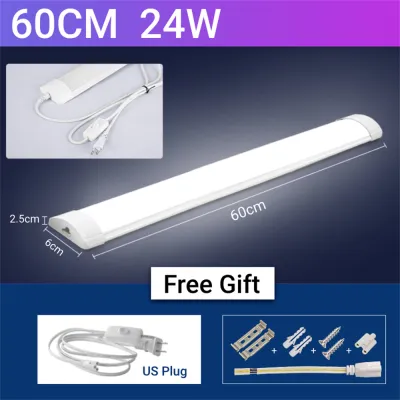
Prices are valid at publication and may change. Please refer to the product page for the latest price.
Lighting Quality: Replicating the Flourescent LED Light Look
Color Temperature and Brightness
Traditional fluorescent lights typically emit Cool White (4000K) or Daylight (6500K) light, which provides a clean, alert atmosphere suitable for task areas like kitchens and home offices. When shopping for smart bulbs, instruct yourself to verify that the chosen model supports this specific Kelvin range in its app or packaging. Some entry-level or budget smart bulbs only offer warm white (2700K–3000K), which creates a cozy ambiance but will fail to replicate the bright, functional look of a fluorescent tube.
Brightness, measured in lumens, is another critical factor. Standard smart bulbs usually produce between 800 and 1100 lumens, which is roughly equivalent to a 60W to 75W traditional incandescent bulb. In contrast, a standard 4-foot fluorescent tube can emit upwards of 2500 to 3000 lumens. Because of this difference, replacing a primary ceiling fluorescent fixture with a single smart bulb can leave your room feeling dim.
To achieve a true flourescent led light replacement, check the lumen rating on the packaging before purchasing. You may need to plan for multi-bulb fixtures to combine the brightness of several bulbs, or seek out high-lumen specific models designed to emit 1500 lumens or more. Both Philips Hue and Yeelight offer high-output options, but you must verify the specifications of each individual model.
Color Rendering Index (CRI) and Visual Comfort
The Color Rendering Index (CRI) measures how accurately a light source reveals the true colors of objects compared to natural daylight. Traditional fluorescent lights, especially older magnetic ballast models, often have a low CRI, which can make food, skin tones, and indoor decor look dull, greenish, or washed out. Transitioning to high-quality smart LEDs offers an opportunity to dramatically improve visual comfort in your condo.
When comparing brands, check the packaging or manufacturer specifications for the CRI rating, often designated as Ra. For realistic color representation, recommend aiming for a CRI of 80 or higher. Premium smart bulbs, such as certain Philips Hue models, frequently boast a CRI of 90 or above, which provides exceptional color accuracy. While Xiaomi and Yeelight bulbs offer excellent everyday performance that meets the standard CRI 80 threshold, Philips Hue leads in maintaining color consistency across all dimming levels.
Smart Ecosystem and Connectivity for Condo Living
Hub-Based (Philips Hue) vs Direct Connect (Xiaomi & Yeelight)
The wireless protocol your smart bulbs use is critical in a high-density condominium. Philippine condos are often constructed with thick reinforced concrete walls, which can severely degrade wireless signals. Additionally, high-density buildings are filled with competing Wi-Fi networks from neighbors, leading to significant wireless interference.

Philips Hue utilizes the Zigbee protocol, which requires a central hub called the Hue Bridge. The Bridge connects directly to your internet router via an Ethernet cable, and the bulbs form a dedicated mesh network among themselves. This means each bulb acts as a repeater, extending the signal throughout your condo without congesting your Wi-Fi router. If your internet connection drops, local automations and physical smart switches still function seamlessly.
In contrast, most Xiaomi and Yeelight smart bulbs utilize direct Wi-Fi or Bluetooth Mesh connections. This design is highly convenient and cheaper to start because you do not need to purchase an expensive central hub. You simply screw in the bulb, connect it to your 2.4 GHz Wi-Fi network via the app, and begin using it.
However, the direct-connect approach has a potential drawback in a condo environment. If you plan to install dozens of smart bulbs throughout a multi-room condo, a standard internet provider-issued Wi-Fi router can quickly become congested. This congestion can lead to delayed response times, offline devices, and general network instability. If you choose to go the hub-free route with Xiaomi or Yeelight, investing in a high-quality third-party router or a mesh Wi-Fi system is recommended to handle the device load.
App Control, Routines, and Voice Assistants
The software ecosystem dictates your daily interaction with your lighting. The Philips Hue app is widely regarded as highly polished, offering intuitive scene creation, precise color tuning, and reliable geofencing that turns lights on or off as you approach or leave your condo building.
Xiaomi and Yeelight operate within the Mi Home and Yeelight apps, respectively. While these apps are highly functional and allow for complex automation chains alongside other smart home appliances (like air purifiers or robot vacuums), their interfaces can sometimes feel less streamlined due to the sheer variety of supported product categories.
Before purchasing, advise yourself to verify compatibility with your existing voice assistants, such as Google Assistant, Amazon Alexa, or Apple HomeKit. Philips Hue offers near-universal compatibility across all major platforms. Xiaomi and Yeelight bulbs generally support Google Assistant and Amazon Alexa, but Apple HomeKit compatibility is often reserved for specific, slightly higher-priced models within their lineups. Always inspect the product packaging or official online specifications to confirm integration support.
Installation and Practicality in Condo Spaces
Physical and Electrical Constraints
Before buying any smart bulb, you must verify the socket type of your existing fixtures. Most residential fixtures in the Philippines use standard E27 screw-in bases. If your condo currently utilizes long, pin-based fluorescent tubes (such as T8 or T5 linear tubes), you cannot directly screw a standard smart bulb into them.
In such cases, you will need to replace the entire fixture or perform a wiring bypass to install an E27 socket fixture. For any fixed wiring modifications, always isolate the power at the main circuit breaker and consult a qualified professional to ensure safety and compliance with local electrical codes.
Smart bulbs are physically larger and heavier than traditional compact fluorescent lamps (CFLs) because they contain internal LED drivers and wireless antennas. Measure the clearance inside your existing light fixtures, especially if you have recessed downlight cans or shallow decorative flush-mounts. A bulb that protrudes too far can look awkward or fail to fit entirely.
In the tropical climate of the Philippines, heat management is a critical factor for electronics. LED bulbs generate internal heat at the base where the driver circuit is located. If you install a smart bulb inside a fully enclosed, unventilated glass or plastic dome fixture, the heat will build up rapidly.
This trapped heat degrades the sensitive wireless chips and capacitors, drastically shortening the lifespan of the bulb and potentially creating a safety hazard. Always check the manufacturer’s care instructions to ensure the bulb is rated for enclosed fixtures; if it is not, leave the fixture open or select a different lighting solution.
The “wall switch problem” is another practical challenge. Smart bulbs require a continuous supply of electrical power to remain connected to your network. If someone flips the physical wall switch off, the bulb loses power, goes offline, and can no longer be controlled via apps, voice assistants, or automated routines.
To solve this in a condo, you can install physical switch guards to keep the switches in the “on” position, or pair your bulbs with dedicated wireless smart switches. If you are renting your condo, avoid making permanent electrical changes to the wall switches without checking your lease agreement and obtaining written landlord approval.
Cost Structure and Long-Term Value
Replacing your condo’s lighting involves a clear trade-off between upfront capital expenditure and long-term convenience. Philips Hue represents a premium investment. A starter kit—which typically includes a few bulbs and the mandatory Hue Bridge—can cost several thousand Philippine Pesos (₱). Adding individual bulbs to expand your system continues to demand a premium price per unit. However, this high entry cost buys you exceptional hardware reliability, lower latency, and long-term software support.
Xiaomi and Yeelight offer a much lower barrier to entry. Because they do not require a central hub, you can purchase a single bulb for a fraction of the cost of a Hue equivalent and immediately integrate it into your condo. This makes them highly attractive for budget-conscious residents or renters who only want to smarten up a few key areas, such as the living room or bedroom.
When calculating the Total Cost of Ownership (TCO) in PHP, map out the total number of light sockets in your condo, add the cost of a hub if choosing Hue, and factor in any wireless dimmers or motion sensors you plan to install.
From an energy efficiency standpoint, transitioning from older fluorescent tubes or CFLs to modern smart LED bulbs will yield noticeable improvements. Smart LEDs consume significantly less wattage to produce the same lumen output, which can contribute to a reduction in your monthly Meralco electricity bill. Furthermore, high-quality smart bulbs are designed to last for tens of thousands of hours of active use, meaning you will rarely have to deal with the hassle of replacing burnt-out bulbs high up on your condo ceilings.
Final Decision Framework
To help you make the right choice for your condominium, use this structured decision framework based on your specific living situation, technical needs, and budget.
- Choose Philips Hue if:
- You want the most reliable, low-latency ecosystem that works flawlessly even when your internet connection is down.
- You plan to expand to dozens of lights across multiple rooms and want to avoid congesting your Wi-Fi router.
- You are a dedicated user of the Apple HomeKit ecosystem and want seamless, native integration.
- You have the budget to invest in a premium ecosystem and a dedicated smart hub.
- Choose Xiaomi if:
- You are already invested in the Mi Home ecosystem and want to manage all your smart appliances under a single app.
- You want budget-friendly hub-free convenience and reliable performance at a highly competitive price point.
- You only need to replace a few primary lights and do not plan to build a complex, whole-home automated lighting network.
- Choose Yeelight if:
- You want a versatile middle ground with strong feature sets, vibrant colors, and high brightness levels without paying premium prices.
- You prefer a hub-free setup but still want broad compatibility across Google Assistant, Amazon Alexa, and select Apple HomeKit devices.
- You want advanced customization options, such as syncing your lighting with music or gaming setups.
- Verify first before purchasing any brand:
- Rental Status: Check your lease agreement before modifying any fixed wiring or replacing wall switches.
- Fixture Ventilation: Inspect your light fixtures to ensure they are open or well-ventilated to prevent heat buildup.
- Network Capacity: Ensure your home Wi-Fi router can handle the additional wireless traffic of multiple connected devices.
- Voltage Compatibility: Double-check that the packaging explicitly states support for 220V-240V grids.
Frequently Asked Questions (FAQ)
Can I use smart bulbs in enclosed fluorescent-style fixtures?
Most standard smart bulbs from Philips Hue, Xiaomi, and Yeelight are not designed for fully enclosed fixtures. The lack of ventilation in these fixtures causes heat to accumulate around the base of the bulb, which can damage the delicate internal LED driver and wireless communication chips. If your condo features enclosed ceiling domes, look specifically for smart bulbs rated for enclosed spaces, or consider removing the diffuser covers to allow proper airflow and extend the lifespan of your bulbs.
Do I need to replace the whole fluorescent fixture to use smart bulbs?
If your existing light fixture utilizes standard screw-in sockets like E27, you can simply remove the old fluorescent bulb and screw in your new smart bulb. However, if your condo is equipped with linear pin-based fluorescent tubes (such as T8 or T5 tubes), standard smart bulbs will not fit. You will need to replace the entire fixture with an E27-compatible model or have a qualified professional rewire the existing fixture to bypass the ballast and install standard screw-in sockets. Always ensure the power is completely shut off at the main circuit breaker before performing any electrical installation work.
Community discussion
Share your experience or ask a question. Comments are reviewed before publication.