
Selecting the right Philips solar light for home security requires moving away from the idea of a single, universally superior model. Because every property features distinct dark spots, entry points, and architectural layouts, the most effective security setup is one customized to your specific environment. To find the right match, you must evaluate how different models balance sensor technology, brightness levels, and battery capacities against your home’s physical layout. By understanding these technical specifications, you can establish a reliable perimeter defense that deters intruders and ensures safe passage.
In the Philippines, where tropical weather brings both intense sunlight and heavy seasonal downpours, choosing outdoor security lighting involves unique environmental considerations. A light that performs well in a dry climate might fail under the stress of high humidity and torrential rains. Therefore, your selection process should focus on verifying product specifications, understanding how different sensor types operate in tropical conditions, and identifying the exact lighting requirements for each zone of your property.
Key Security Features to Check in Philips Solar Lights
To build an effective security barrier, you must first understand the core technologies that power solar security lights. The motion sensor is the brain of any security light, and manufacturers generally use one of two primary types: Passive Infrared (PIR) or microwave sensors. PIR sensors detect changes in heat signatures within their field of view, making them highly effective at identifying moving people or vehicles while ignoring wind-blown debris. Microwave sensors, on the other hand, emit continuous waves and measure the reflection off moving objects, which provides highly sensitive detection over a wider area but can sometimes lead to false triggers from moving tree branches or heavy rain. When reviewing Philips solar light packaging or online specifications, look closely at the stated detection angle—typically ranging from 120 to 180 degrees—and the maximum detection distance to ensure the sensor covers your entire target area.
Products mentioned in this guide
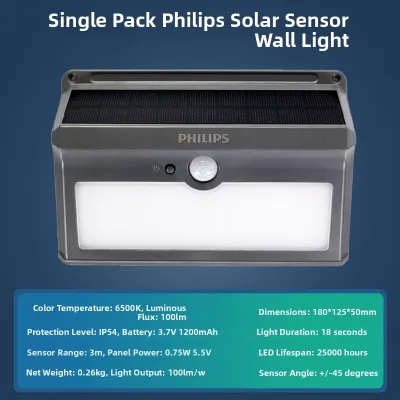
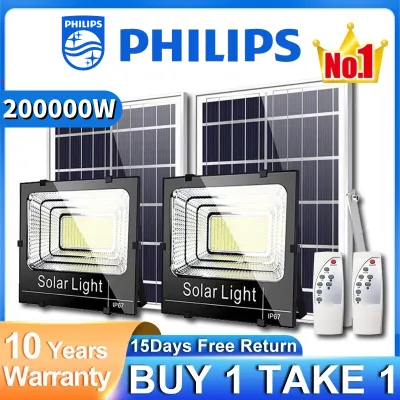
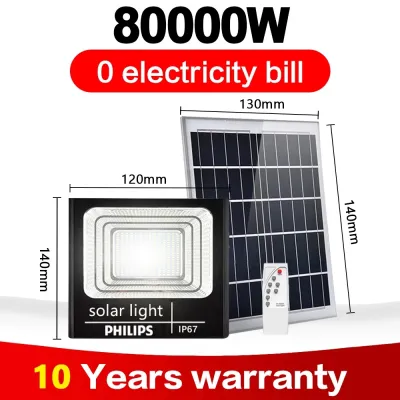
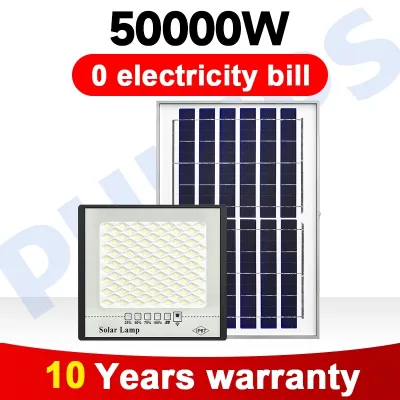
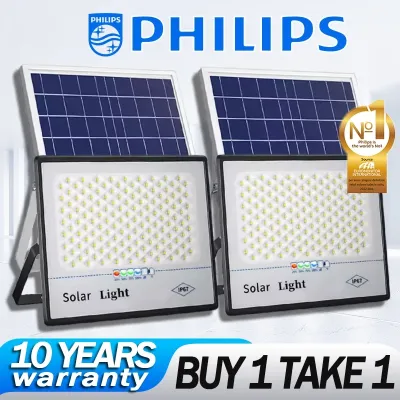
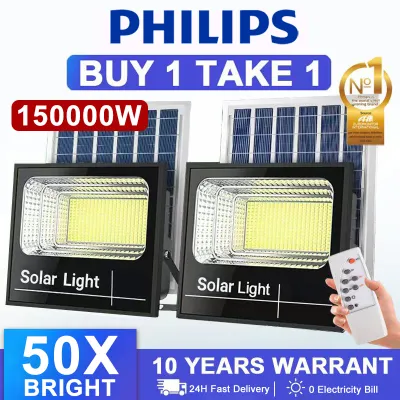
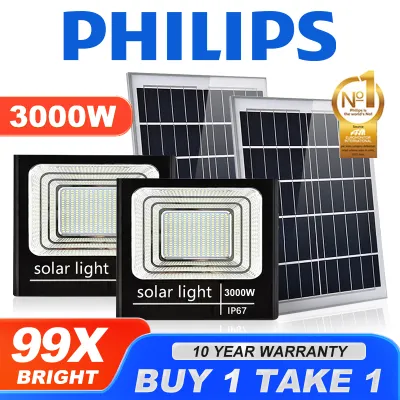
Prices are valid at publication and may change. Please refer to the product page for the latest price.
Another critical factor is the operating mode of the light, which directly impacts both its security value and its battery life. Many security-focused solar lights offer a dual-mode system: they maintain a low, constant dim light to provide continuous visibility, then instantly switch to maximum brightness when the sensor detects movement. Other models operate on a motion-only basis, remaining completely dark until triggered. While the dual-mode option provides excellent continuous deterrence, it drains the battery much faster. If your property experiences long periods of overcast weather, a motion-only mode is often more reliable because it conserves the stored battery power for when it is truly needed.
Brightness, measured in lumens, must also be matched to the specific security task. For active deterrence—where the goal is to startle an intruder and clearly illuminate their face—you should look for models that deliver at least 300 to 800 lumens during their peak burst phase. For basic visibility along a side path or garden walkway, a lower output of 100 to 200 lumens is generally sufficient. Do not simply choose the highest lumen rating available without checking the battery capacity; a high-lumen light paired with an undersized battery will quickly run out of power during long tropical nights.
Matching Light Specs to Your Entry Points and Perimeters
Different areas of your home require distinct lighting strategies to maximize security and functionality. Front doors and porches are your primary transition zones, where you need a balance of welcoming illumination and active security. For these areas, look for solar lights that offer a constant, low-level baseline light that transitions smoothly to a bright burst when someone approaches. This ensures that your entryway is never completely dark, which aids in keyless entry and deters casual trespassers. Because front doors often feature architectural overhangs, you may need to select a split-type solar light model where the solar panel is mounted separately on the roofline while the light fixture itself is installed under the porch ceiling.

Driveways and pathways demand a different approach, focusing on directional guidance and long-range visibility. Here, you should look for solar lights with focused beam angles that direct light downward onto the pavement rather than scattering it into the sky. If you are installing multiple units along a long driveway, consider how they will interact; spacing them so their sensor fields slightly overlap ensures continuous coverage. While some advanced systems offer sequential triggering—where one light turning on signals the next to activate—standard independent units can still provide a highly effective path of light if positioned correctly. Ensure the mounting hardware is robust enough to withstand the vibrations of passing vehicles and wind.
Blind spots, side alleys, and backyards are the most vulnerable areas of a property and require the most aggressive security lighting. These zones should be equipped with high-lumen burst lights that remain dark until motion is detected, creating a sudden, startling contrast that alerts you to unauthorized presence. Because these areas are often less frequented, the lights must have wide detection zones to catch movement from multiple angles. Furthermore, because side alleys and backyards are highly exposed to the elements, prioritize models with the highest available weather resistance ratings to prevent moisture ingress from degrading the internal electronics over time.
Installation and Environmental Checks for Reliable Performance
The reliability of any solar security light depends heavily on its installation environment and physical placement. In the Philippines, maximizing solar exposure is both a major advantage and a unique challenge. To ensure the internal battery charges fully, the solar panel must receive direct, unobstructed sunlight for at least six to eight hours daily. This means avoiding placement under deep roof eaves, dense tree canopies, or the shadow of adjacent buildings. During the rainy season, when cloud cover is persistent, solar panels can still charge using diffuse sunlight, but their efficiency drops significantly. To compensate, angle the solar panel toward the equator at an angle that matches your local latitude to capture the maximum amount of solar radiation year-round.
Weatherproofing is another non-negotiable factor when installing outdoor lighting in a tropical climate characterized by high humidity and intense typhoons. Always check the Ingress Protection (IP) rating on the product specifications before purchasing. An IP rating consists of two numbers: the first indicates protection against solid particles like dust, and the second indicates protection against liquids. For general outdoor use under a porch, an IP54 rating may suffice, but for fully exposed areas like fence lines, driveways, and garden walls, you should look for a minimum rating of IP65. An IP65 rating ensures the light is completely dust-tight and can withstand low-pressure water jets from any direction, protecting it against heavy downpours and driving rain.
Proper mounting height and angle adjustments are critical to maximizing sensor efficiency while minimizing frustrating false alarms. Most residential solar security lights are designed to be mounted at a height of 2 to 2.5 meters. Mounting the light too high reduces the sensitivity of the motion sensor and scatters the light beam too widely, while mounting it too low limits the detection range and makes the fixture vulnerable to tampering. When positioning the sensor, angle it away from busy public streets, neighboring properties, and large leafy plants that sway in the wind. This prevents the light from constantly triggering due to passing traffic or wind-blown foliage, which rapidly drains the battery and can desensitize you to actual security alerts.
Verifying Product Authenticity and Warranty Coverage
As solar lighting has grown in popularity, the market has seen an influx of counterfeit and low-quality imitation products. To ensure you are getting genuine Philips quality, always inspect the product packaging and physical markings carefully. Genuine Philips solar lights feature crisp, high-quality printing on the box, clear safety certifications, and a distinct, professionally applied logo on the light fixture itself. Avoid purchasing from unverified sellers on online marketplaces; instead, source your lighting from official brand stores, authorized home improvement centers, or certified distributors. Purchasing through official channels guarantees that you receive a product that has undergone rigorous safety and performance testing.
Understanding the warranty terms is equally important for protecting your investment. A comprehensive warranty for a solar security light should cover not just the LED elements, but also the solar panel and the internal rechargeable battery. Because batteries are chemical devices that naturally degrade over time, especially in hot tropical climates, check if the warranty specifically addresses battery capacity retention or replacement. Additionally, verify whether the specific model you are buying features a user-replaceable battery. Models with sealed, non-replaceable batteries must be discarded entirely once the battery dies, whereas models with accessible battery compartments allow you to simply swap out the old cell, significantly extending the overall lifespan of your security setup.
Be vigilant against common red flags when browsing online listings. If a listing features vague technical specifications, lacks clear IP rating documentation, or uses generic stock photos instead of detailed product views, it is best to look elsewhere. Unusually low prices—such as a multi-pack of high-lumen security lights offered for a fraction of the standard retail price in ₱—are a strong indicator of counterfeit goods or sub-standard components that may fail after the first heavy rain. Investing in genuine, certified equipment ensures that your home security system remains active and reliable when you need it most.
Frequently Asked Questions (FAQ)
Do Philips solar security lights work during power outages?
Yes, Philips solar security lights operate entirely independently of the main electrical grid. Because they rely on a self-contained system consisting of a solar panel, an internal rechargeable battery, and LED light sources, they are unaffected by local power outages or brownouts. As long as the solar panel receives sufficient direct sunlight during the day to charge the battery, the light will function normally throughout the night. This independence makes solar lighting an invaluable asset for maintaining home security during severe weather events or emergency grid failures.
How often do the rechargeable batteries need replacement?
The lifespan of the rechargeable batteries in outdoor solar lights typically ranges from two to five years, depending on the battery chemistry and local environmental conditions. In tropical climates, consistent high temperatures can accelerate battery degradation, potentially shortening this lifespan. You can maximize battery life by ensuring the solar panel is kept clean and free of dust or debris, which allows for optimal charging cycles. When the light begins to dim quickly or fails to turn on despite a sunny day, it is usually an indication that the battery needs to be replaced.
Can I adjust the motion sensor sensitivity on these models?
The ability to adjust motion sensor sensitivity depends on the specific Philips solar light model you select. Some advanced or commercial-grade models feature physical dials or digital switches on the housing that allow you to customize the detection range, sensitivity, and light-on duration. Many compact residential models, however, come with pre-set, fixed sensitivity levels optimized for standard mounting heights. Before purchasing, check the product manual or specifications sheet to see if the model offers adjustable settings, especially if you plan to install the light near moving foliage or a busy sidewalk where false triggers are more likely.
Community discussion
Share your experience or ask a question. Comments are reviewed before publication.