
Choosing the right motion sensor for your garden depends on your landscape’s physical layout, vegetation density, and local climate conditions. Passive Infrared (PIR) sensors excel in open, direct-line-of-sight areas where you want to avoid false triggers from wind-blown plants. Microwave sensors offer broader, wall-penetrating coverage that works well in complex layouts with hidden corners, though they require careful sensitivity adjustments to prevent unwanted activations.
In the tropical climate of the Philippines, where high humidity, frequent rain, and dense foliage are common, selecting the right technology for an led flood light outdoor 220v sensor ensures your garden remains securely illuminated without constant, disruptive false alarms. By matching the sensor’s physical detection method to your specific yard layout, you can maximize security while minimizing energy waste.
Understanding PIR vs. Microwave Detection Principles
Passive Infrared (PIR) sensors operate by detecting changes in heat signatures within their field of view. When a warm object, such as a person or a stray animal, moves across the detection zone, the sensor registers the temperature difference relative to the background environment and triggers the light. Because they rely on infrared radiation, PIR sensors require an unobstructed line of sight. Physical barriers like concrete walls, wooden fences, or dense tropical foliage will block the heat signature, preventing the sensor from activating.
Products mentioned in this guide
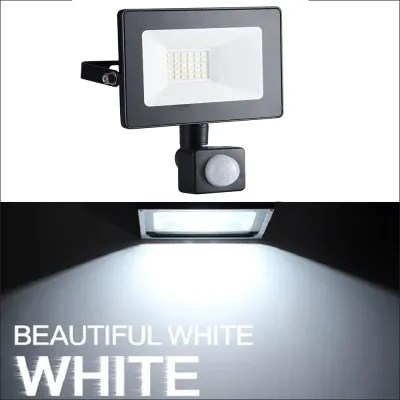
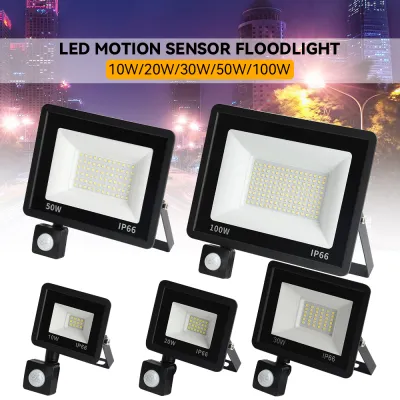
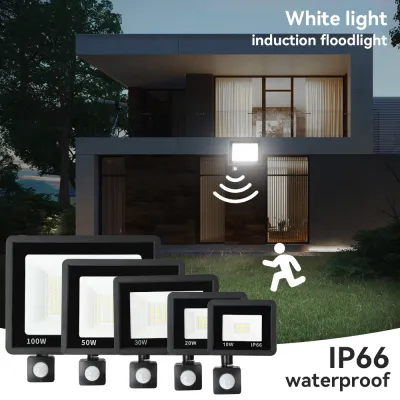
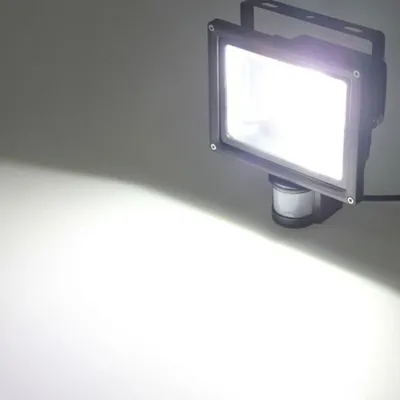
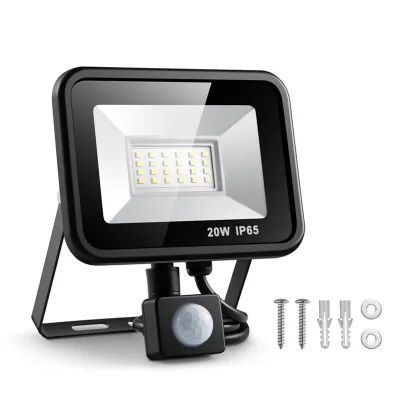
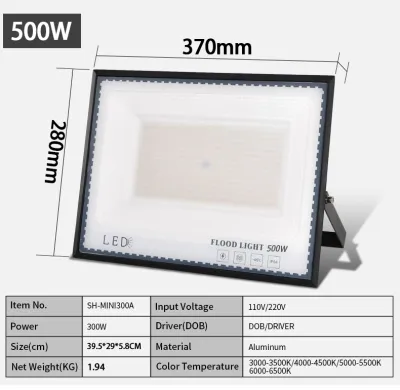
Prices are valid at publication and may change. Please refer to the product page for the latest price.
Microwave sensors, on the other hand, emit high-frequency electromagnetic radar waves and measure the time it takes for those waves to bounce back. When a moving object disrupts this wave pattern, the sensor triggers the floodlight. Because microwave signals can penetrate non-metallic materials, these sensors can detect motion through thin wooden partitions, glass panels, plastic covers, and light foliage. This makes them highly sensitive and capable of covering a wide, omnidirectional area.
Each technology comes with distinct trade-offs. PIR sensors are generally less prone to false triggers caused by wind-blown branches or falling leaves because plants do not emit body heat. However, their detection range can shrink in hot weather when the ambient temperature approaches human body temperature. Microwave sensors maintain consistent sensitivity regardless of temperature, but their ability to penetrate materials means they can easily detect movement outside your property line, such as a neighbor’s passing car or swaying trees behind a fence, leading to frequent false alarms if not properly calibrated.
Matching Sensor Specs to Your Garden Layout
For straight, unobstructed paths, entryways, or driveways, a PIR sensor is highly effective. It provides focused, directional detection exactly where foot traffic occurs. Since these areas are typically clear of heavy vegetation, a PIR sensor will reliably trigger only when a person or vehicle enters the zone, keeping energy consumption low and avoiding unnecessary light pollution.

If your garden features dense landscaping, ornamental shrubs, or complex architectural layouts with blind spots, a microwave sensor offers a practical solution. You can mount the fixture behind a non-metallic decorative screen or high up under an eave, and it will still detect motion through light leaves or plastic covers. This allows you to maintain a clean aesthetic without exposing the sensor hardware directly to view.
To avoid constant activations from stray animals, swaying palm fronds, or passing street traffic, look for fixtures with adjustable settings. High-quality 220V outdoor floodlights often feature dials for sensitivity (SENS), time delay (TIME), and ambient light threshold (LUX). Reducing the sensitivity on a microwave sensor limits its penetration range, keeping its detection zone strictly within your garden boundaries. For PIR sensors, adjusting the physical angle of the sensor head downward can prevent it from scanning too far into neighboring properties.
Electrical and Safety Checks for 220V Outdoor Fixtures
Before purchasing an led flood light outdoor 220v sensor, verify that the product specifications match your local electrical supply. In the Philippines, the standard residential voltage is 220V at 60Hz. Ensure the fixture carries a verified electrical safety certification mark. Additionally, check the Ingress Protection (IP) rating on the product label. For outdoor garden use exposed to heavy tropical downpours, a minimum rating of IP65 is recommended to ensure the housing is completely dust-tight and protected against water jets from any direction.
Proper installation environment is critical for sensor longevity and accuracy. Avoid mounting PIR sensors directly opposite highly reflective surfaces like swimming pools or large glass windows, as reflected sunlight can cause false triggers. Keep them away from heat sources such as air conditioning exhaust units or outdoor kitchen grills. For microwave sensors, avoid mounting them directly onto or near large metal structures, such as steel beams or metal fences, as metal reflects radar waves and can cause signal interference or erratic behavior.
Installing a fixed-wired 220V outdoor fixture involves working with live electrical circuits, often at heights or in damp outdoor environments. Always isolate the power supply at the main circuit breaker before handling any wiring. If the installation requires running new electrical conduits, mounting fixtures on high eaves, or integrating them into complex landscape lighting grids, stop and consult a licensed electrician. Always follow the manufacturer’s specific installation instructions, and prioritize safety over a DIY approach when dealing with high-voltage outdoor wiring.
Frequently Asked Questions (FAQ)
Can heavy rain or storms affect microwave sensor accuracy?
Yes, severe weather can impact microwave sensors. Because microwave technology detects motion by measuring changes in reflected electromagnetic waves, heavy tropical downpours, dense fog, or sheets of wind-driven rain can occasionally scatter the radar signals. This scattering can lead to temporary false triggers or a slight reduction in detection range. To mitigate this during the rainy season, you can adjust the sensitivity dial (SENS) on the fixture to a lower setting, ensuring the sensor only triggers for larger, solid moving objects like a person rather than falling water droplets.
Do PIR sensors work effectively in extremely hot weather?
PIR sensors can experience reduced sensitivity during extremely hot days. Because PIR technology relies on detecting the contrast between a moving object’s heat signature and the surrounding ambient temperature, performance drops when the outdoor air temperature rises close to human body temperature (around 36°C to 37°C). In tropical climates, this can cause the sensor’s effective range to shrink. To compensate, mount the PIR sensor in a shaded area away from direct sunlight, and position it so that visitors walk across its detection field rather than directly toward it, which maximizes its sensitivity to lateral movement.
Community discussion
Share your experience or ask a question. Comments are reviewed before publication.