
Quick Answer: Which Table Lamp Do You Actually Need?
When setting up your bedroom lighting, choosing between a reading lamp and a bedside lamp comes down to how you use your space before sleep. While both fixtures belong to the broader category of table lamps, they are engineered with entirely different optical and physical designs to serve distinct nighttime routines.
Reading lamps are specialized task lights designed to project a focused, clear beam of light directly onto a book, tablet, or writing surface. They prioritize visual clarity, high contrast, and minimal light spill to prevent eye strain. If you spend your evenings actively reading, journaling, or working in bed, a dedicated reading lamp is the correct choice because it delivers the precise illumination required for close-up tasks.
Bedside lamps, by contrast, function primarily as ambient light sources. They are designed to diffuse light softly across a wide area, creating a relaxing, low-glare environment that helps your body wind down for sleep. If your pre-bedtime routine consists of watching television, meditating, or simply needing enough light to safely navigate the room without waking up your partner, a bedside lamp is the better fit.
Products mentioned in this guide
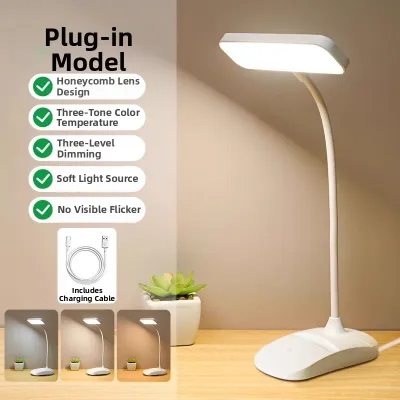
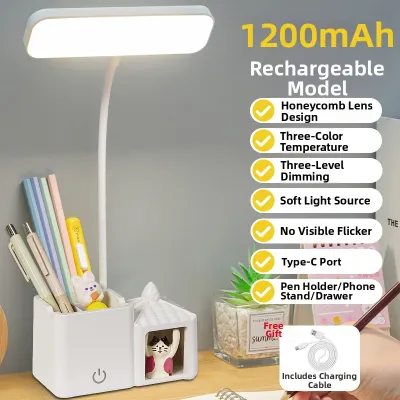
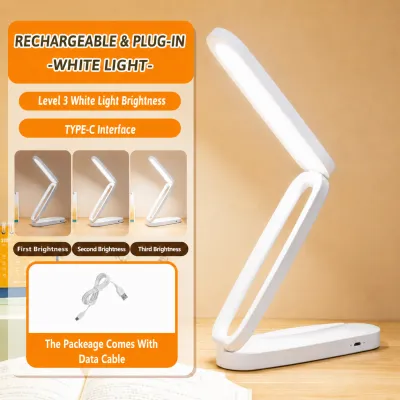
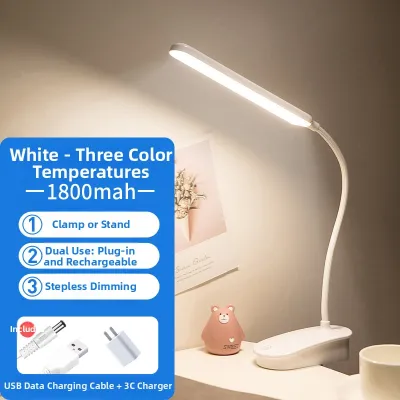
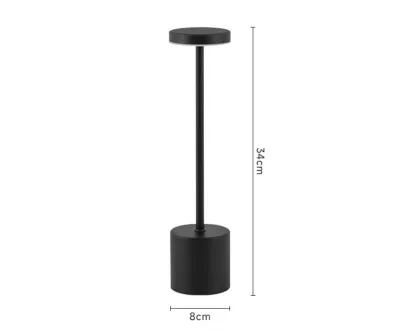
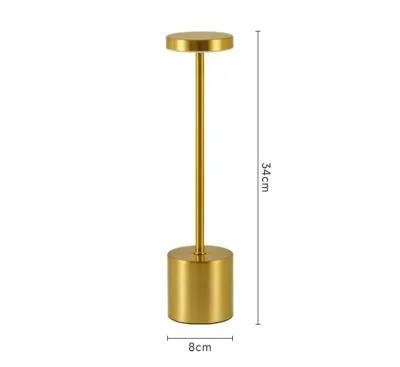
Prices are valid at publication and may change. Please refer to the product page for the latest price.
Core Functional Differences: Task Lighting vs. Ambient Glow
To understand why these two types of table lamps cannot easily replace one another, it is helpful to examine how they distribute light, manage brightness, and affect your sleep cycle.

Brightness and Light Distribution
Reading lamps require a higher concentration of light, measured in lumens, delivered to a specific, localized area. To read comfortable, small-print text without straining your eyes, the target surface typically needs bright, high-contrast illumination. Because this light is concentrated into a tight zone, the overall lumen output of the bulb does not need to illuminate the entire room, keeping the surrounding environment relatively dark.
Bedside lamps utilize lower, highly diffused light output. Instead of focusing the light downward, a bedside lamp scatters light in an omnidirectional pattern. This reduces the contrast between light and shadow, softening the visual environment. This gentle illumination is ideal for relaxing the eyes after a long day, but it lacks the focused intensity required to read small text comfortably for extended periods.
Beam Angle and Directionality
An adjustable beam angle is the defining optical feature of a reading lamp. These fixtures often feature narrow beam angles, sometimes ranging from 15 to 40 degrees, which direct light precisely where it is needed. This directional control is highly functional in shared bedrooms, as it allows one person to read under a bright beam while the rest of the bed remains in relative darkness.
Bedside lamps are designed for 360-degree, omnidirectional diffusion. The light escapes from both the top and bottom of the shade, as well as through the shade material itself, spreading a warm glow across walls and nearby surfaces. This wide distribution pattern is excellent for eliminating harsh shadows in the bedroom, but it makes it difficult to prevent the light from spilling onto a sleeping partner.
Color Temperature and Sleep Hygiene
Color temperature, measured in Kelvin (K), plays a significant role in sleep hygiene and visual focus. Reading lamps often perform best with neutral to cool white light (ranging from 3000K to 4000K). This range provides the crisp contrast necessary to render black text clearly against white or off-white paper, reducing cognitive fatigue while reading. However, exposure to cooler, blue-enriched light late at night can suppress melatonin production, making it harder to fall asleep immediately afterward.
Bedside lamps generally utilize warm white light (ranging from 2200K to 2700K). This amber-toned light mimics the natural progression of sunset, signaling to your brain that it is time to wind down. While warm light is incredibly soothing and supports natural circadian rhythms, it provides lower visual contrast, which can cause your eyes to tire more quickly if you attempt to read under it for too long.
Dimming Capabilities
Dimming features serve different functional purposes depending on the lamp type. In a reading lamp, step-dimming or continuous dimming allows you to adjust the light intensity based on the ambient light level of the room or the reflectivity of your reading material. For instance, reading a glossy magazine requires a different light intensity than reading a matte-paper novel to avoid distracting glare.
In a bedside lamp, dimming is primarily used to transition the bedroom from an active space to a sleep-ready sanctuary. A dimmable bedside lamp can be kept at full brightness while you prepare for bed, then lowered to a minimal glow to serve as a nightlight or a gentle guide for midnight wake-ups.
Design and Physical Features Compared
The functional differences between these table lamps dictate their physical construction, materials, and placement on your nightstand.
Adjustability and Ergonomics
Reading lamps are highly mechanical fixtures. They frequently incorporate adjustable goosenecks, multi-jointed swing arms, and tilting heads. These physical features allow you to manipulate the height, angle, and distance of the light source relative to your book. This physical adjustability ensures you can maintain proper posture while reading, rather than hunching over to catch the light.
Bedside lamps are static decorative pieces. They feature fixed stems, stationary bases, and non-adjustable shades. Because their primary job is to provide consistent, ambient room lighting, they do not require moving parts. This lack of mechanical joints makes them highly durable and gives them a clean, classic silhouette that complements bedroom furniture.
Base and Footprint
Because reading lamps are meant to be adjusted frequently, they require heavy, compact bases. The weight in the base acts as a counterbalance, preventing the lamp from tipping over when you extend the swing arm or tilt the head. The footprint is often kept small to maximize the usable surface area of your nightstand for books, glasses, or a glass of water.
Bedside lamps often feature broader, more substantial bases crafted from decorative materials such as ceramic, glass, carved wood, or polished metal. The larger footprint is designed to anchor the nightstand visually, serving as a key design element in the bedroom. While stable, these bases are not designed to withstand constant pulling or pushing, as they are meant to remain stationary.
Switch Placement and Accessibility
When you are lying down, ease of access to the power switch is a critical convenience factor. Reading lamps often place switches directly on the lamp head, along the arm, or on a heavy base plate, allowing you to turn the light off instantly without shifting your body. Some modern reading lamps also feature touch-sensitive controls on the base for seamless operation.
Bedside lamps traditionally feature inline cord switches, pull chains, or rotary socket switches located beneath the shade. While classic, these designs can sometimes require you to stretch or sit up to turn the light off. Increasingly, modern bedside lamps incorporate touch-activated bases or smart integration to resolve this physical inconvenience.
Shade Materials and Opacity
The material of the lamp shade directly controls how light behaves. Reading lamps utilize opaque materials like aluminum, steel, or dense polycarbonate. These materials block all lateral light, forcing the illumination out of the open end of the shade to create a concentrated spotlight. This design ensures zero light is wasted or scattered in unwanted directions.
Bedside lamps rely on translucent or semi-opaque materials such as linen, cotton, parchment, or frosted glass. These materials absorb a portion of the light while allowing the rest to pass through softly, scattering it evenly throughout the room. The choice of shade material can also be adapted to local climates; for instance, in humid tropical environments, lightweight linen or treated glass shades are often preferred over heavy paper shades, which can degrade or warp over time.
Side-by-Side Comparison Matrix
This comparison table outlines the primary differences between reading lamps and bedside lamps to help you quickly evaluate which features align with your daily habits.
| Feature | Reading Lamp | Bedside Lamp |
|---|---|---|
| Primary Purpose | Focused task lighting for reading and writing | Soft, ambient room illumination and mood setting |
| Light Direction | Directional, narrow, and highly targeted | Omnidirectional, diffused, and wide-reaching |
| Typical Brightness | High localized intensity (focused lumens) | Low to moderate diffused glow |
| Color Temperature | Neutral to cool white (3000K–4000K) for contrast | Warm to ultra-warm white (2200K–2700K) for relaxation |
| Adjustability | High (swing arms, goosenecks, tilting heads) | None to low (typically a fixed, stationary structure) |
| Shade Type | Opaque metal or plastic to prevent lateral spill | Translucent fabric, glass, or paper to scatter light |
| Best Use Case | Reading physical books, studying, or crafting in bed | Winding down, navigating the room, and bedroom decor |
Decision Framework: How to Choose the Right Lamp
To determine which lamp type deserves a place on your nightstand, evaluate your personal bedroom habits, space limitations, and design preferences.
Choose a Reading Lamp if…
- You read physical print daily: If you regularly read physical books, newspapers, or magazines in bed, the high contrast and focused beam of a reading lamp will protect your eyes from premature fatigue.
- You share a bed: If your partner sleeps on a different schedule, a highly directional reading lamp allows you to stay up reading without casting disruptive light across their side of the mattress.
- You have a spacious nightstand: If your nightstand has plenty of room, you can easily position a dedicated task light alongside your other bedside essentials.
Choose a Bedside Lamp if…
- Your pre-bed routine is digital or low-key: If you primarily use a self-illuminating e-reader or tablet, or if you simply watch television before sleeping, you do not need focused task lighting. A bedside lamp will provide the perfect ambient glow.
- You prioritize bedroom aesthetics: If you want to create a symmetrical, balanced look in your master bedroom, a matching pair of decorative bedside lamps will anchor the space beautifully.
- You need a gentle night navigation light: If you frequently get up during the night, a diffused bedside lamp offers a soft, non-glaring way to illuminate your path.
Choose a Hybrid or Adjustable Table Lamp if…
- You have limited nightstand space: If your nightstand is small, you may not have room for separate task and ambient lights. A hybrid lamp—such as a traditional bedside lamp with an integrated, flexible LED reading arm—offers the best of both worlds.
- Your needs change daily: An adjustable table lamp with a high-quality fabric shade and a built-in step dimmer can transition from a bright reading light to a soft ambient glow with a few taps.
When Neither Fits
If your nightstand is exceptionally small, or if you prefer to keep the surface completely clear, table lamps may not be the best solution. In these scenarios, consider alternative mounting options:
- Wall-mounted swing-arm sconces: These free up nightstand space entirely while providing excellent adjustability for reading.
- Bedhead reading lights: Small, clip-on or integrated LED lights can be attached directly to your headboard for minimalist, highly targeted task lighting.
- Floor lamps: If your reading spot is a separate lounge chair placed next to the bed, a tall floor lamp with a downward-facing shade is often more effective than a table-bound option.
Space and Proportion Rules
To avoid uncomfortable glare, you must match the height of your lamp to the height of your bed and nightstand. As a general ergonomic rule, when you are sitting up in bed resting against your headboard, the bottom of the lamp shade should align roughly with your chin or eye level.
If the lamp is too tall, the bare bulb will shine directly into your eyes from beneath the shade, causing immediate glare. If the lamp is too short, the light cast will fall below your reading material, forcing you to slouch. Measure the height of your nightstand relative to your mattress before purchasing to ensure the lamp’s physical dimensions support comfortable viewing angles.
Electrical Safety and Setup Checklist
Before purchasing or installing any new lighting fixture, it is essential to verify its electrical compatibility, physical safety, and suitability for your home environment.
Voltage and Plug Compatibility
Always verify that your chosen lamp is compatible with the local electrical standard. In the Philippines, the standard household voltage is 220V at 60Hz. If you are purchasing a lamp from an international online marketplace, double-check the product specifications to ensure it can operate safely at 220V without requiring a step-down transformer. Additionally, confirm that the plug type matches your wall outlets (typically Type A or Type B flat-pin plugs) to avoid relying on unstable, loose-fitting adapters that can spark or overheat.
Bulb Specifications and Base Types
Before installing a bulb, check the manufacturer’s label affixed to the lamp socket for the maximum wattage limit. Exceeding this limit can melt plastic components, degrade fabric shades, or create a fire hazard.
Verify the socket base type, with E27 (medium screw base) being the most common and widely available option in local hardware stores, followed by E14 (candelabra screw base) for smaller decorative lamps. If you plan to use smart bulbs or LED dimmers, ensure the lamp fixture is rated as compatible, as non-dimmable fixtures can cause LED bulbs to flicker or fail prematurely.
Cord Management and Placement
Proper cable routing is essential for physical safety in the bedroom. Run electrical cords behind the nightstand rather than letting them drape across open walkways where they can become tripping hazards. Avoid pinching cords between the bed frame and the wall, as constant friction can wear down the protective rubber insulation and expose live wires. If you need to clean the lamp or adjust its position, always isolate the power first by unplugging the fixture from the wall outlet.
Heat, Humidity, and Material Safety
In warm, tropical climates, humidity levels can be high. Ensure your lamps are placed away from open windows where sudden rain or condensation could compromise the electrical housing. If you are using traditional incandescent or halogen bulbs, remember that they generate significant heat; keep them well clear of flammable bedding, curtains, and mosquito netting.
For homes with active pets or young children, prioritize table lamps with heavy, low-center-of-gravity bases that resist tipping if bumped. If you ever need to perform fixed wiring modifications or convert a plug-in lamp into a permanent wall fixture, always consult a qualified professional to ensure the installation complies with local electrical codes.
Frequently Asked Questions (FAQ)
Can I use a standard bedside lamp for reading in bed?
While you can physically read under a standard bedside lamp, it is not ideal for long-term eye comfort. Bedside lamps use translucent shades that diffuse light in all directions, which reduces the direct contrast on your page and can cause subtle eye strain over time. Additionally, because the light is not directional, you may find yourself casting a shadow over your book with your own body. If you must use a bedside lamp for reading, consider upgrading to a slightly higher-lumen, warm-white LED bulb, or use a small, clip-on book light to supplement the ambient glow.
What is the ideal height for a bedside or reading lamp?
The ideal height depends on the height of your nightstand and your mattress. Generally, a bedside table lamp should stand between 24 and 30 inches tall from the base to the top of the shade. The critical measurement is eye level: when you are sitting up in bed, the bottom of the lamp shade should be level with your eyes. This position ensures the shade blocks the direct glare of the bulb while allowing the light to spread comfortably across your lap and reading material.
Are smart bulbs a good choice for bedside table lamps?
Smart bulbs are an excellent addition to bedside table lamps. They allow you to adjust both the brightness and the color temperature through a smartphone app or voice commands, eliminating the need to reach for a physical switch in the dark. You can program smart bulbs to transition from a cool, bright white during the day to a warm, dim amber in the evening, supporting your body’s natural sleep cycle. Many smart bulbs also feature sleep timers that slowly fade the light to complete darkness over 30 minutes, helping you transition naturally into sleep.
Community discussion
Share your experience or ask a question. Comments are reviewed before publication.