
Direct Answer: Reading Lamp vs Bedside Lamp
When setting up your personal sanctuary, choosing the right fixture to place on your lamp table for bedroom is more than a decorative decision—it directly impacts your sleep hygiene and evening comfort. The fundamental difference between a reading lamp and a bedside lamp lies in their optical engineering, physical adjustability, and lighting purpose.
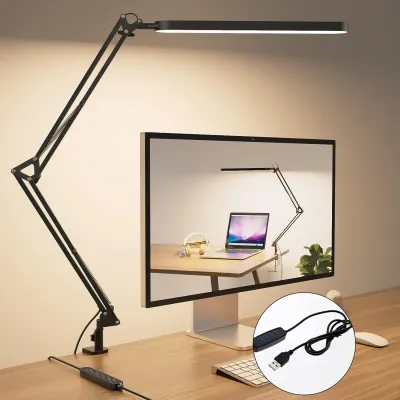
A bedside lamp is designed primarily for ambient illumination, room decoration, and general low-intensity tasks. It casts a wide, diffused glow that softens shadows and creates a relaxing atmosphere. Conversely, a reading lamp is a highly focused task light engineered specifically for glare reduction, visual contrast, and directional adjustability, allowing you to concentrate light on a page or screen without illuminating the entire room.
Your choice should depend entirely on your primary bedside routine. If you use your bedroom table mainly to set a cozy, wind-down mood and navigate the space safely at night, a traditional bedside lamp is your best option. If you spend significant time reading print books, studying, or doing detailed hobbies in bed, a dedicated reading lamp will protect your eyes from strain and provide the precise light you need.
Products mentioned in this guide
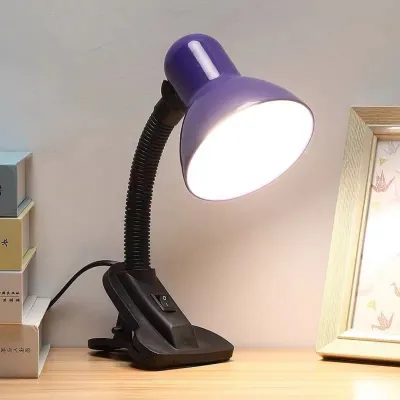
![L&H(COD)Eye protection desk lamp LED study room living room bedroom bedside European style lamp creative [Free bulb]](https://img.lazcdn.com/g/p/40b9a419901428f17c8f6e2eaef9b8fe.jpg_400x400q80.jpg_.webp)
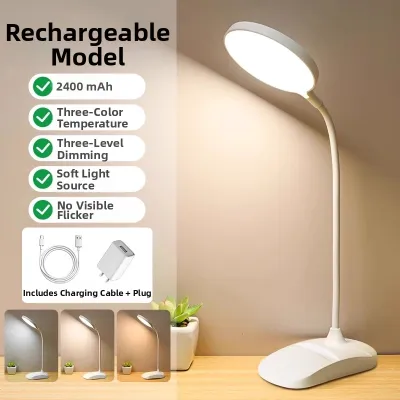
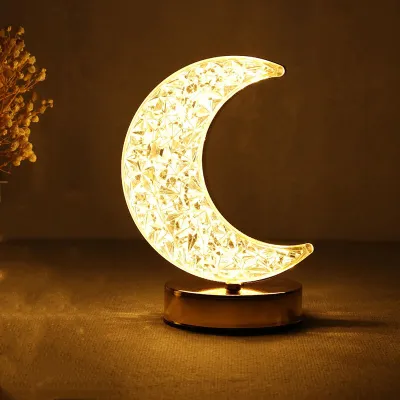
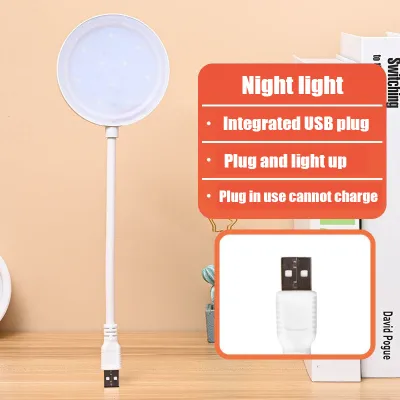

Prices are valid at publication and may change. Please refer to the product page for the latest price.
Core Functional Differences: Light, Focus, and Adjustability
To understand why one lamp cannot easily replace the other, you must look at how they manage light. The physical construction of each fixture dictates where the light travels and how it affects your eyes during the late hours of the day.

Light Direction, Beam Angle, and Adjustability
Reading lamps are built to control light with high precision. They typically feature narrow beam angles, often restricted to 15 to 30 degrees, which confine the light to a specific, concentrated zone. This directional control is achieved through opaque, cone-shaped, or cylindrical shades made of metal or dense plastic that prevent light from spilling sideways. Furthermore, high-quality reading lamps incorporate adjustable features such as flexible goosenecks, swing arms, or rotating heads. These mechanical components allow you to position the light source directly over your reading material, ensuring your head and body do not cast frustrating shadows across the page.
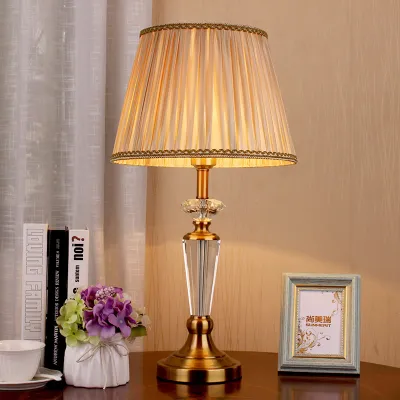
Bedside lamps, by contrast, are designed to distribute light as widely as possible. They utilize semi-translucent shades made of fabric, frosted glass, or paper that scatter light in a 360-degree omnidirectional pattern. Instead of a focused beam, a bedside lamp fills the surrounding space with soft, indirect illumination that bounces off walls and ceilings. Because their primary role is environmental rather than task-oriented, traditional bedside lamps feature fixed, non-adjustable bases and stems, relying on the wide spread of their shades to cover the immediate bedside area.
Brightness, Color Temperature, and Glare Control
Visual comfort in the evening is highly dependent on light quality, which you can easily evaluate by reading product specification labels. Reading print books requires high visual contrast, which is best achieved with higher, focused lumens—typically between 300 and 450 lumens—and a neutral color temperature ranging from 3000K to 4000K (often labeled as “cool white” or “neutral white”). This color range keeps your eyes alert and renders text sharply. To prevent harsh, direct glare when looking toward the lamp, quality reading fixtures often feature recessed light sources or opaque inner linings that shield the bulb from your direct line of sight.
Bedside lamps are engineered to support your body’s natural circadian rhythm. They perform best with lower light outputs of 150 to 250 lumens and warm color temperatures between 2200K and 2700K (labeled as “warm white” or “extra warm white”). This warm, amber-toned light minimizes blue-light exposure, which helps promote melatonin production and signals to your brain that it is time to sleep. When shopping, always check the packaging or specification sheets for the lumen output and Kelvin (K) rating to ensure the bulb matches the lamp’s intended function.
Sizing and Proportions for Your Lamp Table for Bedroom
Selecting a lamp requires careful physical integration with your furniture. The dimensions of your lamp table for bedroom determine not only the visual balance of your space but also how safely and comfortably you can use the light.
Base Footprint
Before purchasing any fixture, measure the flat surface area of your bedside table. A lamp base should never occupy more than one-third of the table’s total surface area. If you choose a lamp with a broad, heavy base, you will struggle to find space for daily essentials such as your smartphone, a glass of water, eyeglasses, or a physical book. In humid tropical climates, where polished wood or glass surfaces can become slightly slick, choosing a lamp base with a non-slip, weighted bottom is crucial to prevent the fixture from sliding or tipping over when you reach for it in the dark.
Height and Eye Level
To avoid painful glare, you must apply a simple ergonomic rule of thumb based on your mattress and table height. Sit up in your bed against the headboard in your normal nighttime posture and measure the distance from the mattress to your eye level. Ideally, when the lamp is placed on the table, the bottom of the lampshade should align horizontally with, or sit slightly below, your eye level. This height ensures that the solid portion of the shade shields your eyes from the hot spot of the bare bulb, while still allowing the light to cast downward and outward over your shoulder onto your lap.
Shade Diameter and Clearance
Another critical dimension to consider is the maximum width of the lampshade. The diameter of the shade should be at least 2 inches narrower than the width of your bedside table. If a shade overhangs the edges of a narrow table, it creates a top-heavy, awkward aesthetic and blocks your physical path. More importantly, an overhanging shade is a constant bumping hazard when you get in and out of bed, change your sheets, or reach to turn off an alarm in the morning. For compact tables, slim, vertical cylinder lamps or adjustable reading lamps with small heads are highly practical choices.
Decision Framework: Which Lamp Fits Your Bedroom Routine?
If you are still undecided, evaluating your specific evening habits and bedroom layout will clarify which fixture type will serve you best on a daily basis.
Choose a Reading Lamp if:
- You are an avid night reader: You spend 30 minutes or more reading physical books, magazines, or non-backlit e-readers every night.
- You share a bed: You have a partner who sleeps on a different schedule, and you need to direct a tight beam of light onto your book without waking them.
- You engage in bedside hobbies: You require high-intensity, clear task lighting for detailed activities like journaling, sketching, knitting, or embroidery.
- You have limited table space: You prefer a highly compact, adjustable clamp-on or wall-mounted fixture that frees up the surface of your table.
Choose a Bedside Lamp if:
- Your priority is relaxation: Your evening routine consists of watching television, meditating, or winding down without intense visual tasks.
- You want to enhance your decor: You view lighting as a key design element and want a beautiful shade material—such as woven rattan, ceramic, or textured glass—that complements your bedroom's interior style.
- You need general ambient light: You rely on your bedside table light to illuminate the entire room gently when entering or exiting at night.
- You prioritize soft navigation: You need a low-glare, comforting light source that is easy on sleep-deprived eyes during midnight wake-ups.
- You want simple operation: You prefer a classic, stationary lamp that requires no physical adjustment or repositioning to use.
Consider a Hybrid or Dual Setup if:
If your routine demands both ambient warmth and focused task lighting but you only have space for one fixture on your table, look for a hybrid solution. Many modern bedroom fixtures feature a dual-source design: a traditional fabric shade that houses a warm, low-lumen ambient bulb, paired with a separate, flexible LED gooseneck reading light extending from the same base. Alternatively, you can opt for a high-quality bedside lamp equipped with an integrated step-dimmer or smart bulb. This setup allows you to dial up the brightness and shift the color temperature to a neutral white when reading, and then dim it down to a warm, low-intensity amber glow when it is time to rest.
Essential Specs, Bulbs, and Safety Checks
Before finalizing your purchase, you must verify several technical, electrical, and safety specifications to ensure the lamp operates reliably and safely in your home.
Electrical Compatibility
In the Philippines, the standard household electrical supply operates at 220 volts (V) at a frequency of 60 hertz (Hz). If you are purchasing a lamp online or from an international retailer, always check the product label to confirm it is rated for 220V–240V. Operating a 110V lamp on a local 220V outlet without a proper step-down transformer will instantly destroy the fixture and pose a severe fire hazard. Additionally, look for local safety certifications, such as the Philippine Standard (PS) mark or the Import Commodity Clearance (ICC) sticker, on the packaging or cord to ensure the electrical components have passed rigorous safety testing. Verify that the socket base type—most commonly the E27 screw base or the GU10 twist-lock base—matches the bulbs readily available in your local stores.
Switch Convenience
Consider how easy it will be to turn the lamp off when you are half-asleep. A switch located on the power cord (an inline switch) can easily slip behind your bedside table, forcing you to stretch or lean out of bed to find it. Rotary switches located directly on the bulb socket can also be awkward to turn, especially if the lampshade is narrow or hot. For maximum convenience, look for lamps with touch-sensitive bases, easy-to-reach toggle switches integrated directly into the lamp base, or smart-enabled fixtures that you can control via a smartphone app or voice commands.
Heat and Cord Safety
Every light fixture has a maximum wattage rating printed clearly on a label near the bulb socket (for example, “Max 40W”). Never exceed this limit, as doing so can melt the socket, degrade the wiring insulation, and ignite a fire. This safety check is particularly critical if you use traditional incandescent or halogen bulbs, which emit high levels of heat. In tropical, humid environments, heat buildup can degrade paper, fabric, or plastic shades much faster, making them brittle and highly flammable. Switching to LED bulbs is highly recommended; they run exceptionally cool, use up to 80% less energy, and are highly resistant to voltage fluctuations. Finally, route all electrical cords neatly behind your bedside table, securing them with cable clips or ties to prevent them from becoming tripping hazards or being accidentally pulled, which could bring the lamp crashing down.
If you decide to install a fixed, wall-mounted reading sconce that requires hardwiring into your bedroom’s electrical system, always isolate the power at the main circuit breaker before starting. Read the manufacturer’s installation instructions thoroughly, and if you are unfamiliar with residential wiring, hire a licensed professional electrician to complete the installation safely.
Frequently Asked Questions (FAQ)
Can I use a standard bedside lamp for reading in bed?
Yes, you can use a standard bedside lamp for reading, but it is not the most ergonomic or comfortable choice for long periods. Because bedside lamps cast wide, diffused light, they often fail to provide the sharp contrast needed to read small print clearly, which can lead to eye strain and headaches. Additionally, because the light source is stationary, your head or shoulders will often cast shadows directly onto your book. If you must use a bedside lamp for reading, try installing a higher-lumen, neutral-white LED bulb (around 3000K) and choose an opaque, dark-colored shade that helps direct more of the light downward onto your lap rather than outward into the room.
What is the ideal height for a lamp on a bedroom table?
The ideal height for a bedroom table lamp is determined by your physical eye level when sitting up in bed. To find this, sit comfortably against your headboard and measure the height from the floor to your eyes. The combined height of your bedside table and your lamp (from the base to the bottom edge of the shade) should match this measurement within an inch or two. For most standard bedroom setups, this means the total height from the floor to the bottom of the lampshade will range between 38 and 42 inches. Keeping the bottom of the shade at this level ensures the bulb remains hidden from your direct line of sight while providing a generous pool of light over your reading area.
Community discussion
Share your experience or ask a question. Comments are reviewed before publication.