
Quick Answer: Which Lamp Fits Your Nighttime Routine?
Choosing between a reading light and a bedside lamp comes down to how you spend your final hours before sleep. If you use your bed as a workspace, study nook, or place to dive into a novel, a reading light is your best option. It delivers highly focused, directional illumination that targets your page without spilling light across the mattress or straining your eyes.
Conversely, if you use your bedroom primarily to wind down, watch television, or navigate safely in the dark, a traditional bedside lamp is the superior choice. Its shaded, diffused glow wraps the room in a soft, relaxing ambiance that prepares your mind for sleep. While some hybrid fixtures attempt to bridge this gap, selecting the right single source depends entirely on whether you require focused task lighting or gentle ambient illumination.
Functional Differences: Focused Task vs. Ambient Glow
Reading Lights: Directed Beam and Eye Comfort
Reading lights are specialized task fixtures engineered to project a concentrated beam of light directly onto a book, tablet, or document. Unlike general fixtures, they utilize narrow beam angles—often between 15 and 30 degrees—to restrict light spill. This precision ensures that the surrounding environment remains dark, allowing you to read comfortably without waking a sleeping partner.
Products mentioned in this guide
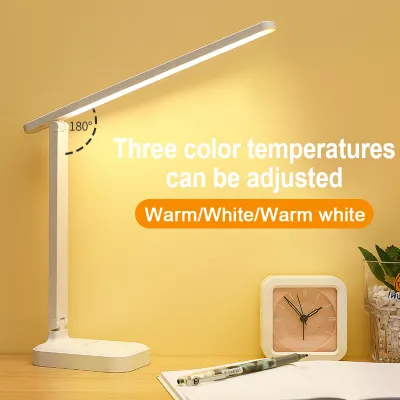
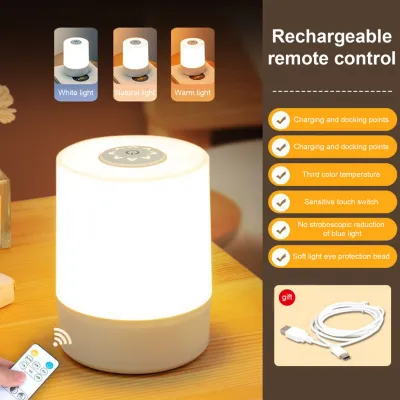
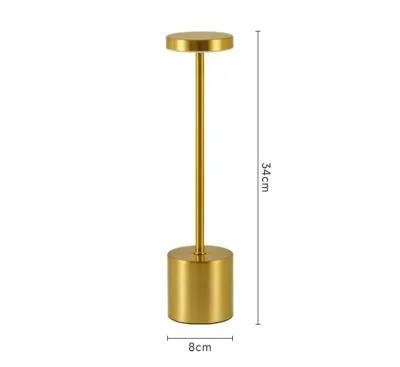
Prices are valid at publication and may change. Please refer to the product page for the latest price.

To protect your vision during late-night reading sessions, these lights prioritize eye comfort through high Color Rendering Index (CRI) values. A high CRI (ideally 90 or above) ensures that the contrast between printed text and paper is sharp and clear, preventing the micro-fluctuations in eye muscles that cause headaches and fatigue. The brightness of a reading light is typically measured in lumens rather than wattage, with 150 to 300 lumens being the sweet spot for close-up tasks without causing reflective glare off white pages.
Furthermore, because the light is directed downward and away from your face, it prevents direct glare from entering your eyes. This optical design is critical for maintaining visual stamina, especially when reading small print or viewing matte screens. By keeping the light source recessed or shielded, a high-quality reading light ensures that only the target area is illuminated, preserving the overall darkness of the bedroom.
Bedside Lamps: Diffused Light and Room Ambiance
Bedside lamps serve a completely different optical purpose by acting as ambient light sources. Instead of focusing light in a single direction, they utilize shades made of fabric, glass, paper, or woven local materials like abaca or rattan to scatter light 360 degrees around the space. This diffusion softens the harshness of the bulb, creating a warm, inviting glow that fills the immediate bedside area.
This soft, scattered light plays a vital biological role in your evening routine. As you prepare for sleep, bright, direct light can trick your brain into thinking it is still daytime, suppressing the production of melatonin. The gentle, low-level illumination of a shaded bedside lamp signals to your circadian rhythm that it is time to wind down, making it much easier to transition into deep sleep.
However, this broad light distribution comes with trade-offs. Because the light is scattered in all directions, a bedside lamp is highly inefficient for detailed tasks. If you attempt to read under a standard shaded lamp, you may find yourself leaning uncomfortably close to the fixture or squinting due to the lack of contrast. Additionally, the wide light spill will inevitably illuminate the entire bed, which can easily disturb anyone sharing the room with you.
Design and Placement: Adjustability vs. Aesthetics
Adjustability, Height, and Nightstand Footprint
The physical architecture of these two lighting types reflects their distinct functions. Reading lights are built for maximum physical adjustability. Many models feature flexible goosenecks, articulated scissor arms, or swiveling heads that allow you to position the light source exactly where you need it. Because they can be wall-mounted, clipped onto a headboard, or designed with ultra-slim bases, they require a minimal footprint, leaving your nightstand free for books, water, or personal items.
In contrast, traditional bedside lamps are designed as static, decorative anchors for the bedroom. They feature a fixed height, typically keeping the bottom of the lampshade at eye level when you are sitting up in bed. Their bases are wider and heavier to ensure stability on a flat table surface. This substantial footprint means they occupy a significant portion of your nightstand, but they compensate for this by serving as a key design element that ties your bedroom’s furniture, textures, and color scheme together.
For homeowners in tropical environments like the Philippines, material choice is also a practical consideration. Metal goosenecks and plastic clip-on reading lights are highly durable and easy to wipe clean of dust. Traditional fabric or paper lampshades, while aesthetically pleasing, can trap moisture and dust in humid climates, requiring regular maintenance to prevent staining or mold growth.
Glare Control and Light Spill
Controlling glare is essential for nighttime comfort, and the two lamp styles handle this challenge differently. Reading lights employ physical barriers, such as deep-set bezels, honeycomb louvers, or precise optical lenses, to cut off the light beam sharply. This design prevents the bulb from shining directly into your eyes, even if the light is positioned close to your head.
Bedside lamps rely entirely on the opacity, color, and shape of their shades to manage glare. A dark or dense fabric shade will restrict light spill to the top and bottom openings of the lamp, while a translucent white or cream shade will allow more light to pass through the sides. If the shade is too short or positioned incorrectly, the bare bulb may become visible when you lie down, creating a harsh, blinding spot that disrupts your relaxation.
Essential Specifications to Check Before You Buy
Before purchasing any bedroom lamp, verifying technical and safety specifications is crucial to ensure compatibility with your home’s electrical setup.
- Voltage and Plug Compatibility: In the Philippines, the standard household electrical supply is 220V at 60Hz. When shopping online, always verify that the lamp is rated for 220V. Importing a 110V lamp designed for other regions can lead to immediate electrical failure or fire hazards if plugged directly into a local outlet. Additionally, ensure the plug type matches your wall outlets—typically Type A (two flat parallel pins) or Type B (two flat pins with a round grounding pin)—to avoid relying on loose, unsafe adapters.
- Bulb Base and Wattage Limits: Always check the fixture's maximum wattage rating, especially when using traditional incandescent or halogen bulbs, which generate significant heat. Exceeding this limit can melt plastic components or damage fabric shades. For bulb bases, E27 is the most common screw-type base in the Philippines, making replacement bulbs easy to find. However, compact reading lights may require smaller bases like E14 (candelabra) or GU10 (bi-pin twist-lock), which are less common and may require a trip to a specialty hardware store.
- Dimming Capabilities: Dimming functionality is highly beneficial for bedroom environments, allowing you to transition from evening relaxation to sleep preparation. If you choose a lamp with built-in touch controls or step dimmers, ensure that any replacement LED bulb you buy is explicitly labeled as "dimmable." Standard LED bulbs will flicker, buzz, or fail prematurely if used with dimming circuits.
- Color Temperature (Kelvin): The color temperature of your bulb dictates the mood and usability of your light. For a bedside lamp, look for a warm white bulb rated between 2700K and 3000K. This warm, golden light mimics sunset and promotes relaxation. For a dedicated reading light, a neutral white bulb of around 3500K to 4000K provides better contrast for reading black text on white paper. Always check the bulb packaging for the Kelvin (K) rating rather than relying on generic terms like "warm" or "cool."
- Smart Features and Controls: Integrating smart bulbs or smart plugs allows you to control your lighting via voice commands or mobile apps. However, for groggy nighttime use, physical controls remain incredibly practical. A lamp with an easily accessible physical switch on the base, cord, or head is often much more convenient to turn off half-asleep than searching for your smartphone in the dark.
The Final Verdict: How to Make Your Choice
To choose the perfect light for your bedroom, evaluate your nighttime habits, room layout, and design preferences. Use this structured framework to make your decision:
- Choose a dedicated reading light if:
- You regularly read physical books, e-readers, or study in bed for more than 15 to 20 minutes at a time.
- You share your bed with a partner and want to read without keeping them awake with bright ambient light.
- Your nightstand is small or cluttered, and you need a space-saving wall-mounted or clip-on fixture.
- You experience eye strain or headaches from reading under soft, diffused lighting.
- Choose a traditional bedside lamp if:
- Your primary goal is to create a cozy, relaxing atmosphere to help you wind down before sleep.
- You rarely read in bed, or only read for a few minutes on a backlit device.
- You want a decorative, symmetrical design element to anchor your bedroom's interior style.
- You need a gentle navigation light to guide you safely if you wake up during the middle of the night.
- Consider a hybrid or dual-setup if:
- You want the best of both worlds. Many modern bedrooms utilize a pair of decorative bedside lamps for general ambiance, paired with small, directional wall-mounted reading lights on flexible arms. This dual-setup allows you to switch seamlessly from a warm, room-filling glow to focused task lighting when you are ready to read.
Ultimately, prioritizing your visual health and sleep hygiene will lead to a more comfortable and functional bedroom environment.
Frequently Asked Questions (FAQ)
Can I use a standard bedside lamp for reading in bed?
While you can use a standard bedside lamp for light reading, it is not recommended for extended sessions. The diffused light from a traditional shade lacks the focus and intensity needed to make text sharp, forcing your eyes to work harder and leading to strain. Additionally, because the light spills across the entire bed, it is highly likely to disturb anyone sleeping next to you.
What color temperature is best for a bedroom lamp?
For general bedside lamps, a warm white color temperature of 2700K to 3000K is best because it minimizes blue light exposure and helps your body prepare for sleep. If you are using a dedicated reading light, a slightly cooler neutral white of 3500K to 4000K is ideal for improving text contrast and reducing eye strain, but it should be turned off at least 30 minutes before you plan to sleep to protect your sleep cycle.
Community discussion
Share your experience or ask a question. Comments are reviewed before publication.