
Selecting the perfect ceilings lights for your home involves looking far beyond the outer trim. For modern spaces, flush-mounted fixtures offer a clean, streamlined aesthetic, but their success depends entirely on matching technical specifications to your specific space. To make an informed purchase, you must evaluate three core pillars: light output quality, electrical compatibility, and physical dimensions. Prioritizing these details ensures your new fixtures provide optimal brightness, operate safely on your local electrical grid, and fit seamlessly into your ceiling structure without installation surprises.
Light Output and Visual Quality: Lumens, Color Temperature, and CRI
Lumens vs. Wattage
In the era of LED technology, measuring brightness by wattage is a common mistake. Wattage only indicates how much electrical power the light consumes, whereas lumens (lm) measure the actual volume of visible light emitted. When browsing ceilings lights, look at the lumen rating to determine if a fixture is bright enough for your room. For instance, a small bathroom might only require a few fixtures totaling 800 to 1,200 lumens, while a spacious living room could need upwards of 4,000 lumens overall to feel adequately illuminated.
Correlated Color Temperature (CCT)
Color temperature, measured in Kelvin (K), dictates the visual warmth or coolness of the light. Lower numbers like 2700K to 3000K produce a warm, yellowish glow that mimics traditional incandescent bulbs, making them ideal for relaxing areas like bedrooms and living rooms. Cool white (4000K) offers a neutral, crisp light suitable for kitchens and home offices, while daylight (6500K) provides a bright, bluish-white tone that aids high-focus tasks but can feel overly clinical if used in cozy living spaces.
Products mentioned in this guide
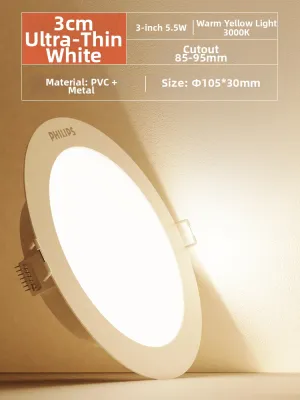
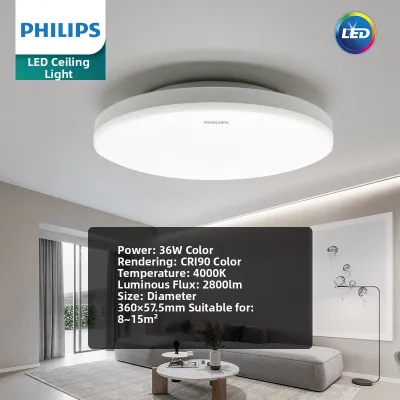
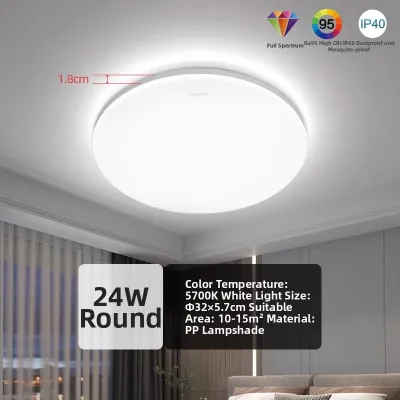
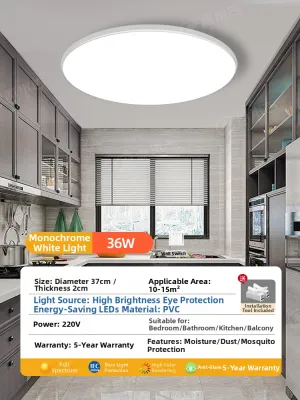
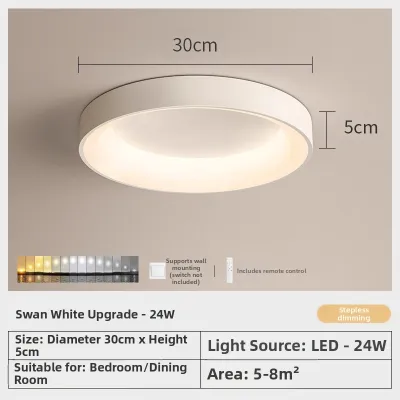
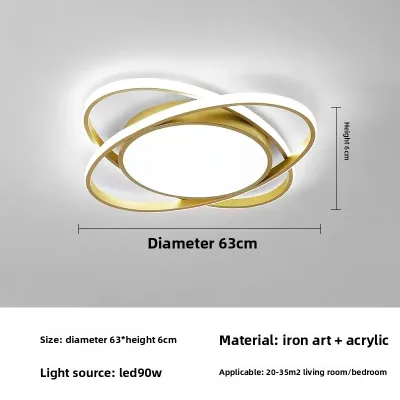
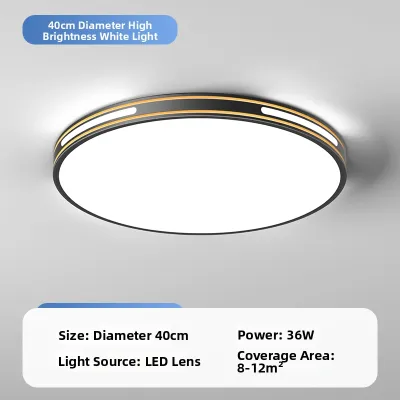
Prices are valid at publication and may change. Please refer to the product page for the latest price.
Color Rendering Index (CRI)
CRI measures how accurately a light source reveals the true colors of objects compared to natural sunlight, rated on a scale up to 100. For standard residential spaces, a CRI of 80 or higher is generally acceptable. However, in areas where visual precision and color accuracy are critical—such as above kitchen countertops, vanity mirrors, or reading nooks—you should seek fixtures with a CRI of 90 or higher to prevent colors from appearing dull, gray, or distorted.
Electrical Compatibility: Wattage, Voltage, and Dimming
Wattage and Efficacy
While wattage does not dictate brightness, it remains essential for calculating energy efficiency. By dividing the lumen output by the wattage, you get the luminous efficacy (lumens per watt, or lm/W). Choosing fixtures with high efficacy ensures you receive maximum brightness while keeping your monthly electricity bills low, which is particularly beneficial in tropical climates where home cooling and lighting run simultaneously.

Voltage Matching
Before purchasing any recessed panel light, you must verify that its rated input voltage matches your local household mains supply. In the Philippines, the standard nominal voltage is 230V at a frequency of 60Hz. Installing a fixture rated strictly for 110V or 120V on a 230V line will cause immediate, irreversible damage and poses a severe electrical fire hazard. Look for products explicitly rated for 220V–240V or wide-voltage drivers rated from 100V–240V, and ensure the product carries reliable electrical safety certifications like the local ICC or PS marks.
Dimming Compatibility
If you plan to adjust your lighting levels for different times of day, you must verify whether the LED driver is labeled as dimmable. Standard, non-dimmable LED panel lights will buzz, flicker violently, or suffer premature driver failure if connected to a dimmer switch. Furthermore, ensure the dimmable panel is paired with a compatible LED-rated dimmer switch rather than an older rotary dimmer designed for incandescent bulbs.
Safety and Installation Boundary
Working with electrical fixtures carries inherent risks of shock and fire. Always isolate the power at the main circuit breaker before handling any wiring or removing existing fixtures. Carefully review the manufacturer’s installation instructions for your specific model. If you are dealing with fixed wiring, complex circuits, or are unsure of load limits and local electrical codes, always consult a qualified professional electrician to complete the installation safely.
Physical Fit and Distribution: Cut-out Size and Beam Angle for Ceilings Lights
Cut-out Size vs. Overall Dimensions
One of the most common installation mistakes is confusing the outer diameter of the panel light with its cut-out size. The overall dimension includes the visible decorative trim that sits flat against the ceiling, while the cut-out size is the exact diameter of the hole you must cut into your ceiling board. If you are retrofitting existing ceilings lights, measure the existing holes precisely before purchasing new panels to avoid having to patch or widen your ceiling plasterboard.
Ceiling Cavity Depth
Recessed panel lights require adequate vertical clearance above the ceiling board to accommodate the thickness of the panel housing and its driver. Even ultra-slim models require a minimum amount of space to sit comfortably without pressing against structural wooden joists, metal frames, or concrete slabs. Ensure there is sufficient clearance for heat dissipation as well, as trapped heat can degrade the electronic components of the LED driver over time.
Beam Angle
The beam angle determines how widely the light spreads from the fixture. Recessed panel lights typically feature a wide beam angle of 110 to 120 degrees, which provides diffuse, even ambient lighting across a broad area, making them excellent for general room illumination. If you want to highlight specific artwork, architectural features, or create focused task lighting, look for specialized downlights with narrower beam angles of 30 to 60 degrees.
Specs You Can Usually Deprioritize
IP (Ingress Protection) Ratings
IP ratings indicate how well a fixture resists dust and water penetration. While a high IP rating (like IP65) is crucial for outdoor areas or wet zones directly inside shower enclosures, it is entirely unnecessary for standard indoor living rooms, bedrooms, and hallways. Standard dry-rated or damp-rated fixtures are perfectly adequate for general indoor use, helping you avoid paying a premium for unnecessary waterproofing.
Rated Lifespan (Hours)
Many manufacturers advertise impressive lifespans of 25,000 to 50,000 hours. While these theoretical numbers sound appealing, they are based on ideal laboratory conditions and rarely reflect real-world performance, which is heavily dictated by heat management and driver quality. Instead of obsessing over minor differences in hour ratings, prioritize reputable brands that offer a solid local warranty of one to two years.
Power Factor (PF)
Power factor is a technical metric indicating how efficiently a device draws current from the electrical grid. While a high power factor (above 0.9) is important for commercial buildings with thousands of fixtures, it does not affect residential electricity meters or billing in the Philippines. For home use, a low power factor has no visible impact on performance or your monthly bill, so you can safely ignore this spec during your search.
Frequently Asked Questions (FAQ)
Can I install a recessed panel light in a solid concrete ceiling?
Recessed panel lights cannot be directly installed in solid concrete ceilings because they require a hollow cavity to house the fixture body, spring clips, and electrical driver. Attempting to chip or carve out a large cavity in a structural concrete slab is highly dangerous and can compromise the structural integrity of your home. If you have solid concrete ceilings, you should opt for surface-mounted panel lights, track lighting, or drop ceilings made of gypsum board to create the necessary hollow space.
Do I need a separate driver for LED panel lights?
Yes, all LED panel lights require an electronic driver to convert high-voltage alternating current (AC) from your mains supply into the low-voltage direct current (DC) that LEDs need to operate. Many slim recessed panel lights come packaged with an external driver that connects via a quick-release cable and must be tucked into the ceiling cavity during installation. Other models feature an integrated driver built directly into the rear of the light housing. Always check the product specifications to ensure you have the vertical clearance required for whichever style you choose.
Community discussion
Share your experience or ask a question. Comments are reviewed before publication.