
Choosing between a rechargeable cordless bedside lamp and a traditional plug-in lamp depends on your bedroom’s physical layout, outlet placement, and how you use light at night. If your bedside table sits far from a wall outlet or you experience frequent power interruptions, a rechargeable lamp offers unmatched placement flexibility and emergency backup. Conversely, if you require consistent, high-output illumination for hours of reading without worrying about battery degradation or charging schedules, a classic plug-in lamp remains the most reliable choice. Both options have distinct advantages, and understanding how they align with your daily routines will help you make the right investment for your home.
Assessing Your Bedroom Layout and Power Access
Before looking at styles or features, evaluate the physical space around your bed. In many homes in the Philippines, bedroom layouts are constrained by concrete walls and fixed outlet positions. Measure the distance from your nightstand to the nearest wall outlet. If the cord must stretch across a doorway, walkway, or open floor space, it creates a significant tripping hazard and looks untidy. A plug-in lamp requires a clear, safe path to the wall, which might limit where you can position your furniture.
Evaluate your nightstand’s surface area. A traditional plug-in lamp requires a dedicated cord that drapes over the back or side of the table. This cord can limit how closely you can push your bed or nightstand against the wall, often leaving an awkward gap where dust accumulates. A cordless rechargeable lamp frees up valuable surface area, allowing you to organize books, eyeglasses, water carafes, or smartphones without managing a tangle of wires.
Products mentioned in this guide
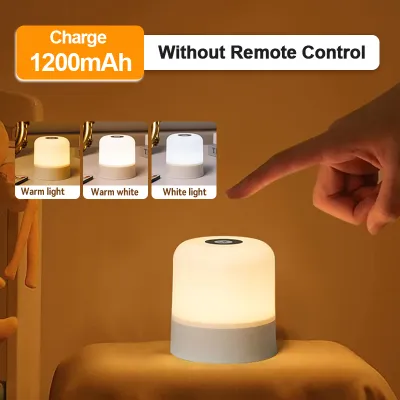
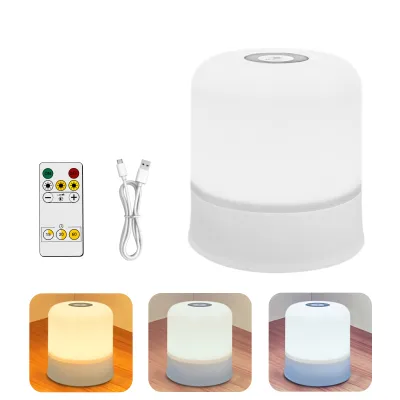

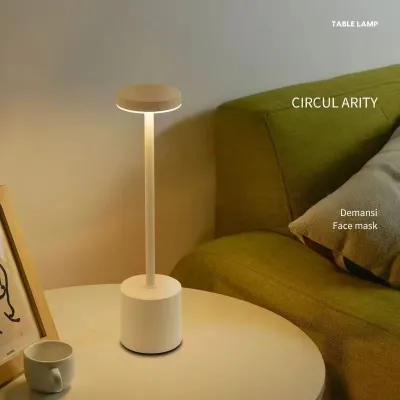
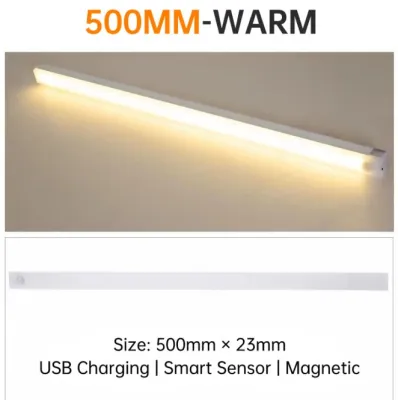
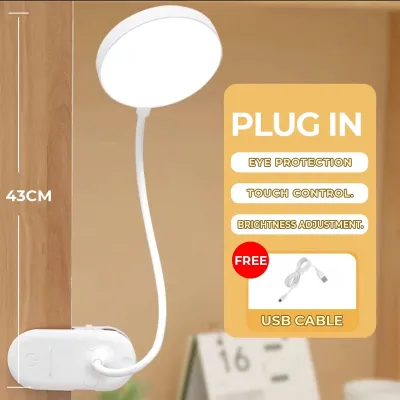
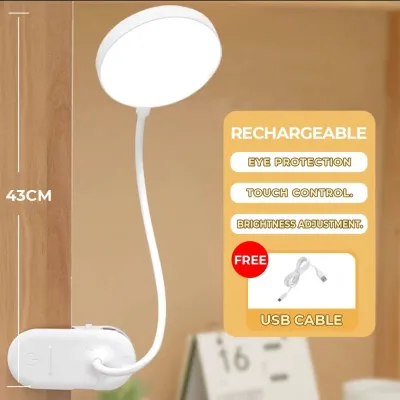
Prices are valid at publication and may change. Please refer to the product page for the latest price.
Consider modern furniture integration. Some contemporary headboards and nightstands feature built-in USB ports or power strips. If your furniture already has integrated power access, a plug-in lamp or a rechargeable lamp that remains plugged in most of the time becomes much easier to manage. However, if your bed is positioned in the center of a room or away from walls, running extension cords is highly discouraged for safety reasons. In these layouts, a cordless model is often the only practical option to keep the space clean and safe.
Matching the Lamp to Your Nightly Usage Habits
Think about how you interact with light before sleeping. Do you stay in one spot, or do you move around? If you enjoy reading in bed but find yourself adjusting your position, a lightweight rechargeable lamp can be easily moved closer to your book or shifted to a different corner of the room. This portability is also highly practical during seasonal storms or rolling blackouts, where a cordless lamp can instantly double as an emergency light source for navigating hallways or other rooms safely.

Determine the primary function of the light. Is it meant for ambient, low-level relaxation, or do you need focused task lighting for detailed hobbies like sewing, journaling, or studying? Plug-in lamps generally support higher-wattage bulbs, providing bright, continuous light that does not dim as the hours pass. Rechargeable lamps, while highly versatile, often utilize integrated LEDs designed for energy conservation, which may offer lower maximum brightness or gradually dim as the battery level drops.
Consider your sleeping partner. If you share a bed, you may need a lamp with an adjustable arm, a directional shade, or precise dimming capabilities. This allows you to focus light directly onto your page without illuminating the entire bedroom. Many rechargeable models feature touch-sensitive dimming, which is silent and convenient for late-night adjustments. However, you must verify that the specific model’s dimming steps or continuous dimming range matches your sensitivity to light in a dark room.
Comparing Maintenance: Charging Routines vs Bulb Replacement
Every light source requires some level of ongoing upkeep, but the nature of that maintenance differs completely between the two types. For rechargeable lamps, the primary routine revolves around managing the battery. You will need to plug the lamp into a charger periodically, depending on your usage habits and the manufacturer’s specified battery capacity. It is essential to check the product label for proper charging protocols, such as using the correct voltage adapter to prevent overheating or premature battery wear.
Traditional plug-in lamps require virtually no daily management but demand occasional physical maintenance. This includes swapping out burnt-out bulbs and dusting the fixture. Because plug-in lamps often use standard screw-in bases, you have the freedom to choose from a wide variety of replacement bulbs, including smart bulbs, filament LEDs, or warm incandescent options. Dusting traditional fabric, paper, or glass shades is also necessary to maintain light clarity and prevent dust buildup, which can be more pronounced in humid tropical environments.
Long-term durability is another critical factor. Rechargeable lamps rely on internal lithium-ion or lithium-polymer batteries, which naturally degrade over time. After several hundred charge cycles, you may notice the lamp requires more frequent charging or fails to hold a charge altogether. If the battery is integrated and non-replaceable, the entire lamp may eventually need to be replaced. In contrast, a high-quality plug-in lamp has no battery to degrade; it relies entirely on stable grid power and simple bulb replacements, making it a highly durable, long-term investment for your home.
Safety, Heat, and Installation Checks
Before purchasing any lighting fixture, safety must be your top priority. For plug-in lamps, always verify the voltage compatibility and the maximum wattage limit printed on the socket label. Installing a bulb that exceeds the recommended wattage can cause excessive heat buildup, damaging the socket, wiring, or shade, and posing a fire hazard. Ensure the lamp carries recognized electrical safety certifications to guarantee it has undergone proper testing.
Physical stability is crucial for bedside safety. Because nightstands are often cluttered or placed close to the bed, lamps are susceptible to being knocked over in the dark. Look for lamps with stable, weighted bases. This is particularly important for cordless rechargeable lamps, which are frequently moved around and may have a higher center of gravity depending on their design. A heavy base prevents accidental tipping onto the floor or, worse, onto bedding.
Heat dissipation is another vital consideration, especially in warm, humid climates. Check the manufacturer’s instructions regarding clearance around the lampshade. Fabric, paper, and plastic shades must have adequate space around the bulb to allow heat to rise and escape. For rechargeable lamps, ensure the charging port and battery compartment remain well-ventilated during use and charging. Never charge a cordless lamp on a soft, insulating surface like a mattress or under a pillow, as this can trap heat and lead to dangerous thermal buildup.
Decision Framework: Which Bedside Lamp Should You Buy?
To make your final decision, weigh these practical trade-offs against your bedroom’s specific needs. A rechargeable cordless lamp is the ideal choice if your bedside table lacks nearby outlets, if you want to eliminate unsightly cords for a minimalist aesthetic, or if you require a portable light source that can move with you during power outages. When shopping, make sure to verify that the base is compatible with the specific style of lampshades for bedroom rechargable fixtures you prefer, paying close attention to how the shade attaches and whether the base can support its weight.
On the other hand, a traditional plug-in lamp is superior if you need reliable, high-intensity light for extended periods without the chore of recharging. It is the best fit for dedicated readers, students, or anyone who prefers a “set-and-forget” appliance that will last for years with only occasional bulb changes. Whichever path you choose, always verify the electrical specifications, base interfaces, and physical dimensions to ensure your new lamp fits safely and beautifully into your bedroom sanctuary.
Frequently Asked Questions (FAQ)
Can I use any lampshade on a rechargeable bedside lamp?
No, shade compatibility depends entirely on the mounting mechanism of your rechargeable lamp base. Many cordless lamps use integrated LED modules or proprietary shapes that do not accommodate standard shades. If the lamp does support removable shades, you must check whether it uses a harp, clip-on, or UNO fitter design. Always consult the manufacturer’s specifications to verify the maximum shade weight and ensure there is sufficient heat clearance between the light source and the shade material to prevent scorching or fire hazards.
Do plug-in bedside lamps consume more electricity?
Not necessarily. Energy consumption is determined by the wattage of the bulb you install and how long the lamp is turned on, rather than how the lamp receives its power. A plug-in lamp using a highly efficient 5-watt LED bulb will consume a similar amount of electricity as a rechargeable lamp drawing the same power. To maximize energy efficiency, check the lumens-per-watt rating on the bulb packaging; a higher rating means you get more light output for every watt of electricity consumed.
How do I know if a rechargeable lamp's battery needs replacing?
You can identify battery degradation through several clear, observable signs. If your lamp’s run time drops significantly compared to when it was new, or if it only operates when plugged directly into a charger, the battery is likely reaching the end of its lifespan. More serious signs include the lamp failing to charge at all or any visible swelling, warping, or heat coming from the battery compartment. If you observe these issues, consult your user manual for battery replacement instructions or contact the manufacturer, as attempting to use or charge a damaged lithium battery can be hazardous.
Community discussion
Share your experience or ask a question. Comments are reviewed before publication.