
Quick Answer: Which Bedside Lamp Should You Choose?
Choosing the ideal bedside reading lamp comes down to a fundamental trade-off: the ultimate placement flexibility of a rechargeable model versus the uninterrupted, maintenance-free power of a plug-in light. If your nightstand is far from a wall outlet or you prefer a clean, minimalist look free of tangled cords, a rechargeable LED desk lamp is highly practical. Conversely, if you are an avid reader who spends hours with a book every night and wants to avoid the chore of regular charging, a traditional plug-in model offers reliable, consistent illumination. Both options can deliver excellent task lighting, provided you verify key specifications like adjustable brightness and warm color temperatures before making your purchase. Your choice should ultimately align with your bedroom layout, daily reading duration, and personal tolerance for managing battery levels.
Convenience and Placement Flexibility
Bedside tables are often prime real estate, holding everything from smartphones and glasses of water to physical books and sleep masks. In many homes in the Philippines, bedrooms may have limited wall outlets, or the outlets might be positioned awkwardly behind heavy wooden headboards. A plug-in LED desk lamp requires a dedicated cord routed directly to the nearest power source. This setup can create visual clutter and physical obstacles, especially if you need to pull your nightstand away from the wall to accommodate the plug. Managing these cords can also lead to dust accumulation in hard-to-reach spaces, which is a common concern in humid tropical environments.

A rechargeable LED desk lamp completely eliminates the cord dilemma during use. Because it operates on an internal battery, you can place it exactly where you need it without being tethered to a wall. This portability allows you to adjust the light angle freely, move the lamp closer to your book, or even carry it to another room during sudden power outages. The physical footprint of rechargeable models is often highly compact, as they do not require heavy internal transformers or thick power cables. This makes them exceptionally easy to fit onto small bedside tables or floating shelves. However, you must consider where the lamp will sit when it eventually needs to be plugged in for a recharge, ensuring you have a convenient charging spot nearby.
Products mentioned in this guide
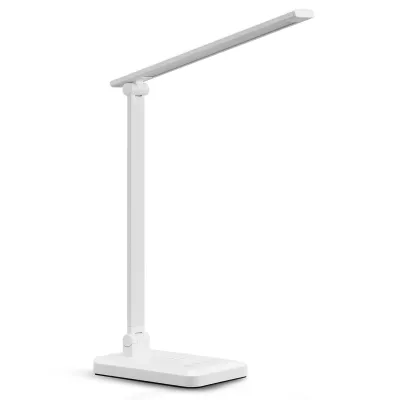
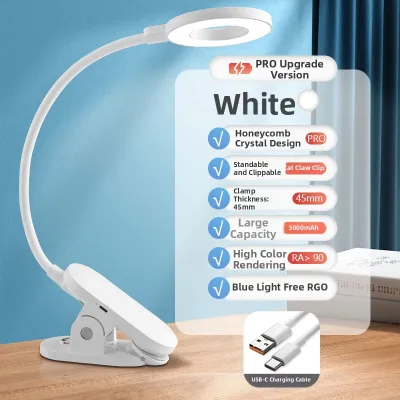
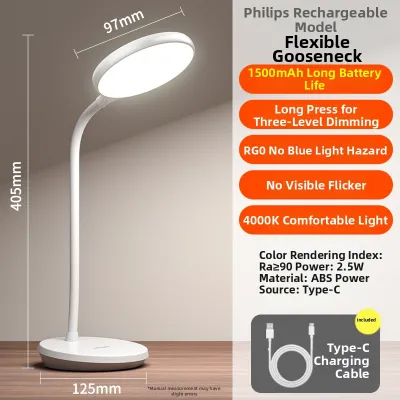
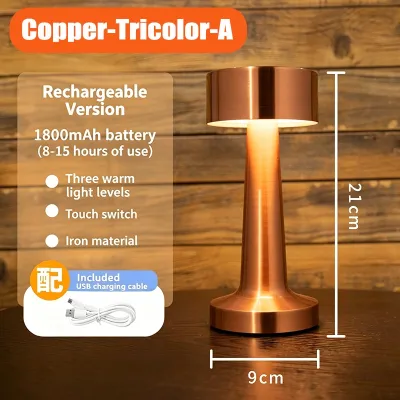
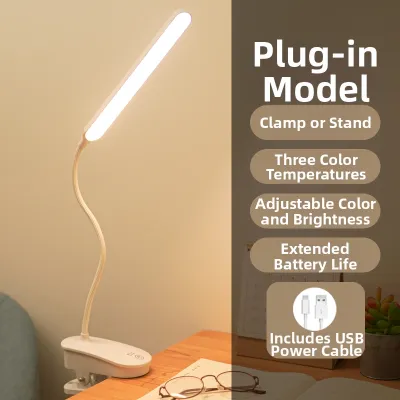
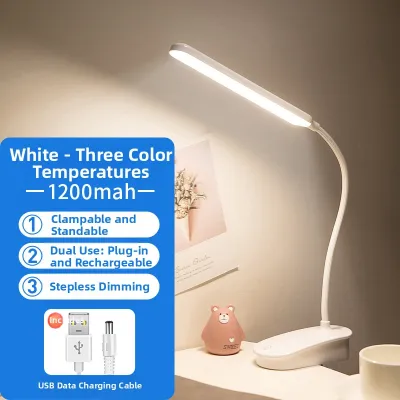
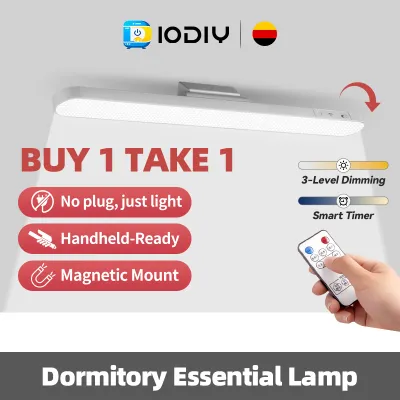
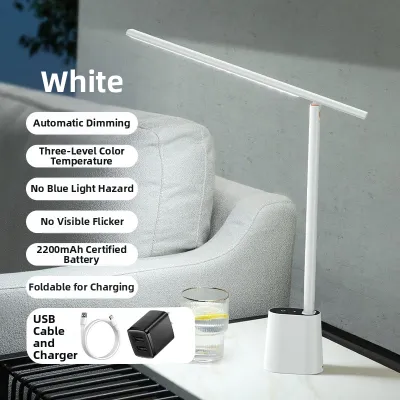
Prices are valid at publication and may change. Please refer to the product page for the latest price.
Power Reliability and Battery Management
When evaluating a rechargeable LED desk lamp, understanding battery performance is crucial to avoid having your reading session cut short. Manufacturers typically list the battery capacity in milliampere-hours (mAh) on the product packaging or specification sheet. A higher mAh rating generally translates to a longer runtime, but actual battery life depends heavily on your chosen brightness setting. Operating the lamp at its maximum lumen output will drain the battery much faster than using a low, warm glow designed for winding down before sleep. It is highly beneficial to look for models that utilize standard charging interfaces, such as USB-C, which allow you to use your existing smartphone chargers and reduce nightstand clutter.
Plug-in LED desk lamps, on the other hand, offer absolute power reliability. They draw continuous electricity directly from your home’s electrical grid, ensuring that the light output remains perfectly consistent from the moment you turn it on until you switch it off. There is no risk of the light gradually dimming or shutting off unexpectedly in the middle of an engrossing chapter. The trade-off is that you must have a safe, accessible wall outlet nearby. If you must use an extension cord to bridge the gap, you must ensure it is properly rated for household electronics and routed safely to prevent tripping hazards or electrical strain. For readers who prioritize a “set-and-forget” appliance, the plug-in model remains the most dependable option.
Lighting Quality and Eye Comfort
Regardless of how your bedside lamp receives its power, the quality of the light it emits is the most critical factor for eye comfort. Reading in bed requires illumination that minimizes eye strain and prepares your body for restful sleep. When browsing online marketplaces or local lighting stores, always check the product labels for adjustable color temperature settings. A warm white light, typically ranging from 2700K to 3000K, is ideal for nighttime reading because it mimics the soft glow of traditional incandescent bulbs and minimizes exposure to blue light, which can disrupt your natural sleep cycle.
In addition to color temperature, look for lamps that feature adjustable brightness levels or stepless dimming. This allows you to customize the light intensity to match the ambient darkness of your bedroom, preventing harsh glare. High-quality LED lamps also incorporate flicker-free technology and a high Color Rendering Index (CRI), usually rated at 80 or above. Flicker-free operation prevents the subtle, rapid pulsing of light that causes headaches and eye fatigue, while a high CRI ensures that text on the page appears sharp and highly legible. Remember to verify these specific optical features on the manufacturer’s specification sheet, as a lamp’s power source does not guarantee its lighting quality.
Decision Framework: Which Type Fits Your Reading Habits?
To help you finalize your decision, consider how your daily routines and bedroom layout align with the unique characteristics of each lamp type. Use the following guidelines to determine which option will provide the most comfortable and convenient reading experience.
Choose a rechargeable lamp if:
- Your bedside table is located far from a wall outlet, and you want to avoid running long, unsightly extension cords across your bedroom floor.
- You prefer a clean, minimalist nightstand aesthetic with zero visible cables cluttering your sleeping space.
- Your reading sessions are typically shorter, lasting between 30 to 60 minutes before you drift off to sleep.
- You want a versatile, portable light source that can be easily moved around the house or used as emergency lighting during seasonal power interruptions.
- You do not mind adding another device to your regular charging routine.
Choose a plug-in lamp if:
- You are an avid reader who spends several hours reading in bed every night and requires uninterrupted illumination.
- You prefer a low-maintenance appliance that is always ready to use without the need to monitor battery levels or search for charging cables.
- Your nightstand has a dedicated, easily accessible wall outlet located directly behind or beside it.
- You require maximum, consistent brightness that never fades or dims due to a declining battery charge.
Verify first if:
- The physical dimensions and base footprint of the lamp will fit comfortably on your nightstand alongside your phone, water glass, and books.
- The included power cord or charging cable is long enough to reach your power source safely without being stretched tight.
- The control switches or touch sensors are intuitive and easy to locate by touch alone in a dark room.
Safety and Maintenance Checks Before You Buy
Ensuring electrical safety is essential when introducing any new appliance to your bedside, particularly in tropical climates where high humidity can affect electronic components over time. Before purchasing, check the product packaging or label for official electrical safety certification marks and verify that the voltage rating matches your home’s electrical system. For rechargeable models, it is important to store and use the lamp away from direct sunlight or areas of extreme heat to protect the internal lithium-ion battery from degradation.
For plug-in models, inspect the power cord regularly for any signs of wear, fraying, or pinching under heavy bedroom furniture. Avoid overloading extension cords or multi-plug adapters, as this can create fire hazards. Always consult the manufacturer’s instruction manual for specific guidelines on cleaning, battery care, and troubleshooting. If your lamp begins to flicker or fails to hold a charge, refer to the official manual or contact the manufacturer rather than attempting unauthorized repairs.
Frequently Asked Questions (FAQ)
Can I leave a rechargeable bedside lamp plugged in all the time?
Most modern rechargeable LED desk lamps are equipped with lithium-ion batteries that feature built-in protection circuits designed to prevent overcharging. However, continuously leaving the lamp plugged into a charger can still generate heat, which may gradually degrade the battery’s overall capacity and lifespan over time. To ensure optimal performance, it is highly recommended to verify the battery management features in your specific product’s manual. Following the manufacturer’s exact charging guidelines and occasionally letting the battery discharge will help maintain its long-term health.
Do plug-in LED desk lamps consume a lot of electricity?
LED technology is highly energy-efficient compared to traditional incandescent or halogen bulbs, meaning plug-in LED desk lamps consume very little electricity. The exact power consumption depends entirely on the wattage listed on the product’s electrical label, which typically ranges from 5 to 12 watts for standard reading lamps. If you are concerned about long-term energy costs, you can easily check the wattage on the packaging and calculate the estimated impact on your monthly ₱ electricity bill. Choosing a model with adjustable brightness can also help reduce energy use when full brightness is not required.
Community discussion
Share your experience or ask a question. Comments are reviewed before publication.